
The Revenue Stream Almost No Sleep Consultant Is Touching
The revenue stream almost no sleep consultant is touching is a niche sleep support community, such as a Toddler Sleep Support Community or a Working Moms & Sleep Community. It gives families ongoing support between sleep challenges and gives you recurring income. There are three ways to structure it: a free community for past clients with paid follow-up calls when a new challenge appears, a paid subscription offered as a downsell of your standard package, or a hybrid model where past clients join free and new families pay.
In this guide
- Why this revenue stream sits untouched
- Build it around your niche, not around "parents"
- Option 1: The free community for past clients
- Option 2: The paid subscription as a downsell
- Option 3: The hybrid model
- How to choose and launch your community: a step-by-step guide
- Common mistakes sleep consultants make with communities
- Frequently asked questions
You finish a package, the baby sleeps, the parents send you a glowing message, and then it goes quiet. Three months later, a regression hits, or a new sibling arrives, or naps fall apart at daycare. The family needs you again.
A sleep support community closes this gap. It gives families a place to stay connected to you between sleep challenges, and it gives you a revenue stream almost no sleep consultant is using. Most sleep consultants stop at 1:1 packages. A few add digital products. Hardly anyone builds a community. This is your chance to be early.
In this guide, you'll learn why the community belongs to your niche instead of to "parents" in general, the three ways to structure it, and how to pick the model matching your business today.
Why This Revenue Stream Sits Untouched
Sleep challenges evolve as children grow. The 5-month-old you helped with night wakings becomes an 18-month-old fighting naps, then a 3-year-old climbing out of the toddler bed at 2 AM. Every stage brings a new problem, and every new problem is a moment the family needs expert support.
With a 1:1-only model, your income resets to zero every month. You solve a problem, the client leaves, and you start hunting for the next family. A community flips this. Instead of constantly searching for new clients, you build a group of families who stay close to you and come back the moment sleep goes sideways. The trust is already there. The sale is already half made.
So why is almost no one doing it? Because a community sounds like a big production: content calendars, live calls, tech setup, moderation. In reality, a community can start as a small private space with a weekly prompt and a monthly Q&A. The structure you choose determines the workload, and you get to choose what that looks like.
When I worked with families, the same parents kept reappearing months after their package ended. A regression here, a nap transition there. I answered their messages for free because I didn't have a place to send them. Every one of those messages was revenue I left on the table. A community would have caught all of it.
Build It Around Your Niche, Not Around "Parents"
A generic "sleep community for parents" competes with every free Facebook group on the internet. A community built around your niche competes with no one. When a mom of a 2-year-old child with Down syndrome sees a Down Syndrome Sleep Support Community, she knows within a second it was made for her. Every post, every call, every resource speaks to her exact experience.
Name the community after the people it serves. A few examples:
- Toddler Sleep Support Community: for a sleep consultant specializing in ages 1 to 3
- Working Moms & Sleep Community: for moms balancing a career with bedtime battles
- Twin Parents Sleep Circle: for the sleep consultant who niches in multiples
- First-Time Moms Newborn Sleep Community: for the 0 to 6 month specialist
The tighter the name, the easier the sell. Members also stay longer, because everyone inside shares the same season of life, and the conversations feel relevant every single week.
Option 1: The Free Community for Past Clients
In this model, every family you've supported gets invited into your free community when their package ends. Make the invitation part of your offboarding process, so joining feels like a natural next step instead of an afterthought.
Inside, parents ask quick questions, share wins, and support each other. You drop in a few times a week to answer what's light and general. The community costs members nothing, keeps your name front of mind, and generates referrals on autopilot, because happy past clients talk to other parents in the same niche.
The revenue comes from what happens when a question gets too big for a comment thread. A full regression, a new sibling, a toddler bed disaster: these need real support, and this is where you invite the parent to book a paid Sleep Tune-Up Call. This is a one-off, paid troubleshooting session (30 to 45 minutes) where you assess the new situation and give them an updated plan. You can also run a monthly members-only AMA session and use it to spot which families need deeper support.
Best for: Sleep consultants with a growing base of past clients who want referrals, testimonials, and easy repeat business without managing a paid product.
Option 2: The Paid Subscription as a Downsell
Think about the parents who get on a Sleep Assessment Call, love what you offer, and then say the words you know so well: "I can't afford it right now." In a 1:1-only business, this conversation ends there. With a paid community, it doesn't have to.
In this model, the subscription sits below your standard package as an affordable alternative. Instead of daily 1:1 support, members get group Q&A calls, your resources, and a community of parents in the same niche working through similar challenges. When a parent says the full package is out of reach, you have a warm next step: "I have a community where you get my guidance in a group setting for a fraction of the price. Would you like to hear about it?"
Pricing follows the same logic as any subscription: a low-cost, high-volume model sits around $10 to $30 per month, while a high-touch version with live coaching can run $97 or more. As a downsell, start at the lower end. The goal is to make yes easy for the parent who wanted you but couldn't stretch to 1:1. Some of these members will upgrade to your full package later, once budget allows and trust has grown.
Best for: Sleep consultants who hear "too expensive" often and want to stop losing those leads.
Option 3: The Hybrid Model
The hybrid model combines both: free for the families you've supported, paid for new families who haven't worked with you yet.
Past clients join at no cost as a thank-you and stay connected for future needs. New parents pay a monthly fee for access to your resources, your group calls, and a community of families who can vouch for your work from first-hand experience. Those testimonials in the comments do your selling for you.
The hybrid model also builds in a natural upgrade path. Inside the community, some paying members will realize they want more than group support. They want accountability, daily check-ins, and a plan built for their child. This is your moment to invite them into 1:1 support. You've demonstrated your expertise week after week, so the Sleep Assessment Call with a community member converts far more easily than one with a cold lead.
Best for: Sleep consultants who have past clients to seed the community and an audience of new parents to sell into.
| Model | Who pays | Where the revenue comes from | Weekly workload |
|---|---|---|---|
| Free for past clients | No one (community is free) | Paid Sleep Tune-Up Calls, referrals, repeat packages | 1 to 2 hours |
| Paid downsell | Parents who can't afford 1:1 | Monthly subscriptions ($10 to $30 to start), upgrades to 1:1 | 2 to 4 hours |
| Hybrid | New families (past clients join free) | Monthly subscriptions plus 1:1 upgrades | 2 to 4 hours |
How to Choose and Launch Your Community: A Step-by-Step Guide
- Step 1: Count your past clients. Fewer than 10? Start with Option 1 and grow it as your client base grows. More than 10 plus an active audience? Options 2 and 3 become realistic.
- Step 2: Name it for your niche. Toddler Sleep Support Community. Working Moms & Sleep Community. The name should tell your ideal parent this space was built for her before she reads a single post.
- Step 3: Decide what members get. Pick two or three things you can sustain: a weekly prompt, a monthly Q&A call, a small resource library. Keep it simple at first. Overcomplicating the offer leads to overwhelm for you and confusion for them.
- Step 4: Set the price (if any). Free for Option 1. For Options 2 and 3, start with one simple price between $10 and $30 per month. You can add tiers later once the community proves itself.
- Step 5: Set up the system. You need a private member space, a payment link for paid access, and an automated welcome email with first steps and group guidelines. Nothing more on day one.
- Step 6: Invite your past clients first. They trust you, so they'll say yes fastest and fill the community with real conversations before strangers arrive.
- Step 7: Add the paid layer. Once the community feels alive, introduce the Sleep Tune-Up Call (Option 1), open paid enrollment (Option 2), or start promoting to new families (Option 3). For the full launch mechanics, follow the steps in How to Start a Membership as a Sleep Consultant.
Common Mistakes Sleep Consultants Make With Communities
I've seen these patterns with almost every sleep consultant I've worked with who tried a community. Watch for them:
- Making it for everyone. A community "for parents" gives no one a reason to join. A community for working moms of toddlers gives your exact parent a reason to join today.
- Giving away full support for free. In a free community, answer the quick questions and refer the big ones to a paid Sleep Tune-Up Call. If you solve regressions in the comments, no one will ever book.
- Launching with too much. Daily posts, weekly calls, a full resource library. It looks impressive on the sales page and burns you out by month two. Two commitments, kept consistently, beat ten commitments abandoned.
- Never making the invitation. A community only feeds your business if you invite members to the next step: the Tune-Up Call, the paid tier, the 1:1 package. Serve generously, then ask clearly.
- Building it alongside three other projects. A course, templates, and a community at the same time leads to scattered energy and unfinished projects. Pick the community, finish it, then move to the next revenue stream.
Frequently Asked Questions
Do I need a big audience to start a sleep support community?
No. Option 1 works with a handful of past clients. Even five engaged families create real conversations, and the group grows with every package you complete.
What should I charge for a paid community?
Start with one simple price between $10 and $30 per month for a community with Q&A access and a small resource library. High-touch communities with live group coaching can charge $97 per month or more. Add tiers only after the base offer works.
What if members cancel once their sleep problem is solved?
Some will, and this is normal. Sleep challenges return with every developmental stage, so position the community as ongoing support through all of them, from the 4-month regression to the toddler bed transition. Members who leave often come back when the next challenge hits, as long as leaving was easy and the experience was good.
How much time does a community take each week?
A free community needs 1 to 2 hours a week for check-ins and light answers. A paid community with a monthly call and fresh content runs 2 to 4 hours. Scheduled prompts and a simple content calendar keep it predictable.
Can I start free and add payment later?
Yes, and it's a smart path. Start with Option 1, learn what your members ask for, then open a paid tier for new families once the community is active. Existing free members keep their access, which builds goodwill and referrals.
Key Takeaways
- A niche sleep support community turns one-time clients into ongoing relationships and recurring revenue, and almost no sleep consultant is using it yet.
- Name the community for your niche, like a Toddler Sleep Support Community or a Working Moms & Sleep Community, so your ideal parent recognizes herself instantly.
- Option 1 is free for past clients and earns through paid Sleep Tune-Up Calls when a new challenge appears.
- Option 2 is a paid subscription offered as a downsell to parents who can't afford your standard package.
- Option 3 is a hybrid: free for past clients, paid for new families, with an upgrade path into 1:1 support for members who want accountability and daily guidance.
- Start with two or three deliverables you can sustain, price simply, and invite your past clients first.
Before you build anything, make sure your follow-up phase runs smoothly. The guide on running the follow-up support phase shows you where the community naturally begins.
Next Article: How to Start a Membership as a Sleep Consultant
Disclaimer: The information shared in these articles is for educational and informational purposes only. It does not constitute legal, financial, or professional advice. Always consult with a qualified professional regarding your specific situation.

Rianna Hijlkema
Certified Pediatric Sleep Consultant, Certified Postpartum Doula, Former Teacher & School Director, Founder of Sleep Consultant Design & Sleep Consultant Business and the author of The Sleep Consultant Playbook (available on Amazon).
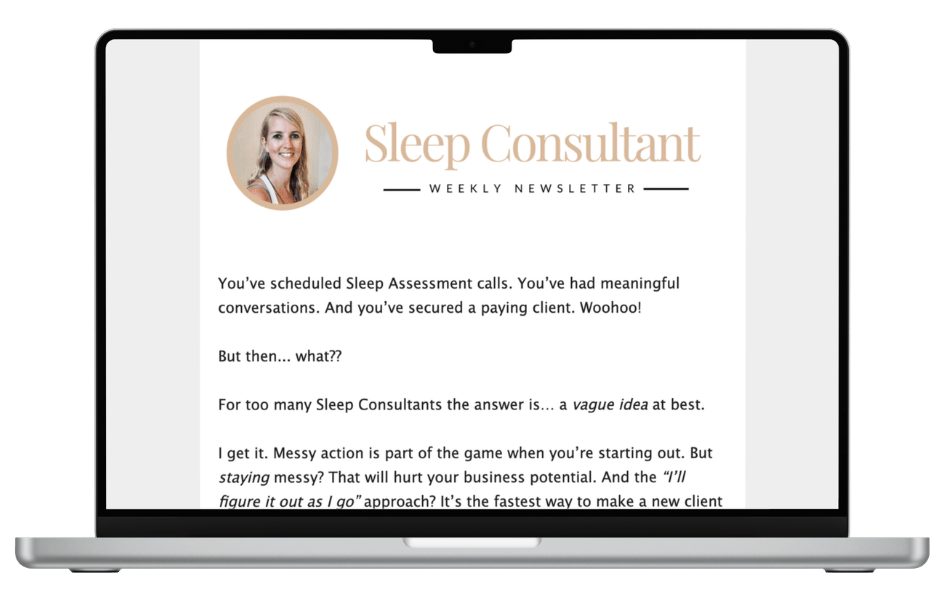
The Sleep Consultant Newsletter
Weekly tips, strategies and marketing ideas for sleep consultants written by a fellow sleep consultant. 1500+ active subscribers!
I’ll only send helpful emails, and you can unsubscribe anytime with one click.
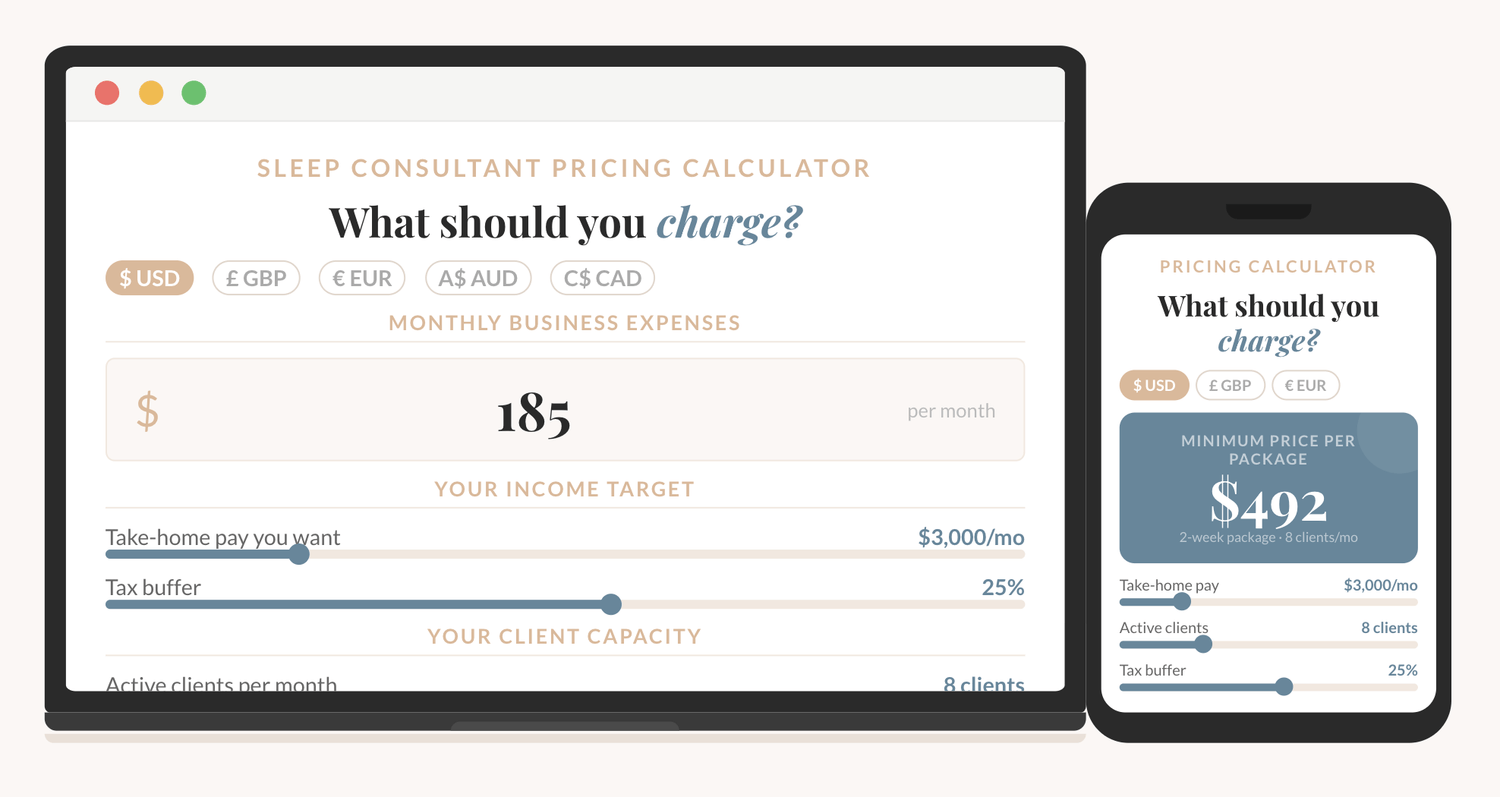
How to price your sleep consulting services?
The Sleep Consultant Pricing Calculator shows you exactly what to charge, based on your real expenses, your income goal, and how many clients you want to take on.
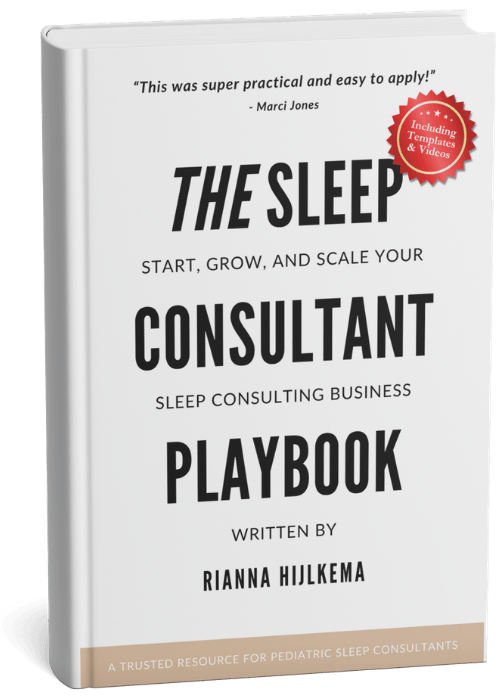
I'm thrilled to offer you an exclusive preview of what’s inside!
You can read the first 22 pages of The Sleep Consultant Playbook and get a taste of the value, insights, and actionable strategies that are waiting for you.
Other articles you might be interested in:
© 2021-2026 Sleep Consultant Business. All Rights Reserved.