
How to Package Your Sleep Consulting Services
A well-structured sleep consulting package includes an intake assessment, an initial consultation call, a written sleep plan, and a defined follow-up support window (typically 2 to 3 weeks). What changes between packages is not what is included but your experience level and how you price accordingly. When you are starting out, one package with one clear price is all you need. Clarity sells better than options.
In this guide
- What goes into a sleep consulting package
- The follow-up support window explained
- Why one package is enough to start
- How to structure your package step by step
- How to present your package to clients
- Common packaging mistakes sleep consultants make
- Frequently asked questions
After you have set your rate, the next question is: what exactly are clients paying for? This is where a lot of new sleep consultants get stuck. You know you will help families get more sleep. But turning that into a clear, structured package that clients can understand at a glance takes a bit of intentional design.
A package is not just a list of deliverables. It is the container for your client experience. When it is clear, clients feel confident saying yes. When it is vague, they hesitate, ask more questions, and sometimes just move on. The goal of this article is to help you build a package that communicates clearly, sets expectations well, and is realistic for you to deliver consistently.
You do not need multiple packages to start. One well-designed package is your foundation. Everything else can come later, once you understand how your clients actually move through your process.
What Goes Into a Sleep Consulting Package
Most sleep consulting packages are built from the same core components. What varies is how you name them, how you deliver them, and how much time you allocate. Here is what a solid package typically includes:
| Component | What it is | Notes |
|---|---|---|
| Intake form | Detailed questionnaire sent before the initial call | Covers child's age, sleep history, feeding, current schedule, family goals |
| Initial consultation call | 60 to 90 minute call to review the intake and discuss the plan | Where you build rapport and begin identifying the right approach |
| Customised sleep plan | Written document sent after the call, tailored to the family | The most time-intensive deliverable. Build a template to streamline it. |
| Follow-up support | Email or messaging support during the implementation window | Standard window is 2 to 3 weeks. Define your response time clearly. |
| Check-in call (optional) | A shorter follow-up call mid-support or at the end of the window | Adds value and helps catch families who have gone quiet |
These components stay consistent whether you charge $200 or $600. What changes is not what you include, but your experience, confidence, and speed of delivery. A sleep consultant two years in can write a sleep plan in half the time it takes someone who just certified. That efficiency is part of what justifies a higher rate.
The Follow-Up Support Window Explained
The support window is the part of your package that confuses new sleep consultants most. How long should it be? What does it include? How do you stop it from becoming a never-ending inbox responsibility?
Two to three weeks is the standard for a full sleep consulting package. This is enough time for families to implement the plan, hit the inevitable rough patch around days four to six, and stabilise. It is not so long that you are still answering questions six weeks after the initial call.
Define exactly what "support" means in your package. Email only? Messaging app? What is your response time: same day, within 24 hours, business days only? Vague support terms create scope creep and resentment on both sides. Put it in your welcome document and your contract.
The support window starts when the sleep plan is delivered, not when the client pays. This matters. If a client takes two weeks to book their initial call, you are not still on the hook for support two weeks after that. Build this into your booking terms so there is no confusion.
What to include in your support window
- Unlimited questions by email or messaging, within your stated response time
- Plan adjustments: minor tweaks based on how the family is progressing
- Reassurance and troubleshooting: most families need this most around days three to seven
- A mid-point or end-of-window check-in call (optional but worth offering, especially early in your practice)
What is not included (and should be stated)
- Support beyond the defined window (offer an extension or follow-on service instead)
- Medical advice or assessment (always refer to a paediatrician)
- Additional calls beyond what is included, unless agreed and invoiced separately
Why One Package Is Enough to Start
The temptation when you are newly certified is to build out a full menu: a basic package, a premium package, a VIP option, maybe a standalone consultation. It feels professional. It feels like you are covering all your bases.
In practice, it usually backfires. Multiple packages before you have a settled process creates inconsistency in your delivery. It gives potential clients too many decisions to make before they have even decided they trust you. And it means you are managing three different workflows at a stage when your energy is better spent getting clients through one reliable process.
When I started out, I built three packages before I had a single client. I thought I was being thorough. What I actually did was delay my launch while I agonised over pricing tiers and what to call each one. One clear package would have gotten me to my first paying client weeks sooner. Start with one. You can always add more once you know what your clients actually need.
Start with your core package. Price it based on your experience level (see the pricing guide). Deliver it well to five to ten clients. Then decide what to add, change, or offer alongside it.
You might be thinking about offering a lower-cost option for families, such as a self-paced plan without support. While this can seem appealing, it comes with real risks. Sleep consulting is a highly personalised process, and families often need ongoing guidance to navigate unexpected setbacks or adjust the plan as their child's needs change. Without one-on-one support, parents can struggle to implement the plan effectively, which leads to frustration and a lack of results. This not only affects the family but can also reflect poorly on you as a sleep consultant if parents perceive the plan as ineffective, when in reality it is the absence of support that is the issue.
How to Structure Your Package Step by Step
Use this framework to design your first sleep consulting package from scratch.
Step 1: Define what you will deliver
List the components: intake form, initial call (and how long), written sleep plan, follow-up support window (and how long), any check-in calls. Write these down in plain language before you write your sales page. If you cannot describe it clearly to yourself, you cannot describe it clearly to a client.
Step 2: Define your support boundaries
Decide: What channels will you use for support (email, Voxer, WhatsApp)? What is your response time? When does the support window open and close? Write this down. It goes into your contract and your welcome document.
Step 3: Name your package simply
You do not need a clever name. "Sleep Consulting Package" works fine. If you want something more descriptive, use the outcome: "Better Sleep in 3 Weeks" or "The Full Sleep Reset." Avoid jargon. Avoid anything that sounds clinical or corporate.
Step 4: Set your price
If you have not already read the pricing guide, do that now. Your price should reflect your experience level and your market, not a number you picked because it felt comfortable.
Step 5: Build your delivery templates
You will need: an intake form, a sleep plan template, a welcome email, and a wrap-up or offboarding message. These do not need to be perfect before your first client. They just need to exist so you are not starting from scratch every time.
Step 6: Write your package description
Write two to three sentences that describe what a client gets, how long it takes, and what outcome they can expect. This is what goes on your website, your booking page, and anywhere you describe your services. Test it by reading it to someone who knows nothing about sleep consulting. If they can repeat it back, it is clear enough.
How to Present Your Package to Clients
The way you present your package matters almost as much as what is in it. A well-structured package described vaguely is still hard to say yes to. Here is what works.
Lead with the outcome, not the process
Your client does not care that you will send them an intake form. They care that their baby will sleep through the night. Lead every package description with the result: "A fully customised sleep plan and three weeks of support to help your child sleep independently." Then list what is included underneath.
Be specific about the timeline
Tell clients exactly how the package unfolds. "You will receive your intake form within 24 hours of booking. We will have our initial call within five to seven days. Your sleep plan will be delivered within 48 hours of our call. From there, you have three weeks of support." Specificity builds trust and removes anxiety about what happens next.
Make it easy to book
One clear call to action: book a discovery call, or book directly. Do not send potential clients to a page with three packages and five add-ons. The more decisions they have to make before they can get started, the more likely they are to close the tab and come back to it later (which usually means never).
Common Packaging Mistakes Sleep Consultants Make
Leaving the support window undefined
Saying "two weeks of support" without explaining what that means (which channels, what response time, when it starts) is a recipe for mismatched expectations. One family thinks they can call you anytime. Another thinks they are only allowed two emails. Define it clearly in your contract and repeat it in your welcome message.
Building multiple packages before having any clients
More options feel professional. In reality, they usually delay your launch and add complexity you are not ready to manage. A new sleep consultant with three packages has three times the onboarding variation, three times the scope to misquote, and three times the decisions for a potential client. Start with one.
Tiering support based on price
Charging more and including more support in a higher tier sounds logical, but it sends a problematic message: that the cheapest clients get less of you. All your clients deserve the same quality of support. If you want to charge more over time, charge more because your experience has grown, not because you are adding more deliverables. Your support window stays the same. Your rate increases.
Describing the process instead of the outcome
A package page that reads like a procedure checklist ("intake form, 90-minute Zoom call, written PDF plan") does not help a tired parent understand why they should book. Describe what changes for their family. The process details can come after the emotional reason to say yes.
Not having a written contract
Your package description is not a contract. A contract defines the scope of the engagement, what is and is not included, payment terms, and what happens if something goes wrong. Even a simple one-page agreement protects you and your client. Do not skip this because you think it feels too formal for a small business. It is not.
Frequently Asked Questions
How many packages should a new sleep consultant offer?
One. A single, clearly defined package is the right starting point for most new sleep consultants. It simplifies your delivery, makes your marketing clearer, and gives clients one easy decision to make. Once you have worked with ten to fifteen clients and have a settled process, you can consider adding a second option, such as a maintenance package or a standalone call for returning clients.
Should I offer a standalone consultation without a full package?
You can, but be careful about positioning it. A standalone call can attract clients who want advice without committing to a plan, which can make it harder to get results. If you do offer a standalone consultation, be clear that it does not include a written plan or follow-up support, and price it to reflect the time it takes. Many sleep consultants add this later as an option for returning clients or families who only need a short check-in.
How long should my sleep consulting package be?
The support window for a standard package is typically two to three weeks from when the sleep plan is delivered. This gives families enough time to implement the plan and stabilise without the engagement dragging on indefinitely. The total time from booking to end of support is usually three to four weeks, depending on how quickly you schedule the initial call.
Can I offer add-ons to my package?
Yes, once your core package is settled. Common add-ons include extended support beyond the standard window, a follow-up call at the four to six week mark, or a sibling consultation for families with more than one child. Keep add-ons simple and do not introduce them until you have a clear and consistent delivery process for your core package.
What if a client needs more support than my package includes?
This happens, and having a clear policy in advance makes it easy to handle. When a client reaches the end of their support window and still needs help, you can offer a support extension at a set rate. Something like "two additional weeks of email support for $X" is a clean, boundary-respecting option that serves the client without you absorbing unlimited work for free. Build this option into your contract so it is not a surprise.
Do I need different packages for different ages (newborns vs toddlers)?
Not necessarily. Most sleep consultants use one package structure across age groups and customise the sleep plan itself based on the child's age and developmental stage. Where you might differentiate is if you specialise, for example if you focus only on newborns or only on older toddlers and school-age children. In that case, your package might reflect the specific scope of that specialisation. But for most new sleep consultants, one package that covers your working age range is the right place to start.
Key Takeaways
- A standard sleep consulting package includes an intake form, initial call, customised sleep plan, and a 2 to 3 week follow-up support window.
- What changes between price points is your experience level, not the amount of support you deliver. Every client gets the same quality of service.
- Start with one package. It is simpler to deliver, simpler to market, and simpler for clients to say yes to.
- Define your support boundaries clearly: which channels, what response time, when the window opens and closes. Put it in your contract.
- Lead your package description with the outcome the family gets, not the list of steps they will go through.
- Build your delivery templates before your first client so you are not starting from scratch each time.
Once your package is clear and priced correctly, the next step is making sure you actually have somewhere to send clients. Read the next article on setting up your booking process.
Next Article: How to Handle Payments as a Sleep Consultant
Disclaimer: The information shared in these articles is for educational and informational purposes only. It does not constitute legal, financial, or professional advice. Always consult with a qualified professional regarding your specific situation.

Rianna Hijlkema
Certified Pediatric Sleep Consultant, Certified Postpartum Doula, Former Teacher & School Director, Founder of Sleep Consultant Design & Sleep Consultant Business and the author of The Sleep Consultant Playbook (available on Amazon).
The Sleep Consultant Newsletter
Weekly tips, strategies and marketing ideas for sleep consultants written by a fellow sleep consultant. 1500+ active subscribers!
I’ll only send helpful emails, and you can unsubscribe anytime with one click.
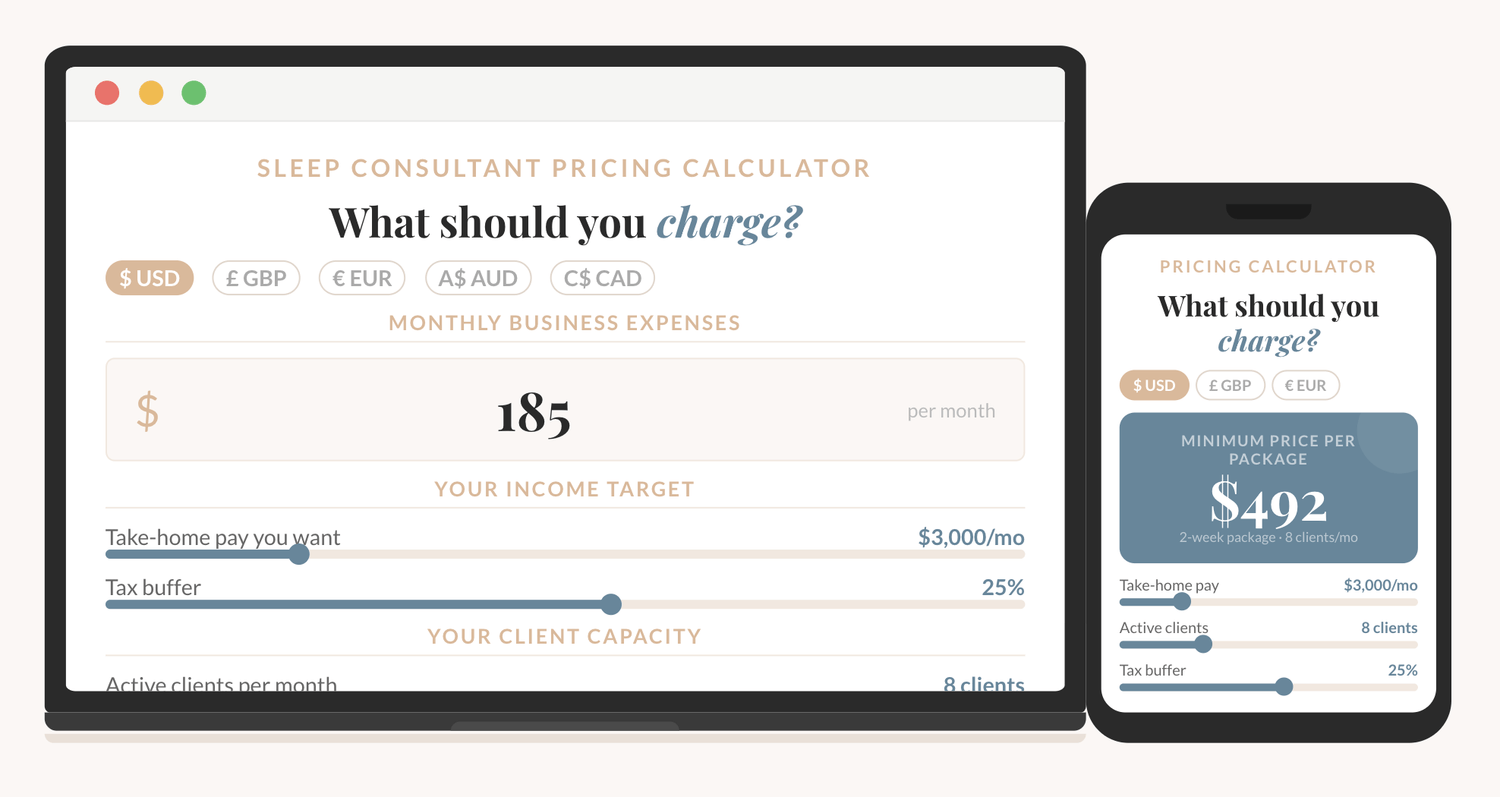
How to price your sleep consulting services?
The Sleep Consultant Pricing Calculator shows you exactly what to charge, based on your real expenses, your income goal, and how many clients you want to take on.
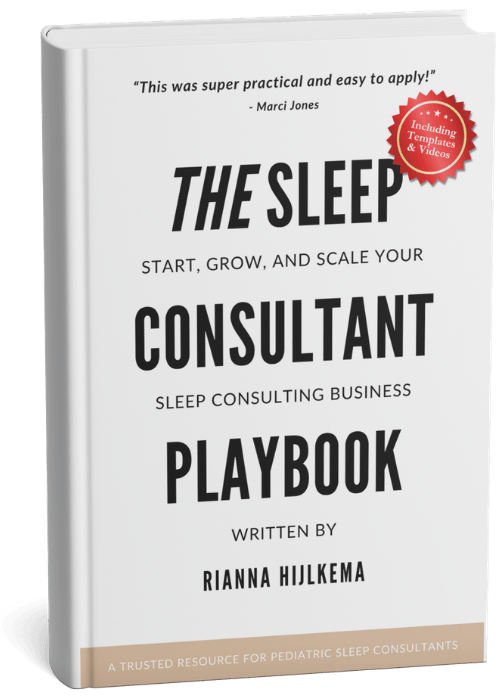
I'm thrilled to offer you an exclusive preview of what’s inside!
You can read the first 22 pages of The Sleep Consultant Playbook and get a taste of the value, insights, and actionable strategies that are waiting for you.
Other articles you might be interested in:
© 2021-2026 Sleep Consultant Business. All Rights Reserved.