
How to Handle Payments as a Sleep Consultant
Set up a Stripe or PayPal account, link it to your business bank account, and generate a payment link you can paste directly into your emails. That's the whole system. Send the contract and payment link together within a few hours of a client saying yes, ask for payment within 48 hours to secure the spot, and do not send the questionnaire until payment is confirmed. Your contract needs to spell out your fees, cancellation policy, and what happens with late or missed payments. Keep it simple, keep it consistent, and you'll never have an awkward money conversation you weren't prepared for.
In this guide
- Setting up your payment system
- When to send the payment link and what to say
- What your contract needs to say about payments
- Your business bank account and keeping finances separate
- Setting aside tax from every payment
- How to handle late payments, missed payments, and refund requests
- Common payment mistakes sleep consultants make
- Frequently asked questions
Payments are one of those things that feel awkward until they're not. Most newly certified sleep consultants spend a lot of time thinking about the sleep science and almost no time thinking about how they're actually going to get paid. Then the first client says yes, and there's a moment of "wait, what do I do now?"
The good news: your payment system doesn't need to be complicated. A Stripe account, a payment link, and a clear contract is genuinely all you need to get started. This article walks you through the setup, the timing, the money conversations you'll need to have, and the problems you'll eventually run into so you're ready for them.
Setting Up Your Payment System
You can't run a business without getting paid. That sounds obvious, but you'd be surprised how many new sleep consultants delay this step because it feels technical or official. It isn't. Setting up payments takes about 20 minutes and you only do it once.
Stripe or PayPal: which one?
Both work. Stripe is the cleaner option for most sleep consultants because it generates a simple payment link you can drop straight into an email, it looks professional, and it handles multiple currencies if you work with international clients. PayPal is more familiar to some clients, especially in certain countries, and it's also completely fine to use. Pick one, set it up, and move on. Don't spend a week comparing features.
The setup process is the same for both: create a business account, verify your identity, and link it to your business bank account. Once that's done, you can generate a payment link for your package amount and paste it directly into your follow-up email when a client says yes. Watch the video at the bottom of this page for a full step-by-step walkthrough of how to set up your Stripe payment link.
If you're using an all-in-one platform
If you're using a platform like Systeme.io to run your website, email, and funnels, you can connect your Stripe or PayPal account directly inside the platform and process payments through your order pages or checkout links without any additional tools. That makes the whole thing even simpler: one platform handles your website, your emails, and your payments, and everything is connected.
If you haven't set up Systeme.io yet and want to, you can grab 2 free months here (affiliate link, no extra cost to you). It's the all-in-one platform I use for my own businesses and have been setting up for sleep consultants for years.
When I just started out as a sleep consultant, I had a very simple setup that worked great! What I did was, I included a Stripe payment link directly in my email that I sent after the sleep assessment call. Once payment was made, I let the client know I would send their Welcome Guide within 24 hours. That was it. No DocuSign, no separate invoicing software, no extra subscriptions. When you're just starting out you don't need a fancy checkout experience. You just need a clear, easy way for your clients to pay you. Simple is also professional.
When to Send the Payment Link and What to Say
Timing matters here. The moment a client says yes on the Sleep Assessment Call, the deal isn't done yet. It's done when the payment comes through. Until then, buyer's remorse can creep in, life gets in the way, and the booking can quietly disappear.
On the call, as soon as they say yes, say this: "Amazing! I'll send over two things after our call: the contract, and a payment link. I ask for payment within 48 hours to secure your spot, as I book up quickly. Does that work for you?" Get verbal agreement on the spot. Then send the email within a few hours of the call, not the next day.
Here's what that email looks like:
Subject: Let's get started!
Hi [Client's Name],
It was so great talking with you today! I'm really excited to help your family get the sleep you need.
Here are your two next steps to get officially booked:
1. Review the contract: I've attached it to this email. Take a moment to look it over and let me know if you have any questions.
2. Submit payment: Use this link to complete your payment: [Stripe payment link]. Once it goes through, you're officially booked!
Once I receive your payment, I'll send over your Welcome Guide with everything you need to get started, including the questionnaire and a link to schedule your Consultation Call.
Looking forward to working together!
[Your Name]
Two things to notice. First, the questionnaire isn't in this email. Don't send it with the contract. It makes the whole thing feel like more work than it is, and it can distract the client from the one action you actually need them to take: paying. Send the questionnaire after payment is confirmed. Second, the payment link is front and centre with a clear action, not buried at the bottom after three paragraphs.
If 48 hours pass and you haven't heard back, follow up. One friendly message: "Hi [Name], just checking in to see if you had any questions about the contract or payment. I want to make sure your spot is held!" If that gets no response within another day or two, follow up once more and then move on. Don't hold a spot indefinitely. Payment is what confirms the booking.
What Your Contract Needs to Say About Payments
Your contract does a lot of work for you when it comes to payments. Done well, it means you never have to have an awkward money conversation that you weren't prepared for, because the expectations were set in writing before anything started.
At a minimum, your contract's payment section needs to cover:
- Your fee and what it includes. Spell out the package price, exactly what's included (number of calls, support duration, deliverables), and the currency. No vague language.
- When payment is due. Full payment upfront before the engagement starts is the standard for most sleep consultants. If you offer a payment plan, state the amounts, dates, and what happens if an instalment is missed.
- Your cancellation policy. What happens if the client cancels before you've started? What if they cancel partway through? Most sleep consultants offer no refund on sessions already delivered, and a partial refund or credit on sessions not yet started. Whatever your policy is, write it down clearly.
- Late or missed payment terms. If you offer payment plans, what happens if a payment is missed? A common approach: a short grace period (3 to 5 days), then support pauses until payment is received.
- Agreement mechanism. You don't need a DocuSign signature to make a contract valid in most jurisdictions. A clear statement in your email that payment constitutes agreement to the terms, with the contract attached, is legally sufficient in many places. Check your local requirements if you're unsure.
Keep the language plain. Your client should be able to read it in five minutes and understand exactly what they're agreeing to. Long contracts full of legal jargon don't protect you more than a simple one, they just slow down the booking process and create friction at a moment when you want momentum.
Your Business Bank Account and Keeping Finances Separate
Mixing personal and business finances is a recipe for chaos. You don't want to be scrolling through your bank transactions trying to remember whether a charge was a client payment or your morning coffee. More importantly, if you're operating as an LLC or equivalent structure, keeping finances separate isn't optional, it's the rule that maintains the legal protection the structure gives you.
Open a dedicated business bank account before you take your first client payment. Look for a bank that works well with small businesses, has good online banking, and ideally low fees. When it's set up, use it exclusively for all business income and expenses: client payments in, software subscriptions and business costs out. Nothing personal touches it.
Link your Stripe or PayPal account to this business bank account, not your personal one. That way every client payment lands where it belongs, and your records are clean from day one.
Setting Aside Tax From Every Payment
This is the step most new sleep consultants skip and then regret. When a client payment hits your account, it doesn't all belong to you. A portion of it belongs to the tax authority in your country, and you need to set it aside the moment it arrives rather than spending it and hoping there's enough left at tax time.
A simple habit that works: open a separate savings account specifically for tax. Every time a client payment comes in, transfer 20 to 30% straight into it. Don't touch that account except to pay your tax bill. The specific percentage depends on your country and income level, in the US you'll likely need to pay quarterly estimated taxes; other countries have different schedules. Check with your local tax authority or accountant to confirm the right amount for your situation.
It sounds like an extra step. It is. But future you will be very grateful for it when tax season arrives and the money is sitting there ready, instead of requiring a scramble through the previous year's spending.
How to Handle Late Payments, Missed Payments, and Refund Requests
Late payments
If a payment plan instalment doesn't arrive on time, follow up promptly and warmly. Most late payments are simply forgotten, not intentional. A quick message the day after the due date, "Hi [Name], just a reminder that today's payment was due yesterday, here's the link again", is usually all it takes. If the payment doesn't come after a follow-up, your contract terms kick in. If your terms say support pauses until payment is received, apply that consistently. Being clear and consistent is not being unkind. It's running a professional business.
Missed payments or disputes
Chargebacks (where a client disputes a payment through their bank) are rare but they do happen. Having a signed contract and a clear record of the services you delivered is your protection. Stripe and PayPal both have dispute processes and will ask you to provide evidence of the agreement and the work done. This is another reason why the contract matters even when everything goes smoothly, it protects you in the rare cases when it doesn't.
Refund requests
Your refund policy should be in your contract before this conversation ever comes up, because once a client is asking for a refund you want to be pointing to what was already agreed rather than making a decision under pressure. Most sleep consultants don't offer refunds on sessions already delivered, and offer a pro-rated credit or partial refund on sessions not yet started. Whatever your policy is, state it clearly and apply it consistently. If you're ever unsure whether to honour a refund request that falls outside your stated terms, err on the side of your professional reputation. One goodwill gesture is sometimes worth more than the payment you'd keep.
Should you offer payment plans?
You can, but don't jump to offering one the moment someone mentions money as a concern. First, ask: "If money weren't an issue, would this feel like the right fit for you?" If they say yes, then a payment plan is a practical solution to a practical problem. If they say no, the money isn't really the issue, the real hesitation is something else, and offering a payment plan won't solve it. Payment plans also add admin overhead and the risk of missed instalments. If you do offer them, keep them simple: two payments maximum, with the first due immediately to confirm the booking.
Common Payment Mistakes Sleep Consultants Make
Waiting too long to send the payment link
Every hour between the yes and the payment link is an hour where enthusiasm fades and doubt creeps in. Send it the same day as the call. Ideally within a few hours. The momentum from the call is your best asset right after someone says yes, don't let it cool down.
Sending the questionnaire with the payment link
One action at a time. Your only goal in that first email is to get the contract signed and the payment made. Adding the questionnaire makes the whole thing feel like a big project. The client looks at it and thinks "I'll do this properly when I have more time" and then three days pass. Keep the focus: contract and payment first, questionnaire after.
Starting work without a contract
It feels awkward to send a contract to someone you've just had a warm conversation with. Do it anyway. The contract protects both of you. It sets expectations that prevent misunderstandings, and it gives you something concrete to refer back to if a disagreement ever comes up. A verbal agreement and a payment with no contract is a situation you don't want to be in.
Mixing personal and business money
This seems minor when you're making your first few hundred dollars. It becomes a serious headache at tax time and a legal issue if you're operating as an LLC. Set up the business account before your first payment, not after a few months when you're trying to untangle which transactions were which.
Not setting aside tax from day one
You'll spend the money if it's in your main account. Open the tax savings account now, set a transfer percentage, and make it automatic. This one habit prevents what is genuinely one of the most stressful experiences a new self-employed person can have: a tax bill you can't pay.
Jumping straight to a payment plan when someone hesitates
When a client says "I can't afford it", the instinct is to immediately offer a payment plan to rescue the sale. Resist that. First ask whether money is truly the barrier, or whether it's something else. If it is money, a payment plan is a reasonable solution. If it's hesitation about something else dressed up as a money concern, a payment plan won't close the gap, it just delays the decision.
Frequently Asked Questions
Do I need to use invoicing software?
No. A Stripe or PayPal payment link in your email is all you need when you're starting out. Stripe automatically sends the client a receipt after payment, which functions as the invoice. If a client specifically asks for a formal invoice, you can generate one inside Stripe or use a free tool like Wave. You don't need a separate invoicing subscription for a solo sleep consulting practice.
Should I charge upfront or at the end?
Always upfront, before the engagement starts. This is standard practice in service businesses and for good reason. It confirms the client is serious, it means you're not chasing payment after you've already done the work, and it protects you if a client disappears partway through. If the full amount feels like a barrier for some clients, offer a two-payment plan with the first payment due immediately at booking.
What currency should I charge in?
Charge in your local currency unless you work primarily with clients in another country. If you work internationally, decide on one primary currency (often USD for international reach) and state it clearly on your website and in your contract. Stripe supports multiple currencies, so you can accept payment in several currencies and have it converted to your local currency on payout.
Do I need to charge sales tax or VAT?
It depends on where you're based and who your clients are. In many countries, professional services like sleep consulting are exempt from VAT or GST below certain revenue thresholds. In others, you're required to register and charge from the first dollar. This is one to check with a local accountant or your country's tax authority before you take your first payment, not after. The answer varies enough by location that general advice here can mislead you.
How do I handle it if a client asks for a discount?
Your pricing reflects the value you provide. If someone asks for a discount after you've already shared your price, you don't have to give one. A confident response: "I do keep my pricing consistent, but if budget is a concern, I can look at whether a payment plan would help." If you want to offer a discount, tie it to something tangible, like being one of your first five case study clients in exchange for a testimonial. That feels intentional rather than arbitrary.
Do I need a separate contract signature or is payment enough?
In many countries, payment itself constitutes agreement to the terms if the contract was sent before payment and the email clearly states that by paying the client agrees to the attached terms. That said, rules vary by jurisdiction. If you want to be certain, tools like DocuSign or HelloSign allow for a proper e-signature before payment. For most new sleep consultants, the email-plus-payment approach is perfectly adequate. Check with a local attorney if you need certainty for your specific country.
Key Takeaways
- Your payment system is simple: Stripe or PayPal, linked to your business bank account, with a payment link in your email. That's it.
- Send the contract and payment link the same day as the call. Don't let the momentum cool. Ask for payment within 48 hours to secure the spot.
- Don't send the questionnaire with the payment link. One action at a time. Contract and payment first, then onboarding.
- Your contract needs to cover your fee, payment timing, cancellation policy, and what happens with late payments. Plain language, short, easy to read.
- Keep business and personal money completely separate from your very first payment. A business bank account isn't optional once you're operating as a proper business entity.
- Set aside 20 to 30% for tax every time a payment arrives. A separate savings account, automatic transfer, don't touch it. Future you will be grateful.
- When someone hesitates about price, don't jump straight to a payment plan. First ask whether money is truly the barrier. If it is, a plan is a practical solution. If it isn't, a plan won't close the gap.
Next Article: How to Onboard a Sleep Consulting Client
Disclaimer: The information shared in these articles is for educational and informational purposes only. It does not constitute legal, financial, or professional advice. Always consult with a qualified professional regarding your specific situation.

Rianna Hijlkema
Certified Pediatric Sleep Consultant, Certified Postpartum Doula, Former Teacher & School Director, Founder of Sleep Consultant Design & Sleep Consultant Business and the author of The Sleep Consultant Playbook (available on Amazon).
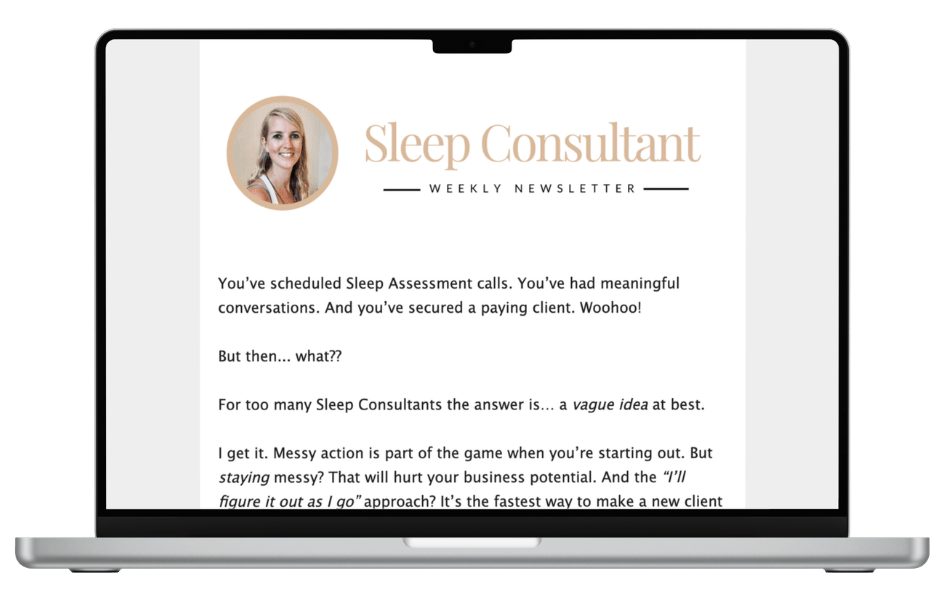
The Sleep Consultant Newsletter
Weekly tips, strategies and marketing ideas for sleep consultants written by a fellow sleep consultant. 1500+ active subscribers!
I’ll only send helpful emails, and you can unsubscribe anytime with one click.
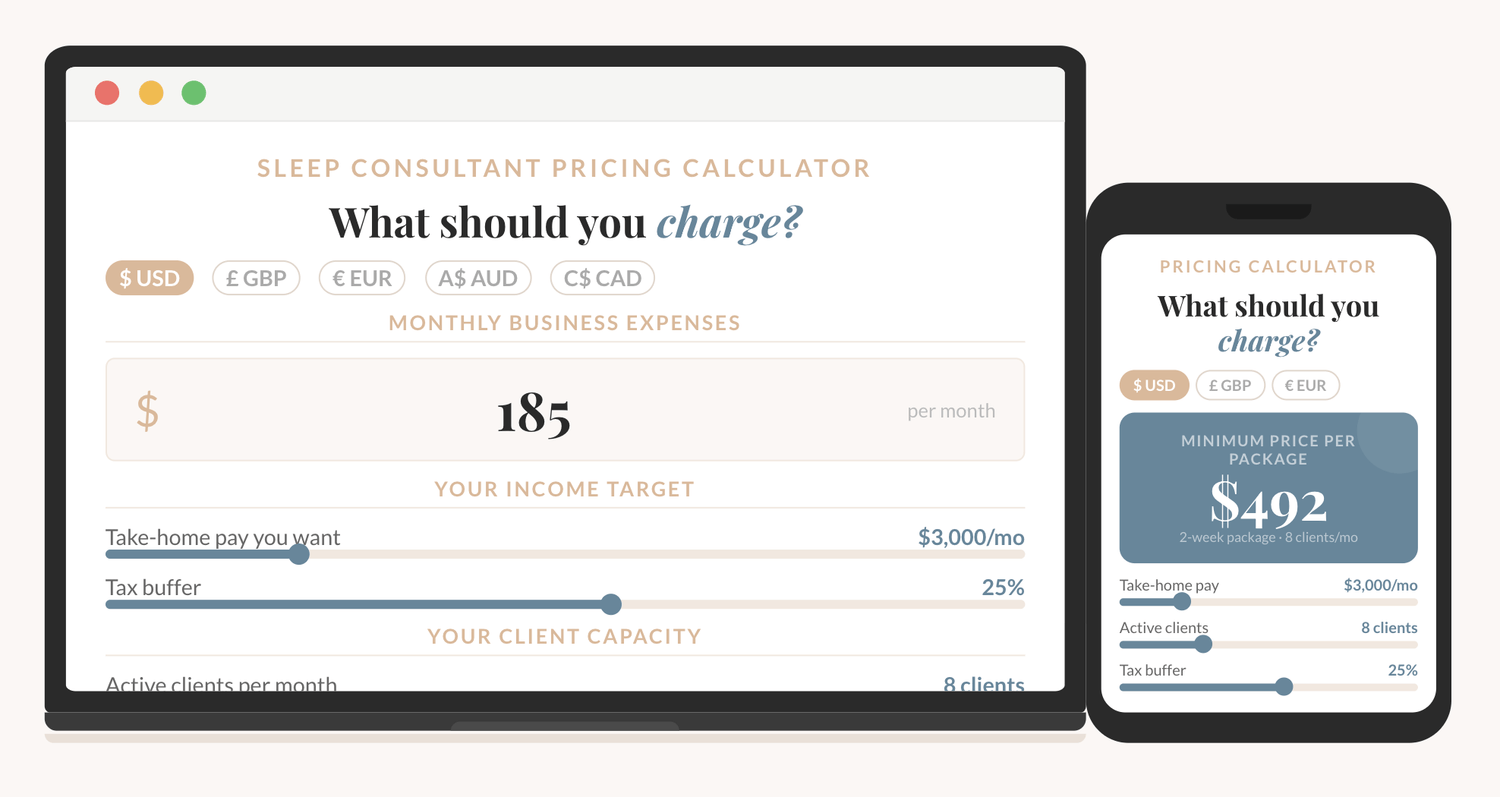
How to price your sleep consulting services?
The Sleep Consultant Pricing Calculator shows you exactly what to charge, based on your real expenses, your income goal, and how many clients you want to take on.
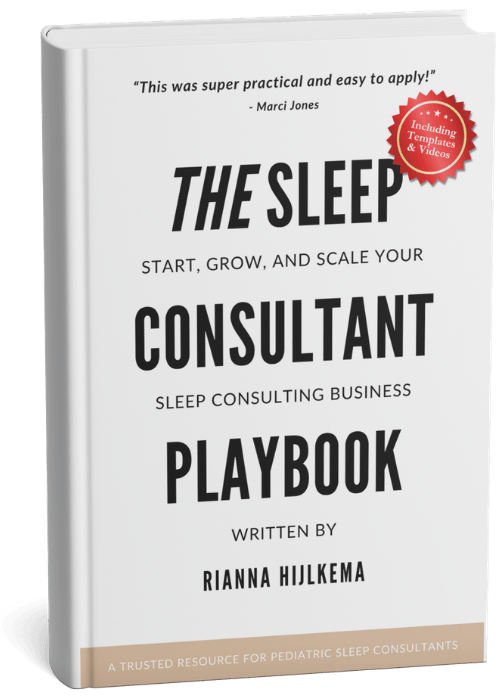
I'm thrilled to offer you an exclusive preview of what’s inside!
You can read the first 22 pages of The Sleep Consultant Playbook and get a taste of the value, insights, and actionable strategies that are waiting for you.
Other articles you might be interested in:
© 2021-2026 Sleep Consultant Business. All Rights Reserved.