
How to Onboard a New Sleep Consulting Client
To onboard a new sleep consulting client, send a contract and payment link within 3 hours of their yes. Once payment is received, follow up with a warm welcome email that includes your intake questionnaire and a link to schedule the Consultation Call. Give yourself at least 72 hours before the call to review their answers and write a personalised sleep plan. The goal is a smooth, reassuring experience that confirms they made the right choice.
In this guide
- What onboarding is (and why it matters)
- Step one: contract and payment
- Step two: the onboarding email
- Step three: the intake questionnaire
- Step four: sleep plan and Consultation Call
- How to set up your onboarding process
- Common onboarding mistakes sleep consultants make
- Frequently asked questions
A parent just said yes to working with you. That moment matters, but so does everything that comes next. The 24 hours after a client books are when they are most excited, most nervous, and most likely to wonder if they made the right call. How you handle that window shapes the entire experience they have with you.
Onboarding is not just admin. It is the first time your client experiences you as their sleep consultant rather than as someone they are considering hiring. A clear, warm, well-organised onboarding process signals that you are professional, that you have done this before, and that they are in good hands. A chaotic or slow one can undo the confidence they had when they said yes.
This guide walks you through every step of a simple, effective onboarding process, from the moment a client commits to the moment they are sitting down for your Consultation Call with their sleep plan in hand.
What Onboarding Is (and Why It Matters)
Onboarding is the process of moving a client from "I just paid" to "I am ready for my Consultation Call." It covers everything in between: getting the paperwork sorted, welcoming them properly, collecting the information you need to do your job well, and setting clear expectations for what comes next.
For sleep consultants, good onboarding does two things at once. It collects the detailed information you need to write a truly personalised sleep plan. And it manages the emotional experience of an exhausted, anxious parent who has just made a financial commitment and is now waiting to see if it was worth it.
Buyer's remorse is real, and it tends to show up quietly: slow replies, sudden questions about the process, a drop in enthusiasm. The antidote is proactive, clear communication. When your client knows exactly what is happening and when, they relax. And a relaxed client is far easier to support.
The first time I onboarded a paying client, I sent the contract, then waited a day before sending anything else because I did not want to seem pushy. That gap created unnecessary anxiety for both of us. I learned quickly that the opposite is true: the faster and clearer your follow-up, the more confident your client feels. Speed and warmth are not pushy. They are professional.
Step One: Contract and Payment
The moment a client says yes on your Sleep Assessment Call, your next move is simple: send the contract and payment link within 3 hours of the call. Until payment is received, the booking is not confirmed, and momentum is everything at this stage.
Keep this email brief and warm. Summarise what you discussed on the call, confirm what you will be helping them achieve, and give them two clear next steps: review and sign the contract, then complete payment. Nothing else goes in this email. You want their attention on those two actions.
You do not need a fancy signing platform to do this professionally. A Stripe payment link sent directly in the email works well. Once payment goes through, you know the booking is real and you can move to the next step. Keep the process simple enough that there is no friction for the client to get it done.
Do not send the Welcome Guide, questionnaire, or Consultation Call link until payment is received. Sending these before payment blurs the line between a confirmed client and a prospect, it means you are doing work for someone who has not yet committed, and it can create overwhelm in a parent who is still in the decision-making phase. Payment secures the spot. Everything else follows from there.
Step Two: The Onboarding Email
Once payment is in, send your onboarding email within 24 hours. This is the email that officially kicks things off. Its job is to welcome the client warmly, explain exactly what happens next, and give them two things to do: complete the intake questionnaire and schedule their Consultation Call.
The tone here matters. Your client has just committed money to solving a problem that has likely been affecting their entire family for weeks or months. They are hopeful, a little nervous, and possibly running on very little sleep. Your email should feel like a warm, capable colleague taking the wheel: clear about what is happening, reassuring about the outcome, and easy to act on.
You can send this as a plain email with a Calendly link, or you can elevate the experience with a one-page Welcome Guide designed in Canva. The Welcome Guide approach is particularly effective because it gives the client something tangible that reinforces the quality of your service. It can include an overview of your process, what they can expect during each stage, and the links they need to take their next steps.
What to include in the onboarding email
- A genuine welcome that acknowledges the step they have just taken and expresses your excitement to work together.
- A brief overview of the process so they know what the next few weeks look like and nothing comes as a surprise.
- A link to the intake questionnaire with a short explanation of why it matters.
- A link to schedule the Consultation Call (via Calendly or similar). Set your availability so clients cannot book within 72 hours. You need that time to review their questionnaire and write their sleep plan.
- Clear instructions on what to do if they have questions before the call.
Step Three: The Intake Questionnaire
The intake questionnaire is the foundation of everything you are about to do for this family. It tells you everything you need to write a sleep plan that actually fits their situation: their child's age, sleep environment, current routine, challenges, health history, and the family values and preferences that should shape the approach you recommend.
Google Forms is a free, reliable option that works well for this. Keep the sharing settings correct: set it to "Anyone with the link can view and respond" so clients are not blocked by permission errors before they even get started. Turn on email notifications for new responses so you know the moment a completed questionnaire comes in (watch my video at the bottom of this article).
What your questionnaire should cover
| Category | Key questions to include |
|---|---|
| General information | Child's name, age, gender, and date of birth. Parent and caregiver contact details. |
| Family and living situation | Siblings, shared rooms, typical daily schedule, number of caregivers involved in the child's routine. |
| Current sleep situation | Total sleep in 24 hours, bedtime, wake time, nap schedule, how the child currently falls asleep, night wakings. |
| Challenges and goals | What is the biggest problem right now? What strategies have they already tried? What does success look like for them? |
| Health background | Any medical conditions affecting sleep (reflux, allergies, teething), current medications, recent illnesses. |
| Sleep environment | Where the child sleeps, room conditions (light, noise, temperature), comfort items, white noise use. |
| Parent preferences | Sleep methods they are not comfortable using, family values around sleep, anything else that is important to them. |
| Developmental notes | Recent milestones, any changes in routine or behaviour, upcoming travel or transitions. |
Always end with an open question: "Is there anything else you would like me to know about your child or your family's situation?" Some of the most important context you will ever receive comes from this one question.
Step Four: Sleep Plan and Consultation Call
Once you have the completed questionnaire, you write the sleep plan. This is your core deliverable. It should be thorough, well-designed, and clearly laid out. A messy or rushed sleep plan does not just look unprofessional, it makes parents doubt whether to follow it. When your plan is detailed and easy to navigate, parents feel confident enough to trust the process and lean on it, rather than messaging you every few hours.
There are sleep consultants out there who have moved away from writing sleep plans altogether, and I understand why. Once you have worked with a lot of families, you start to notice how often the plan needs adapting on the fly, how much of what you do is responding in the moment rather than following a document. That is a completely valid approach once you have the experience to back it up.
But please, do not skip the sleep plan in your first year. Writing a detailed plan for every client is one of the most valuable learning experiences you will have in this field. It forces you to think deeply about each child's situation, find the right words to explain approaches to parents, and build the kind of foundational knowledge that eventually lets you adapt with confidence. The process of writing it is how you grow. Keep it on your task list until you genuinely do not need it anymore.
Send the sleep plan at least 12 hours before the Consultation Call so parents have time to read through it and come prepared with questions, but not so far in advance that they have time to over-analyse individual approaches and start questioning the plan before you have had a chance to walk through it with them together.
The Consultation Call is not the same as the Sleep Assessment Call. The Sleep Assessment Call happens before the client has paid, and its purpose is to understand their situation and invite them to work with you. The Consultation Call happens after onboarding is complete. Its purpose is to walk through the personalised sleep plan, address any questions, set expectations for the implementation phase, and schedule check-ins. Never conflate these two calls when describing your process to clients.
On the Consultation Call itself, focus on three things: making sure the parents fully understand the plan, addressing any concerns they have before implementation begins, and setting clear expectations for how the next two to three weeks will work. Walk through the sleep plan step by step, answer every question without rushing, and close the call by confirming what they will do first and when they will hear from you next.
How to Set Up Your Onboarding Process
Here is the full sequence in order. Each step has one clear action and one clear outcome. Work through this for your first client and you will have a reusable process from that point on.
Step 1: Send contract and payment link within 3 hours of yes
Keep the email brief. Reference what you discussed on the Sleep Assessment Call, confirm the goal, and give them two clear actions. Outcome: paperwork complete, spot secured.
Step 2: Confirm payment and send the onboarding email
Once payment clears, send your welcome email within 24 hours. Include the intake questionnaire link and the Calendly link to schedule the Consultation Call. Outcome: client knows exactly what to do next.
Step 3: Receive and review the completed questionnaire
Read through their answers carefully before you start writing. Note anything surprising, any gaps, and any preferences that should shape your approach. Outcome: you understand the family's situation in full.
Step 4: Write the personalised sleep plan
Use the questionnaire to customise every section. Include safe sleep guidelines, a nighttime plan, 2 to 3 sleep training method options with pros and cons, a daytime plan, troubleshooting notes, and an encouraging final section. Use Ctrl+F (or Command+F) to find and replace the child's name throughout to avoid errors. Outcome: a professional, complete plan tailored to this family.
Step 5: Send the sleep plan at least 12 hours before the Consultation Call
Email it with a brief note asking them to read it before the call and to have both caregivers present if possible. Outcome: parents arrive prepared, call is more productive.
Step 6: Run the Consultation Call
Walk through the sleep plan, answer every question, set expectations for the implementation period, and confirm the first check-in. Do not rush. Outcome: parents feel clear, confident, and fully supported.
Step 7: Begin the follow-up support phase
Proactive check-ins keep clients on track and prevent small problems from becoming big ones. Reach out before they feel the need to reach out to you. Outcome: client feels supported, is more likely to stay consistent with the plan.
It is tempting to automate your onboarding process as quickly as possible. But automating something before you have figured out what actually works for you is a fast track to a more complicated mess. There are small moments in the onboarding sequence, the personal message between steps, the specific wording that puts a nervous parent at ease, the timing that feels right for your process, that you will only discover by doing it manually first.
Take at least 5 to 10 clients through the process by hand before you start building any automation. By then you will know exactly what you want to say, when you want to say it, and what a seamless experience looks like for your specific clients. Once you are there, the Sleep Consultant Business Operating System™ has the complete process with plug-and-play templates ready to go, set up on a platform that supports all parts of your business rather than just solving one problem.
Common Onboarding Mistakes Sleep Consultants Make
Waiting too long to follow up after the call
Sending the contract and payment link the next day, or even a few hours later, cools the momentum and gives doubt time to creep in. The client said yes at the end of a call where they felt connected to you and understood by you. The longer you wait, the more that feeling fades. Aim to send the follow-up within 3 hours of the call ending, same day.
Sending the questionnaire before payment is received
This blurs the boundary between a confirmed client and someone who is still deciding. It also means you could end up with a completed questionnaire from someone who never actually pays. The questionnaire is part of the paid experience. It goes out after payment, not before.
Using a generic questionnaire with no customisation
A good intake form covers not just the sleep data but the preferences, values, and sensitivities that will shape your recommendations. The open-ended question at the end ("Is there anything else you would like me to know?") often surfaces the most important detail of all.
Allowing clients to book the Consultation Call too soon
If your Calendly is open for same-day or next-day bookings, you may end up on a call without enough time to review the questionnaire and write a thorough sleep plan. Block at least 72 hours before availability opens. This is not about being unavailable. It is about making sure you show up to the call fully prepared rather than winging it.
Rushing through the sleep plan to save time
The sleep plan is the core product your client has paid for. A thorough, well-presented plan does two things: it gives parents the confidence to follow through, and it reduces the number of questions and check-ins you have to handle during the support phase. A rushed plan creates more work for you, not less. Take the time to get it right.
Frequently Asked Questions
How long should the onboarding process take from payment to Consultation Call?
Most sleep consultants aim for three to five days between payment and the Consultation Call. This gives the client time to complete the questionnaire without feeling rushed, and gives you enough time to review their answers and write a thorough, personalised sleep plan. Set your Calendly to block at least 72 hours before the first available slot.
Do I need a Welcome Guide or is a plain email enough?
A plain, warm email with clear instructions works perfectly well, especially when you are starting out. A Welcome Guide designed in Canva can elevate the experience and make a strong first impression, but it is an enhancement rather than a requirement. Start with a clear email and add a Welcome Guide later once you have your process working smoothly.
Do I need special tools or software to manage client onboarding?
You do not need anything complicated to start. A contract sent via email, a Stripe payment link, a Google Form for the questionnaire, and Calendly for scheduling covers the full process. Keep it simple until you have worked through at least 5 to 10 clients manually and know exactly what your process looks like. When you are ready to automate, stay away from expensive platforms that only solve one part of your business. You want a platform that supports everything: your website, your email marketing, your products, your scheduling. The Sleep Consultant Business Operating System™ is exactly that: a complete, plug-and-play setup on a platform built to run your whole business, not just your onboarding.
What if a client does not complete the questionnaire before the call?
Follow up with a friendly reminder 24 to 48 hours after sending the link. Frame it as you making sure they did not miss it rather than chasing them. If the questionnaire is still not in 72 hours before the call, reach out directly and give them the option to either complete it or reschedule. You need that information to do your job well, and rescheduling is the right call if the plan is not ready.
How do I handle a client who seems to be having second thoughts after booking?
Signs of buyer's remorse include slow replies, questions about the process, or reduced enthusiasm after the initial excitement. The best response is to gently bring them back to the reason they booked: the problem they are trying to solve and the outcome they are looking for. A warm, proactive check-in ("Just wanted to make sure you received everything and let you know I am here if you have any questions") can ease the doubt without drawing attention to it directly.
What is the difference between the Sleep Assessment Call and the Consultation Call?
These are two entirely different calls with different purposes. The Sleep Assessment Call happens before the client has paid. It is a short, free call where you understand the family's situation and invite them to work with you. The Consultation Call happens after onboarding is complete. It is a paid part of your service where you walk the client through their personalised sleep plan, answer their questions, and set them up for the implementation phase.
Key Takeaways
- Send the contract and payment link within 3 hours of yes. Speed keeps momentum alive and signals that you are organised and professional.
- Nothing goes out before payment is received. The questionnaire, Welcome Guide, and Calendly link are all part of the paid experience.
- Block at least 72 hours before the Consultation Call. You need that time to review the questionnaire and write a thorough, personalised sleep plan.
- The sleep plan is your product. A well-designed, detailed plan gives parents the confidence to follow through and reduces how much follow-up support they need.
- The Consultation Call and the Sleep Assessment Call are different things. One is a pre-sale call. The other is paid service delivery after onboarding.
- Proactive communication prevents buyer's remorse. A client who knows exactly what is happening and when will feel supported, not left to wonder.
Once onboarding is complete and the Consultation Call is done, your focus shifts to the follow-up support phase. For a full overview of what a well-run client journey looks like from first contact through to offboarding, see How to Build a Sleep Consulting Client Journey.
Next Article: How to Run a Sleep Consulting Follow-Up Support Phase
Related: How to Run a Sleep Assessment Call
Disclaimer: The information shared in these articles is for educational and informational purposes only. It does not constitute legal, financial, or professional advice. Always consult with a qualified professional regarding your specific situation.

Rianna Hijlkema
Certified Pediatric Sleep Consultant, Certified Postpartum Doula, Former Teacher & School Director, Founder of Sleep Consultant Design & Sleep Consultant Business and the author of The Sleep Consultant Playbook (available on Amazon).
The Sleep Consultant Newsletter
Weekly tips, strategies and marketing ideas for sleep consultants written by a fellow sleep consultant. 1500+ active subscribers!
I’ll only send helpful emails, and you can unsubscribe anytime with one click.
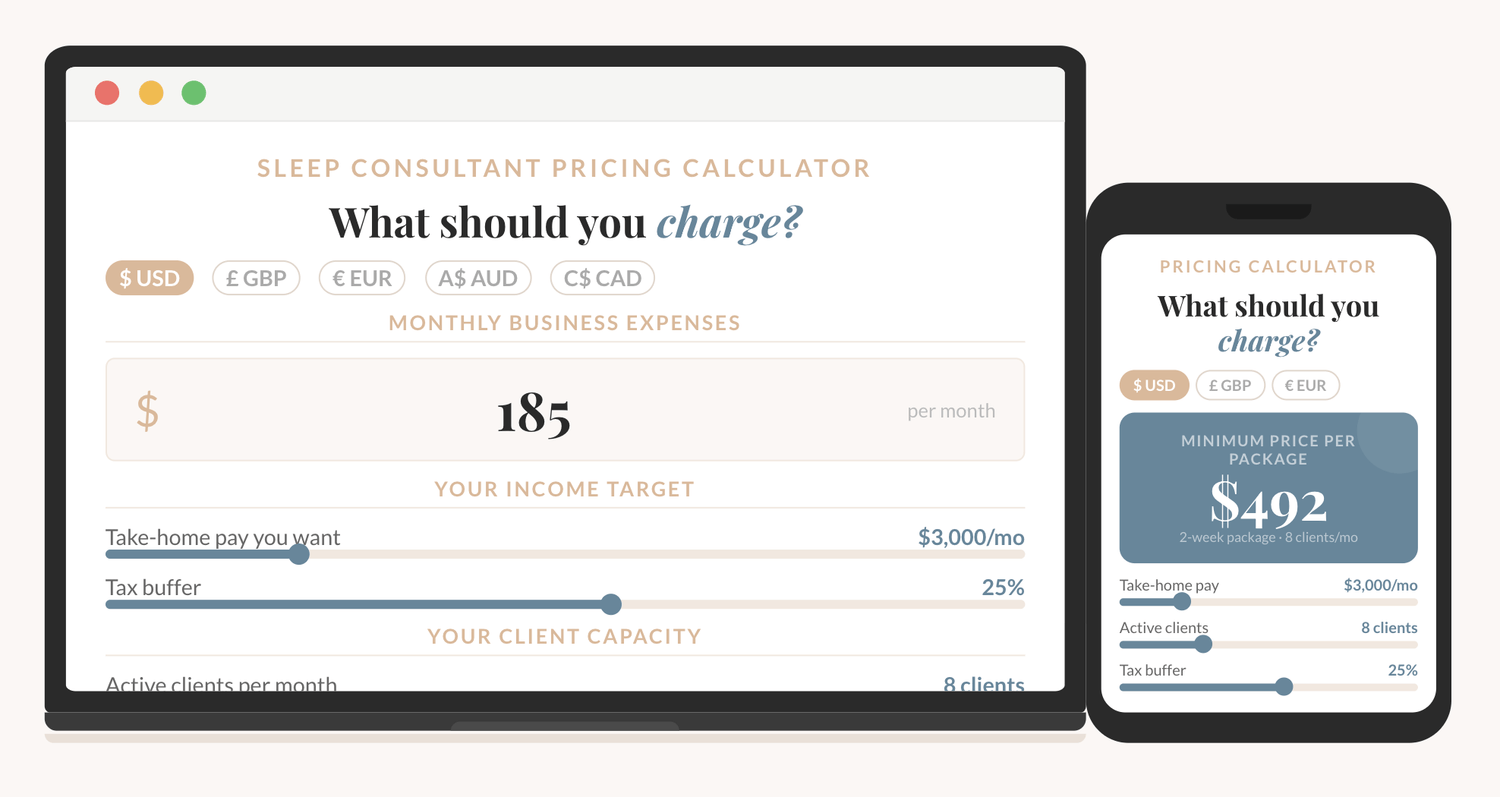
How to price your sleep consulting services?
The Sleep Consultant Pricing Calculator shows you exactly what to charge, based on your real expenses, your income goal, and how many clients you want to take on.
I'm thrilled to offer you an exclusive preview of what’s inside!
You can read the first 22 pages of The Sleep Consultant Playbook and get a taste of the value, insights, and actionable strategies that are waiting for you.
Other articles you might be interested in:
© 2021-2026 Sleep Consultant Business. All Rights Reserved.