
How to Run a Sleep Consulting Follow-Up Support Phase
The follow-up support phase is the 2-3 weeks after the Consultation Call when the family is actively implementing the sleep plan. Your job is to check in proactively, troubleshoot challenges as they arise, adjust the plan if needed, and keep parents consistent when the process gets hard. Most challenges during this phase are predictable: resistance at bedtime, night wakings that take time to reduce, and parents doubting whether to keep going. Knowing what to expect and how to respond is what separates a sleep consultant who gets results from one who just delivers a plan.
In this guide
- What your job is during the support phase
- What parents typically experience week by week
- Common challenges and how to respond
- When and how to adjust the plan
- Helping parents stay consistent when it gets hard
- Adding value without overwhelming
- How to structure your support across 2-3 weeks
- Common follow-up support mistakes sleep consultants make
- Frequently asked questions
The sleep plan is written. The Consultation Call is done. The family is excited, a little nervous, and ready to start. And then night one arrives.
This is where your work as a sleep consultant really begins. The follow-up support phase, typically two to three weeks of active support after the Consultation Call, is the period where results are built or lost. A solid sleep plan gives families the roadmap. Your support during implementation is what helps them actually follow it, especially when things get hard, which they almost always do at some point.
This article covers the practical side of running this phase well: what parents typically experience, what challenges come up, how to troubleshoot and adjust, and how to keep families on track when doubt and exhaustion start to creep in.
What Your Job Is During the Support Phase
Your role during these weeks is not passive. You are not waiting for things to go wrong before you show up. You are actively walking alongside the family, staying one step ahead of the process, and providing the kind of calm, expert presence that makes the difference between a parent who pushes through and one who gives up on night four.
That means five things:
- Proactive check-ins. You reach out before the parent needs to. Especially in the first week, your check-ins should be regular and warm.
- Troubleshooting. When something in the plan is not working, you help identify why and offer a practical fix. You do not wait to be asked.
- Plan adjustments. Sleep plans are starting points, not fixed documents. Adjusting based on what you learn during implementation is part of the job.
- Emotional support. Sleep deprivation makes everything feel worse. A parent who is convinced they are failing needs reassurance that what they are experiencing is normal, alongside practical guidance.
- Holding the line on consistency. You are the voice that keeps parents on track when the pull to revert to old habits gets strong. That is one of the most important things you do.
What Parents Typically Experience Week by Week
Knowing what is coming before it arrives is one of the most powerful things you can do as a sleep consultant. When you tell a parent on Monday that Wednesday night might be harder than the first two nights, and then Wednesday night is hard and you have already named it, their trust in you goes up. They feel guided rather than blindsided.
Here is a general picture of what most families experience across a standard two-week support window. Every child is different, and age, temperament, and the approach being used will all affect the timeline, but this gives you a useful baseline to share with clients at the close of the Consultation Call.
Week one: the adjustment period
The first few nights are almost always the hardest. The child is being asked to fall asleep in a new way, and their response is often protest. Depending on the approach, this might look like crying, prolonged settling times, increased night wakings, or early morning waking. This is normal. It is the adjustment period, and it does not mean the plan is not working.
Many families encounter what is sometimes called an extinction burst during this phase: a brief but intense increase in protest before things begin to improve. If a parent does not know this is coming, it feels like evidence that the whole approach is wrong. If they do know it is coming, they can meet it with confidence instead of panic.
Progress in week one is rarely linear. A better night is often followed by a harder one. This is also worth naming in advance. Parents who expect steady improvement get derailed by normal variability. Parents who expect variability take it in stride.
One of the most common things I hear from parents at the end of week one is "it was better on night three and then it got worse again on night five, so I don't think it's working." I now explain this pattern to every family before they start. When that harder night arrives and they message me, I can say "this is exactly what we talked about" and they feel reassured rather than derailed. Set the expectation early. It saves you both a lot of stress.
Week two: finding a rhythm
For most families, week two is when things start to feel more manageable. Settling times shorten. Night wakings reduce in frequency or duration. The child begins to build new sleep associations that do not depend on the previous props or interventions. Parents, though still tired, start to see a real shift.
This is also the week where complacency can appear. A few good nights can make parents feel like the problem is solved and the plan no longer needs to be followed closely. This is the moment to remind them that consistency in week two is what locks in the gains from week one. Easing off too early is the most common reason for regression once the formal support period ends.
Week three: consolidation (if included in the package)
For packages that include three weeks of support, the third week is about consolidation: fine-tuning schedule tweaks, addressing any remaining nap challenges, and preparing the family to continue independently. Your check-ins become less frequent but remain important. The goal is to hand the family off feeling equipped and confident, not dependent on you for every small adjustment.
Common Challenges and How to Respond
Most of what you encounter during the support phase is predictable. The more clearly you can identify what is happening and why, the faster and more confidently you can guide the family through it.
Protest at bedtime or during settling
Protest is the child's response to a change in their sleep associations. It is not a sign that the approach is wrong or that the child is being harmed. It is a sign that they are learning something new. When a parent messages you saying the child is crying at bedtime, your first job is to acknowledge how hard it is to sit with, then remind them what to do in that specific moment based on the method they are using.
Ask specific questions before you respond with advice. How long has the protest been going on? What does it look and sound like? What is the parent doing in response? These answers tell you whether this is typical adjustment behaviour or whether something needs reassessing.
Night wakings that are not reducing
If night wakings are not improving after the first few days, the first question is always: is the parent responding consistently overnight in the same way they are settling the child at bedtime? Inconsistency between bedtime settling and overnight response is one of the most common reasons night wakings persist. The child learns to fall asleep one way at 7pm, wakes at 2am, and expects the same conditions. If the parent responds differently overnight, the association does not change.
Also check the schedule. Is the child getting adequate daytime sleep for their age? Is the wake window before bed appropriate? Overtiredness and undertiredness both increase night wakings, and schedule issues are often at the root of overnight problems that look unrelated to timing.
Early morning waking
Early waking is one of the trickier challenges to address during the support phase because the cause varies. A 5am wake is usually related to one of three things: accumulated overtiredness from the adjustment period, a bedtime that is actually too late so the early wake is biologically appropriate given the child's total sleep, or a sleep environment issue disrupting the early morning sleep cycle, when sleep is naturally lightest, through light, noise, or temperature.
Early waking that appears in the first week is often transient and resolves as overall sleep consolidates. Early waking that persists into week two warrants a closer look at the schedule and sleep environment before making any changes to the approach itself.
Nap resistance or short naps
Naps are almost always harder to improve than nighttime sleep because the homeostatic sleep pressure that makes night settling easier is lower during the day. Some resistance at nap time in the first week is expected, particularly if the child was previously contact napping or being fed to sleep for naps and is now being asked to settle independently.
Short naps, specifically the 30 to 45 minute nap that ends when the child completes one sleep cycle and wakes between cycles, are very common in the first two weeks of working on naps. Help the parent understand that this is not failure. Keep the settling approach consistent and check the wake windows carefully. A child put down too early or too late will almost always produce short or refused naps regardless of which method is being used.
Illness, teething, or developmental changes during the support phase
This happens more often than parents expect, and it is one of the most common reasons families feel stuck mid-process. A child who was making good progress suddenly seems to regress because they are unwell or teething, and the parent is unsure whether to continue the plan or pause it.
The general principle: during genuine illness, especially fever or infection, it is appropriate to offer more comfort and respond more promptly to distress. Reassure the parent that a few nights of extra responsiveness during illness will not undo weeks of progress, as long as they return to the original approach once the child is well. With teething, assess severity: mild teething discomfort does not typically warrant pausing the plan, but a child clearly in significant pain needs responsive care first.
Developmental changes are worth a mention too. Their impact on sleep is often overstated as a reason to pause everything. Most children can continue working on sleep during developmental periods. The approach may need to be more flexible or gentler for a few days, but pausing entirely is rarely necessary and can significantly set back progress.
Inconsistency between caregivers
One of the most common obstacles to progress is that both parents are not fully on the same page. One parent follows the plan closely. The other uses the old approach overnight or at nap time because they cannot bear the protest or simply are not as committed. The child picks up on this inconsistency immediately and will work harder to achieve the old response from the more responsive parent.
When you suspect this is happening, ask directly but without blame: "Are both you and your partner following the same approach consistently?" Acknowledge that it is genuinely hard to hear a child upset, and that the reluctant partner is coming from a place of love. Then explain clearly why consistency between all caregivers is non-negotiable for the plan to actually work.
You are often the most knowledgeable person in the family's life about infant and toddler sleep, but you are not a medical professional. If a child's sleep issues appear linked to a potential health concern, such as breathing difficulties, significant reflux, or developmental concerns that fall outside your scope, always recommend the parent speak with their paediatrician before continuing. Never advise beyond your scope of practice.
When and How to Adjust the Plan
Sleep plans are starting points. They are built on the best information you have at the time of the questionnaire and Consultation Call. Once implementation begins, you will often learn things about the child and family that were not visible before, and the plan may need to shift accordingly.
Adjust the plan when the settling approach is clearly not a fit for the child's temperament and a gentler option is available within your training. Adjust when the schedule is genuinely off: wake windows are too long or too short, bedtime is creating overtiredness, or nap timing needs refinement based on what you are seeing in practice. Adjust when a new piece of information has come up that changes your understanding of the situation, such as a health issue not mentioned in the questionnaire. And adjust when progress has stalled for more than five to seven days despite consistent implementation.
Do not adjust the plan simply because it is hard. Hard is not the same as wrong. Before making any change, ask yourself: is this adjustment being made because the evidence points to it, or because the parent is struggling emotionally and wants relief? Both are valid reasons, but they require different responses.
When you do make an adjustment, communicate it clearly. Explain what you are changing, why, and what the parent should do differently from tonight. A confused parent will either not implement the change correctly or will lose confidence in the overall plan. Clarity is reassurance.
Helping Parents Stay Consistent When It Gets Hard
Consistency is the single biggest predictor of whether the sleep plan will work. And consistency is hardest to maintain precisely when it matters most: at 2am on night five, when the child has been protesting for longer than expected, and the parent has not slept properly in months.
Your job is to be the calm, steadying voice that keeps them going. This does not mean dismissing how hard it is. It means acknowledging the difficulty fully and then helping them reconnect with the reason they started.
A few things that work:
- Remind them of where they started. When a parent is in the thick of week one, they often forget how bad things were before they began. A simple "remember you told me she was waking four times a night and you were at breaking point" can reframe the struggle as progress rather than failure.
- Give them a specific next step, not the full two weeks. "Just tonight" is easier to commit to than "the next two weeks." When a parent is wavering, focus them on one night at a time.
- Normalise the doubt. Almost every parent hits a point during the process where they wonder if they are doing the right thing. This is not a sign that they are bad parents. It is a sign that they love their child. Say that clearly.
- Explain what stopping mid-process often means. Not as a threat, but as honest information. If the parent reverts to the old approach in the middle of the plan, they are likely to extend the child's confusion rather than relieve it. The kindest path through is usually the most consistent one.
The hardest part of supporting families is holding the line when a parent wants to quit and you can see that quitting will make things harder, not easier. I have learned to say something like: "I completely understand the urge to stop, and I want to respect your decision as a parent. Can we just get through tonight and reassess tomorrow morning with fresh eyes?" Almost every time, by morning things have improved enough that the family wants to continue. The worst decisions in this process are usually made at 3am.
Adding Value Without Overwhelming
Going beyond the plan itself is one of the things that separates a great sleep consultant from a good one. Small, well-timed additions during the support phase show clients that you are invested in their outcome, not just delivering a service.
Sending a brief resource directly relevant to what the family is experiencing right now works well: a short note on what to expect during an upcoming developmental period, a checklist for the sleep environment, or a specific tip on a challenge they have just mentioned. Make it targeted, not generic. A tired parent at the end of night six does not need a five-page guide to sleep science. They need three clear sentences that answer their question and send them back to bed with enough confidence to get through to morning.
Explaining the science behind what is happening is another underrated tool. When a child does something that seems counterintuitive, such as fighting sleep harder after a good night, a brief explanation of what is happening biologically can transform a parent's anxiety into curiosity. Knowledge reduces panic. And acknowledging small wins early and often matters more than most new sleep consultants realise. A message that says "the fact that she settled in 20 minutes tonight instead of 45 is real progress" costs you nothing and means everything to a parent who has been tracking every minute.
How to Structure Your Support Across 2-3 Weeks
Here is a practical framework for a standard two-week support window. Adjust based on your package, the family's needs, and what your contract specifies.
Night 1: check in the next morning
Message the morning after implementation starts. Ask how night one went. Acknowledge that it was probably hard. Offer specific guidance based on what they share. This is the most important check-in of the entire phase.
Days 2 to 5: daily contact
Check in every day, ideally around the same time. Use a mix of check-in messages, encouragement, and proactive tips based on what you know about their child's age and what typically comes up in the first week. Respond to messages promptly.
Days 5 to 6: mid-point review
Take stock. Are night wakings reducing? Is settling time improving? Are naps on track? If something significant is not moving, this is the right moment to assess whether a plan adjustment is needed, rather than waiting until the end of week two.
Days 6 to 12: every other day
Contact becomes slightly less frequent as the family finds their rhythm. Still proactive, still warm. This is when encouragement and celebrating progress matters most. The hardest part is mostly behind them. Help them feel that.
Days 13 to 14: closing check-in
Let the parent know what they have achieved, what to watch for going forward, and what to do if they hit a setback after the support window closes. Remind them that some variability in sleep is always normal and does not mean they need to restart. Then send the offboarding email.
Common Follow-Up Support Mistakes Sleep Consultants Make
Only showing up when contacted
Families who are struggling often go quiet. They stop messaging not because everything is fine, but because they feel embarrassed that the plan is not working, or because they have already reverted to the old approach and do not know how to tell you. Waiting to be contacted means you will miss the moments that matter most. Reach out first.
Adjusting the plan too quickly when a parent is distressed
When a parent is distressed, the instinct is to do something. But changing the plan before you understand why something is not working is one of the ways sleep consultants accidentally extend the process. Ask questions first. Understand what is actually happening. Then adjust if needed.
Treating every family the same
Some parents need daily contact and a lot of reassurance. Others find frequent messages overwhelming and prefer brief, practical updates. Pay attention to how each family communicates: their tone, their frequency, their questions. Personalised support feels personal. Generic support feels like a service.
Letting scope creep set in
Without a contract that clearly defines what is included, it is hard to hold the line without feeling unhelpful. Extra questions here, an extra call there, questions about a second child. These things add up. Make sure your contract is specific and refer back to it warmly when support extends beyond what was agreed.
Not formally closing the support phase
A support phase that ends without a formal closing message leaves families feeling abandoned rather than celebrated. Always send a closing message that acknowledges the work the family has done, celebrates their progress, and gives them a clear picture of what to do if things come up after the phase ends.
Frequently Asked Questions
How do I know if the plan is not working or if the parent just needs more time?
Look at direction of travel rather than individual nights. If things are generally moving in the right direction, even slowly and unevenly, the plan is working. If there is no improvement at all after five to seven days of consistent implementation, or if things are getting significantly worse, that is worth a proper reassessment. The first question to ask is always: is the plan actually being followed consistently?
What do I do if the child gets sick during the support phase?
Guide the parent to prioritise comfort over the plan during genuine illness. Reassure them that a few nights of extra responsiveness will not undo their progress, and that they should return to the plan once the child is well. Offering to extend the support period by a few days to account for illness is a reasonable and professional thing to do within your existing contract terms.
What if one parent is following the plan and the other is not?
Address it directly but without creating conflict between the parents. The reluctant partner is usually not opposed to the outcome, they are uncertain about the method. Offer to send a brief explanation of the approach for them to read, or suggest a short call to answer their questions. Frame it as a shared goal and acknowledge that it is genuinely hard to hear a child protest, even when you know it is part of the process.
How much crying is normal during sleep training?
This depends entirely on the method being used and the child's temperament. What matters is direction of travel: protest that reduces over consecutive nights is part of normal adjustment. Protest that is increasing, or that is accompanied by signs of distress that go beyond expected adjustment behaviour, is worth reassessing. Always remind parents to trust their instincts alongside the plan, and that they can reach out to you before making any change.
Should I use a sleep diary or tracker with every client?
A sleep diary can be genuinely useful, particularly in the first week, because it gives you real data to work with rather than an exhausted parent's recollection of a difficult night. If you include one, explain clearly on the Consultation Call what to record, how to record it, and how you will use it. Keep it simple: bedtime, settling duration, wake times, and a brief note on anything unusual is usually enough. A tracker nobody understands the purpose of will not get filled in.
What if the family finishes the support phase but sleep is not fully resolved?
First, define what "not fully resolved" means. If significant progress has been made but a few challenges remain, continued consistency will often complete the work without further support. If genuine remaining issues need more intensive guidance, offer a paid extension or follow-up option. Do not extend your support indefinitely out of goodwill. It sets an unsustainable expectation and is not fair to you or to other clients.
Key Takeaways
- The support phase is active work, not passive availability. Check in proactively, anticipate what is coming, and stay one step ahead of the process.
- Most challenges are predictable. Naming them to parents before they arrive is one of the most valuable things you can do. It builds trust and prevents panic.
- Ask before you adjust. Understanding why something is not working is more important than moving quickly. A well-informed adjustment helps. A reactive one often extends the process.
- Consistency is the whole game. Your job is to keep families on track when the process gets hard, which is exactly when your support matters most.
- Match your response to what the moment requires. A distressed parent at 2am needs three clear sentences, not a detailed sleep science explanation. Read the situation.
- Every difficult moment is an opportunity. How you handle challenges during the support phase is what turns a one-time client into someone who sends you referrals for years.
When the support phase is complete, the next step is closing out the client relationship well. For a guide to offboarding, testimonial requests, and what to do when a client is not fully satisfied, see How to Offboard a Sleep Consulting Client.
Next Article: How to Offboard a Sleep Consulting Client
Disclaimer: The information shared in these articles is for educational and informational purposes only. It does not constitute legal, financial, or professional advice. Always consult with a qualified professional regarding your specific situation.

Rianna Hijlkema
Certified Pediatric Sleep Consultant, Certified Postpartum Doula, Former Teacher & School Director, Founder of Sleep Consultant Design & Sleep Consultant Business and the author of The Sleep Consultant Playbook (available on Amazon).

The Sleep Consultant Newsletter
Weekly tips, strategies and marketing ideas for sleep consultants written by a fellow sleep consultant. 1500+ active subscribers!
I’ll only send helpful emails, and you can unsubscribe anytime with one click.
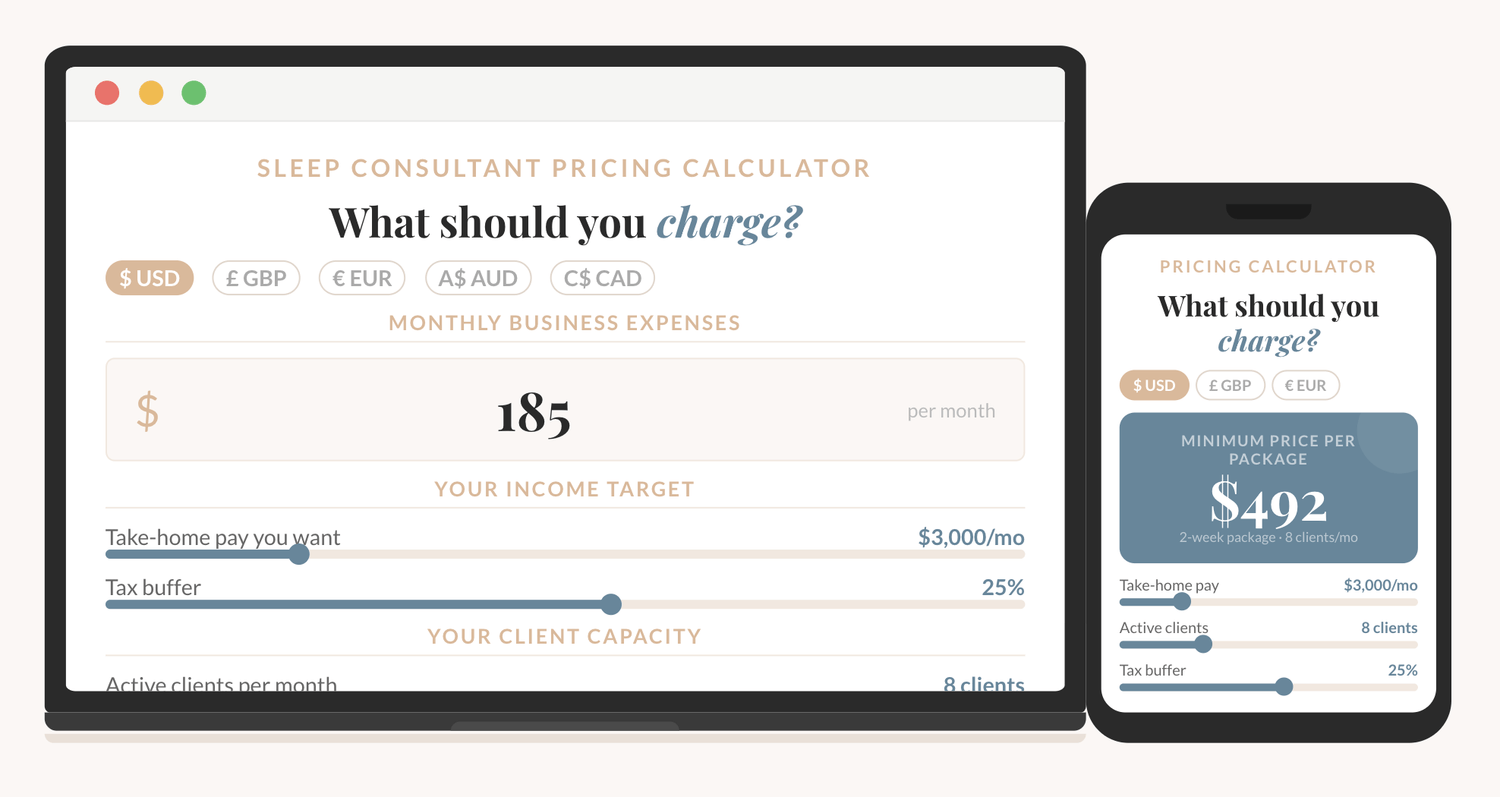
How to price your sleep consulting services?
The Sleep Consultant Pricing Calculator shows you exactly what to charge, based on your real expenses, your income goal, and how many clients you want to take on.

I'm thrilled to offer you an exclusive preview of what’s inside!
You can read the first 22 pages of The Sleep Consultant Playbook and get a taste of the value, insights, and actionable strategies that are waiting for you.
Other articles you might be interested in:
© 2021-2026 Sleep Consultant Business. All Rights Reserved.