
How to Offboard a Sleep Consulting Client
Offboarding is the final phase of the client journey: the step between completing your support and the client becoming a long-term advocate for your business. Done well, it leaves the family feeling celebrated and equipped to continue independently, and gives you a testimonial or feedback that helps you grow. The key steps are a warm closing message at the end of the support phase, a thank-you email with a testimonial request for satisfied clients (or a feedback form for unsatisfied ones), and a 30-minute follow-up call offered after the testimonial is received. What you do not want is to simply stop responding when the package ends and hope they leave a review.
In this guide
- Why offboarding matters more than most sleep consultants realise
- How to offboard a sleep consulting client: step by step
- How to ask for a testimonial (and actually get one)
- What to do when a client is not fully satisfied
- The 30-minute follow-up call: what it is and when to offer it
- Turning happy clients into referral sources
- Common offboarding mistakes sleep consultants make
- Frequently asked questions
You have done the hard work. The sleep plan is implemented, the family has made real progress, and the support phase is wrapping up. What happens next determines whether this client becomes a source of referrals and testimonials, or simply disappears quietly at the end of their package.
Offboarding is the final phase of the client experience, and it matters more than most new sleep consultants realize. A thoughtful close reinforces the trust you have built across the entire engagement, leaves the family feeling genuinely celebrated rather than processed, and creates the conditions for a testimonial, a referral, or a return booking when the next sleep challenge comes around.
This article walks through every step: closing out the support phase, writing the offboarding email, asking for testimonials in a way that actually works, handling clients who are not fully satisfied, and setting up the 30-minute follow-up call that keeps the relationship alive after the package ends.
Why Offboarding Matters More Than Most Sleep Consultants Realise
A client who finishes their package and hears nothing from you does not automatically leave a glowing review. They move on. They are exhausted, they are busy, they are adjusting to a new routine, and the moment has passed. The testimonial you were hoping for does not come because you never asked for it at the right time, in the right way.
On the other hand, a client who receives a warm, thoughtful closing message that acknowledges what they have achieved, explains what to do next, and makes it genuinely easy to leave a review, will often do exactly that. The effort is small. The impact on your business is not.
Your Google Business Profile reviews are often the first thing a prospective client looks at before deciding whether to book a call with you. Three strong testimonials from real families carry more persuasive weight than any amount of content you could post on Instagram. Offboarding is how you collect them.
I used to think that if a client was happy, they would leave a review on their own. Occasionally they did. Mostly they did not, not because they were not happy, but because life got in the way and they moved on. Once I started sending a proper offboarding email with a direct link to my Google Business Profile and a specific, easy ask, my review rate went up significantly. Make it easy. Ask clearly. Do it at the right moment. That is the whole system.
How to Offboard a Sleep Consulting Client: Step by Step
Offboarding is not a single email. It is a short sequence of intentional steps, each one building on the last. Here is how to run it.
Step 1: Send a closing message at the end of the support phase
Before the formal offboarding email arrives, the support phase needs a proper close. This is a warm, personal message, sent via whatever channel you have been using throughout the engagement, that acknowledges what the family has done, names the progress they have made, and lets them know that the formal support window is wrapping up. It is not an abrupt stop. It is a handoff. Keep it brief, specific to their child and situation, and genuinely warm. This is also the moment to let them know that a follow-up email is on its way.
Step 2: Send the offboarding email
Send this within 24 hours of the closing message, ideally the same day or the following morning. This email does three things: it thanks the client genuinely, it acknowledges what they have achieved, and it asks for a testimonial with a direct link to your Google Business Profile. See the full template below.
Step 3: Wait for the testimonial before offering the follow-up call
This sequence matters legally. Once the client has left their testimonial, send a brief thank-you and offer the 30-minute follow-up call as a gift. Offering the call before the review is left can be interpreted as an incentive, which is against the guidelines for unbiased reviews. Always wait.
Step 4: For unsatisfied clients, send a feedback form instead
If the client is not fully satisfied, you do not ask for a testimonial. You send a different email: one that acknowledges the experience honestly, invites them to share their feedback through a short form, and keeps the door open for further support. See the full guidance on this below.
Step 5: Stay in touch
Offboarding is not the end of the relationship. A former client who is happy is one of your most valuable marketing assets. A check-in a few weeks later, adding them to your email list if they opt in, or simply being the name they think of when a friend mentions sleep struggles, all of this starts with a strong offboarding experience.
How to Ask for a Testimonial (and Actually Get One)
The timing and framing of your testimonial request make a significant difference to whether you receive one. Ask too early and the family is still in the middle of the process. Ask too late and the moment has passed and they have mentally moved on. Ask in the right way and it feels natural, not awkward.
The right moment is at the close of the support phase, when progress is real and visible and the family is still emotionally connected to the experience. The right ask is direct, specific, and easy. A vague "feel free to leave a review sometime" is not an ask. It is a hope. Give them a direct link to your Google Business Profile, tell them exactly what it would mean for your business, and keep the request to one clear action.
There is one exception to waiting until the end: a significant mid-process win. If a family messages you on night five to say the child slept through for the first time, or naps that had been 30 minutes are suddenly stretching to an hour and a half, that moment of genuine excitement is a powerful one to capture. A simple "I am so glad to hear that, would you be open to sharing that on my Google profile while it is fresh?" can land beautifully in that moment. You are not asking them to evaluate the full experience, just to share what they are feeling right now. Not every client will say yes, and that is fine, but for the ones who are genuinely thrilled mid-process, that window is worth using.
There is also a full article on how to collect great testimonials and use them effectively in your marketing. You can read it here: How to Get Great Testimonials as a Sleep Consultant (and Make Them Work for Your Business).
Here is a full email template you can adapt:
Subject: Thank You for Letting Me Support Your Family
Hi [Client's Name],
I just wanted to take a moment to say thank you for trusting me to guide your family on the journey to better sleep. It has been such a privilege to work with you, and watching [Child's Name] make this progress has been genuinely rewarding.
If you feel comfortable, I would love it if you could leave a short review on my Google Business Profile. Your words could be exactly what another exhausted parent needs to hear before deciding to ask for help. Even a few sentences makes a real difference.
Here is the link: [Insert Google Business Profile link]
Thank you again for your trust. Wishing you and your family many peaceful nights ahead.
Warmly,
[Your Name]
A few things worth noting about this template. It does not tell the client what to say. It does not offer them anything in return for leaving a review. It frames the ask in terms of the impact their words will have on another family, which is both genuine and effective. And it keeps it short, because a tired parent is not going to read four paragraphs before clicking a link.
Never offer anything of value in exchange for a review. This includes the 30-minute follow-up call, discounts on future services, or any other incentive. Offering something before a review is left can violate the guidelines of Google and other review platforms, and it undermines the credibility of the testimonial. Always let the review come first, then offer the follow-up call as a thank-you gift after it has been received.
What to Do When a Client Is Not Fully Satisfied
Not every engagement ends with a family who is completely happy. Sometimes the results fell short of what the parent hoped for. Sometimes the process was harder than expected and the relationship feels strained. Sometimes circumstances got in the way, an illness, a house move, a second caregiver who was not fully on board, and progress was slower than it should have been.
In these situations, you do not ask for a testimonial. You ask for feedback. This is not just ethically right, it is strategically smart. A feedback form gives an unsatisfied client somewhere constructive to direct their feelings. It shows that you take your work seriously and genuinely want to improve. And it often prevents a negative public review, because the client feels heard before they feel the need to vent publicly.
Here is a template for reaching out to a client whose experience was not what either of you hoped for:
Subject: Your Feedback Means a Lot to Me
Hi [Client's Name],
I hope you are doing well. I wanted to check in now that our time working together has wrapped up, and to be honest with you: I know things did not go exactly as either of us hoped, and that matters to me.
If you have a few minutes, I would really value your honest feedback. It helps me understand where I can do better, and it means I can support future families more effectively. There are no wrong answers.
Here is a short form: [Insert link to Google Form or feedback survey]
If you would prefer to talk through anything directly, I am also happy to do that. Just reply to this email and we can find a time.
Thank you for trusting me with your family's sleep journey. I genuinely wish you all many restful nights ahead.
Warmly,
[Your Name]
[Your Business Name]
Keep your feedback form short: three to five questions maximum. What went well? What could have been better? Was there anything you needed that you did not get? Would you recommend me to another family? The answers will be more useful than you expect, especially early in your career when every client is still teaching you something.
The feedback I have learned the most from has almost always come from clients who were not fully satisfied. A happy client tells you what went right. A frustrated client tells you what you cannot see from your own perspective. Both are valuable. The ones who felt genuinely heard through the feedback process have sometimes come back as clients later, or referred someone to me, because the way you handle difficulty says more about who you are than the way you handle success.
The 30-Minute Follow-Up Call: What It Is and When to Offer It
After a client has left their testimonial, offer them a complimentary 30-minute follow-up call they can use at any point within the next three months. This is a troubleshooting call, not a full consultation: a chance to check in on how sleep is going, answer any questions that have come up, and fine-tune anything that needs attention as the child continues to develop.
This call serves several purposes. It gives the family a safety net, which reduces the anxiety that can come with the support phase ending. It keeps the relationship warm and positions you as invested in their long-term success, not just their package period. And it creates a natural opening to offer further services if the family encounters new challenges, a nap transition, a sleep regression, a new sibling, later down the line.
Here is how to offer it after the testimonial comes in:
Subject: Thank You for Your Review + A Little Gift
Hi [Client's Name],
Thank you so much for taking the time to leave a review. It genuinely means a lot, and I know it will help another family in exactly the position you were in a few weeks ago.
As a small thank you, I would love to offer you a complimentary 30-minute follow-up call, yours to use any time in the next three months. If anything comes up with [Child's Name]'s sleep, or if you just want to check in as they hit a new developmental stage, I am here.
You can book a time here: [Insert booking link]
Wishing you continued restful nights.
Warmly,
[Your Name]
The three-month window is intentional. It is long enough to feel generous without creating an open-ended obligation. If the client books the call after three months have passed, you can use your discretion, but having a defined window in the offer protects your time and sets a clear expectation from the start.
Turning Happy Clients Into Referral Sources
A parent who has just come through a successful sleep transformation is one of the most powerful marketing assets you have. They are emotionally invested in the outcome. They will talk about what worked for their family because sleep deprivation touches every part of a parent's life, and the relief of solving it is something they want to share.
You do not need a formal referral programme for this to work, though having one does make it easier. What matters most is making it easy and natural for a happy client to think of you when someone in their circle mentions sleep struggles.
A few simple things that work well at offboarding:
- Mention it directly, once. Something as simple as "if you know any other families who are struggling with sleep, I would love if you thought of me" in the closing message or offboarding email is enough. You do not need to make it a formal ask. Just name it.
- Ask for a three-way introduction. If a client mentions they know someone who is struggling with sleep, suggest they make a group introduction: a short message in a group chat or email that introduces both of you to each other with one or two sentences. Something like "I have been working with Rianna on sleep and it has been a game-changer, I thought you two should connect." This kind of warm introduction carries far more weight than a cold referral because the trust transfers instantly. It takes thirty seconds for your client and removes all the awkwardness of a stranger reaching out cold.
- Give them something to share. A link to your website, your Instagram profile, or your booking page means they do not have to find you again when someone asks. Make it frictionless.
- Stay visible after the engagement ends. A client who stops hearing from you entirely has no reason to think of you when a friend mentions their 4-month-old is not sleeping. A periodic email or a presence on social media keeps you in their world long after the package closes.
Common Offboarding Mistakes Sleep Consultants Make
Not asking for a testimonial at all
This is the most common mistake. Many new sleep consultants feel uncomfortable asking, especially when the relationship has been warm and personal. It feels transactional. But asking is not transactional if it is framed genuinely, and most happy clients are glad to leave a review when asked clearly. They just would not have done it unprompted.
Asking at the wrong time
Asking for a testimonial in the middle of the support phase, before the results are solid, means the client is writing from the middle of the experience rather than from the other side of it. Ask at the close, when the transformation is visible and the family has had enough time to feel it.
Ending abruptly without a formal close
Going from daily check-ins to silence without a proper closing message leaves clients feeling cut off rather than graduated. The closing message does not need to be long. It needs to exist. It is the difference between a client who feels seen and a client who feels processed.
Treating satisfied and unsatisfied clients the same way
Sending a testimonial request to a client who is not satisfied is tone-deaf and potentially damaging. If you are unsure which category a client falls into, err on the side of a feedback form. You can always read the response and send a testimonial request later if it turns out they are happy. You cannot take back a poorly timed ask.
Offering the follow-up call before the testimonial
This matters. Offering something of value before the review is left introduces an element of reciprocity that can compromise the authenticity of the testimonial and potentially violate platform guidelines. Wait until the review is in before offering anything in return. The sequence is: close the engagement, ask for the testimonial, wait for the testimonial, then offer the follow-up call as a thank-you.
Frequently Asked Questions
What if the client does not respond to the offboarding email?
Send one gentle follow-up five to seven days later. Keep it short: a one-sentence check-in that restates the testimonial link and acknowledges that life with a young child is busy. If there is still no response after that, let it go. Two attempts is enough. Chasing a testimonial beyond that shifts the dynamic in a way that is not worth it.
Should I ask for a testimonial on Google, on my website, or somewhere else?
Google Business Profile is the highest-value platform for a new sleep consultant. Reviews there are publicly visible, build search credibility, and are the first thing many prospective clients look at. Once you have a solid base of Google reviews, you can also collect written testimonials for your website. But in the early months, prioritise Google. A direct link in the email removes the friction of the client having to find your profile themselves.
How do I know if a client is satisfied enough to ask for a testimonial?
Look at the tone of the support phase overall. Has the client been engaged, positive, and sharing progress? Are the results visible? Did the closing message land warmly? If you are uncertain, the feedback form is the safer path. It is better to receive feedback from a happy client than to send a testimonial request to a client who was quietly frustrated.
What if a client asks for more support after the package ends?
This is a natural and common occurrence, especially as children hit new developmental stages. If the request falls within the three-month follow-up call window and is a straightforward troubleshooting question, use the call for that. If the request is more substantial, such as a new sleep challenge that requires a fresh assessment, a new package, or a new plan, offer that as a paid service. Your time has value. Former clients who come back are often the easiest clients to re-engage because the trust is already built.
What questions should I include in a feedback form?
Keep it to three to five questions using a Google Form. Useful questions include: What did you find most valuable about the process? Is there anything you felt was missing or could have been better? Did you feel supported throughout? Would you recommend me to another family, and why or why not? One open-ended question at the end, anything else you would like to share, will often surface the most useful insight. Make it anonymous if you want more honest answers.
Should I add former clients to my email list?
Only with their explicit consent. Include a simple opt-in in your offboarding email, something like "if you would like to stay in touch and receive occasional sleep tips and resources, you can sign up here." Do not add people automatically. A small list of people who genuinely want to hear from you is worth far more than a large list of people who will unsubscribe or mark you as spam.
Key Takeaways
- Offboarding is the final phase of the client experience, and the step that turns a completed package into a testimonial, a referral, and a long-term relationship.
- The sequence matters. Close the support phase, send the offboarding email, wait for the testimonial, then offer the follow-up call. Do not skip steps or reverse the order.
- Never offer anything before the review is left. The 30-minute follow-up call is a thank-you gift, not an incentive. Timing matters both legally and ethically.
- Unsatisfied clients need a different path. A feedback form instead of a testimonial request shows professionalism, protects your reputation, and often provides your most useful learning.
- Google Business Profile reviews are your highest-value asset as a new sleep consultant. Three strong, specific reviews will do more for your bookings than months of social media content.
- Ask clearly, once, and make it easy. A direct link, a genuine reason, and a short email. That is the whole ask. Most happy clients will say yes.
The client journey does not end at offboarding. A former client who returns for a new challenge, refers a friend, or simply stays in your orbit is a sign that you delivered something worth remembering. That starts with how you close.
Disclaimer: The information shared in these articles is for educational and informational purposes only. It does not constitute legal, financial, or professional advice. Always consult with a qualified professional regarding your specific situation.

Rianna Hijlkema
Certified Pediatric Sleep Consultant, Certified Postpartum Doula, Former Teacher & School Director, Founder of Sleep Consultant Design & Sleep Consultant Business and the author of The Sleep Consultant Playbook (available on Amazon).
The Sleep Consultant Newsletter
Weekly tips, strategies and marketing ideas for sleep consultants written by a fellow sleep consultant. 1500+ active subscribers!
I’ll only send helpful emails, and you can unsubscribe anytime with one click.
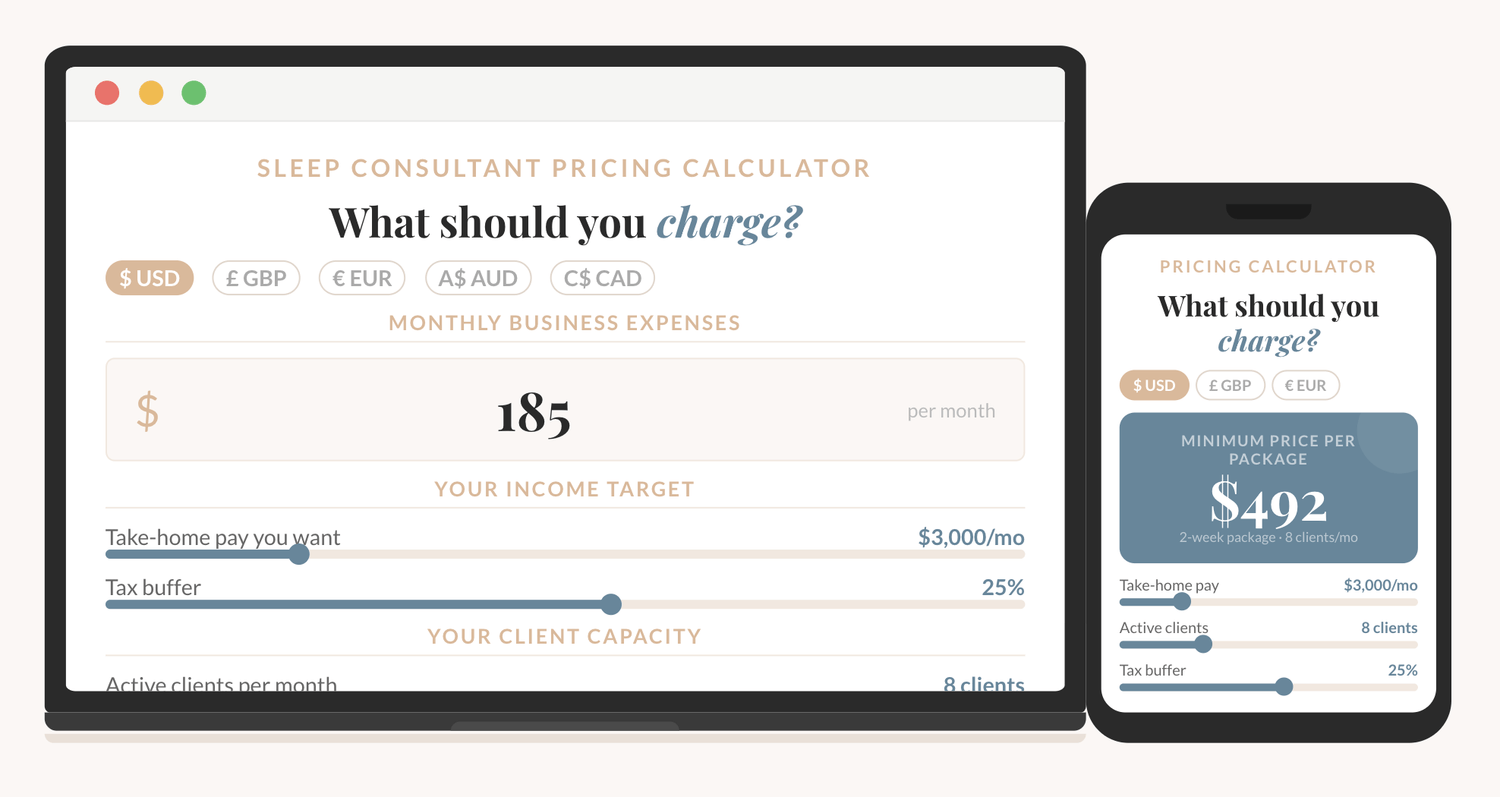
How to price your sleep consulting services?
The Sleep Consultant Pricing Calculator shows you exactly what to charge, based on your real expenses, your income goal, and how many clients you want to take on.
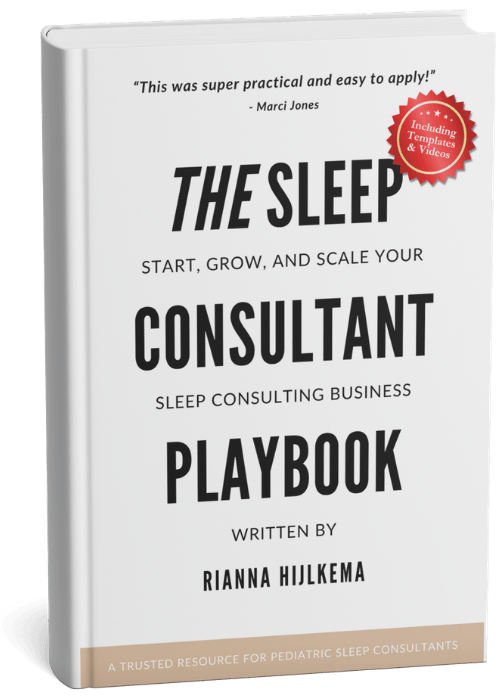
I'm thrilled to offer you an exclusive preview of what’s inside!
You can read the first 22 pages of The Sleep Consultant Playbook and get a taste of the value, insights, and actionable strategies that are waiting for you.
Other articles you might be interested in:
© 2021-2026 Sleep Consultant Business. All Rights Reserved.