
How to Build a Referral System as a Sleep Consultant
A referral system for a sleep consulting business has three layers: informal referrals from happy clients (ask directly at offboarding, make it easy, stay visible), a formal referral programme with a clear incentive for clients who send paying clients your way, and professional partnerships with complementary providers such as doulas, lactation consultants, and midwives who serve the same families at a different stage. The system works best when it is built deliberately rather than left to chance, and when you make it as easy as possible for a satisfied client to introduce you to someone who needs your help.
In this guide
- Why referrals are the highest-value client source for a new sleep consultant
- Layer one: informal referrals from happy clients
- The three-way introduction: the most underused referral tool
- Layer two: setting up a formal referral programme
- Layer three: professional partnerships
- How to build your referral system: step by step
- Common referral mistakes sleep consultants make
- Frequently asked questions
People trust personal recommendations far more than any form of advertising. That is not a marketing opinion, it is a consistent finding across every industry, and it is especially true in the world of pediatric sleep consulting, where a parent is entrusting someone with their child's sleep and the daily functioning of their whole family.
A parent who hears "this sleep consultant changed everything for us, you have to call her" from someone they trust has already done most of the decision-making before they ever reach your website. They arrive warm, pre-sold, and significantly more likely to book than any cold lead you could find through advertising. That is what a referral is worth, and that is why building a system around it is one of the most valuable things you can do for your business.
Most sleep consultants get some referrals by accident. This article is about making referrals happen consistently and intentionally, at three levels: from your happy clients, through a formal programme, and through professional partnerships with other providers who serve the same families you do.
Why Referrals Are the Highest-Value Client Source for a New Sleep Consultant
Referred clients are easier to convert, easier to work with, and more likely to become referrers themselves. They come with pre-existing trust, which means fewer objections on the Sleep Assessment Call, higher likelihood of following through on the sleep plan, and better results overall. Better results lead to stronger testimonials, which attract more clients, and the cycle builds.
Referrals also cost nothing to acquire in the traditional marketing sense. No ad spend, no content schedule, no algorithm to beat. The investment is entirely in the quality of your client experience and the intention you put into nurturing the relationship after the package ends. For a newly certified sleep consultant with limited time and budget, that ratio is hard to match.
The challenge is that referrals do not happen automatically, even when clients are delighted with the results. People are busy. They forget to mention you. They do not know how to introduce you. They want to help but have no clear prompt to do so. A referral system solves all of those problems by giving satisfied clients a simple, easy way to act on the goodwill they already feel toward you.
Every successful sleep consultant I have worked with has referrals as one of their primary client sources, and not because they got lucky. They got intentional. They asked at the right time, they made it easy, and they stayed in touch long enough to still be the name that comes to mind six months later when a friend mentions their baby is not sleeping. That is not luck. That is a system.
Layer One: Informal Referrals From Happy Clients
The most natural referral source you have is a client who has just seen real results. In the closing phase of the engagement, when a family has come through the process and their child is sleeping, the parent is at peak emotional connection to the experience. They are grateful, relieved, and often genuinely excited to share what worked. That is your window.
Ask directly, once, and make it specific
The most effective referral ask is direct and specific, not a vague "feel free to mention me." In your closing message or offboarding email, include something like: "If you know any other families who are struggling with sleep, I would love it if you thought of me." That is it. Name it once, clearly, and move on. You are not asking them to do anything complicated. You are just making sure it is on their radar.
Stay visible after the engagement ends
A client who stops hearing from you entirely after offboarding has no reason to think of you six months later when a friend mentions their four-month-old is not sleeping. A brief check-in email around four weeks post-service is a natural way to stay in touch, remind them of the results they achieved, and gently open the referral conversation again. Something as simple as "I hope sleep is still going well, I would love to hear how things have progressed" keeps the relationship warm without feeling like a chase.
Give them something easy to share
When a happy client wants to refer you but has to search for your website or remember your Instagram handle, the referral often does not happen. Remove that friction. Include your booking link or website URL in your offboarding email. If you are active on social media, mention your profile. Make it as easy as possible for a motivated parent to pass your details to a friend in a thirty-second message.
The Three-Way Introduction: the Most Underused Referral Tool
The three-way introduction is one of the most powerful referral mechanics available to sleep consultants, and almost nobody uses it intentionally. Here is how it works: when a happy client mentions that a friend or colleague is struggling with sleep, you ask the client to make a group introduction, a short message in a text thread or email that briefly connects both parties.
The message from your client might be as simple as: "I have been working with Rianna on sleep and it genuinely changed everything for us. I thought you two should connect." That is it. Thirty seconds of effort from your client, and you arrive in the conversation with their trust already transferred. The new parent is not receiving a cold outreach from a stranger. They are being introduced to someone a person they know and trust has personally vouched for.
To make this work, you have to ask for it specifically. "If you know anyone who might benefit from working with me, would you be open to making a quick introduction in a group message?" is a far more concrete ask than "feel free to mention me." Most people do not know what a three-way introduction is or how natural and easy it is, until someone frames it for them. Once they understand what they are being asked for, the majority of satisfied clients will say yes.
You can include this in your offboarding email or raise it in the closing conversation:
"If someone in your circle ever mentions they are struggling with sleep, would you be open to making a quick group introduction? Something as simple as a group text that says you have worked with me and thought we should connect is all it takes. It means a lot more coming from you than from me, and it takes about thirty seconds."
Layer Two: Setting Up a Formal Referral Programme
Informal referrals rely on goodwill and momentum. A formal referral programme adds structure and an incentive, which means more of your satisfied clients are actively motivated to send people your way, not just the enthusiastic ones.
A referral programme does not need to be complicated. At its simplest, it is a clear offer: when a former client refers someone who books and completes a package with you, they receive something of value in return. The key elements are deciding on the incentive, setting clear terms, communicating it to your clients, and having a way to track who referred whom.
Choosing your referral incentive
Common options include a cash payment or PayPal transfer per successful referral, a percentage discount on future services such as a follow-up package or a complimentary call, a gift card, or a free resource relevant to the family. The right choice depends on what your clients actually value. For most sleep consulting clients, a cash payment or a discount on a future session is the most straightforward and motivating option.
A typical starting point is $50 to $100 per successful referral, or a 10 to 20% discount on a future booking. Set it at a level that feels genuinely valuable to the client but is also sustainable for your business. Remember that a referred client costs you essentially nothing to acquire compared to paid advertising, so the economics are usually strong even with a meaningful incentive.
Setting clear terms
Before you launch any referral programme, be clear about: who qualifies (new clients only, not returning clients from the referrer), what counts as a successful referral (the referred client must book and complete a package, not just enquire), how referrals are tracked (the referred client mentions who sent them, or uses a specific booking link), and when rewards are paid (monthly or after the referred client completes their programme). Having these terms written down and available to share when clients ask prevents any awkwardness later.
Never offer the referral incentive before the referred client has booked and paid. Announcing "I will give you $50 when you refer a friend" before a review or testimonial is left can also introduce an element of reciprocity that undermines the authenticity of the review. Keep the referral programme separate from the testimonial request in your offboarding process, and always honour your commitments promptly. Paying late or not at all is the fastest way to kill goodwill.
Layer Three: Professional Partnerships
The most scalable referral source available to a sleep consultant is not a happy client, it is a professional who works with families at a stage right before they need you. Postpartum doulas, midwives, lactation consultants, paediatricians, OBGYN practices, parenting educators, and early childhood physiotherapists all serve the same families, at a point when sleep is becoming (or is about to become) a significant challenge. A recommendation from any of these professionals carries enormous weight.
Building professional partnerships is a longer-term strategy than informal client referrals, but it creates a fundamentally different kind of referral flow: a consistent stream of warm leads from a trusted source, rather than occasional referrals from individual clients. One strong partnership with a doula who works with fifty families a year can be worth more to your business than any single marketing campaign.
Who to approach
The most natural professional partners for a sleep consultant are postpartum doulas and lactation consultants, who work with families in the early weeks when sleep challenges are just beginning. Midwives and OBGYN practices also have regular contact with new parents and often field questions about sleep. Parenting groups and parent-and-child classes, early childhood educators, and local family therapists are also worth approaching. Think about who a new parent encounters in the first six months of their child's life, and start there.
How to approach a potential partner
The approach that works best is one that leads with value, not with what you want. Before you pitch a referral arrangement, ask yourself what you can offer this person that makes their work easier or better for their clients. This might be a resource you can share with their clients, a guest post for their newsletter, a joint workshop, or a bundle that combines your service with theirs.
Here is a template for reaching out to a postpartum doula:
Subject: Partnering to Support New Families Better
Hi [Name],
My name is [Your Name] and I am a certified pediatric sleep consultant working with families in [your area / virtually]. I came across your work and really admire the support you provide to families in those early weeks.
I imagine many of the families you work with have sleep questions that fall slightly outside your scope, just as some of mine have postpartum needs that go beyond sleep. I would love to explore whether there is a natural way for us to support each other's clients, whether that is a simple referral arrangement, a bundled offering, or just staying in each other's networks for when the right family comes along.
Would you be open to a short call to chat about it?
Warm regards,
[Your Name]
[Your Business Name]
[Your website]
Structuring the partnership
Once a professional is willing to refer clients to you, decide together how the arrangement will work. The simplest model is a mutual referral agreement where you each refer clients to the other at no charge, because both parties benefit from having a trusted specialist to recommend. A more formal model involves an affiliate commission, where the referring partner receives a percentage of the booking value for each client they send your way. Either can work. The important thing is that the terms are agreed in advance and that you provide the referring partner with clear, ready-to-use materials so that the referral process is as easy as possible for them.
At minimum, give every partner a direct link to your booking page or website, a short description of what you do and who you help that they can share with clients, and a reliable way to reach you if a client they refer needs to be connected quickly. Make it frictionless for them to recommend you, and they will do it more often.
How to Build Your Referral System: Step by Step
Step 1: Add a referral ask to your offboarding process
The most important single action you can take is to make the referral ask a standard part of every offboarding email you send. One sentence. "If you know any other families who are struggling with sleep, I would love it if you thought of me." Include a direct link to your booking page. That is the minimum. Do this from your very first client.
Step 2: Set up a four-week follow-up email
Schedule a follow-up email to go out approximately four weeks after offboarding. Check in on how sleep is going, celebrate the progress the family has made, and gently mention that referrals are a meaningful way to help other families while supporting your small business. Keep it warm and personal. A single automated email set up once will work quietly in the background for every client you ever work with.
Step 3: Decide on your referral programme incentive and terms
Write down your referral programme terms: the incentive, what qualifies as a successful referral, how it is tracked, and when rewards are paid. Keep the document simple and shareable. You do not need a complex system. A short paragraph in an email is sufficient.
Step 4: Communicate your referral programme to existing clients
Add a brief mention of your referral programme to your offboarding email, your four-week follow-up, and any email newsletter you send. It does not need to be a big announcement. A single clear sentence with the incentive and how to claim it is enough. Repeat it consistently rather than making a big deal of it once and never mentioning it again.
Step 5: Identify two or three professional partners to approach
Write a list of complementary professionals in your area or network who work with families at a stage adjacent to yours: doulas, lactation consultants, midwives, parenting educators. Start with two or three. Use the email template above to make your initial contact. Do not pitch a transaction immediately. Open a conversation about how you might support each other's clients.
Step 6: Give every partner the tools to refer easily
Once a professional agrees to refer clients to you, make it as easy as possible for them. Send them a short bio they can paste directly into a message, your direct booking link, and your contact details. If you have a Sleep Consultant Branding & Marketing Kit, your ready-made referral materials are already inside. The easier you make the referral act, the more often it will happen.
Common Referral Mistakes Sleep Consultants Make
Not asking at all
The most common referral mistake is never making the ask. Many sleep consultants feel awkward about it, as if asking for referrals is somehow transactional or undermines the warmth of the client relationship. It does not. A direct, genuine ask at the right moment is a normal part of running a business, and most happy clients are genuinely glad to be given a way to say thank you. They just need the prompt.
Disappearing after offboarding
A client who stops hearing from you entirely after the package ends will not think of you when a friend mentions their baby is not sleeping. They have moved on, and you are not top of mind. A single follow-up email four weeks post-service keeps your name warm at exactly the point when the client is likely to be telling friends how much better things are at home. That conversation is your referral opportunity, and you cannot participate in it if you have gone silent.
Being too vague in the ask
"Feel free to mention me" is not a referral ask. It is a vague hope. Give the client a specific action: mention you, make a group introduction, share your booking link. The more concrete the ask, the more likely it is to happen. When you ask for a three-way introduction specifically, you are giving the client a defined, low-effort action they can take immediately. Vague requests get vague results.
Pitching a commission before building a relationship
The fastest way to kill a professional partnership before it starts is to lead with the commission structure. Professionals who might refer to you need to trust that you are excellent at your work and that you will take good care of the families they send your way. The money is secondary. Lead with the value and the alignment of who you both serve. The referral arrangement follows naturally once the relationship exists.
Relying on only one referral source
A referral system that depends entirely on one source is fragile. If that source dries up, your referrals stop. Build across all three layers: informal client referrals, a formal programme, and professional partnerships. Not all three need to be fully operational from day one, but the goal is to develop each over time so that no single relationship or channel is the whole system.
Frequently Asked Questions
When should I start building a referral system?
From your very first client. The informal layer, asking at offboarding and sending a four-week follow-up, costs you almost nothing and can be set up in an afternoon. The formal programme and professional partnerships take longer to build but should be on your radar from the beginning. The earlier you start, the more momentum you have to draw on as your client base grows.
Does offering a referral incentive feel transactional or awkward?
It does not need to. Framed correctly, a referral incentive is simply a way of saying thank you for something that has real business value. Many clients actually appreciate having a concrete reason to refer: it turns something they might have done informally into something they feel acknowledged for. The key is to mention it naturally rather than making it the centrepiece of your offboarding message.
What if a client refers someone but that person does not book?
This is normal and expected. The referral incentive should be tied to a completed booking, not just an introduction. Make this clear in your terms. A client who makes an introduction that does not result in a booking has still done something valuable, and a brief personal thank-you for the introduction is appropriate regardless of the outcome. Acknowledging the effort matters even when the booking does not happen.
How do I track who referred whom without a complicated system?
The simplest approach is to ask every new client how they heard about you as part of your intake process. If the answer is a referral, note the name of the person who referred them. A spreadsheet with three columns, referring client name, referred client name, and booking date, is sufficient for most sleep consultants in the early years. You do not need specialist software until referral volume justifies it.
Should I approach doulas and lactation consultants even if I have only worked with a few clients?
Yes, with the right framing. You do not need a long track record to have a valuable conversation with a complementary professional. What you need is clarity about who you help and how, and a genuine interest in their work and their clients. Lead with curiosity about how they operate and where sleep questions tend to come up in their practice. Let the relationship develop before you propose any formal arrangement.
How is a referral programme different from an affiliate programme?
A referral programme is typically aimed at your clients, people who have experienced your service and recommend it to people they know personally. An affiliate programme is aimed at professional partners and online audiences, people who promote your services to a broader group in exchange for a commission. Both are valuable. The referral programme is the right starting point because it builds on existing relationships. The affiliate programme becomes relevant as you grow and start working with partners who have larger audiences.
Key Takeaways
- Referred clients arrive warm, pre-sold, and easier to work with. They are the highest-value client source available to a sleep consultant, and they cost nothing to acquire beyond the quality of your service and your intentionality about asking.
- Build across three layers: informal referrals from happy clients, a formal programme with a clear incentive, and professional partnerships with complementary providers.
- The three-way introduction is your most underused tool. Ask satisfied clients to make a group introduction rather than just mentioning you. It takes them thirty seconds and transfers trust instantly.
- Stay visible after offboarding. A four-week follow-up email keeps you top of mind at exactly the moment a client is likely to be talking about you to friends.
- With professional partners, lead with value. The commission conversation comes after you have established trust and demonstrated that you will take excellent care of the families they send your way.
- Make every referral action as easy as possible. Direct links, ready-to-forward descriptions, clear instructions. The more friction you remove, the more often it happens.
A referral system is not built in a day. It is built one client relationship at a time, one professional conversation at a time, and one consistent follow-up at a time. Start with the simplest layer first and build from there.
Disclaimer: The information shared in these articles is for educational and informational purposes only. It does not constitute legal, financial, or professional advice. Always consult with a qualified professional regarding your specific situation.

Rianna Hijlkema
Certified Pediatric Sleep Consultant, Certified Postpartum Doula, Former Teacher & School Director, Founder of Sleep Consultant Design & Sleep Consultant Business and the author of The Sleep Consultant Playbook (available on Amazon).
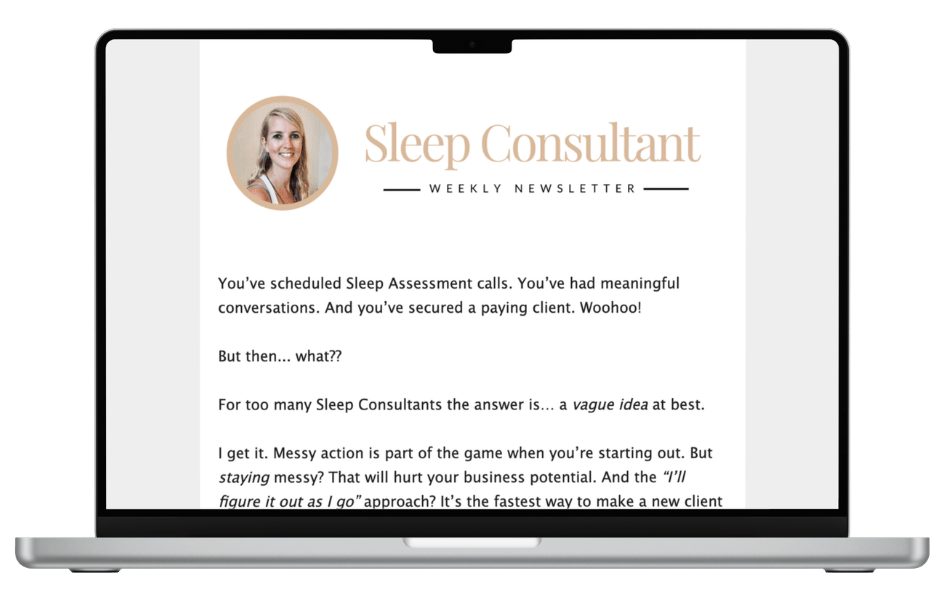
The Sleep Consultant Newsletter
Weekly tips, strategies and marketing ideas for sleep consultants written by a fellow sleep consultant. 1500+ active subscribers!
I’ll only send helpful emails, and you can unsubscribe anytime with one click.
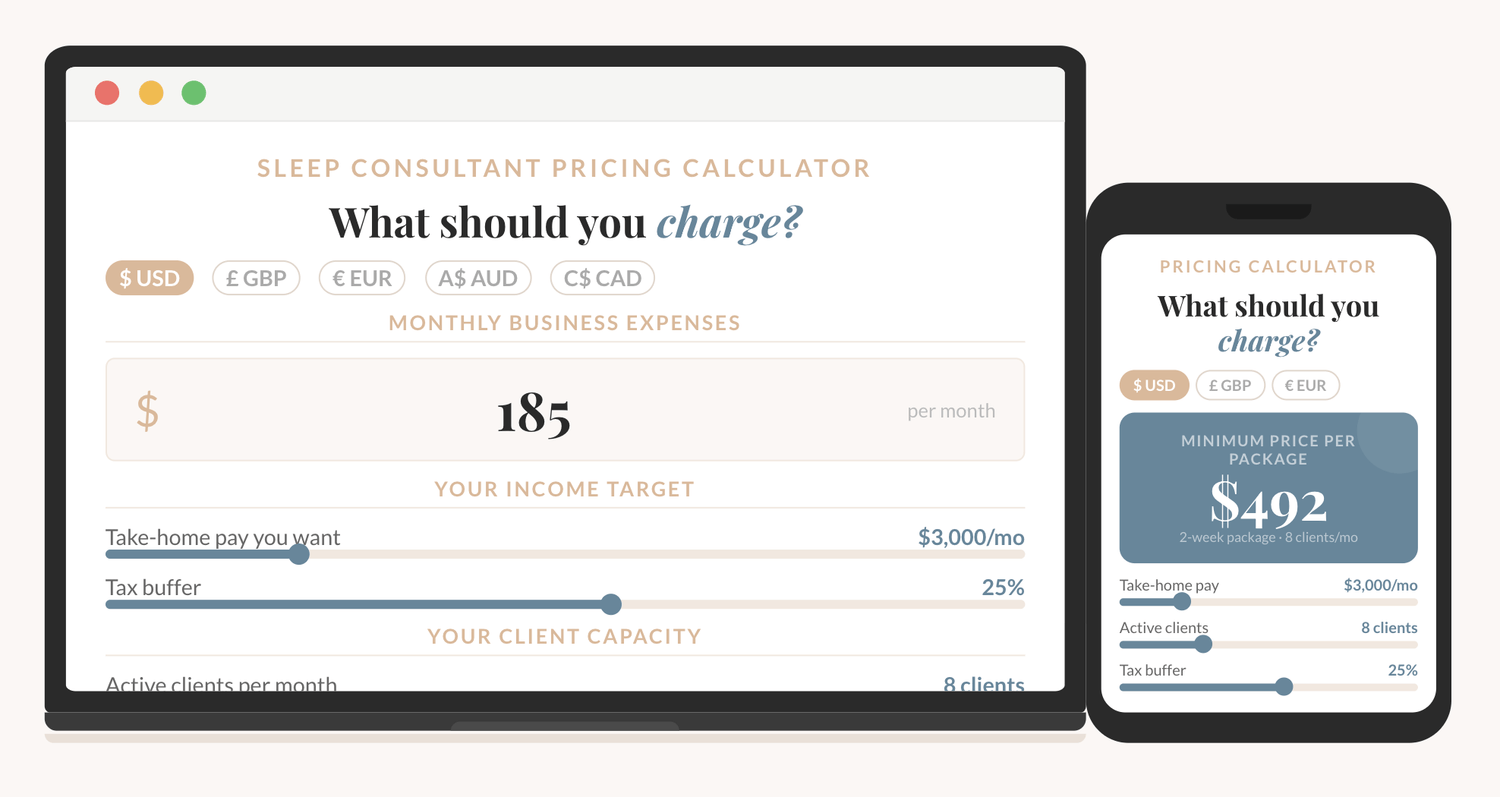
How to price your sleep consulting services?
The Sleep Consultant Pricing Calculator shows you exactly what to charge, based on your real expenses, your income goal, and how many clients you want to take on.
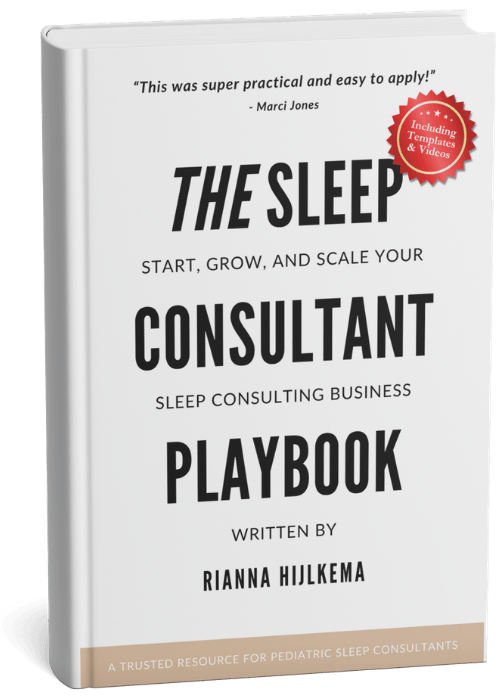
I'm thrilled to offer you an exclusive preview of what’s inside!
You can read the first 22 pages of The Sleep Consultant Playbook and get a taste of the value, insights, and actionable strategies that are waiting for you.
Other articles you might be interested in:
© 2021-2026 Sleep Consultant Business. All Rights Reserved.