
How to Run a Sleep Assessment Call (And Why You Should Stop Calling It a Discovery Call)
A Sleep Assessment Call is a short, free call (typically 15 minutes) where you understand a parent's specific sleep challenges, offer one or two immediate tips, and explore whether your services are the right fit. It is not a casual chat. It is a structured two-part conversation: first you listen and build trust, then you present your offer and guide them toward a decision. Call it a Sleep Assessment Call, not a discovery call. The name alone changes how parents show up.
In this guide
- Why "discovery call" is the wrong name
- What a Sleep Assessment Call actually is
- What to do before the call
- How to run a Sleep Assessment Call step by step
- How to handle common objections
- How to reduce no-shows
- Common Sleep Assessment Call mistakes
- Frequently asked questions
You have done your outreach. Someone has shown interest. Now they want to talk. This is the moment most newly certified sleep consultants dread most, and also the moment that matters most. How you show up on that call is what turns an interested parent into a paying client.
A lot of sleep consultants treat this call as an informal chat, hope their warmth carries the conversation, and then feel confused when the parent says they will think about it and disappears. The problem is almost never the price. It is almost never even the fit. It is that the call lacked structure, the value was not made clear, and the parent left without a reason to decide now.
This article covers everything: what to call the call, how to prepare, how to structure the conversation, how to close it, and how to handle the moments that feel hardest. It draws directly on the framework in The Sleep Consultant Playbook, which devotes an entire chapter to this exact conversation.
Why "Discovery Call" Is the Wrong Name
Most of the online business world calls this a discovery call. You will see the term everywhere. And it is worth stopping to question whether it is actually the right name for what sleep consultants do.
Here is the problem with "discovery call" for sleep consultants specifically. The parents you are speaking to are exhausted, often anxious, and searching for someone they can trust to help them. When they see the words "discovery call" in your Calendly or on your website, they either do not know what it means, or they assume it is a sales call where someone will try to pitch them something. Neither of those reactions is helpful.
I stopped using the term "discovery call" early on, and the shift in how parents showed up was immediate. "Discovery call" is vague. It does not tell a tired parent what they will get from 15 minutes of their time. "Sleep Assessment Call" tells them exactly what it is: someone is going to assess their child's sleep situation and offer them something useful. That changes the energy of the whole conversation before it even starts.
The term "discovery call" also has five specific problems in this context. It is vague and gives parents no sense of what to expect. It does not communicate value. Many parents outside the online business world simply do not relate to it. It is overused and does not help you stand out. And it sounds like a sales pitch, which is exactly the association you want to avoid.
The better name is Sleep Assessment Call. It clearly communicates purpose. It positions the call as something the parent receives value from, not just something they sit through. And it aligns with the kind of professional, expert positioning that makes parents take you seriously. Use this term everywhere: in your Calendly, on your website, in your DMs, when you invite someone to book.
What a Sleep Assessment Call Actually Is
A Sleep Assessment Call is a free, short call, typically 15 minutes, where three things happen. You understand the parent's specific sleep situation. You offer one or two actionable tips they can use right away. And you explore whether working together makes sense.
It is not a casual chat. It is not a therapy session. It is not a free consultation where you hand over your best advice for nothing. It is a structured sales conversation, and understanding that is important because a lot of sleep consultants feel uncomfortable with that framing. But reframing it helps: you are not trying to sell something to someone who does not need it. You are giving an exhausted parent the chance to hear about a solution that exists and could change their family's life. That is an act of service, not a sales pitch.
| What it is | What it is not |
|---|---|
| A structured, two-part conversation | An unstructured chat |
| A chance to understand their situation and offer real value | A free session where you solve everything for nothing |
| A sales conversation you lead with confidence | A pitch you deliver at someone |
| Free and typically 15 minutes | Long, open-ended, or unpaid consulting time |
| A conversation where both parties decide if it is a good fit | An audition where you hope they pick you |
One more important distinction: do not drop your prices in a DM or email before the call. When someone asks "how much does it cost?", the instinct is to answer. Resist it. The price means nothing to someone who has not yet connected the value to their specific situation. Share the price on the call, once they are excited about what you offer.
What to Do Before the Call
The call starts before you pick up the phone. How you prepare and how you set the call up determines a lot of what happens on it.
Set up your booking system
Use a free Calendly account synced with your calendar and integrated with Zoom so meeting links generate automatically. This removes any back-and-forth about timing and makes the whole experience feel professional from the first interaction. Make sure your Calendly page says "Sleep Assessment Call", not "discovery call" or "free call".
Sell yourself first
Before the call happens, you need to be completely convinced of the value you bring. Not in an arrogant way. In a grounded way. If you are not fully confident that you can help families improve their child's sleep, that uncertainty will come through on the call no matter how good your script is. Confidence is not something you perform. It comes from knowing your material, believing in your method, and trusting that the service you are offering is genuinely worth the investment.
Have your script nearby, not in your head
A script is not there to be read word-for-word. It is a safety net that keeps you on track and makes sure you ask the right questions at the right time. Having one nearby during your early calls is not a crutch. It is preparation. The goal is for the call to feel like a natural conversation, and having the structure in front of you actually makes that easier, not harder.
If you are on a video call, skip the blurred background. Research shows that potential clients feel more comfortable and confident when they can see a real environment. A tidy, natural backdrop builds more trust than a virtual one.
How to Run a Sleep Assessment Call Step by Step
The call has two distinct parts. Most sleep consultants either rush Part 1 or skip it entirely. That is where things fall apart.
Part 1: Selling without pressure (listening, connecting, understanding)
Step 1: Build rapport and set the frame
Start with a warm greeting, find a moment of common ground, then immediately establish the structure: "The purpose of today's call is for me to understand where you are at and where you want to be. If I can help, I will walk you through how. If I cannot, I will be honest and point you in the right direction. Does that sound fair?" This sets expectations, positions you as an expert rather than a salesperson, and gives the parent permission to relax.
Step 2: Understand their situation
Ask: "What made you want to schedule this call today?" Then listen. Write down their exact words, because you will use them later. Go deeper: "How long has this been going on?" and "What have you already tried? How did that go?" This is not small talk. It is intelligence gathering. By the end of this step you should have a clear picture of their pain, their history, and what they have already attempted.
Step 3: Paint the possibility
Before you describe your services, help them picture what life looks like on the other side of the problem. Something like: "Imagine waking up at 7am feeling well-rested because your baby slept through the night. How would that change things for your family?" Use their specific words and pain points from Step 2. Share a brief client story if you have one. Getting them emotionally connected to the outcome is what makes the next part land.
Step 4: Check in before moving forward
Before pivoting to your offer, ask: "Would you like to hear how I could help you achieve this?" This is a small but important moment. It gets an explicit yes from the parent before you present anything, which means you are not pitching to someone who has not opted in. If they say yes, move to Part 2. If they say no, thank them, ask what is holding them back, and leave the door open.
Part 2: Closing with confidence
Step 5: Frame your offer in their context
Now describe your services, but do it using the exact words and concerns they shared. Not a generic package description. A direct connection between what they told you and what you offer. For example: "From everything you have shared, it sounds like your mornings are exhausting because your child is waking at 4am. Here is how we would tackle that: I will start by assessing their sleep patterns, then we create a customised plan to extend their sleep. Most families see changes within the first week."
Step 6: Present the investment and ask
State your price clearly and then stop talking. Silence is your friend here. A lot of sleep consultants fill the gap immediately with justifications and discounts because the silence feels uncomfortable. Let the parent respond. Their first answer tells you what the real objection is, which is rarely the number itself.
Step 7: Handle what comes up, then close
If they have objections, address them with empathy (see the next section). If they say yes: "Congratulations on making this decision. Here is what happens next. I will send you a contract and a payment link. I ask for payment within 48 hours to secure your spot. Once that is in, I will send you a welcome guide and a questionnaire so I can start building your child's plan." Celebrate it briefly, stay professional, and follow up within 24 hours.
How to Handle Common Objections
Objections are not rejections. They are requests for more information or reassurance. The key rule: ask "why" before you assume you know what the objection is really about. Most sleep consultants jump to offering a payment plan the moment someone mentions cost. But the cost objection is rarely purely about money.
| Objection | How to respond |
|---|---|
| "I can't afford it." | Acknowledge it genuinely. Then ask: "If money were not a factor, would this feel like the right fit for you?" If yes, explore a payment plan. If hesitant, the real objection is something else. |
| "I need to talk to my partner first." | Ask if the partner can join now or schedule a short follow-up call with both of them. If that is not possible: "Of course. What would help you most when you have that conversation? I can send over a summary of what we discussed." |
| "I want to think about it." | Do not leave it open-ended. Ask: "Is there something specific you want to think through? I want to make sure I have given you everything you need to feel confident." This often surfaces the real hesitation. |
| "I am not sure it will work for my child." | Share a relevant client story. Acknowledge that every child is different. Explain how you tailor your approach. This is a trust objection, not a price objection. |
The golden rule throughout the whole closing section: let the parent do most of the talking. About 70 percent of the conversation should be them. Your job is to ask the right questions and guide the conversation, not to fill every silence with more selling.
How to Reduce No-Shows
No-shows happen. They are frustrating, but they are also informative. Someone who books a call and does not show up was probably not fully committed to begin with, which means the question is less "how do I get them back?" and more "what could I have done differently to increase their commitment before the call?"
These are the practical steps that reduce no-show rates meaningfully. Set up automatic reminders in Calendly: one the day before and one an hour before. Send a personal message between the time they book and the call itself, something brief like "Looking forward to speaking with you tomorrow" with their child's name if you have it. And ask yourself: were they clear on what they would get from the call? If the booking page just says "free call" with no description, they have nothing to hold onto.
When someone does not show, send a single follow-up: "Hi, I just wanted to check everything is okay. I am happy to reschedule if something came up." Many times they simply forgot. Do not take it personally and do not give up on the lead.
Common Sleep Assessment Call Mistakes Sleep Consultants Make
Rushing straight to the pitch
Jumping straight into what your package includes, before the parent feels heard, is the fastest way to lose the call. The parent needs to feel that you understand their specific situation before they will trust you to solve it. Part 1 exists for a reason. Do not skip it.
Giving away the price before the call
When someone asks your price in a DM and you answer with a number, you are asking them to make a decision before they know the value. The price lands very differently after a conversation where they have told you what they are struggling with and you have helped them picture a solution. Share the price on the call, not before.
Spending more time perfecting the script than actually booking calls
A lot of newly certified sleep consultants spend weeks refining their call structure, adjusting their script, and redoing their Calendly page, when what they actually need to do is get on calls. Confidence on a call does not come from more preparation. It comes from more calls. Book the calls. The refinement happens through doing.
Treating a "no" as a failure
Every "no" is a step toward a "yes". Not in the motivational poster sense, but in the practical sense: each no shows you what to adjust and gets you closer to the kind of confident ease that eventually converts most calls. Sleep consultants who track their no-shows and objections and use them to sharpen their approach improve faster than those who interpret rejection as proof they are not good enough.
Not following up after a "maybe"
When someone says they will think about it and you never follow up, you leave a potential client in a gap where life gets in the way and they never come back. Follow up within 48 hours. Keep a simple note of where each person is so you know who to check in with. The parents who say "not right now" often become clients two or three months later if you have stayed appropriately present.
Frequently Asked Questions
How long should a Sleep Assessment Call be?
Fifteen minutes is the standard. It is long enough to build rapport, understand the situation, and make an offer, but short enough that parents are willing to book it without feeling like a big commitment. If the conversation goes longer because a real connection is happening, that is fine. But 15 minutes should be your baseline.
Do I need to do Sleep Assessment Calls forever?
Not necessarily. At a more advanced stage of your business, when your calendar is consistently full of calls, it can make sense to add pricing to your website so that only serious, ready-to-invest parents book calls with you. But in your first year, the Sleep Assessment Call is an essential part of your process, not just because it converts clients, but because each call builds your confidence, your listening skills, and your understanding of what parents actually need.
What if I do not feel ready to take calls yet?
You will not feel ready until you are on calls. There is no threshold of readiness that gets crossed through more preparation. Book the call, use your script as a safety net, and trust that being genuinely invested in helping the parent in front of you is more powerful than being polished. Parents are not looking for perfection. They are looking for someone who cares and knows their stuff.
What if they ask a question I cannot answer?
Be honest. "That is a great question. I want to give you the most accurate answer, so let me check and get back to you." Then follow up with a thoughtful response within 24 hours. This is not a weakness. It is professionalism. Following up with a detailed, considered answer often builds more trust than a quick answer that turns out to be imprecise.
Should I offer my services for free to get experience?
No. Offering free services undermines the perceived value of what you do. If you want to gain testimonials and real client experience early on, offer a meaningful discount to your first three to five clients in exchange for detailed feedback and a written testimonial. This keeps your service positioned as something worth paying for, which matters both for your reputation and for your own mindset around your pricing.
What do I say when I invite someone to book a call?
Keep the invitation helpful and low-pressure. Something like: "During our Sleep Assessment Call, we will focus on understanding the specific sleep challenges you are facing with your child. I will offer some practical tips you can use right away, and if you are interested, we can talk about what working together would look like." That framing makes clear the parent gets value from the call regardless of whether they become a client, which removes the sales-pitch anxiety on their end.
Key Takeaways
- Stop calling it a discovery call. "Sleep Assessment Call" communicates purpose and value in a way that "discovery call" never will for an exhausted parent.
- The call has two parts. Part 1 is listening, connecting, and understanding. Part 2 is presenting your offer and closing. Skipping Part 1 is what makes Part 2 feel like a pitch.
- Do not share your prices before the call. The number means nothing without the value conversation that precedes it.
- Objections are not rejections. Most of them are requests for more information or reassurance. Ask why before you assume you know what the real concern is.
- Confidence on calls does not come from more preparation. It comes from more calls. Book them.
- Every "no" is progress. Set a goal to collect 10 Sleep Assessment Calls regardless of outcome and notice how much your confidence shifts by the end of it.
Once a parent says yes on the call, the next step is making sure they stay committed. Read the next article on how to onboard new clients and prevent buyer's remorse.
Next Article: How to Onboard a New Sleep Consulting Client
Disclaimer: The information shared in these articles is for educational and informational purposes only. It does not constitute legal, financial, or professional advice. Always consult with a qualified professional regarding your specific situation.

Rianna Hijlkema
Certified Pediatric Sleep Consultant, Certified Postpartum Doula, Former Teacher & School Director, Founder of Sleep Consultant Design & Sleep Consultant Business and the author of The Sleep Consultant Playbook (available on Amazon).
The Sleep Consultant Newsletter
Weekly tips, strategies and marketing ideas for sleep consultants written by a fellow sleep consultant. 1500+ active subscribers!
I’ll only send helpful emails, and you can unsubscribe anytime with one click.
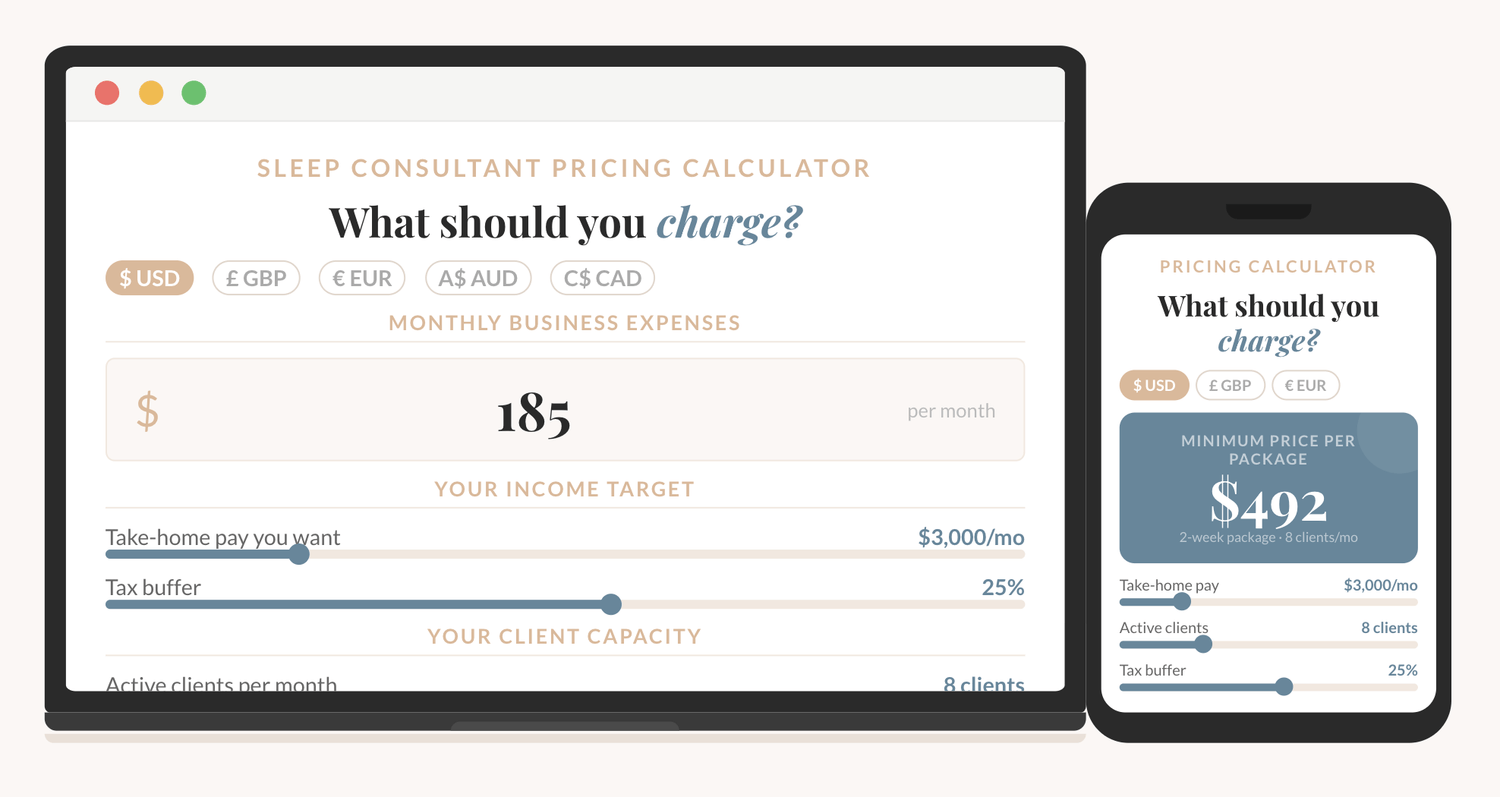
How to price your sleep consulting services?
The Sleep Consultant Pricing Calculator shows you exactly what to charge, based on your real expenses, your income goal, and how many clients you want to take on.
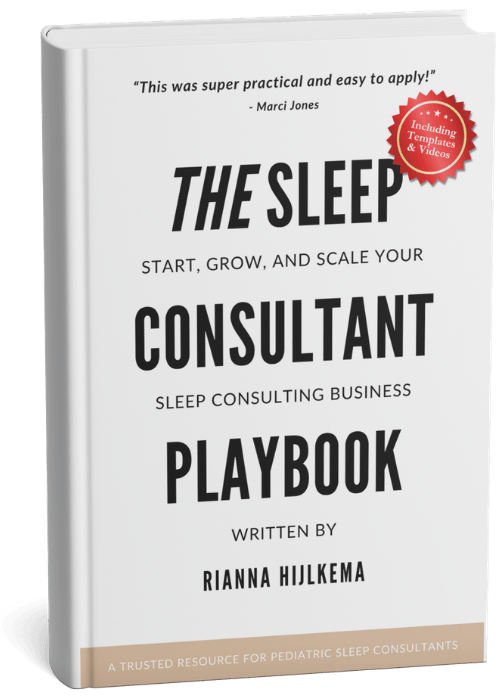
I'm thrilled to offer you an exclusive preview of what’s inside!
You can read the first 22 pages of The Sleep Consultant Playbook and get a taste of the value, insights, and actionable strategies that are waiting for you.
Other articles you might be interested in:
© 2021-2026 Sleep Consultant Business. All Rights Reserved.