
How to Build a Sleep Consulting Client Journey
A sleep consulting client journey has five phases: Awareness (how they find you), Consideration (how they decide to work with you), Purchase (the yes moment and immediate follow-up), Service (delivery of the sleep plan and support), and Loyalty (offboarding, reviews, and referrals). Mapping it out gives you clarity on what to build, what is missing, and what to prioritise next. A clear, well-structured journey prevents buyer's remorse, reduces client anxiety, increases the quality of your results, and turns satisfied clients into advocates for your business.
In this guide
- Why building a client journey matters
- The five phases of a sleep consulting client journey
- How to map your client journey
- What to build in each phase
- Buyer's remorse: what it is and how to prevent it
- Common client journey mistakes sleep consultants make
- Frequently asked questions
Most newly certified sleep consultants think about their business in terms of tasks: set up a website, create a sleep plan template, figure out how to get clients. These are important. But underneath all of those individual tasks is a bigger question that shapes everything: what is the experience of working with you, from the very first moment a parent hears your name to the day they refer a friend six months later?
That experience is your client journey. It is not a single email or a single call. It is the full sequence of touchpoints, communications, and actions that a parent moves through when they work with you. When it is mapped and intentional, it reduces anxiety for both you and your clients, prevents misunderstandings, increases the quality of your results, and creates the kind of experience that makes people talk about you.
This article walks through the five phases of a sleep consulting client journey, how to map yours, what to build in each phase, and how to handle the buyer's remorse that catches many new sleep consultants off guard.
Why Building a Client Journey Matters
When you do not have a mapped client journey, you are improvising every time. Each new client brings a slightly different set of communications, timelines, and expectations, which creates inconsistency in your results and stress for you. Over time, improvising is exhausting and it shows in the quality of the experience you deliver.
A mapped client journey solves this. It gives you a clear process you can follow with every client, which means you spend less mental energy on logistics and more on the actual work of helping families sleep. It also means your clients always know what to expect next, which is one of the most powerful things you can do to build trust in the early stages of working together.
There is also a direct link between a well-structured client journey and the quality of your results. When a parent feels clear, supported, and confident at each stage, they are more likely to implement the sleep plan consistently, more likely to reach out when they are struggling rather than quietly giving up, and more likely to complete the process and see real results. Better results mean stronger testimonials, more referrals, and a business that grows through the quality of the work rather than constant marketing effort.
The anxiety of starting a sleep consulting business often comes from the fear of the unknown: what if the client is unhappy, what if the results are not good enough, what if something goes wrong? A structured client journey does not remove all of that uncertainty, but it addresses most of it. When the steps are mapped out, the communication is clear, and the tools are in place, you feel more confident and prepared, and your clients feel supported and reassured throughout. That is not a small thing.
The Five Phases of a Sleep Consulting Client Journey
Every client who works with you moves through five phases. Understanding what each phase is and what your job is within it gives you a framework for building your entire business system.
| Phase | What the parent is doing | Your job |
|---|---|---|
| 1. Awareness | Searching for help, hearing about you, landing on your profile or website for the first time | Be easy to find. Be clear about what you do and who you help. |
| 2. Consideration | Reading your testimonials, browsing your website, deciding whether you are the right fit | Build trust. Reflect their pain points back with empathy. Make the next step obvious. |
| 3. Purchase | Saying yes, paying, and waiting to hear what happens next | Send contract and payment within 24 hours. Follow up immediately. Prevent buyer's remorse. |
| 4. Service | Completing the questionnaire, receiving the sleep plan, implementing it with your support | Deliver transformation. Stay proactively engaged. Adjust when needed. |
| 5. Loyalty | Processing the results, telling others, potentially returning with a new challenge | Ask for a review. Request a referral. Stay in touch. Make it easy to come back. |
How to Map Your Client Journey
Mapping your client journey does not require specialist software or complex tools. A piece of paper and a pen will do it. The goal is to get a clear visual picture of what exists at each phase, what is missing, and what to build next.
Draw five columns on a page and label them with the five phases: Awareness, Consideration, Purchase, Service, Loyalty. Under each column, write down every action, communication, or tool you currently have at that phase. Under Awareness, that might be your Google Business Profile, your website, and referrals from your network. Under Purchase, it might be the contract and payment email. Under Service, it might be the welcome email, the questionnaire, the sleep plan, and the consultation call.
Once you have filled in what you have, colour-code each item: green for things that are complete and working, orange for things that are in progress or partially set up, and red for things that do not exist yet. The red items are your priorities. The golden rule is to tackle one at a time. Pick the most critical red box, finish it, celebrate turning it green, then move to the next. Trying to build everything at once leads to nothing being built properly.
Before you move on to building fancier systems, make sure that Phase 1 (Awareness), Phase 2 (Consideration), and Phase 3 (Purchase) are fully green. These three phases are the foundation for giving your clients a smooth experience. An incomplete or unclear onboarding process is one of the most common causes of buyer's remorse and early client drop-off, and neither can be fixed by a great sleep plan if the foundation is not solid.
What to Build in Each Phase
Here is a practical breakdown of what belongs in each phase and what makes the difference between a functional journey and an exceptional one.
Phase 1: Awareness
This is where potential clients first encounter you. It might be a Google search at 3am, a friend's recommendation, a listing in a local parenting directory, or a social media post. Your job in this phase is not to sell. It is to be visible, be clear, and make the first impression a confident one.
The core assets for Phase 1 are your Google Business Profile (optimised and verified), your website (clear headline, services described in outcome language, booking link visible), and your presence in local or parenting directories. Referrals from your network are also Phase 1 touchpoints. In your first year, these matter more than social media, because they reach parents who are actively looking for help rather than passively scrolling.
Phase 2: Consideration
Once a parent has found you, they are evaluating whether you are the right fit. They will read your testimonials, look at your about section, check whether your services match their specific situation, and likely try to get a sense of your approach and whether it aligns with their values around sleep and parenting. This is the phase where trust forms.
The key assets for Phase 2 are your website testimonials and Google reviews, your about page and brand story, your services section written in transformation language rather than feature lists, and your Sleep Assessment Call booking system. The call itself sits at the transition between Phase 2 and Phase 3: it is the last trust-building step before the yes, and the place where you move a considering parent to a paying client.
One important rule for Phase 2: do not list your prices on your website in the early stage of your business. A parent who sees a number before they are emotionally connected to what you offer will make a reflexive judgement about whether it is too expensive. Keep the price for the Sleep Assessment Call, where you can first understand their situation, reflect it back to them, and then present the investment in context.
Phase 3: Purchase
The parent has said yes. This is the most vulnerable moment in the entire journey. The excitement of the decision is fresh, but so is the doubt. Buyer's remorse is most likely to strike in the hours immediately after the booking, and a slow or unclear follow-up is the most common trigger.
The rule here is speed and clarity. Send the contract and payment link within a few hours of the yes, ideally the same day. Keep the email brief, warm, and action-focused: two clear next steps only. Once payment is confirmed, send the onboarding email within 24 hours. That email should include a warm welcome, a link to the questionnaire, and a link to schedule the Consultation Call. Nothing else. A long, information-dense onboarding email overwhelms rather than reassures.
One practical note on timing: set your Calendly or booking system so the Consultation Call cannot be scheduled within 72 hours of the questionnaire being sent. This gives you the breathing room to review the responses and create a thoughtful, personalised sleep plan before you speak.
Phase 4: Service
This is where the transformation happens. The sleep plan you send before the Consultation Call is the centrepiece of this phase. Send it at least 12 hours before the call so parents have time to read it, sit with it, and come to the conversation with questions. A rushed plan sent 30 minutes before a call is not setting either of you up for a productive conversation.
The Consultation Call is your chance to walk through the plan in detail, address any concerns, and set clear expectations for the implementation phase. This is also when you explain what the support period will look like: how often you will check in, how to contact you, what to do if something is not working.
During the follow-up support phase, the key principle is being proactive rather than reactive. Do not wait for a parent to message you in distress. Reach out first. A brief check-in on morning two, a mid-point review around day six, and a closing check-in before offboarding keeps the parent engaged and signals that you are invested in the outcome, not just available if they happen to reach out. This proactive contact is one of the most reliable ways to keep a client consistent with the plan, which directly affects the quality of their results.
Phase 5: Loyalty
The end of the service is not the end of the relationship. If you have delivered a genuinely transformational experience, this is where that investment pays forward: in reviews, referrals, and returning clients.
Phase 5 actions include a warm closing message at the end of the support phase, an offboarding email with a direct link to your Google Business Profile review page, a feedback form for clients who were not fully satisfied, a four-week follow-up email that checks in and opens the door to referrals, and the 30-minute follow-up call offered after the testimonial is received as a thank-you gesture. Loyalty is built on results, yes, but it is also built on the relationships you continue to nurture after the package ends.
Buyer's Remorse: What It Is and How to Prevent It
Buyer's remorse is the nagging doubt that follows a purchase decision, the internal voice asking "did I make the right choice, was this really worth it?" It is especially common in services like sleep consulting, where a parent is making the decision from a place of exhaustion and vulnerability, which amplifies the risk of second-guessing.
The signs of buyer's remorse include a client who goes quiet after the initial booking excitement, slower replies than before, reduced enthusiasm, questions about the price after it has already been agreed, hesitation around next steps, or stopping actions on the onboarding process. These are not signs that the client does not trust you. They are signs that the client needs reassurance.
The best way to handle buyer's remorse is to prevent it before it happens. The most effective prevention strategy is speed: a prompt contract and payment follow-up, a warm onboarding email within 24 hours of payment, and a clear picture of what happens next. When a client always knows the next step, the space for doubt is much smaller.
When you do notice signs of buyer's remorse, do not wait for the client to come to you. Reach out proactively. A brief, warm check-in, "how are you feeling about everything so far?" is often all it takes to surface the concern and address it directly. Remind them of the problem they were trying to solve when they booked. Revisit the goals they shared during the Sleep Assessment Call. Offer to clarify anything that is causing uncertainty. What the client needs at that moment is not a sales pitch. They need reassurance that they are in good hands.
Common Client Journey Mistakes Sleep Consultants Make
Sending the contract and payment link too slowly
Every hour that passes between the yes and the contract is an hour in which buyer's remorse can grow. Send the contract and payment link within a few hours of the call, ideally the same day. Payment is what locks in the booking. Until payment is made, the client has not fully committed, and the window is open for doubt to win.
Sending too much information at once
A common pattern for enthusiastic new sleep consultants is to send the questionnaire, the welcome guide, the sleep prep resources, and three separate emails all at once after payment. This overwhelms rather than reassures. Keep each communication focused on one clear action. The contract email has two next steps. The onboarding email has two links. The sleep plan email has clear instructions for how to prepare for the call. Less is more when it comes to client communications.
Being reactive instead of proactive during the service phase
Waiting for a client to reach out when something is not working is one of the most damaging patterns in the service phase. Parents in the middle of sleep training are tired, stressed, and sometimes on the edge of giving up. If they do not hear from you for four days, they may conclude that the plan is not working and abandon it, with no opportunity for you to adjust and support them through it. Check in before they need to ask. Be the one who initiates.
Treating the end of the package as the end of the relationship
When the support phase ends and the client stops hearing from you entirely, the relationship ends too. The loyalty phase requires intentional action: a closing message, an offboarding email, a review request, a follow-up four weeks later. These are not optional extras. They are the part of the journey that converts a completed client into a referral source, an advocate, and potentially a returning client when the next developmental challenge arrives.
Trying to automate before the foundation is solid
Many new sleep consultants try to add complex automations and fancy tools before they have even completed their first five clients with a consistent, manual process. Automation is valuable, but it should come after you have worked out what your process is, not instead of doing that work. Run your journey manually for your first five to ten clients. You will learn far more about what works and what to refine than any workflow template can teach you. Automate after you have proven the process.
Frequently Asked Questions
Do I need to have the whole journey built before I take my first client?
No. You need phases one through three solid before you take a paying client: a way to be found, a way to help people decide to book, and a clear process for what happens after the yes. The service phase can be refined with each client you work with. The loyalty phase can be built out once you have the earlier phases running smoothly. The map is a guide to what to build next, not a prerequisite checklist before you begin.
How long should the service phase last?
Most sleep consulting packages include two to three weeks of active follow-up support after the Consultation Call. The first week is typically the most intensive, with daily check-ins as the family begins implementing the plan. By week two, a rhythm has usually emerged and contact can become less frequent. The exact duration depends on your package structure, but the principle is that you are actively present during the implementation period, not just available if they reach out.
What if a client goes quiet during the service phase?
Reach out. Do not wait. A client who has gone quiet is often either struggling and embarrassed to admit it, or doing well and assuming you do not need to hear from them. Either way, a proactive check-in is the right response. A brief message, "just checking in on how last night went," is enough to re-open the channel and get a sense of where things stand.
Should I use a Welcome Guide or just a welcome email?
Either works. A Welcome Guide is a one or two-page PDF designed in Canva that gives the client a polished overview of the process, what to expect, and links to their next steps. It creates a professional first impression and reduces back-and-forth questions. A well-written welcome email achieves most of the same things with less production time. Start with a welcome email if you are still in your first few clients. Add a Welcome Guide once you have a stable process you are confident in.
When should I start automating my client journey?
After five to ten clients worked through manually. Automation is most valuable when you know what your process is and have refined it through real experience. Automating a process you have not yet tested properly will lock in the wrong things. Run it manually first, identify what you send at each step and when, then automate the parts that are consistent and predictable, such as the onboarding email, the questionnaire link, and the four-week follow-up.
How do I handle a client who wants to skip the questionnaire?
Hold the line. The questionnaire is not a formality. It is the information that makes the sleep plan personalised rather than generic. A plan built without it is a worse plan, and a worse plan produces worse results. Explain to the client that the questionnaire is an essential part of the process because every sleep plan you create is built specifically around their child's situation, and without that information you cannot do your best work. Most clients will understand and comply once they see the reason behind it.
Key Takeaways
- A mapped client journey reduces anxiety for both you and your clients. When everyone knows what comes next, doubt has less room to grow and results improve.
- The five phases are Awareness, Consideration, Purchase, Service, and Loyalty. Each has a clear job. Build phases one to three first, before worrying about the rest.
- Buyer's remorse is preventable. Send the contract and payment link the same day as the yes. Follow up within 24 hours of payment with a warm, focused onboarding email. Keep every communication to one or two clear actions.
- Be proactive during the service phase. Do not wait for a parent to tell you something is not working. Check in before they need to ask. It is the single most effective way to keep clients consistent with the plan.
- The loyalty phase is not optional. Offboarding, reviews, referrals, and the four-week follow-up are what convert a completed client into a business asset. Build them into your process from the start.
- Automate after you have proven the process manually. Run it with your first five to ten clients by hand. You will learn what works. Then automate what is consistent.
Your client journey map is not a finished product. It is a living document that grows with your business. Start with what you have, tackle one red box at a time, and trust that each improvement makes the next client experience better than the last.
Next Article: How to Run a Sleep Assessment Call
Disclaimer: The information shared in these articles is for educational and informational purposes only. It does not constitute legal, financial, or professional advice. Always consult with a qualified professional regarding your specific situation.

Rianna Hijlkema
Certified Pediatric Sleep Consultant, Certified Postpartum Doula, Former Teacher & School Director, Founder of Sleep Consultant Design & Sleep Consultant Business and the author of The Sleep Consultant Playbook (available on Amazon).
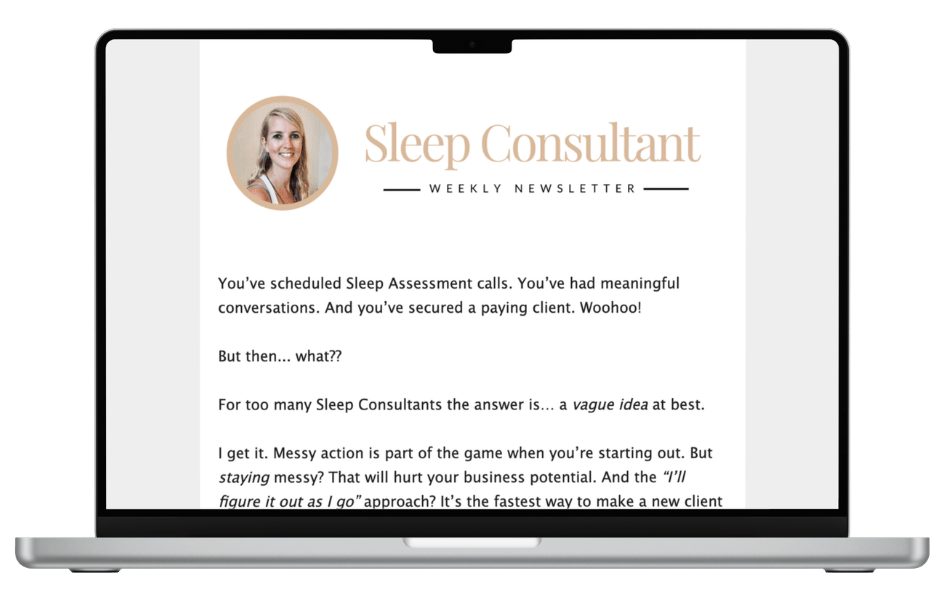
The Sleep Consultant Newsletter
Weekly tips, strategies and marketing ideas for sleep consultants written by a fellow sleep consultant. 1500+ active subscribers!
I’ll only send helpful emails, and you can unsubscribe anytime with one click.
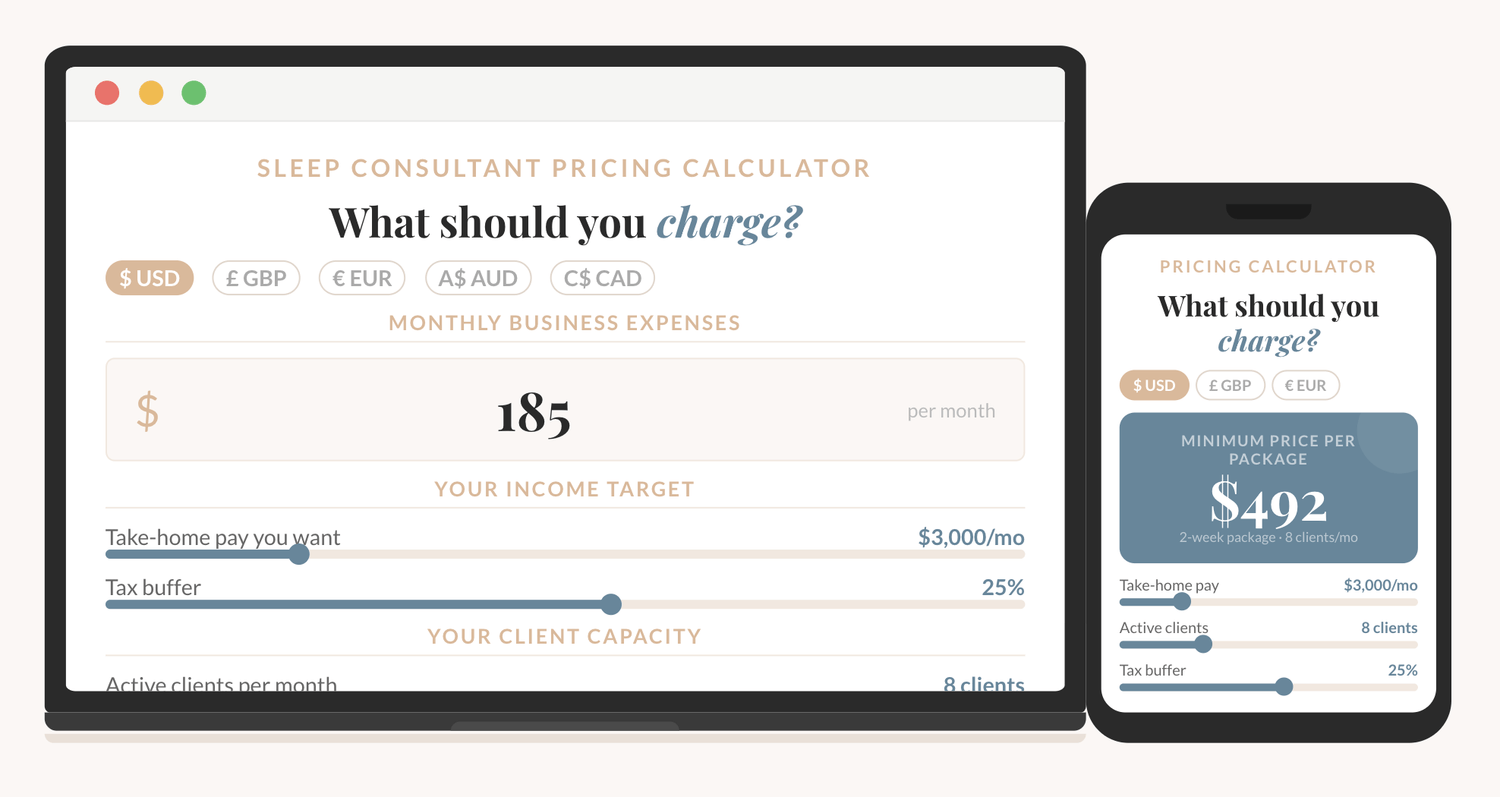
How to price your sleep consulting services?
The Sleep Consultant Pricing Calculator shows you exactly what to charge, based on your real expenses, your income goal, and how many clients you want to take on.
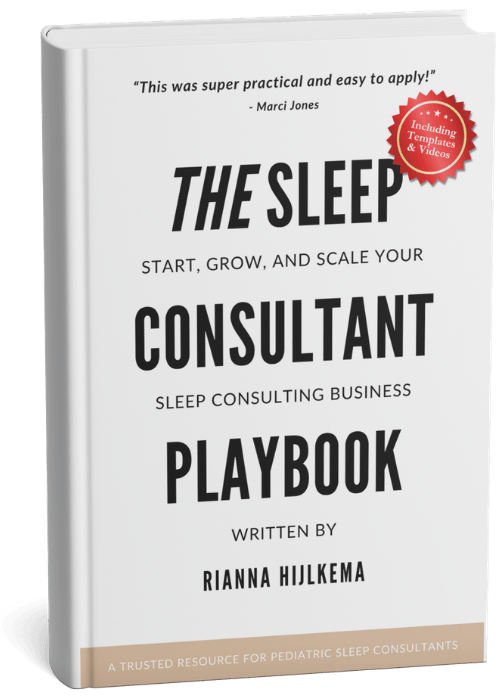
I'm thrilled to offer you an exclusive preview of what’s inside!
You can read the first 22 pages of The Sleep Consultant Playbook and get a taste of the value, insights, and actionable strategies that are waiting for you.
Other articles you might be interested in:
© 2021-2026 Sleep Consultant Business. All Rights Reserved.