
How to Create and Sell Digital Products as a Sleep Consultant
Digital products are resources you create once and sell repeatedly: PDF guides, checklists, sleep tracking logs, schedule templates, swipe files, and mini-trainings. They typically sell for $5 to $50 and let parents access your expertise without booking a full one-on-one package. The key is to pick one specific sleep problem your ideal client is facing, create a product that solves it quickly and clearly, and put it in front of the right people consistently. Start small, test before you invest, and build from there.
In this guide
- Why digital products work for sleep consultants
- Product ideas: what sleep consultants can create and sell
- How to choose your first product topic
- How to create it
- How to price it
- How to sell it
- How to grow your digital product income over time
- Common digital product mistakes sleep consultants make
- Frequently asked questions
One-on-one sleep consulting is the heart of what you do. But there are only so many hours in a day and only so many clients you can hold at once. Digital products change that equation by letting you package your expertise into something a parent can buy and use right now, at midnight, without needing to book a call or wait for availability.
A well-made digital product does several things at once. It serves families who aren't ready or can't afford full one-on-one support. It builds trust with potential clients who might upgrade to a package later. It generates income while you sleep, and yes, that part is actually true for a digital product in a way it isn't quite true for a course or membership that requires your ongoing attention.
The catch? Most sleep consultants either never start because it feels overwhelming, or they spend months building something nobody buys. This article is about avoiding both of those outcomes.
Why Digital Products Work for Sleep Consultants
Sleep is a universal need and a high-urgency problem. A parent dealing with a sleep regression at 3am is not thinking "I'll look into this when I have a spare afternoon." They want a solution right now, at a price that doesn't require a lot of deliberation. A $17 guide they can download immediately and start using tonight? That's an easy yes.
Digital products also create a natural progression in your client relationships. A parent who buys a $12 nap schedule template from you has already paid you money. They've experienced your work. When they're ready to invest in more personalised support, you're not a stranger. You're someone who's already helped them. The product becomes the gateway to the package.
Digital products are genuinely leveraged income in a way that courses and memberships aren't quite. A course still requires you to engage, update content, and respond to students. A digital product (a PDF guide, a checklist, a swipe file) can sit in a shop and sell itself with zero ongoing input from you once it's set up. That's the closest thing to truly passive income in this business. It still takes effort to create and market, but once it's running, it runs.
Product Ideas: What Sleep Consultants Can Create and Sell
The range of what you can create is wide. Here are the main product types with sleep-specific examples:
| Product type | Sleep consultant example | Typical price |
|---|---|---|
| Sleep guide / e-book | The 7-Day Baby Sleep Regression Fix | $15 to $47 |
| Schedule template | Your Baby's Ideal Sleep Schedule (0 to 36 Months) | $7 to $17 |
| Checklist / cheat sheet | Crib-to-Bed Transition Checklist: Everything You Need to Know | $5 to $12 |
| Sleep tracker / log | The Baby Sleep Tracker and Journal | $7 to $15 |
| Swipe file / script | The Back to Bed Script: Exactly What to Say When Your Toddler Won't Stay In | $7 to $17 |
| Mini-training / video | How to Fix Early Wakings in 3 Simple Steps (30-minute recorded training) | $15 to $37 |
| Bundle / sleep kit | Baby Sleep Guide + Sleep Tracker + Bedtime Routine Checklist | $27 to $67 |
Notice what all of these have in common: they solve one specific, named problem. Not "baby sleep" as a general topic. A specific challenge, a specific age range or stage, with a promise the parent can picture. The more specific the product title, the more clearly the right parent can recognise that it's for them.
How to Choose Your First Product Topic
The easiest place to start is with the question you get asked most often. Not the most interesting sleep topic, not the one you'd most enjoy writing about, but the one that comes up again and again from actual parents you've worked with. That pattern is demand telling you exactly what to make.
If you're not sure, ask. A quick poll in an Instagram Story, a question in your email list, or a note at the end of a consultation asking what resource would have been most useful. Any of those give you real signal. The product you think parents need and the product they'll actually pay for are not always the same thing. Find out before you build.
Once you have a topic, check that it passes three filters. One: does it solve a specific, high-urgency problem (not a nice-to-have, but a "we need to fix this now" situation)? Two: can it be solved in a focused, downloadable resource rather than requiring personalised one-on-one support? Three: can you describe the transformation in a single sentence? If yes to all three, you have a product.
The biggest mistake sleep consultants make when creating a digital product is spending weeks building something before checking if anyone wants to buy it. Test before you invest. Survey your audience. Post about the topic and watch the response. Offer a beta version to a handful of parents at a discount in exchange for feedback. Validating demand before you build saves you enormous amounts of time and disappointment.
How to Create It
Keep it simple. Parents who buy a $17 checklist do not want a 50-page e-book. They want a resource they can pick up, read in one sitting, and actually use. Shorter, focused, and immediately actionable beats comprehensive every time at this price point.
Choosing the format
The format should match the content. A step-by-step process works well as a checklist or a short guide. A collection of information a parent will return to repeatedly works better as a tracker or template. A walk-through explanation works well as a short recorded video. Don't choose the format first and then fill it. Choose the format that best serves the specific thing you're trying to communicate.
Tools to create it
You don't need expensive software. Canva is the most accessible option for sleep consultants creating PDF products. It's free, has hundreds of relevant templates, and lets you design something that looks genuinely professional without any design background. Google Docs or Notion work well for text-heavy guides. For recorded video products, a clean recording on your phone or laptop with decent audio is completely acceptable at this price point.
A few things that matter for the final product: visual consistency with your brand (your colours, your fonts, your logo), clear and legible formatting, and a professional cover page. The product should feel like something a parent would trust and be proud to reference. If it looks like it was put together in five minutes, it undermines the expertise you're selling.
What to include
Start with a brief statement of who this is for and what problem it solves. Follow with the actual content (practical steps, framework, or resource) that delivers on the promise. Close with a clear next step: what should the parent do after using this? That next step is also where you can naturally mention your one-on-one service for parents who want personalised support. Keep it warm and organic, not salesy. Done well, it feels helpful rather than promotional.
How to Price It
Digital products for sleep consultants typically range from $5 to $50. The right price depends on three things: the depth of the product, the urgency of the problem it solves, and where it sits in your overall offer stack.
Simple checklists and templates sit at the lower end ($5 to $15). They should feel like a very easy yes, with a price low enough that a parent doesn't need to think about it. Comprehensive guides and mini-trainings can sit in the $17 to $47 range. Bundles, where you combine two or three products, can go up to $47 to $67 and offer significantly higher perceived value than the individual items.
The most strategic use of a digital product is as a tripwire. This is a low-cost offer you present immediately after someone downloads your free lead magnet. The logic is simple: a parent just downloaded your free toddler sleep guide. Right away, you show them a $17 offer: a 30-minute bedtime routine video with a printable tracker. It solves the very next problem they'll encounter. They're already engaged with your content, already trusting you enough to give their email. That's the moment they're most likely to say yes to a small purchase. You've turned a lead into a paying client, and you've done it automatically.
How to Sell It
Your sales page
Even at a low price point, you need a sales page. It doesn't have to be long. A focused single page covering five things: the problem it solves, who it's for, what's included, how it works, and the price with a clear purchase button. That's it. One testimonial from a beta user adds significant trust. Keep the language in the parent's words, not sleep science terminology. "Help your toddler go from waking every two hours to sleeping through the night" lands better than "establish consolidated sleep using graduated extinction principles."
Automated delivery
This is non-negotiable. The moment a parent pays, they should receive their product automatically, with no waiting for you to manually send anything. Set up a post-purchase automated email sequence that delivers the product immediately, confirms the purchase, and tells the buyer exactly what they just got and how to use it best. If this is set up correctly, a parent can buy at 2am and be reading your guide by 2:05am. That experience is part of the value.
Talk about it constantly
Parents won't buy something they don't know exists. Your product needs to show up regularly in your content, not just at launch. Mention it in relevant Instagram posts. Link to it in your email newsletters. Include it in your bio link. Reference it when answering questions about the problem it solves. Add it to your email signature. Most sleep consultants launch a product once, hear crickets, and conclude it doesn't work. Usually the product is fine. It just wasn't talked about enough, for long enough.
Where to host it
The simplest option is to sell directly through your existing website and business platform. If your website and business tools are on an all-in-one platform, you can set up a product page and payment processing there without adding any new tools or accounts.
How to Grow Your Digital Product Income Over Time
Bundle products together
Once you have two or three products, bundle them into a sleep kit. A baby sleep guide combined with a sleep tracker and a bedtime routine checklist becomes a "Newborn Sleep Starter Kit" worth significantly more than the individual pieces. Bundles increase perceived value and encourage higher-order purchases from buyers who are already engaged. They're also an easy way to move inventory on products that aren't selling as well individually.
Expand on what sells
Track which products sell best. When something consistently converts, ask: what's the next problem this buyer will face? Create that product. If your Nap Transition Guide sells well, a Toddler Sleep Regression Guide is a natural next product for the same buyer at a later stage. You're building a product ecosystem rather than just a single item, and buyers who trust your first product are far more likely to buy the second.
Set up affiliate partnerships
Other sleep consultants, parenting bloggers, or related professionals (postpartum doulas, midwives, lactation consultants) can promote your products for a commission. This extends your reach without requiring more of your own marketing effort. An affiliate earns a percentage of each sale they refer, and you gain sales from audiences you'd never have reached on your own. Start with people who already know and trust your work and whose audience matches your ideal client.
Use products as VIP bonuses
A digital product doesn't only earn money as a standalone sale. Including it as a bonus in a premium one-on-one package increases the perceived value of that package without adding to your delivery time. "Includes the Toddler Sleep Toolkit (valued at $47)" on your sales page costs you nothing to deliver but makes the package feel more complete and more compelling.
Common Digital Product Mistakes Sleep Consultants Make
Building before validating demand
Spending three weeks creating a beautifully designed product and then discovering nobody wants to buy it is demoralising and avoidable. Survey your audience first. Post about the topic and see how people respond. Offer a beta version to a small group. Validation takes a few days. Building a product nobody buys takes weeks. Do the short thing first.
Making it too broad
"Complete Baby Sleep Guide" sounds comprehensive and impressive. It also sounds like something for everyone, which means it clearly speaks to no one. "The 4-Month Sleep Regression Survival Guide" tells a specific parent with a specific baby at a specific stage that this is exactly for them. Narrow wins. The broader the product, the harder it is to sell at a low price point because the right buyer can't immediately recognise themselves in it.
Promoting it once and moving on
A product launch post is not a marketing strategy. Your product needs to be mentioned regularly, woven into relevant content, referenced when you answer questions on the topic, and included in your email sequences. Most parents won't buy the first time they see something. Repeated exposure across multiple touchpoints is what converts curiosity into a purchase. Talk about your products as often as you talk about your services.
Skipping automated delivery
Manually sending products to buyers is not scalable and creates a poor experience. If a parent buys at midnight and receives their product at 9am the next morning, the experience is worse than it should be, and it creates a customer service overhead you don't need. Set up automated delivery before you launch, not after you've started getting purchases.
Treating it as a standalone product rather than part of a system
A digital product is most powerful when it's part of a progression: free lead magnet, then low-cost product as a tripwire, then higher-ticket one-on-one service for parents who want personalised support. Each step builds trust and moves the right parent toward the offer that fits them best. A product that sits alone, with no path from it toward your core service, is leaving money and relationships on the table.
Frequently Asked Questions
Do I need a lot of clients before I can create a digital product?
Not many, but some. You need enough real-world experience with families to know which problems genuinely come up repeatedly and what actually helps. Creating a product before you've worked with real clients risks producing something generic that doesn't reflect the nuanced reality parents are living. A handful of clients gives you enough pattern recognition to create something specific and useful. A hundred isn't necessary.
How long does it take to create a digital product?
A simple checklist or template can be done in a day. A comprehensive PDF guide takes two to five days of focused work. A recorded mini-training takes a day to plan, a few hours to record, and a day to edit and set up. The trap is perfectionism. A product that's 90% done and live is infinitely more valuable than one that's 100% perfect and still on your hard drive. Get it done enough to be useful, release it, and refine it based on buyer feedback.
Can I sell products while still taking one-on-one clients?
Yes, and it's the right order of operations. Your one-on-one work funds the business and gives you the real-world insights that make your products genuinely useful. The products generate a layer of income that eventually reduces your dependence on trading hours for dollars. Build the product alongside client work, not instead of it. Once a product is set up and selling automatically, it runs with no input from you while you focus on clients.
What if my product gets bad reviews or people ask for refunds?
Treat every piece of negative feedback as product development data. If multiple buyers say the same thing, that's a clear signal about what to fix or expand. Have a simple refund policy in place before you launch. Most digital product creators offer a 14 to 30-day refund window. Honouring that policy consistently protects your reputation far more than any individual sale. One gracious refund costs you $17. A buyer who tells people you were difficult to deal with costs you far more.
How do I protect my products from being copied or shared?
Include a clear copyright notice inside your product stating it's for personal use only and may not be shared, resold, or reproduced. Beyond that, some level of sharing is inevitable with low-cost digital products and not worth stressing over. The parent who shares your $12 checklist with a friend is unlikely to be the parent who would have bought it. Focus your energy on creating genuinely good products and marketing them well rather than on enforcement. Your expertise is the real barrier to replication. Someone can copy a PDF format, but they can't copy what you know.
Key Takeaways
- Digital products are the closest thing to truly passive income in this business. Create once, sell repeatedly, deliver automatically. No ongoing time from you once they're set up.
- Start with one specific, high-urgency problem. The more specific the product, the more clearly the right parent recognises it's for them.
- Validate before you build. Survey your audience, post about the topic, offer a beta. Getting signal before investing weeks of effort is the strategy, not an optional extra.
- Keep it actionable and short. Parents want a quick win, not a 50-page comprehensive guide. Focused beats thorough at this price point.
- Use it as a tripwire. The most powerful place for a low-cost product is immediately after a parent downloads your free lead magnet. They're warm, engaged, and already trusting you. That's the moment to offer the next step.
- Talk about it constantly. Launch is not enough. Reference it in content regularly, include it in email sequences, link to it everywhere. Most parents need multiple touchpoints before they buy.
- Think in a product ecosystem, not standalone items. Each product should logically lead to the next, and eventually to your one-on-one service for parents who want more.
Start this week: write down the one sleep challenge you get asked about most often. That's your first product. Now write three possible titles for it: specific, with a named problem and a promised outcome. Pick the one that makes you immediately think "yes, I'd buy that."
Disclaimer: The information shared in these articles is for educational and informational purposes only. It does not constitute legal, financial, or professional advice. Always consult with a qualified professional regarding your specific situation.

Rianna Hijlkema
Certified Pediatric Sleep Consultant, Certified Postpartum Doula, Former Teacher & School Director, Founder of Sleep Consultant Design & Sleep Consultant Business and the author of The Sleep Consultant Playbook (available on Amazon).
The Sleep Consultant Newsletter
Weekly tips, strategies and marketing ideas for sleep consultants written by a fellow sleep consultant. 1500+ active subscribers!
I’ll only send helpful emails, and you can unsubscribe anytime with one click.
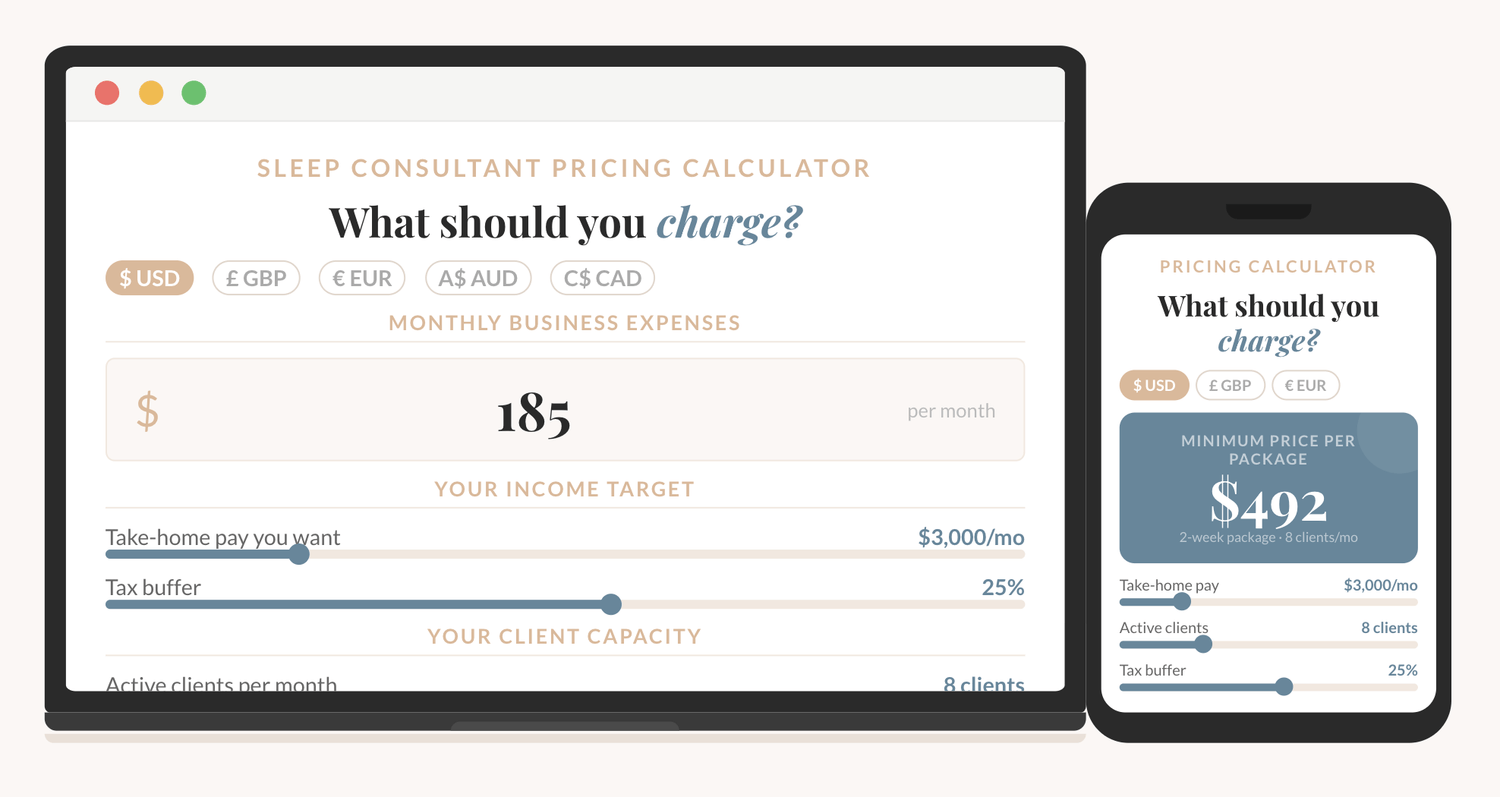
How to price your sleep consulting services?
The Sleep Consultant Pricing Calculator shows you exactly what to charge, based on your real expenses, your income goal, and how many clients you want to take on.
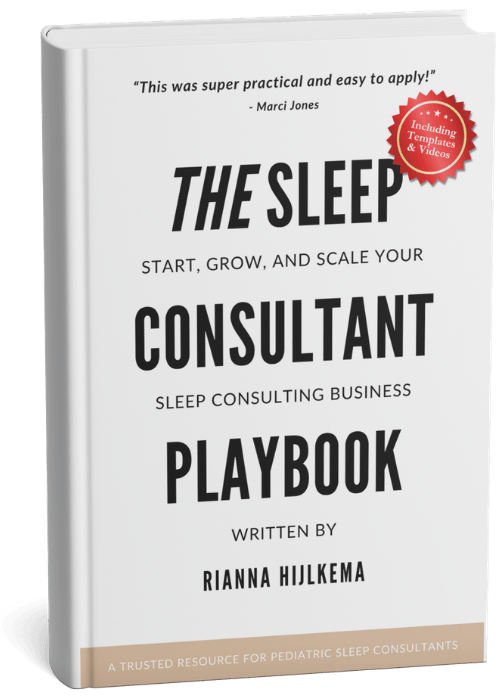
I'm thrilled to offer you an exclusive preview of what’s inside!
You can read the first 22 pages of The Sleep Consultant Playbook and get a taste of the value, insights, and actionable strategies that are waiting for you.
Other articles you might be interested in:
© 2021-2026 Sleep Consultant Business. All Rights Reserved.