
How to Start a Membership as a Sleep Consultant
A sleep consultant membership is a recurring subscription that gives parents ongoing access to your expertise: through a private community, live Q&A calls, monthly content, or a combination of all three. It works well for sleep consultants because sleep challenges don't end after one package: they evolve as children grow through different stages. A membership keeps you in families' lives through those transitions and gives your business predictable monthly income instead of starting from zero every month. Start simple, test with a beta group at a founding member rate, and expand once the model is proven.
In this guide
- Why a membership model suits sleep consulting
- How to structure your membership
- How to price it
- Setting up the system
- How to launch: beta first, then public
- Keeping members engaged and reducing churn
- Common membership mistakes sleep consultants make
- Frequently asked questions
One-on-one sleep consulting is deeply rewarding. It's also a model that resets every single month. When a package ends, that income ends. You're always looking for the next client, always filling the next slot, always starting the process again. A membership changes that dynamic.
Instead of income that resets, you build a community of paying members who receive continuous value and stay month after month. That's predictable revenue. And in a business where so much feels uncertain, knowing what's coming in before the month starts changes how you operate, how you plan, and honestly how you sleep.
Before we get into the how, though: the same warning applies here as with any scaling offer. Don't try to launch a membership, an online course, and digital products all at once. Pick one. Make it work. Then add the next thing. Scattered energy produces unfinished projects, and I don't want that for you.
Why a Membership Model Suits Sleep Consulting
Sleep consulting is unusual among service businesses in one specific way: the need doesn't end when the package does. A family who works with you on their six-month-old's sleep regressions will face a completely new set of challenges at twelve months, then again during the toddler years, then again when a new sibling arrives. The parents you serve are likely to need you again. A membership is the natural container for that ongoing relationship.
This is what makes the membership model genuinely well-suited to sleep consulting, not just financially but practically. You're not manufacturing a reason for people to stay. You're meeting a real need that actually continues. Parents in your membership get expert support as new stages arrive, without having to re-invest in a full package each time. You get recurring income without having to find a new client to replace every one who finishes.
A membership is a leveraged income stream, not a passive one. It still needs your attention. You'll be updating content, showing up for live calls, engaging in the community, and regularly giving members a reason to stay. The difference from one-on-one work isn't that you do less. It's that you do it once for many people rather than repeatedly for one. That's a much better use of your expertise over time.
How to Structure Your Membership
Before you set up anything, get clear on three things: what members get, how often you deliver value, and what format makes sense for the life you want to live. These three decisions shape everything else.
What members get
A sleep consultant membership can be structured in several ways, from very light-touch to highly involved. Here are the main models:
| Model | What it includes | Your time commitment |
|---|---|---|
| Content library | Access to a growing library of videos, guides, and resources organised by age and topic | Low once built. Monthly content additions. |
| Community Q&A | Private group where members post questions and you answer regularly, plus monthly live Q&A call | Moderate. Daily check-ins, one live call per month. |
| Weekly tips | Weekly email or newsletter with sleep tips, case studies, and resources | Low. One piece of content per week. |
| High-touch community | Community access, weekly live calls, personalised feedback, content library, guest expert sessions | High. Multiple touchpoints per week. |
Start simple. Overcomplicating the offer at the beginning leads to overwhelm for you and for your members. A focused, consistent membership that delivers on one clear promise will always outperform a sprawling one that tries to do everything. You can add tiers and features once the model is proven.
Your value proposition
The value proposition is the single most important thing to nail before you launch. It needs to make your membership feel essential, not just nice to have. Think about it from the parent's perspective. What problem does your membership solve that a one-off package can't?
Examples that work: "Get personalised sleep guidance every month, with live Q&A calls and expert resources tailored to your child's current age." Or: "A private sleep coaching community for parents who want expert advice and troubleshooting without booking a full one-on-one package every time a new challenge appears." Notice what both of these do: they describe ongoing access to expertise as new situations arise, not a one-time transformation.
How to Price It
There are two main approaches, and neither is wrong. It depends on the level of support you're offering and the volume of members you're trying to build.
Low-cost, high-volume ($10 to $30 per month): Content library, weekly tips, or light community access. The barrier to joining is low, which means more members, but you need significantly more of them to generate meaningful income. Good for building an audience and getting people into your world.
Higher-touch, premium ($97 to $297 per month): Live calls, personalised feedback, active community management. Fewer members, but each one is worth significantly more. Your delivery costs are higher, but so are the results members get, which means better testimonials and lower churn.
Start with one price point. Don't launch with tiers right away. Test what your audience will pay, validate that you can consistently deliver the value, and then introduce Basic and Premium options once you have the data to make those decisions well.
Do the maths before you launch. If your membership is $29 per month and you want to generate $2,900 in monthly recurring revenue, you need 100 members. If your membership is $197 per month, you need 15. The second number is much more achievable for a newly launched membership with a small audience. Higher price points with genuinely high value are often easier to sustain than low-price memberships that require large numbers to be viable.
Setting Up the System
Once your structure is clear, you need three things in place: a way to take recurring payments, a place for your community to live, and an automated welcome sequence that onboards new members properly.
Recurring payments: Connect your payment system so that membership fees are charged automatically each month. Members should be able to join, pay, and access the community immediately without any manual steps from you.
Community space: Depending on your model, a private group where members can post questions, share wins, and interact with each other makes a big difference to retention. A community where members connect with each other (not just with you) becomes stickier over time. People don't just stay for your expertise. They stay for the relationships they've built.
Automated welcome sequence: The moment someone joins, they should receive a welcome email with login details, community guidelines, and clear first steps. This sets the tone, reduces early drop-off, and starts the relationship well. Set it up once and let it run for every new member automatically.
The Sleep Consultant Business Operating System™ has an all-in-one platform built in, so you can get your membership payment system, community, and automated welcome emails set up in no time without juggling multiple tools.
Also create a content calendar before you launch. One of the most common reasons memberships fail is the founder running out of ideas or scrambling to create content last minute. Plan your first three months in advance: what live calls you'll host, what resources you'll share each week, what prompts you'll post in the community. This keeps you consistent and removes the panic of "I need to post something today."
How to Launch: Beta First, Then Public
Start with a beta group
Before you launch publicly, invite a small group of founding members at a discounted rate in exchange for detailed feedback and testimonials. This is not just a discount strategy. It's a research strategy. Your beta members will tell you what's working, what's confusing, what they wish you'd included, and what they'd pay more for. That feedback is worth far more than the difference between full price and founding member price.
Who should you invite? Start with past clients who got great results from your one-on-one work, people from your email list who've engaged with your content, and warm connections who've expressed interest in ongoing support. These are people who already trust you, which means their feedback will be grounded and their testimonials will be authentic.
The public launch
For your official launch, focus your messaging on the transformation members will experience, not the features they'll get. "Join a community of supported, informed parents navigating sleep challenges at every stage" lands differently from "get access to monthly Q&A calls and a resource library." Both say the same thing. The first one makes a parent feel something.
Your sales page needs to cover: what's included and how it works, who it's for (and who it's not for), pricing and payment options, testimonials from beta members, and a clear call to action to join now. Be specific about who the membership is not for. "This isn't for families who are still in active sleep training. This is for parents who want expert support as new challenges come up over the months ahead" is the kind of specificity that makes the right people lean in.
Promote through your email list, social media, and your existing client base. Consider a limited-time launch bonus to encourage action: a free private consultation included with the first month, a bonus resource, or a free trial week before the first charge. These create genuine urgency without feeling manipulative.
Keeping Members Engaged and Reducing Churn
Getting members is the first challenge. Keeping them is the ongoing one. Churn (members who cancel) is the biggest threat to a membership's long-term viability. The good news is that most churn is preventable, and it almost always comes back to one thing: members stop feeling like they're getting value.
Track engagement from the start. How often are members participating in discussions? Are they attending live calls? Are they opening the emails you send? If engagement drops, act on it before those members cancel. A personal check-in message, a new challenge to reignite interest, or a themed content week can bring disengaged members back before they're gone.
Send surveys regularly. Quarterly is a good starting point. Ask what members value most, what they wish you'd do more of, and what challenges they're currently dealing with. This does two things: it gives you content ideas, and it makes members feel heard. People stay in communities where they feel seen.
The strongest retention driver is member-to-member connection. When members have relationships with each other, not just with you, they don't just leave when they feel like they've gotten what they needed from your expertise. They stay because their people are there. Foster that. Ask members to introduce themselves. Create opportunities for them to interact, share wins, and support each other. You're building a community, not just delivering a service.
Common Membership Mistakes Sleep Consultants Make
Launching before the one-on-one work is established
A membership requires a reputation and an audience. If you're still building your first few client relationships, a membership is the wrong next step. You need existing clients to invite as beta members, testimonials to use in your launch, and enough of a following that your launch reaches enough people to be viable. Get the foundation solid first.
Overcomplicating the offer from day one
Launching with three price tiers, a content library, weekly live calls, monthly workshops, a resource vault, and guest expert sessions is a recipe for burnout. Pick one thing your membership does really well. Get that running consistently. Add features once members are asking for them, not before. Complexity before consistency is one of the fastest ways to kill a membership.
Not planning content in advance
Running a membership without a content calendar is like building a website without a plan. You end up scrambling every week, the quality drops, and you start to dread showing up. Plan your first three months before you open the doors. What goes out each week? When are the live calls? What's the community prompt for Monday? When this is planned in advance, showing up feels manageable instead of frantic.
Selling features instead of transformation
"Monthly Q&A call, resource library, private community" describes what's inside. It doesn't make a parent want to join. Parents don't buy Q&A calls. They buy the feeling of not being alone when their toddler starts climbing out of the crib at 11pm and they don't know what to do. Lead with that. The features are just how you deliver it.
Focusing on new members and ignoring the ones you have
It's easy to get excited about a launch and put all your energy into attracting new members. But if you're not keeping the ones you have, you're filling a leaking bucket. Retention is worth more than acquisition. A member who stays for twelve months at $47 per month is worth $564. Getting one new member doesn't replace losing one who's been with you a year. Serve the people already in the room.
Frequently Asked Questions
How many members do I need before a membership is viable?
It depends on your price point and your goals. A membership at $97 per month with 20 members generates $1,940 in monthly recurring revenue. A membership at $29 per month needs 67 members to hit the same number. Work backwards from your income goal and your price point, and that gives you the membership size you need to hit. Most sleep consultants start with 10 to 20 founding members and grow from there.
What's the difference between a membership and a group coaching programme?
A group coaching programme has a defined start and end point. It takes a cohort of participants through a specific transformation over a set number of weeks. A membership is ongoing. People join, stay for as long as they're getting value, and leave when they're ready. Group coaching programmes work well for structured transformations. Memberships work well for ongoing support and community. Some sleep consultants run both: a group programme that leads naturally into a membership for continued support.
Should I lock members into a minimum commitment?
A minimum commitment of two to three months is reasonable and common. It protects you from people who join for one month, download everything, and leave. It also gives members long enough to actually experience the value, which reduces early cancellations driven by inertia. Be upfront about the minimum term on your sales page. It's not a surprise, it's a standard part of a subscription offer.
How do I handle members who want to cancel?
Make cancellation easy to find and easy to do. Memberships that hide the cancel button to reduce churn create resentment, not loyalty. When someone cancels, ask one simple question: "What was the main reason for leaving?" That feedback is gold. You'll often find patterns: a topic members wanted more of, a format that wasn't working, a price point that felt hard to justify. Use that to improve before your next launch.
Can I run a membership while still doing one-on-one work?
Yes. In fact, that's the recommended order. Your one-on-one clients fund the business and give you the real-world insights that make your membership content valuable. The membership gradually creates a floor of recurring income that reduces pressure on the one-on-one work. Over time, you can scale back your one-on-one slots as the membership grows. But don't abandon one-on-one before the membership is proven and profitable. Build it alongside, not instead.
What if my membership grows very slowly at first?
That's normal. Most memberships grow slowly in the first six months and then start to compound as testimonials build, word of mouth kicks in, and your content library becomes a stronger reason to join. The key is to not measure success too early. Focus on delivering outstanding value to the members you have. Happy members are your best marketing. If the five founding members you have are thrilled with what they're getting, those five will bring in ten more.
Key Takeaways
- A membership suits sleep consulting because the need is ongoing. Sleep challenges evolve as children grow through stages. That's a genuine reason for parents to stay, not a manufactured one.
- Start simple. One price point, one clear value proposition, one primary format. Prove the model before you add tiers, features, or complexity.
- Do the maths before you launch. Work backwards from your income goal to know what price point and membership size you need. High-touch at a higher price is often more achievable than low-cost at scale.
- Run a beta group first. Founding member rate, real feedback, real testimonials. Don't skip this step.
- Sell the transformation, not the features. Parents don't join for the Q&A call. They join because they don't want to feel alone when the next sleep challenge arrives.
- Retention beats acquisition. Serve the members you have brilliantly. That's how a membership grows: through word of mouth from people who are genuinely getting value, not through constant new launches.
If this model excites you, start by outlining your first three months of content this week. Then identify five to ten people you'd invite as founding members. That's all you need to get moving.
Disclaimer: The information shared in these articles is for educational and informational purposes only. It does not constitute legal, financial, or professional advice. Always consult with a qualified professional regarding your specific situation.

Rianna Hijlkema
Certified Pediatric Sleep Consultant, Certified Postpartum Doula, Former Teacher & School Director, Founder of Sleep Consultant Design & Sleep Consultant Business and the author of The Sleep Consultant Playbook (available on Amazon).
The Sleep Consultant Newsletter
Weekly tips, strategies and marketing ideas for sleep consultants written by a fellow sleep consultant. 1500+ active subscribers!
I’ll only send helpful emails, and you can unsubscribe anytime with one click.
How to price your sleep consulting services?
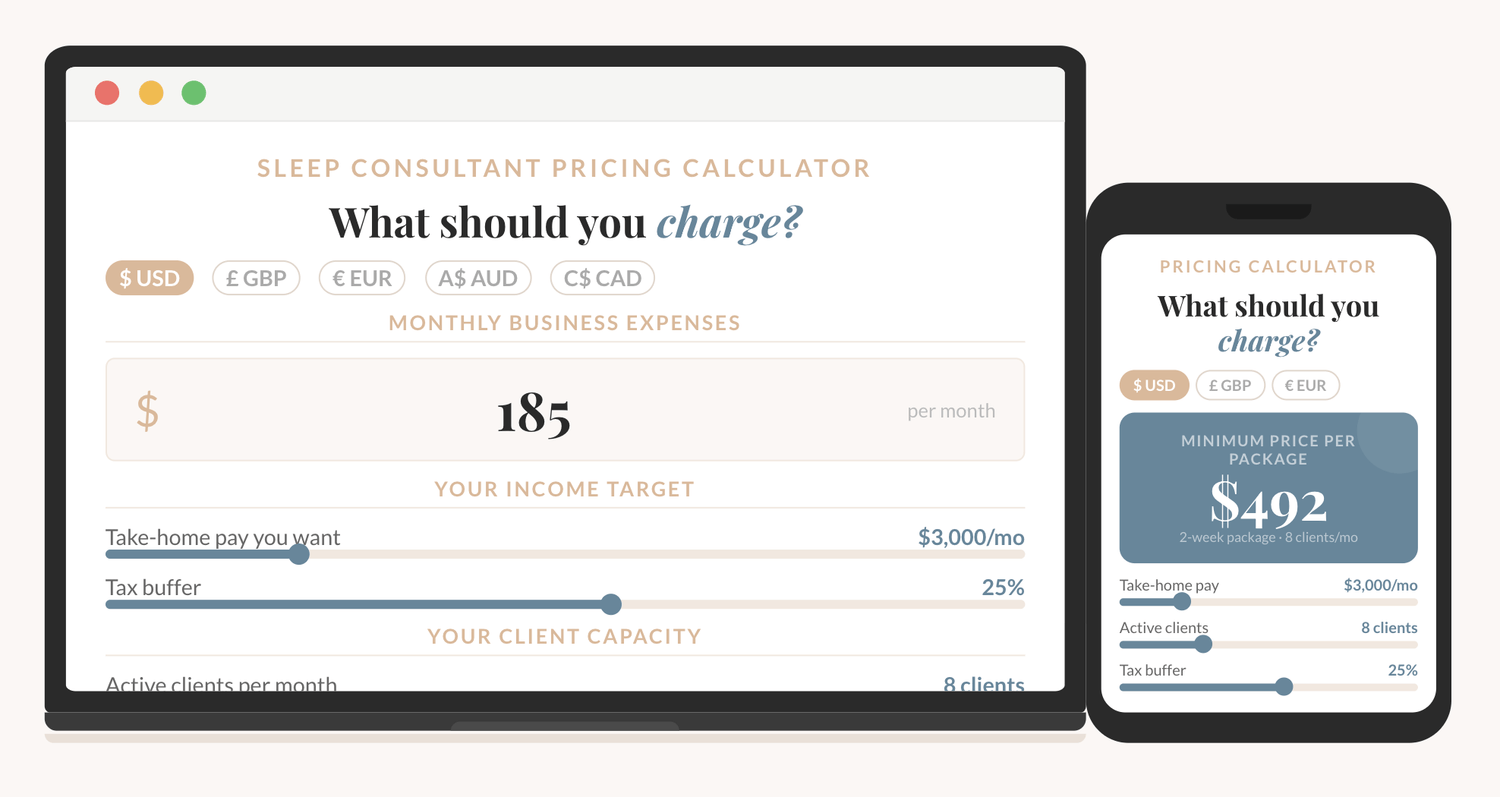
The Sleep Consultant Pricing Calculator shows you exactly what to charge, based on your real expenses, your income goal, and how many clients you want to take on.
I'm thrilled to offer you an exclusive preview of what’s inside!
You can read the first 22 pages of The Sleep Consultant Playbook and get a taste of the value, insights, and actionable strategies that are waiting for you.
Other articles you might be interested in:
© 2021-2026 Sleep Consultant Business. All Rights Reserved.