
How to Choose a Niche as a Sleep Consultant
You do not have to niche down before you have your first client. Start by defining your ideal client clearly, then let your niche emerge from the patterns you notice in real client work. Once you have that clarity, committing to a specific focus makes your marketing significantly easier, your referrals more targeted, and your positioning much stronger. A specific sleep consultant almost always out-attracts a general one.
In this guide
- Niche vs ideal client: what is the difference
- When to niche down (and when to wait)
- Common niches for sleep consultants
- How to choose your niche step by step
- How your niche changes your marketing
- Common niching mistakes sleep consultants make
- Frequently asked questions
One of the most common questions newly certified sleep consultants ask is whether they should specialise. And close behind it: "If I niche down, will I miss out on clients?" It is a fair concern. When you are just getting started and clients feel hard to come by, narrowing your focus can feel counterintuitive.
But the question is not really whether to niche, it is when and how. A clear niche does not limit who you can help. It changes how easily the right people find you, trust you, and choose you over someone else. This article walks through the difference between a niche and an ideal client, when specialisation actually makes sense, and how to approach the decision in a way that is grounded in your real experience rather than guesswork.
Niche vs Ideal Client: What Is the Difference
These two terms are often used interchangeably, but they are not the same thing, and confusing them leads to fuzzy positioning.
Your ideal client is a description of the person you most want to work with: their situation, their struggles, what they value, how they make decisions, and what a successful outcome looks like for them. Every sleep consultant should have a clear ideal client profile, even before they have seen a single paying client.
Your niche is the specific area of sleep consulting you focus on, defined by the type of child, family situation, or sleep challenge you specialise in. Twins. Neurodivergent children. Newborns only. Gentle, no-cry methods. Toddlers with early waking issues. A niche is a positioning decision that shapes your marketing, your content, and eventually your reputation.
| Ideal client | Niche |
|---|---|
| Describes a person and their situation | Describes an area of specialisation |
| Defined by who they are and what they need | Defined by what you offer and to whom |
| Developed from day one | Often refined after early client experience |
| Informs your tone, messaging, and content | Informs your positioning, authority, and referral strategy |
You can have a sharp ideal client profile without a defined niche. But once you commit to a niche, your ideal client profile becomes much more specific and your marketing becomes much easier to write.
When to Niche Down (and When to Wait)
Niching before you have worked with real clients is mostly guesswork. You might assume you want to work with newborn families, then discover after a few clients that toddler sleep is actually where you feel most effective and most energised. Or you might not know that you have a real gift for supporting neurodivergent families until a client experience reveals it.
The early stage of your sleep consulting business is data collection. Work with a range of clients, pay attention to what patterns emerge, and let your niche grow from evidence rather than assumption.
I have seen sleep consultants spend weeks trying to define their niche before they have a single client, convinced they need to have it figured out before they can market themselves. What actually happens is they overthink it, second-guess every option, and delay showing up altogether. You do not need a niche to get your first clients. You need a clear ideal client, a solid package, and the confidence to put yourself out there. The niche will come.
Signs you are ready to commit to a niche
- You have worked with 10 or more clients and you notice a pattern in who you enjoy working with most
- A specific type of family or sleep challenge keeps coming up in your enquiries
- You feel more confident and more effective with certain types of cases
- You have personal or professional experience that gives you genuine depth in one area
- Your current marketing feels like it is speaking to everyone and resonating with no one
Common Niches for Sleep Consultants
Niches in sleep consulting tend to fall into a few broad categories. The most effective ones combine more than one dimension, for example an age group plus a parenting approach, or a family situation plus a specific challenge.
| Niche type | Examples |
|---|---|
| Age group | Newborns only, 0 to 6 months, toddlers, school-age children |
| Family situation | Twins and multiples, single parents, adoptive families, military families |
| Child's needs | Neurodivergent children (ADHD, autism, sensory processing), premature babies, children with reflux or medical needs |
| Parenting philosophy | Attachment parenting, gentle/no-cry methods, responsive settling |
| Specific challenge | Night weaning, early waking, nap transitions, sleep regressions |
| Parent identity | Working mums returning from maternity leave, mothers with postnatal anxiety, LGBTQ+ families |
The strongest niches are often the ones with a personal connection. A sleep consultant who is a twin mum herself, or who has a neurodivergent child, or who used only gentle methods with her own children brings something to that niche that no amount of additional training can replicate: lived experience and genuine credibility.
How to Choose Your Niche Step by Step
Use these questions and steps to move from a vague sense of direction to a niche you can actually commit to.
Step 1: Look at who you have already helped
Which clients got the best results? Which cases did you find most engaging? Which enquiries felt like exactly the right fit? If you do not have client history yet, think about the 5-years-younger version of yourself, or the parent who most reminds you of someone you genuinely want to support.
Step 2: Ask what problem you solve best
What are the specific fears, frustrations, and desires of the families you most want to work with? What keeps them up at night beyond the actual sleep problem? The more precisely you can answer this, the more clearly you can speak to them in your marketing.
Step 3: Check if there is a market
Are families with this need actively searching for help? Are there communities, forums, or social media groups where this audience gathers? A niche needs to be specific enough to resonate but large enough to sustain a business. Twins is a strong niche. "Twins born in July" is not.
Step 4: Test your niche language before committing
Write a one-sentence description of who you help and what you help them with. Read it aloud. Does it feel specific and true, or does it feel like you are performing a version of yourself you do not quite believe yet? Show it to someone in your target audience and ask if it speaks to them. Their reaction tells you more than any amount of internal deliberation.
Step 5: Commit and show up consistently
A niche only works if you are willing to let go of clients who fall outside it, or at least to stop marketing to everyone equally. Update your website, your bio, your social profiles, and your content to reflect your focus. Niches build reputation through repetition. Saying it once does nothing. Saying it consistently, across every touchpoint, over months, is what makes you the go-to person in that space.
How Your Niche Changes Your Marketing
Think about it this way. If you had a heart problem, would you choose a general doctor or a cardiologist? The parents searching for help with their child's sleep feel exactly the same. They want someone who understands their specific situation, not someone who works with anyone and everyone. The more precisely you can speak to what they are going through, the more they will trust that you are the right person to help them.
A clear niche changes your marketing in three concrete ways.
Your content becomes much easier to create
When you are talking to everyone, you constantly second-guess what to post, write, or say. When you are talking to a specific parent in a specific situation, your content practically writes itself. A sleep consultant who specialises in twins has an almost endless stream of content: syncing nap schedules, managing different sleep needs, handling regressions with two babies at once, creating bedtime routines that work for both children. That kind of specificity is what makes content feel genuinely useful rather than generic.
Referrals become more targeted
People refer specifically. A midwife who knows you specialise in newborn sleep will send you every new parent she works with. A twin parent Facebook group will tag you repeatedly once someone in that community has a good experience with you. Tight-knit communities spread word quickly when your expertise is clear. "You should talk to someone who does sleep consulting" is a weak referral. "You need to speak to this person, she specialises in twins" is a direct booking.
You can charge more over time
Specialists command higher rates than generalists. A sleep consultant who works with neurodivergent children brings a level of expertise that cannot be replicated by someone who occasionally takes on those cases. As you build a track record within a niche, your authority grows, your pricing power increases, and the clients you attract are increasingly the ones who specifically sought you out because of your focus.
Common Niching Mistakes Sleep Consultants Make
Trying to niche before having any client experience
Choosing a niche without data is just a preference. It might be right, or it might be entirely wrong for how you actually work. If you are brand new, focus on getting your first ten clients across a range of cases. Then look for the patterns.
Choosing a niche based on what seems profitable rather than what fits
Specialising in an area you have no real connection to is hard to sustain. Your content will feel hollow, your authority will be slow to build, and you will find it difficult to speak with the kind of specificity that makes a niche actually work. The best niches come from genuine experience, personal connection, or a type of work that genuinely energises you.
Niching down and then not showing up consistently in that space
Updating your Instagram bio to reflect your niche and then posting general sleep content is not niching. It is a label with no substance behind it. Your niche has to run through your content, your partnerships, your referral conversations, and how you talk about yourself everywhere. Consistency over time is what builds a reputation.
Confusing "I will work with anyone" with "I have not niched yet"
Being willing to work with anyone is not the same as being positioned to attract the right people. You can accept all enquiries while still marketing specifically. In fact, many sleep consultants work more broadly than their marketing suggests, and that is fine. The goal of a niche is not to turn away clients, it is to attract the right ones more easily.
Being too broad and calling it a niche
"I help tired mums" is not a niche. "I help mums with autistic children create calm, consistent sleep routines without relying on cry-it-out methods" is a niche. The difference is specificity. Broad positioning blends in. Specific positioning stands out and makes the right person feel like you are speaking directly to them.
Frequently Asked Questions
Do I have to niche down to be successful as a sleep consultant?
No, but it makes growing significantly easier. Sleep consultants who work generically can and do build good businesses. What a niche gives you is a faster path to becoming known, a clearer content strategy, and stronger word-of-mouth referrals within a specific community. You will almost always out-attract a generalist if your positioning is more specific than theirs.
What if I niche down and then change my mind?
You can always refine or shift your niche as your business evolves. Most sleep consultants who have been in business for several years have adjusted their focus at least once. Niching is not a permanent commitment written in stone, it is a strategic decision you revisit as you learn more about your market and yourself. The important thing is to pick a direction, commit to it long enough to see results, and then reassess from a position of real experience.
Can I have more than one niche?
Early on, no. One focused niche will almost always outperform two diluted ones. Once you have built a strong reputation in one area, you can consider expanding or adding a secondary focus. But splitting your attention between two niches before either one is established is a common way to end up with the worst of both: too specific to appeal broadly, but too scattered to build authority in either.
What if my niche is too small to sustain a full business?
This is a valid concern for very narrow niches. If you specialise in a specific rare condition or an extremely specific family situation, the pool of potential clients may genuinely be too small for a sustainable business. The test is simple: are there enough families in your market actively looking for this kind of help to keep your enquiry pipeline full? If you are working online and serving clients internationally, your niche can be narrower than if you are geographically limited.
Will niching down mean I have to turn away clients who do not fit?
Not necessarily. Most sleep consultants continue to work with a range of clients even after committing to a niche. What changes is where you direct your marketing energy. You stop trying to attract everyone equally and focus on becoming well-known within one specific community. How strictly you hold the boundary in your actual bookings is a business decision you can make based on your capacity and your goals.
How do I know if my niche is specific enough?
A useful test: if a parent in your target audience read your bio or website and thought "this is exactly for me," your niche is specific enough. If they would read it and think "this could be for a lot of people," you have more narrowing to do. Specificity is what creates that immediate "she gets it" recognition in the right person.
Key Takeaways
- A niche and an ideal client are not the same thing. Define your ideal client from day one. Let your niche emerge from actual client experience.
- You do not need a niche to get your first clients. You need it to grow faster, attract better referrals, and build authority in a specific space.
- The strongest niches combine a genuine connection (personal experience, lived context) with a real market need.
- Niching changes your marketing: easier content creation, more targeted referrals, and stronger pricing power over time.
- A niche only works if you show up consistently within it. Updating your bio once is not niching. Showing up in the same space repeatedly over months is what builds a reputation.
- You are not closing doors by niching. You are opening the right ones.
Once you know who you are talking to, the next step is making sure they can actually find you. Read the next article on how to set up your sleep consulting website.
Next Article: How to Set Up Your Sleep Consulting Website
Disclaimer: The information shared in these articles is for educational and informational purposes only. It does not constitute legal, financial, or professional advice. Always consult with a qualified professional regarding your specific situation.
Rianna Hijlkema
Certified Pediatric Sleep Consultant, Certified Postpartum Doula, Former Teacher & School Director, Founder of Sleep Consultant Design & Sleep Consultant Business and the author of The Sleep Consultant Playbook (available on Amazon).
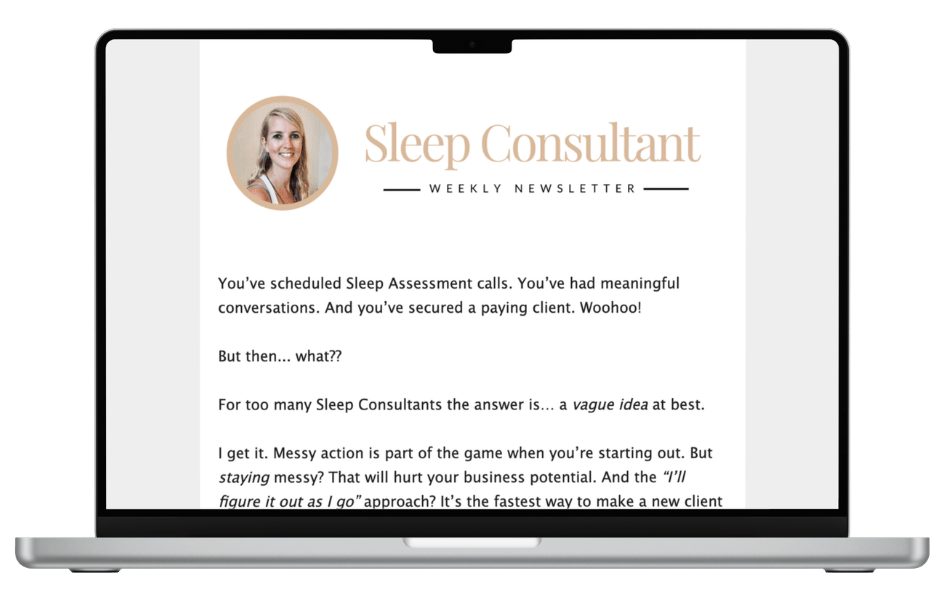
The Sleep Consultant Newsletter
Weekly tips, strategies and marketing ideas for sleep consultants written by a fellow sleep consultant. 1500+ active subscribers!
I’ll only send helpful emails, and you can unsubscribe anytime with one click.
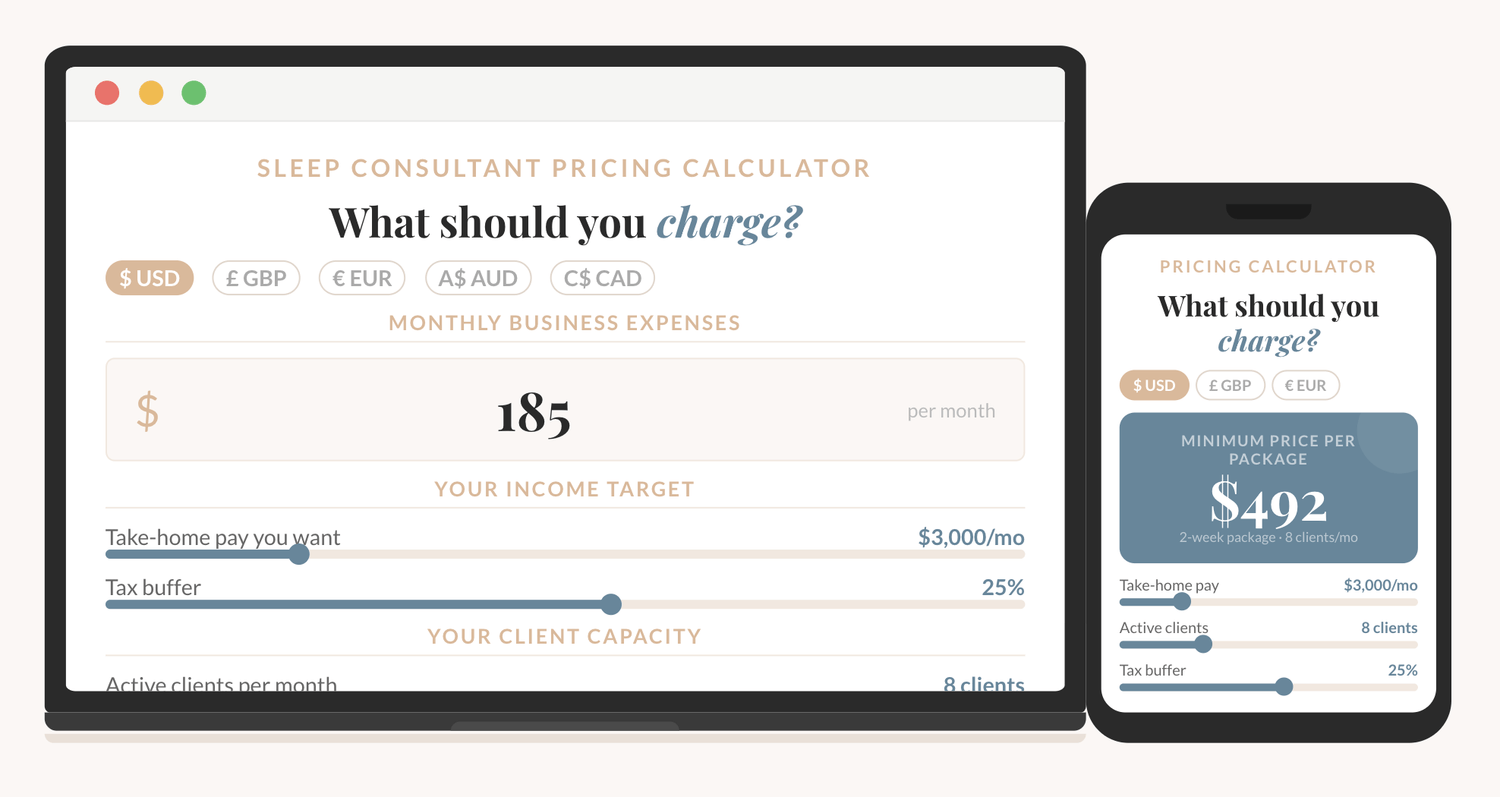
How to price your sleep consulting services?
The Sleep Consultant Pricing Calculator shows you exactly what to charge, based on your real expenses, your income goal, and how many clients you want to take on.
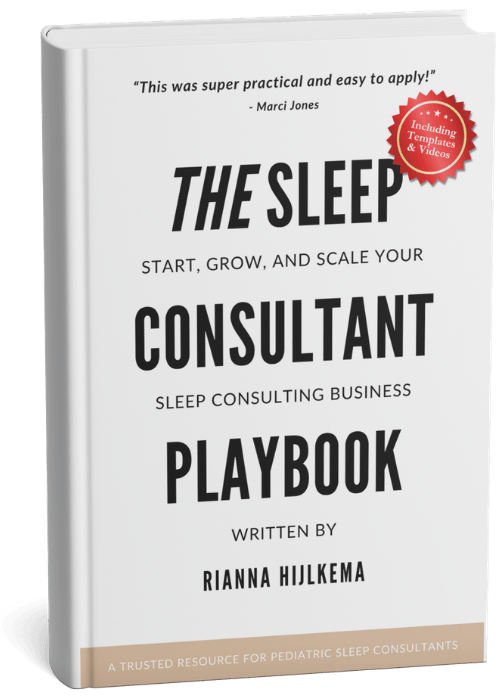
I'm thrilled to offer you an exclusive preview of what’s inside!
You can read the first 22 pages of The Sleep Consultant Playbook and get a taste of the value, insights, and actionable strategies that are waiting for you.
Other articles you might be interested in:
© 2021-2026 Sleep Consultant Business. All Rights Reserved.