
How to Build a Website as a Sleep Consultant
Your first sleep consulting website needs six things: a clear header with a strong headline and a call to action, an about section that builds trust, a services section focused on outcomes not just offerings, testimonials, a second call to action, and a footer with your legal essentials. It does not need to be perfect. It needs to exist, be clear, work on mobile, and make it easy for an exhausted parent to understand what you do and book a call. Done is better than perfect. Get it live, then make it better.
In this guide
- Do you actually need a website to get started?
- Three website options: PDF, landing page, or full site
- The six essential sections every sleep consultant website needs
- How to build your sleep consulting website: step by step
- Should you put your pricing on your website?
- Common website mistakes sleep consultants make
- Frequently asked questions
When you get certified as a sleep consultant, nobody tells you that you are also signing up to become a web designer, copywriter, and brand strategist. And yet, within the first few weeks, most newly certified sleep consultants find themselves staring at a blank website builder wondering where to start, what to say, and whether anyone will ever actually find it.
Here is the truth: your website does not need to be beautiful, elaborate, or expensive. What it needs is clarity. When an exhausted parent lands on your site at 11pm after four wakeups, they are not admiring your colour palette. They are trying to answer three questions as fast as possible: who are you, can you solve my problem, and how do I book you. Your website's entire job is to answer those three questions and make the next step obvious.
This article walks through everything you need to know to get a professional, effective website live, including the six sections every sleep consulting website needs, the three format options available to you, the pricing question most new sleep consultants get wrong, and the seven mistakes to avoid that will cost you clients even when your content is good.
Do You Actually Need a Website to Get Started?
Technically, no. Your first clients will almost certainly come from your warm network, and you can land those without a website. But here is the thing: even a warm lead will look you up before they book. When a friend mentions your name, the first thing the other person does is search for you. If there is nothing to find, or if what they find does not inspire confidence, you have lost a booking that was almost already yours.
A website does more than make you visible. It builds credibility before you have ever spoken to a prospective client. It gives your business a professional home that exists independently of social media platforms you do not own. And it creates a space where you can send every enquiry, every referral, and every prospective client, so they can do their research and arrive at the Sleep Assessment Call already feeling that they know and trust you.
The goal at this stage is not a perfect website. The goal is a website that exists, answers the right questions, and is live. You can always improve it. You cannot get clients from a website that is still in draft.
Three Website Options: PDF, Landing Page, or Full Site
Not every sleep consultant needs to launch with a full multi-page website, and not every platform is the right fit for where you are right now. There are three formats to choose from, and the right one depends on your current situation and how much time and energy you have available.
Option 1: A one-page PDF
If the idea of building a website feels completely overwhelming right now, start with a PDF. Design it in Canva, include the six essential sections covered below, and use it as your "website" while you get your business moving. You can email it to enquiries, share it on social media, and send it to anyone who asks. It is simple, quick, and far better than having nothing at all.
Option 2: A one-page landing page
A single webpage that covers everything a prospective client needs to know. Clean, simple, mobile-friendly, and professional. This is a strong choice for most newly certified sleep consultants because it gives you a real online presence without the scope creep and overwhelm of a full website build. For many sleep consultants in their first year, a well-done landing page converts better than a sprawling five-page site that never quite gets finished.
Option 3: A five-page website
A basic five-page website typically includes a home page, about page, services page, testimonials section, and a contact or booking page. This is the right choice if you are ready to invest the time, want a stronger SEO foundation, and intend to grow your content over time. It does not need to be elaborate. It needs to be clear, consistent, and professional.
I have seen sleep consultants spend three months perfecting a website that nobody visited, and I have seen others land their first five clients with a Canva PDF and a Google Business Profile. The format matters less than most people think. What matters is that it is clear, it is live, and it makes it easy to book you. Start with what you can actually finish this week.
The Six Essential Sections Every Sleep Consultant Website Needs
Whether you are building a PDF, a landing page, or a full site, these six sections are the core of your website. Everything else is optional. These are not.
Section 1: Header (the above-the-fold section)
This is the first thing a visitor sees before they scroll. It is the most important real estate on your entire website, and most sleep consultants waste it. Your header needs four things: a headline that immediately tells a parent what you do ("Helping families get more sleep, starting tonight"), a short supporting tagline that reinforces your unique approach, a background image that reflects the experience you are offering, and a clear call to action button that tells them exactly what to do next.
The headline is not about you. It is about them. "Expert sleep solutions for tired parents" works better than "Welcome to Peaceful Nights Sleep Consulting." If you can include a client testimonial or trust badge in this section, even better. Spend 90% of your website energy on getting this section right, and the rest of the page becomes much easier.
Section 2: About
The about section is where you build the human connection that makes a parent want to work with you specifically, not just any sleep consultant. Start with a warm, approachable introduction: who you are, why you do this work, and what your approach looks like. Draw on your brand story here, because the goal is to make them feel like they are talking to a real person who understands what they are going through. Your credentials matter, but they come second to the connection. Certification first, then warmth, is the wrong order. Lead with the human, then back it up with the credentials.
Section 3: Services
This section is not a list of what you do. It is a description of what changes for the family when they work with you. Instead of "one-on-one sleep consultation," write "get your baby sleeping through the night with a personalised plan built around your family." Instead of "ongoing support," write "two weeks of daily check-ins so you are never navigating a hard night alone." The transformation is what parents are buying. Make sure the language reflects that.
End this section with a call to action to book a Sleep Assessment Call. Do not make them hunt for the next step.
Section 4: Testimonials
This is where other parents do the selling for you. Include two to four testimonials that are specific about the before, the result, and what it felt like to work with you. "She was wonderful" does nothing. "My son went from waking six times a night to sleeping 10 hours straight in nine days, and I feel like a different person" does everything. If you only have one testimonial at launch, you can split a longer one into two or three excerpts and feature them separately across your site, each attributed clearly to the same person.
Section 5: Call to action
Every page on your website should have a clear, visible next step. For most sleep consultants, this is a button to book a Sleep Assessment Call. Make it obvious, make it easy, and make it appear more than once. A parent who has scrolled through your whole site and is ready to act should not have to scroll back to the top to find the booking link. Put a call to action button in the header, at the end of the services section, and again near the bottom of the page.
Section 6: Footer
The footer is often treated as an afterthought, but it carries legal and trust weight. It must include your privacy policy, your terms and conditions, and a copyright notice (for example, "© 2026 Your Business Name"). These are not optional. GDPR in Europe and CCPA in California both require a privacy policy if you are collecting any visitor data, including email addresses through a contact form. Do not copy a privacy policy from another website, even if it looks similar to what you need. The only safe options are writing your own or using a reputable policy generator.
How to Build Your Sleep Consulting Website: Step by Step
The six sections above tell you what to include. This is the order in which to build it.
Step 1: Choose your format and register your domain
Decide whether you are starting with a PDF, a landing page, or a full site. Then register your domain name through a provider such as GoDaddy or Namecheap. Aim for a .com if it is available. Your domain should reflect your business name clearly. Once you have your domain, set up a professional email address tied to it, for example hello@yourbusinessname.com. A Gmail address for client communications signals that your business is not quite established yet.
Step 2: Write your content before you build
Most sleep consultants make the mistake of opening the website builder first and then trying to write copy in real time. This leads to vague, generic content because the design is distracting. Write your six sections as a simple document first: headline, tagline, about paragraph, services descriptions, testimonials, and CTA text. When the words are done, putting them into a design takes a fraction of the time.
Step 3: Choose your platform and build
For a PDF, use Canva. For a landing page or full site, choose a platform that matches your technical comfort level and long-term goals. Whichever platform you choose, use a template designed for service businesses, not a general-purpose template. Starting from a template that already has the right structure saves significant time and prevents common layout mistakes.
Step 4: Add images and brand elements
Use your own photos where possible. A real photo of you builds more trust than a stock image, and it makes the about section genuinely personal. For any stock photography, use royalty-free sources and double-check the licensing terms before publishing. Canva's free plan has image restrictions for online use, so verify before you use them. Convert all images to JPG format and compress them before uploading. Large image files slow your site down, and site speed directly affects whether parents stay or leave.
Step 5: Check the technical essentials
Before you publish, check every page on a mobile device. Over 60% of web traffic comes from mobile phones, and in the parenting space that number is likely higher. If your site does not work properly on a phone, you are losing clients. Add alt text to every image (a short description of what the image shows), write a meta description for each page (a one or two sentence summary that appears in search results), and add your privacy policy and terms to the footer.
Step 6: Connect Google Analytics and publish
Create a free Google Analytics account, add your website, and install the tracking code before you go live. You do not need to analyse the data right now. The point is to start collecting it so that when you are ready to review your website performance later, you have historical data to work from. Once Analytics is connected, publish and set up your Google Business Profile, which is the next most important step after the website itself.
Should You Put Your Pricing on Your Website?
This is one of the most common questions newly certified sleep consultants ask, and there is a clear answer for the early stage of your business: no.
When a parent sees a number before they are emotionally connected to the value of what you offer, they make a reflexive judgement about whether it is too expensive. They have not heard your voice, they have not told you about their child, they have not imagined what a full night of sleep would feel like. They just see a number and make a snap decision. Removing that number from your website removes that barrier and replaces it with a conversation, which is where you can actually demonstrate your value.
The goal in your first year is to have as many Sleep Assessment Calls as possible. Every barrier you remove between a parent and that call increases the number of conversations you have, and more conversations means more practice, more bookings, and more testimonials. Price is a barrier for parents who are not yet sold on the value. Keep it off the website until you have a waitlist.
Once you do have consistent demand and decide to add pricing, frame it around the investment rather than the cost. Instead of listing "$500," write something like "Investment: $500 for a personalised sleep plan and two weeks of daily support, so your family can finally sleep." That framing signals transformation, not transaction.
Common Website Mistakes Sleep Consultants Make
A weak above-the-fold section
The above-the-fold section is everything a visitor sees before they scroll. If that section does not clearly communicate what you do, who you help, and what to do next, most people will leave without reading further. A common version of this mistake is leading with your business name and a vague tagline ("Peaceful Nights Consulting — where rest begins"), when what a parent needs to see is "I help families with babies and toddlers establish healthy sleep habits, without nights of full crying it out." Clarity first, brand second.
Not checking the site on mobile
Over 60% of web traffic comes from mobile devices, and in the parenting space it is likely even higher. Parents are researching sleep consultants on their phones at 3am, between feeds, during nap time. If your website is difficult to read, slow to load, or has buttons that do not work on a phone screen, you are losing them. Check your site on your own phone before you publish, and check it again every time you make a significant update.
Using heavy or unlicensed images
Large image files slow your page load time, and a slow website loses visitors before they even read your headline. Convert all images to JPG and compress them before uploading. On the licensing side, if you are using images from Canva or a stock library, read the terms before you publish. Canva's free plan has specific restrictions on commercial use, and not all stock images are cleared for website use. Always check. And if you are a sleep consultant, make sure any sleep-related images on your site reflect safe sleep practices.
No privacy policy
If your website has a contact form, a booking button, or any kind of email opt-in, you are collecting personal data and you are legally required to have a privacy policy in most countries. GDPR in Europe and CCPA in California are the two most significant regulations, but similar laws apply in Australia, Canada, and the UK. Do not copy a privacy policy from another website. A colleague of mine did exactly that and later discovered the policy she copied was part of a paid legal service. The fine was $3,000. Use a reputable policy generator and make sure it is specific to your business.
Skipping meta descriptions and alt text
Meta descriptions are the short summaries that appear under your website name in Google search results. Alt text is the written description attached to every image. Both matter: meta descriptions help Google understand what your page is about and affect whether parents click through from search results, and alt text is required for accessibility and also contributes to your search ranking. Most website platforms have a simple field for both. Fill them in for every page and every image before you publish.
Not connecting Google Analytics
Google Analytics tells you how many people visit your site, where they come from, which pages they look at, and how long they stay. You do not need to analyse this data right now, but you need to start collecting it. The data is only valuable if it goes back far enough to show trends. Set it up before you publish so that when you are ready to optimise your site in year two, you have months of data to work from rather than starting from zero.
Waiting until it is perfect to publish
This is the most common and most expensive website mistake. A sleep consultant with a simple, clear, published website will always outperform one with a perfect website that is still in progress. Done is better than perfect. Get it live with the essentials, then keep improving it as you go. You will spot the gaps faster once it is live and real people are visiting it than you ever will from staring at a draft.
Frequently Asked Questions
How much does it cost to build a sleep consulting website?
A basic website can cost as little as a domain registration ($10–$20 per year) and a platform subscription ($10–$30 per month for most entry-level plans). However, I recommend choosing an all-in-one platform like SleepPRO, where you can also manage your email marketing, funnels, course builder, automations, and more—all in one place. This can save you both time and money as you build your business, so you can spend less time piecing different tools together and more time doing what you actually got certified to do: helping families.
What platform should I use to build my website?
My honest recommendation is SleepPRO (grab 2 free months). I have used it for my own businesses and have set it up for fellow sleep consultants, and the reason I keep recommending it comes down to one thing: it does everything in one place.
When you are just starting out, your website is the immediate priority. But within your first year you will also need email marketing, a booking system, and eventually a way to sell digital products or run an online course. With Wix or Squarespace, each of those needs a separate tool and a separate monthly cost. With SleepPRO, they are all already included in the same platform at the same price.
I also know that when you are starting a sleep consulting business, there is genuinely no spare money sitting around. Every subscription matters. In the meantime, if this article has helped you and you decide to sign up, here is the link to grab 2 free months.
Do I need a separate page for each service?
Not at the start. A single services section on your home page or landing page that clearly describes each package is enough for most newly certified sleep consultants. Separate service pages become useful once you have multiple distinct packages and want to drive SEO traffic to each one specifically. For now, keep it simple and focused on getting clients into a Sleep Assessment Call, not on building out a complex site architecture.
What photos should I use on my website?
A professional headshot of yourself is the highest-value image you can have on your site. It makes you real and approachable in a way that no stock photo can. Beyond that, use warm, calm imagery of babies and families sleeping, and make sure any sleep-related images reflect safe sleep guidelines. Avoid stock photos that show unsafe sleep environments such as loose bedding, soft toys in the cot, or a baby sleeping face-down. As a sleep consultant, your visuals are part of your professional positioning.
How long should it take to build my website?
A one-page landing page built from a template, with your content written in advance, should take one focused day. A five-page website from a template typically takes a weekend. The variable is how long you spend writing your content, which is the hardest part for most sleep consultants. Write the words first, separately from the building. That single habit will halve your build time.
Key Takeaways
- Your website does not need to be perfect, it needs to be live. A clear, simple, published site will always outperform an elaborate one that is still in progress. Start with what you can finish this week.
- Every sleep consulting website needs six sections: header, about, services, testimonials, call to action, and footer. Everything else is optional at the start.
- Write your content before you build. Copy written inside a website builder is almost always weaker than copy written separately and pasted in. Do the words first.
- Do not put pricing on your website in your first year. Keep the barrier to a Sleep Assessment Call as low as possible. You can always add pricing later when you have the demand to justify it.
- Check everything on mobile before you publish. Most parents will find you on their phone. If the site does not work well there, it is not working.
- Connect Google Analytics before you go live. You do not need to use it now, but you need the data to start building so you have it when you need it later.
Once your website is live, the next priority is your Google Business Profile, which is one of the most underrated tools available to newly certified sleep consultants and often more valuable than social media in the early months.
Disclaimer: The information shared in these articles is for educational and informational purposes only. It does not constitute legal, financial, or professional advice. Always consult with a qualified professional regarding your specific situation.

Rianna Hijlkema
Certified Pediatric Sleep Consultant, Certified Postpartum Doula, Former Teacher & School Director, Founder of Sleep Consultant Design & Sleep Consultant Business and the author of The Sleep Consultant Playbook (available on Amazon).
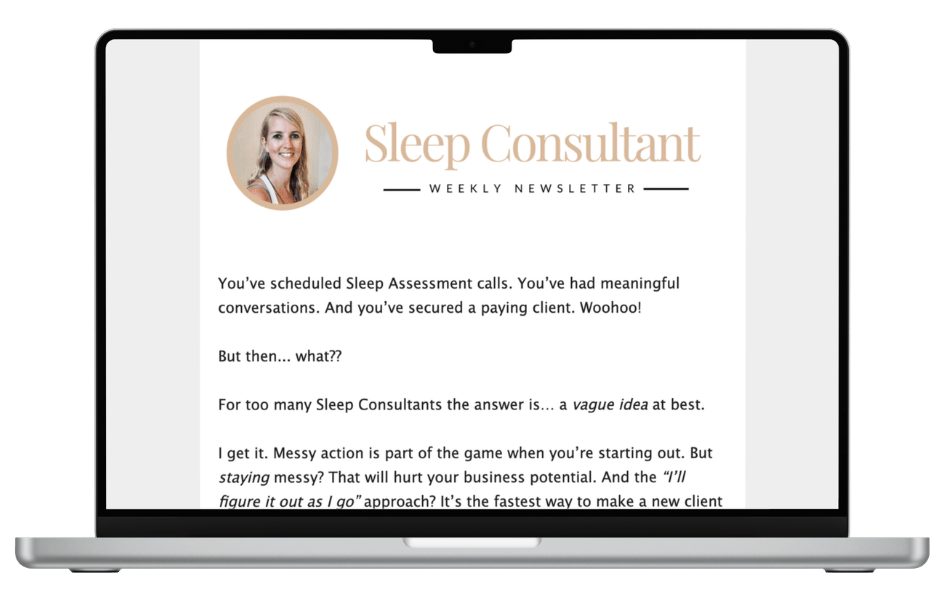
The Sleep Consultant Newsletter
Weekly tips, strategies and marketing ideas for sleep consultants written by a fellow sleep consultant. 1500+ active subscribers!
I’ll only send helpful emails, and you can unsubscribe anytime with one click.
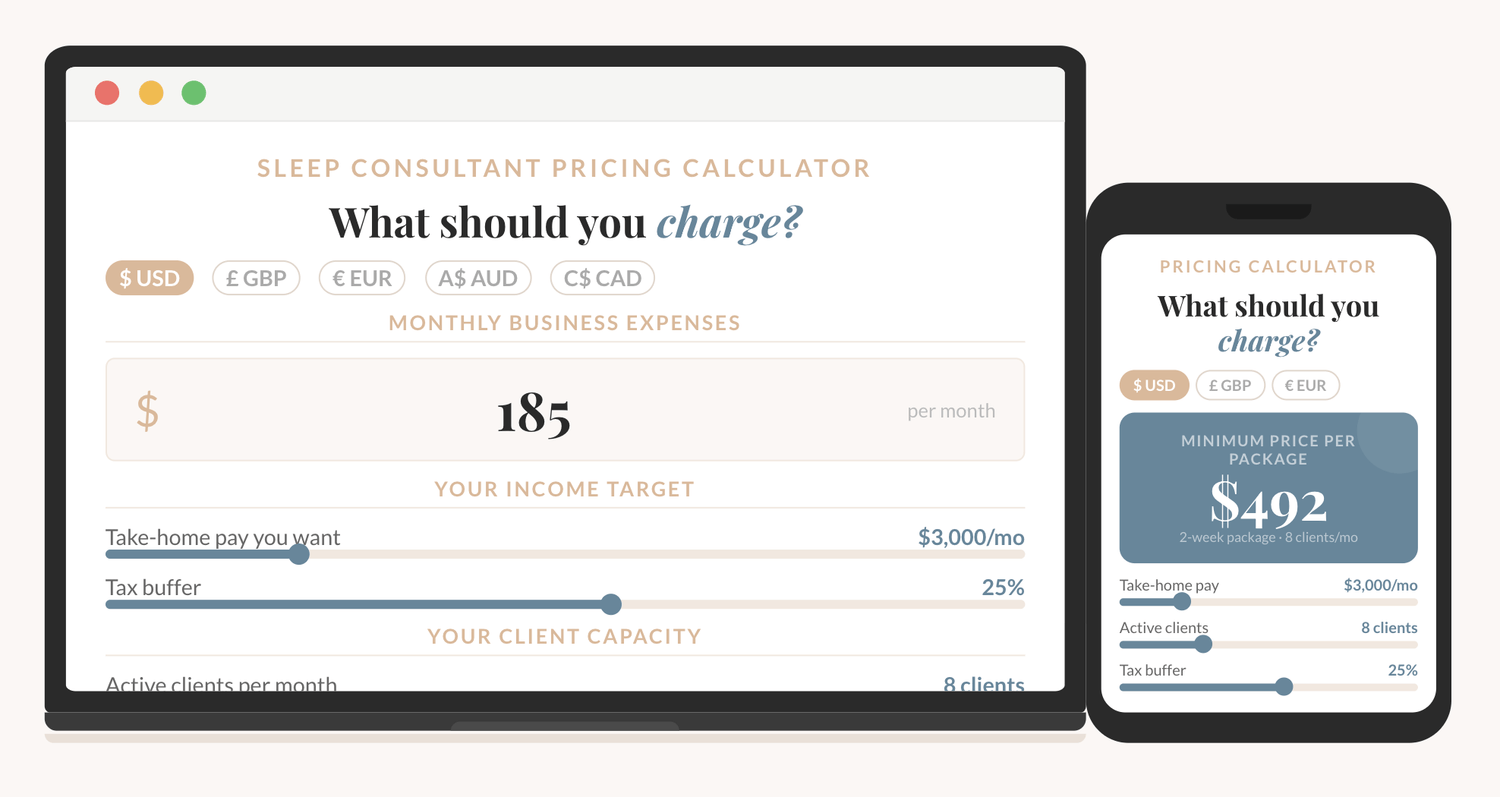
How to price your sleep consulting services?
The Sleep Consultant Pricing Calculator shows you exactly what to charge, based on your real expenses, your income goal, and how many clients you want to take on.
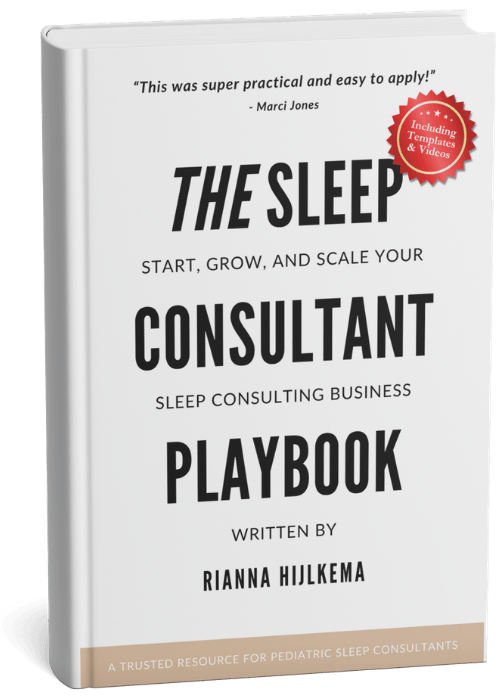
I'm thrilled to offer you an exclusive preview of what’s inside!
You can read the first 22 pages of The Sleep Consultant Playbook and get a taste of the value, insights, and actionable strategies that are waiting for you.
Other articles you might be interested in:
© 2021-2026 Sleep Consultant Business. All Rights Reserved.