
How to Avoid Bad Reviews as a Sleep Consultant
Most bad reviews in sleep consulting aren't caused by bad outcomes. They're caused by unmet expectations, clients who felt unsupported or surprised during the process, and situations that weren't addressed early enough to resolve. The way to avoid them is to set clear expectations before the work begins, stay actively connected throughout the process, recognise the signs of buyer's remorse early, and handle unhappy clients with empathy rather than defensiveness. Handle the relationship well at every phase and bad reviews rarely happen. When they do, you'll know how to respond.
In this guide
- Where bad reviews actually come from
- Set clear expectations before you start
- Recognise and address buyer's remorse early
- Stay connected throughout the process
- How to handle an unhappy client
- Offboarding: the make-or-break moment
- What to do when a bad review happens anyway
- Common mistakes sleep consultants make
- Frequently asked questions
Sleep consulting is personal work. A family comes to you exhausted and vulnerable, trusting you with something as intimate as their child's sleep. That dynamic creates incredible moments of impact, and it also creates conditions where things can go wrong in ways that feel disproportionate to the actual outcome.
A parent who expected a dramatic transformation in three nights and saw modest improvement in ten may feel let down, even if ten nights was a perfectly reasonable timeline. A parent who felt unsupported during a tough week may leave a lukewarm review even if the plan was excellent. A parent who wasn't clear on what was included may feel they didn't get what they paid for, even if they did.
None of those outcomes are inevitable. Most bad reviews in this industry are preventable. The prevention happens across the entire client journey, not just at the end. This article walks you through exactly how.
Where Bad Reviews Actually Come From
Most sleep consultants assume bad reviews come from bad results. They don't. At least, not usually. When you look at what actually triggers a negative review, it almost always comes back to one of three things.
Unmet expectations. The client imagined something different from what was delivered. Not worse. Just different. Maybe they expected more calls, faster results, more personalised check-ins, or a different approach. If those expectations were never explicitly discussed, the gap between what they imagined and what they received feels like a failure, even when it technically wasn't.
Feeling unsupported. Sleep training is emotionally gruelling. A parent who is watching their baby cry and not hearing from you for three days is going to spiral. Even a brief, warm check-in at the right moment can completely change how they feel about the whole experience.
Buyer's remorse that was never addressed. Many parents feel doubt after booking. They've spent money they're not sure about, on a process they're not sure will work, during an already stressful period of their lives. That doubt, left unaddressed, quietly builds. By the time they're unhappy with something small, the accumulated doubt is the real issue. Catch buyer's remorse early and it dissolves. Miss it and it tends to find an outlet.
Set Clear Expectations Before You Start
Expectation management begins on the Sleep Assessment Call, not after the contract is signed. The more clearly you paint the picture of what working with you looks and feels like, the less room there is for misalignment later.
Cover these things explicitly before any money changes hands:
- Realistic timelines. Sleep training takes time. Most families see meaningful progress within one to two weeks, but every child is different. Say this out loud. A parent who hears it before they start will hold it very differently from a parent who discovers it mid-process when they're already frustrated.
- What's included and what isn't. How many check-ins? How many calls? What response time should they expect on messages? What happens if the plan needs to be adjusted? Go through this in detail. Ambiguity in your package description creates assumptions, and assumptions create complaints.
- Their role in the process. Sleep consulting is collaborative. The plan won't work if it's not followed consistently. Make sure the family understands that results depend on their commitment as much as your expertise. This isn't about covering yourself. It's about giving them an accurate picture of what success requires.
- What to do if something feels off. Tell them explicitly: if anything isn't working or feels wrong, contact you before making changes to the plan themselves. An open door to raise concerns is a bad-review prevention mechanism. Parents who feel they can bring a problem to you rarely need to take it anywhere else.
Your onboarding process should reinforce all of this in writing. A warm welcome email that outlines the journey, what to expect, and how to reach you creates a foundation of trust before the hard work even begins. Clients who feel clear and prepared going in are dramatically less likely to feel disappointed coming out.
A strong client contract is part of expectation management too. It's not about being defensive or lawyerly. It's about having something in writing that both you and your client agreed to. When a misunderstanding arises (and occasionally they will), a clear contract gives you a shared reference point to return to. If you don't have one yet, that's the first thing to sort out. Check out the Sleep Consultant Template Shop for a ready-to-use contract template.
Recognise and Address Buyer's Remorse Early
Buyer's remorse is more common in sleep consulting than most consultants realise. A parent who has just spent a meaningful amount of money on help during one of the most anxious periods of their lives is going to feel some doubt. That's normal. It doesn't mean they don't trust you. It means they need reassurance.
Here's what buyer's remorse looks like in practice:
- They go quiet after booking: slower replies, less enthusiasm than when they first signed up.
- They start asking for more detail than before, or looking for reasons to hesitate.
- They bring up the price again, or mention they're stretched financially.
- They stop taking action on the next steps you've outlined.
- Their tone shifts from warm and engaged to flat or uncertain.
When you notice any of these, don't wait for them to come to you. Reach out warmly and gently revisit the reasons they decided to work with you in the first place. Remind them of what they're working towards. A simple "How are you feeling about everything so far?" is often enough to surface what's going on and give you the chance to address it before it grows.
If they express doubts, don't push back or defend yourself. Listen first. Ask clarifying questions. Offer to adjust something in the plan if there's a genuine concern. Flexibility here isn't weakness. It's good client care, and it's almost always enough to restore confidence.
Stay Connected Throughout the Process
The follow-up support phase is where most complaints are born or prevented. A parent who is three days into sleep training, running on minimal sleep, and hasn't heard from you is a parent who is starting to doubt. It doesn't take much from your end to completely change that experience, but it does require proactive contact, not just responding when they reach out.
These five types of check-in messages cover most of what a parent needs to hear during the process. Keep them short, warm, and specific to where they are in the plan.
| Check-in type | Example message |
|---|---|
| Progress reminder | "Hey [Name], just a quick reminder: small steps lead to big progress. Even if it's moving slowly, every bit of consistency is building a solid foundation for [child's name]'s sleep." |
| Celebration of wins | "Hey [Name], I hope you're noticing some positive changes! Even little wins (like an easier bedtime) are huge. Keep it up!" |
| Reassurance | "Hey [Name], I know [child's name] might be testing the new routine and that can be frustrating. This is completely normal. Stick with it, it will get easier. I'm here if you need anything." |
| Preemptive guidance | "Hey [Name], as we approach [milestone], you might notice some changes in naps or sleep resistance. Let me know if you'd like help adjusting the plan." |
| Supportive closure | "Hey [Name], as we wrap up our plan together, I want to make sure you're feeling confident moving forward. Any last questions? You've done an amazing job." |
The goal is for your client to never feel alone in the process. Regular contact builds trust, provides reassurance and prevents small frustrations from turning into bigger problems that eventually land in a review.
For a full breakdown of how to structure this phase, see How to Run the Follow-Up Support Phase as a Sleep Consultant.
How to Handle an Unhappy Client
Even with everything in place, the occasional unhappy client is part of doing this work. How you handle it determines whether it becomes a bad review or a trust-building moment. The sequence matters.
Step 1: Stay calm and listen. Your first reaction when a client expresses frustration will set the tone for everything that follows. Don't defend yourself immediately. Don't explain. Just listen. Let them feel heard. Being heard is often most of what they actually need. An exhausted parent who feels dismissed will escalate. One who feels genuinely listened to will often soften.
Step 2: Acknowledge their feelings. Before you say anything else, acknowledge what they've shared. Something simple: "I can hear how frustrated you are and I'm really glad you told me." You're not agreeing that you've done something wrong. You're validating that their experience is real. That distinction matters.
Step 3: Ask clarifying questions. Before you offer solutions, make sure you fully understand what the concern actually is. Sometimes what a client says on the surface ("the plan isn't working") is different from what's really going on ("I don't feel supported" or "I expected this to be faster"). Ask before assuming.
Step 4: Offer a concrete solution. Once you understand the issue, offer something specific. Adjust the plan. Schedule a call. Extend the support period if warranted. Something that shows you're committed to their success rather than defending your delivery. Stay solution-focused. This is the difference between a complaint that becomes a story the parent tells against you and one they tell in your favour.
Don't take it personally. Sleep consulting is high-stakes and emotional. When a parent vents, it usually has more to do with exhaustion and stress than with your actual performance. See it as useful feedback and an opportunity to show your commitment to their family, not as an attack on who you are.
Offboarding: the Make-or-Break Moment
How you end a client engagement determines what they say about you afterwards. A thoughtful offboarding process is both a relationship-nurturing tool and a review-prevention strategy.
For happy clients, your offboarding email should thank them warmly, celebrate the progress they've made, and include a direct link to your Google Business Profile with a simple request for a review. Keep the ask easy: one sentence with a clickable link is enough. The more steps involved, the less likely it is to happen.
For clients who didn't get the results they hoped for, or where the process was bumpy, skip the testimonial request. Instead, send a feedback form. A short survey asking how the experience went gives them a constructive outlet for any frustrations and shows you genuinely care about improving. Done well, this often turns a potentially negative experience into a neutral or even positive one, because the parent feels respected rather than ignored.
Wait until after the client has left their testimonial before offering a follow-up call or bonus. Offering it beforehand can look like an incentive for a positive review, which goes against platform guidelines for unbiased reviews and can actually invalidate the testimonial. Get the review first. Then offer the bonus as a genuine thank-you.
For a full walkthrough of the offboarding process, including email templates, see How to Offboard a Sleep Consulting Client.
What to Do When a Bad Review Happens Anyway
Even with everything above in place, the occasional bad review will happen. A parent having a particularly hard night can leave a one-star review impulsively. A misunderstanding that wasn't fully resolved can surface publicly. Someone with unrealistic expectations can feel let down regardless of your effort. This is part of operating a client-facing service business. It doesn't define you.
When it happens:
- Don't respond immediately. Wait until the emotional spike passes. A response written in the moment will almost always make things worse. Give yourself a few hours minimum.
- Respond publicly with calm professionalism. Acknowledge the feedback, express that you're sorry they had that experience, and offer to connect privately to resolve it. Don't argue facts, don't explain yourself at length, and don't get defensive. Other potential clients are reading your response as carefully as the review itself.
- Reach out privately as well. A direct message giving them a genuine opportunity to discuss the issue can sometimes lead to the review being updated or removed voluntarily. Don't request this explicitly. Just focus on actually resolving their concern.
- Use it as feedback. Once the sting fades, read it as data. Is there something you could do differently in your process, your communication, or your expectation-setting? One honest bad review often contains more useful information than ten glowing ones.
Common Mistakes Sleep Consultants Make
Only communicating when there's a problem
Waiting for clients to reach out creates a dynamic where your contact is always associated with something going wrong. Proactive, warm check-ins throughout the process change the entire feel of the relationship. Don't wait to be needed. Show up consistently.
Promising specific results
Every family is different. Every child is different. Guaranteeing that a baby will sleep through the night by night five sets a specific benchmark that might not be met. Even a client who made good progress can feel let down. Promise your commitment, your process, and your support. Be careful with specific outcome timelines.
Asking unhappy clients for a testimonial
Sending your testimonial-request email to every client by default, regardless of how the process went, is a fast track to a public negative review. Read the room at offboarding. Happy client: ask for the review. Anything less than clearly satisfied: send the feedback form instead.
Getting defensive with complaints
A defensive response to a complaint (even a justified one) almost always escalates it. The parent isn't looking for a debate. They want to feel heard and to see that you care. Acknowledge first, solve second, explain never (unless directly asked).
Not having a contract
When a dispute arises and nothing is in writing, it becomes your word against theirs. A clear client contract that both parties have signed sets the terms of the engagement before emotions are running high. It protects you. It protects your client. And it means that when a misunderstanding arises, you have a shared document to return to rather than a he-said-she-said situation.
Frequently Asked Questions
What if a client is unhappy but hasn't said anything?
Watch the signals: slower replies, less engagement, shorter responses, declining to book the next check-in. These are buyer's remorse patterns. Don't wait for the conversation. Initiate it warmly yourself. A check-in that says "I just wanted to make sure you're feeling supported and everything is on track" gives them an easy opening without putting them on the spot.
Should I offer a refund to avoid a bad review?
Have a clear refund policy in your contract, before any money is exchanged. If a refund is warranted based on your policy, honour it cleanly and graciously without making the client feel they had to fight for it. What you should never do is offer a refund specifically in exchange for removing a review. That's against most platform policies and, if discovered, does far more damage than the review itself.
What if the results were genuinely poor and it was partially my fault?
Own it. The worst thing you can do when you know something went wrong is to deflect or make excuses. Acknowledge what happened, offer a genuine resolution, and let it inform how you approach the next client. Every experienced sleep consultant has a case that didn't go as well as they hoped. What separates the good ones from the great ones is what they do with that information.
Can I ask for a bad Google review to be removed?
You can flag a review for removal if it violates Google's policies: spam, fake reviews, irrelevant content, or reviews from someone who was never actually a client. Google doesn't remove reviews simply because you disagree with them or because the experience was resolved. Focus your energy on generating a strong volume of genuine positive reviews so that one difficult review carries less weight in the overall picture. See How to Get Great Testimonials as a Sleep Consultant for how to build that foundation.
How many positive reviews do I need before a negative one stops mattering?
There's no magic number, but patterns matter more than individual reviews. A profile with 30 five-star reviews and one three-star review looks very different from a profile with five reviews and one three-star. The best protection against any single bad review is a consistent practice of requesting reviews from every satisfied client and making the process as easy as possible for them.
Key Takeaways
- Most bad reviews come from unmet expectations, not bad results. Manage expectations clearly on the Sleep Assessment Call and in your onboarding, before the work begins.
- Buyer's remorse is normal and manageable. Watch for the signs and reach out warmly before it grows. Don't wait for the client to come to you.
- Proactive check-ins prevent complaints. Use the five check-in types (progress reminder, celebration, reassurance, preemptive guidance, supportive closure) throughout the follow-up phase.
- When a client is unhappy: listen first, acknowledge second, solve third. Don't defend or explain until the parent feels genuinely heard.
- Offboarding determines what clients say about you. Read the room: testimonial request for happy clients, feedback form for anyone who wasn't fully satisfied.
- A strong volume of genuine positive reviews is your best defence. One difficult review on a profile of thirty glowing ones is a footnote. One on a profile of four is a problem.
Prevention is built into every phase of the client journey: awareness, consideration, purchase, service, and loyalty. Get each phase right and bad reviews become the exception, not the risk.
Next Article: How to Get Great Testimonials as a Sleep Consultant
Disclaimer: The information shared in these articles is for educational and informational purposes only. It does not constitute legal, financial, or professional advice. Always consult with a qualified professional regarding your specific situation.

Rianna Hijlkema
Certified Pediatric Sleep Consultant, Certified Postpartum Doula, Former Teacher & School Director, Founder of Sleep Consultant Design & Sleep Consultant Business and the author of The Sleep Consultant Playbook (available on Amazon).
The Sleep Consultant Newsletter
Weekly tips, strategies and marketing ideas for sleep consultants written by a fellow sleep consultant. 1500+ active subscribers!
I’ll only send helpful emails, and you can unsubscribe anytime with one click.
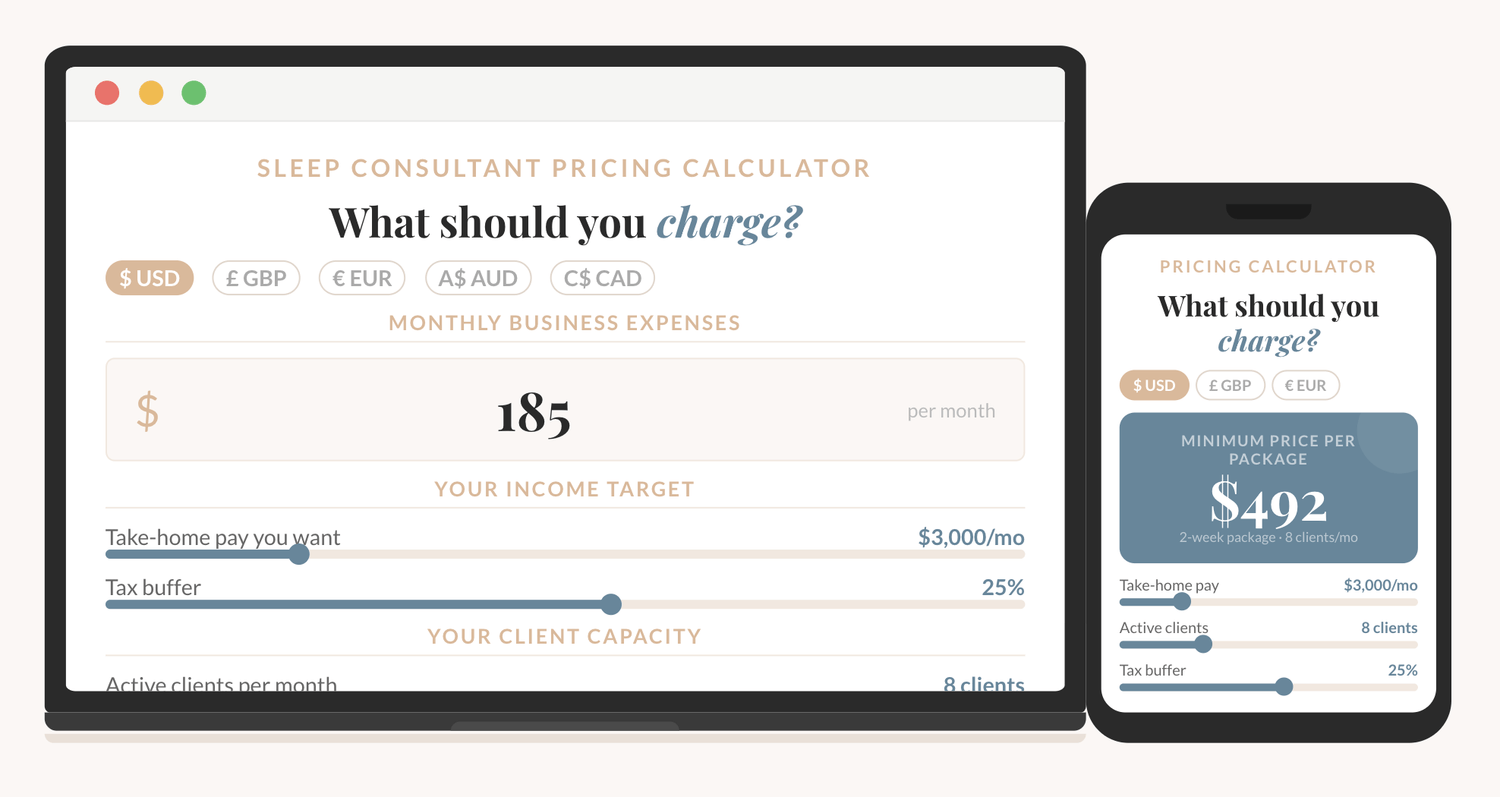
How to price your sleep consulting services?
The Sleep Consultant Pricing Calculator shows you exactly what to charge, based on your real expenses, your income goal, and how many clients you want to take on.
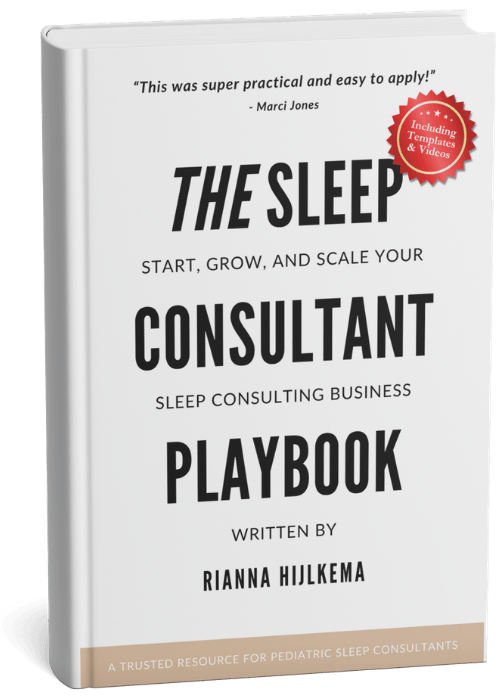
I'm thrilled to offer you an exclusive preview of what’s inside!
You can read the first 22 pages of The Sleep Consultant Playbook and get a taste of the value, insights, and actionable strategies that are waiting for you.
Other articles you might be interested in:
© 2021-2026 Sleep Consultant Business. All Rights Reserved.