
The Three Systems Every Sleep Consulting Business Needs
Every sleep consulting business needs three core systems working together: a marketing system that attracts and nurtures potential clients, a sales system that converts interested parents into paying clients, and a delivery system that provides a consistent, professional experience to every family you work with. Without all three, you're either constantly chasing clients, losing them between enquiry and booking, or delivering an experience that depends entirely on you remembering everything. This guide breaks down what each system involves and how to build one.
In this guide
- Why most sleep consultants avoid systems (and why that's costing them)
- System 1: Marketing: attract and nurture
- System 2: Sales: convert enquiries into bookings
- System 3: Delivery: serve every client consistently
- How the three systems connect
- Where to start
- Common mistakes sleep consultants make
- Frequently asked questions
Why Most Sleep Consultants Avoid Systems (and Why That's Costing Them)
You became a sleep consultant to help families, not to become a business systems expert. So when someone says "you need to build a marketing funnel" or "you need a CRM", it's completely understandable that your eyes glaze over. That language is designed for corporations, not for a newly certified sleep consultant trying to land their first client.
But here's the reality that most consultants discover the hard way: without systems, you're the system. You're manually posting every day to attract clients. You're having every sales conversation entirely from memory. You're emailing welcome information to every new client by hand. Every time you take a holiday or fall ill or simply get busy, the whole thing grinds to a halt.
A system doesn't remove the human element from your business. It protects it. When the repetitive, administrative tasks run on autopilot, you have more energy and attention available for the parts that genuinely need you: the consultation calls, the relationship building, the personalised sleep plans. You don't rise to the level of your goals. You fall to the level of your systems.
The good news: you don't need complicated software or a marketing degree. You need three systems, each covering one core business function. Marketing, sales, and delivery. Built once, refined over time.
System 1: Marketing: Attract and Nurture
Your marketing system is everything you do to get in front of the right parents and build enough trust that they want to find out more. Without it, you're invisible. With it, you're working on building an audience even when you're not actively posting or networking.
A marketing system for a sleep consultant has two main parts.
Part 1: Visibility
Visibility is how new parents discover you exist. This includes your social media presence, your Google Business Profile, local directories, referral networks, blog content, and any collaborations with complementary professionals (postpartum doulas, lactation consultants, midwives, GPs). You don't need to be everywhere. You need to be consistently present in the places where your ideal clients are actually looking.
Part 2: The Lead Generation Funnel
Visibility gets parents to notice you. Your lead generation funnel is what captures their interest and builds the relationship while they're deciding whether to book.
A lead generation funnel for a sleep consultant has five components: a free resource so valuable that parents happily exchange their email for it (a guide, a checklist, a short webinar), a simple sign-up page, a thank-you page, a nurture email sequence that builds trust and demonstrates your expertise over days or weeks, and a clear call to action to book a Sleep Assessment Call.
This funnel works 24 hours a day, 7 days a week, whether you're in a consultation, asleep, or on holiday. Set it up once, test and improve it over time, and it quietly moves interested parents towards booking without requiring your constant attention.
Make sure your marketing system is running and bringing in at least one new lead a day before you focus your energy on scaling or adding new content channels. A funnel that isn't converting yet needs to be fixed. Adding more traffic to a broken funnel just wastes your effort. Get the foundation working first.
System 2: Sales: Convert Enquiries Into Bookings
Your sales system is everything that happens between a parent expressing interest and a signed contract with payment confirmed. For most sleep consultants, this is the most inconsistent part of the business. Most have a vague process that changes each time and relies entirely on how confident they're feeling that week.
A sales system removes that inconsistency. It covers four steps.
Step 1: The Sleep Assessment Call
This is your primary conversion tool. A 15 to 20-minute call where you understand the family's situation, demonstrate your expertise and empathy, and present your offer clearly. The call is not a sales pitch. It's a genuine assessment, and the offer follows naturally from having understood their specific situation. See How to Run a Sleep Assessment Call for the full framework.
Step 2: The booking and scheduling system
An online scheduling tool that lets parents book their Sleep Assessment Call themselves, sync to your calendar automatically, and receive confirmation and reminder emails without you doing anything manually. Set it up once. It prevents double bookings, dramatically reduces no-shows (especially with automated 24-hour and 1-hour reminders), and saves hours of back-and-forth every week.
Step 3: The proposal and contract
After a parent says "yes" on the call, send the proposal as soon as possible, ideally within the hour. Have a template ready with your package details and payment link that you can personalise in five minutes by referencing specific things from the conversation. Attach your contract and include a payment link. Keep it clean and simple: what they're getting, what they're paying, and what happens next. Never include the questionnaire in the proposal email. It overloads them when the only action you need them to take is reading and paying.
Step 4: The sales pipeline tracker
A simple system for tracking where each potential client is in the process: enquired, booked a call, had the call, proposal sent, contract signed, payment received. This can be a spreadsheet or a basic CRM column view. It means you never lose track of a warm lead and you always know who needs a follow-up. A parent who said "not right now" two months ago is someone to circle back to, but only if you have a system that reminds you they exist.
System 3: Delivery: Serve Every Client Consistently
Your delivery system is how you serve clients once they've booked, from the moment payment lands to the moment the engagement ends and beyond. This is where your expertise shows up, and it's where the experience you create determines whether a client becomes a raving referral source or just someone who quietly moves on.
Think of a great onboarding system like ordering from Amazon: smooth, immediate, with clear next steps at every stage. That's the feeling you want to create, from the moment payment is confirmed to the moment you close the engagement.
A delivery system covers five stages.
Stage 1: Automated welcome
The moment a payment is confirmed, a warm welcome email goes out automatically. It contains a link to their intake questionnaire, instructions for scheduling their first consultation call, and a clear overview of what happens next. They feel immediately looked after. You don't have to remember to send anything manually.
Stage 2: Intake and consultation
The questionnaire gathers everything you need to create a personalised sleep plan before the consultation call. The consultation call itself is where you walk the family through the plan, answer questions, and set clear expectations for the support phase. This is the most human part of your delivery. Because the questionnaire handled all the data gathering, your full attention can be on the family rather than on taking notes.
Stage 3: The follow-up support phase
Proactive check-ins throughout the plan period. Not waiting for clients to report problems, but reaching out with progress reminders, celebrations of wins, reassurance during tough moments, and preemptive guidance before predictable challenges (nap transitions, age milestones, regressions). See How to Run the Follow-Up Support Phase for the full playbook on this stage.
Stage 4: Offboarding
A thoughtful close to the engagement that celebrates the family's progress, requests a testimonial (for happy clients) or feedback (for anyone who wasn't fully satisfied), and leaves the door open for future support. This is not an afterthought. It's the moment that determines whether a client becomes an advocate who refers you to others. See How to Offboard a Sleep Consulting Client for the full process.
Stage 5: Post-service follow-up
A short automated email sequence that continues after the engagement ends: a check-in two weeks later to see how things are going, and another two weeks after that to reconnect and gently mention the possibility of a follow-up call, additional services, or referring a friend. This keeps the relationship alive without requiring manual effort and turns past clients into ongoing referral sources.
How the Three Systems Connect
Marketing, sales, and delivery form a loop, not a line. Your marketing system brings in leads and moves them towards a booking. Your sales system converts bookings into paying clients. Your delivery system serves those clients so well that they refer new parents to you, who enter your marketing system and start the loop again.
Break any one of the three and the whole loop struggles. Great marketing that sends leads to a broken sales process wastes every lead. A slick sales process that delivers a poor client experience gets no referrals and no testimonials. An excellent delivery system that nobody ever hears about because the marketing system is nonexistent doesn't grow.
The point of building all three is to create a business that works consistently, not one that works when you have a good week or when everything lines up perfectly. A business built on systems is a business you can step away from, because the systems keep running when you don't.
Where to Start
If you're just starting out, build the systems closest to your current clients first, then work outward. That means starting with delivery, then sales, then marketing.
- First: Get your delivery system in place. Welcome email, questionnaire, consultation structure, follow-up messages, offboarding. This is the foundation that protects your reputation with every client you serve.
- Second: Build your sales system. Scheduling tool, Sleep Assessment Call framework, proposal template, contract, sales pipeline tracker. This is what turns interest into revenue.
- Third: Build your marketing system. A lead magnet, a sign-up page, a nurture email sequence, a content strategy. Once your delivery and sales systems are solid, marketing becomes about scaling what's already working.
The order matters. Bringing in lots of new leads before your delivery system is ready creates chaos. Getting your delivery right first means every new client gets a great experience, and every great experience fuels word-of-mouth marketing that compounds over time.
Common Mistakes Sleep Consultants Make
Building the marketing system first
It's tempting to focus on visibility first because it feels exciting and public. But attracting clients to a business with no sales or delivery system in place creates problems. A parent who books and then receives a chaotic, inconsistent experience is unlikely to refer anyone. Build the backend before you scale the front end.
Buying expensive tools before they're needed
Many sleep consultants invest in elaborate CRM systems, premium marketing tools, or complex automation platforms before they've taken their first paying client. Start lean. A scheduling tool, a payment processor, an email platform, and an all-in-one business platform is all you need to build all three systems. Add complexity only when the business genuinely requires it.
Not automating the welcome email
Manually sending welcome information to every new client is the first thing most consultants automate once they discover how much time it saves, and how much more consistent the client experience becomes. Set this up before you take your next client. A parent who receives a warm, detailed welcome email within minutes of payment feels immediately reassured. One who waits until you remember to send something does not.
Treating all three as separate rather than as a loop
Each system feeds the next. Your delivery system generates the testimonials that power your marketing. Your marketing system fills your sales pipeline. Your sales system funds the time you spend on delivery. Optimise them as a connected whole, not as three separate projects.
Frequently Asked Questions
How long does it take to build all three systems?
A basic version of all three systems can be built in a focused two to three week sprint if you have the right tools and templates. The delivery system (welcome email, questionnaire, consultation structure, offboarding) takes about a week. The sales system (scheduling tool, proposal template, contract, pipeline tracker) takes another few days. The marketing system (lead magnet, sign-up page, email sequence) takes another week. These are not finished products on day one. They improve each time you run a client through them.
Do I need separate tools for each system?
Not necessarily. An all-in-one business platform can handle email marketing, funnel pages, scheduling, payment processing, and course or product hosting in one place, eliminating the cost and complexity of multiple subscriptions that need to talk to each other. This is the approach behind the Sleep Consultant Business Operating System™, which is built specifically so sleep consultants can run all three systems from one platform without needing technical expertise.
What if I already have clients but no real systems?
Start with delivery. The next client who books is the first one to experience your new system. Build the welcome email, get a questionnaire set up, prepare an offboarding process. Run it with the next client, see what needs improving, adjust. You don't need to rebuild everything at once. Just start layering in the pieces with each new client and your system gets stronger every time.
Won't automation make my business feel impersonal?
Done right, the opposite is true. A warm, personalised welcome email that arrives within minutes of payment feels more looked after than waiting hours for a manual one. Automated check-in messages during the support phase, written in your voice and tailored to where they are in the plan, show parents you care even when you're not actively working. Automation handles the repetitive; you show up for the irreplaceable. That's how the personal touch gets protected, not eroded.
Key Takeaways
- Every sleep consulting business needs three systems: marketing to attract, sales to convert, and delivery to serve.
- Without systems, you are the system. The business only runs when you do.
- Build delivery first, then sales, then marketing. Get the client experience right before you scale the number of clients you're bringing in.
- The three systems form a loop. Each feeds the next: delivery generates referrals, referrals become leads, leads become clients, clients become the next referral cycle.
- Automation protects the personal touch by handling repetitive tasks so your energy goes to the parts that genuinely need you.
- Start lean. An all-in-one platform that handles all three systems is far better than multiple expensive tools that don't connect.
Pick one system to build this week. Start with the welcome email if you have existing clients. Start with the Sleep Assessment Call framework if you're still getting your first bookings. One piece at a time, built with intention, is how the whole thing comes together.
Disclaimer: The information shared in these articles is for educational and informational purposes only. It does not constitute legal, financial, or professional advice. Always consult with a qualified professional regarding your specific situation.

Rianna Hijlkema
Certified Pediatric Sleep Consultant, Certified Postpartum Doula, Former Teacher & School Director, Founder of Sleep Consultant Design & Sleep Consultant Business and the author of The Sleep Consultant Playbook (available on Amazon).
The Sleep Consultant Newsletter
Weekly tips, strategies and marketing ideas for sleep consultants written by a fellow sleep consultant. 1500+ active subscribers!
I’ll only send helpful emails, and you can unsubscribe anytime with one click.
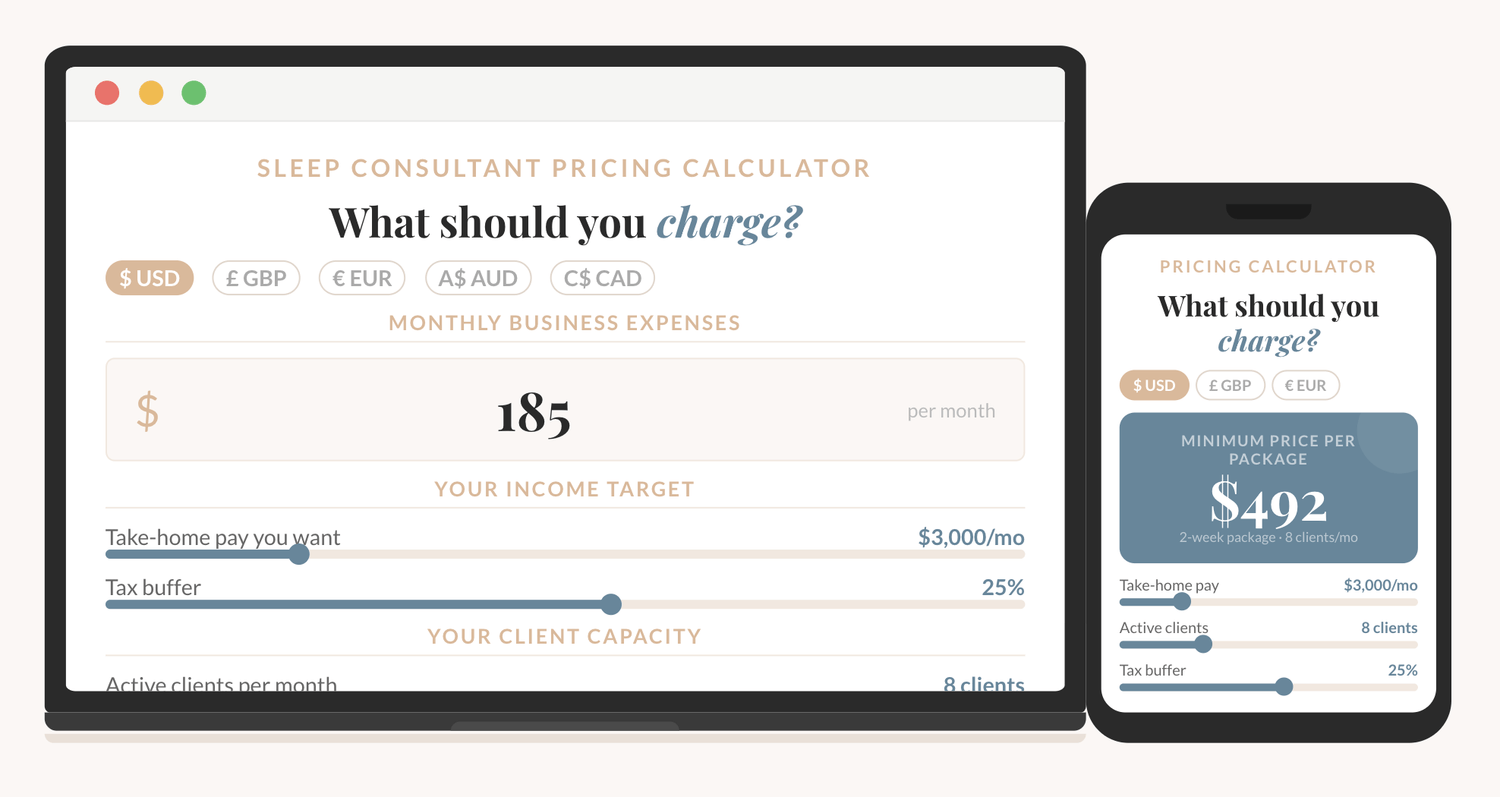
How to price your sleep consulting services?
The Sleep Consultant Pricing Calculator shows you exactly what to charge, based on your real expenses, your income goal, and how many clients you want to take on.
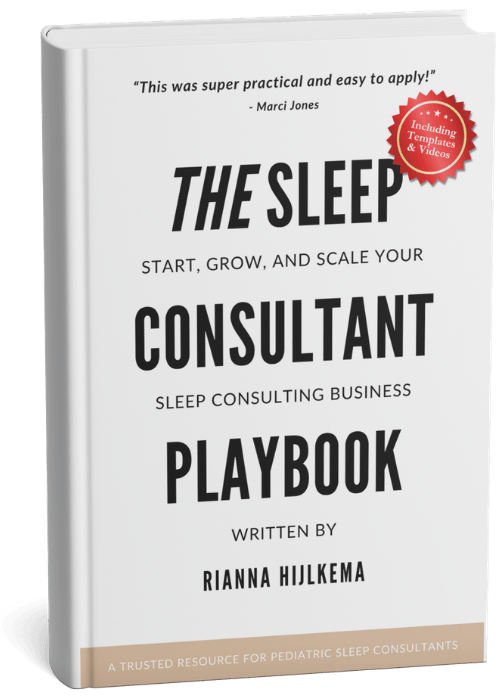
I'm thrilled to offer you an exclusive preview of what’s inside!
You can read the first 22 pages of The Sleep Consultant Playbook and get a taste of the value, insights, and actionable strategies that are waiting for you.
Other articles you might be interested in:
© 2021-2026 Sleep Consultant Business. All Rights Reserved.