
What I Wish I Knew Before Starting a Sleep Consultant Business
Before starting a sleep consulting business, know that growth isn't a straight line. You'll move through excitement, doubt, a rough middle stretch, and then traction, and every Sleep Consultant goes through some version of it. The practical things that matter most: reach out to people before you feel ready, use a sales script in your first year, keep pricing off your website until you have a waiting list, and own your title out loud, even before you have clients. Consistency beats intensity every time.
In this guide
- The emotional cycle nobody warns you about
- Own your title before you feel like you've earned it
- How to move through your first year as a Sleep Consultant
- Common mistakes new Sleep Consultants make before they feel ready
- Frequently asked questions
You got certified, and somewhere between finishing your final module and opening your laptop to build a business, the excitement turned into a question: now what?
That's the exact spot most new Sleep Consultants land in. All the training, none of the roadmap for turning it into an actual business. Nobody tells you that the hardest part of becoming a Sleep Consultant isn't the sleep science. It's everything your certification didn't cover: the mindset shifts, the first awkward calls, the pricing decisions you second-guess at midnight.
This is the article I wish someone had handed me on day one. This isn't more sleep science. Your certification already gave you that. This is what happens in your first year, and what I'd do differently if I were starting again.
The Emotional Cycle Nobody Warns You About
Most new Sleep Consultants expect the business to feel like a steady climb: get certified, build a website, get clients, grow. Yup, me too. Unfortuantely, it doesn't work that way. And once you know the actual pattern, the hard days stop feeling like proof you made the wrong choice.
Almost every Sleep Consultant moves through the same five stages in year one. Knowing them ahead of time won't skip the dip, but it will make it a lot less frightening when it shows up.
Uninformed Optimism
The honeymoon phase. You've got the certificate, the energy, and a plan that feels completely doable. Five clients a month? Sure, why not. Ride this one. It's what gets you moving in the first place.
Informed Pessimism
Then reality shows up. Finding clients takes longer than you expected. You scroll past other Sleep Consultants and start wondering if you're getting it wrong. You're not. Families don't hire you for encyclopedic sleep knowledge. They hire you because you listen and can guide them with what you already know.
The Valley of Despair
This is where most people quit. You've been showing up, and the results still aren't there. Frustration builds. If you hit this stretch, and you probably will, remember it's temporary. The work is happening under the surface even when you can't see it yet.
Informed Optimism
The first real signs of progress show up: a booking, a kind message from a parent, a call that goes well. The work still takes effort, but now it has direction.
Success and Fulfillment
Clients are reaching out. The business feels steadier. Looking back, the Sleep Consultants who got here weren't the ones who had it all figured out from the start. They were the ones who kept going through the valley instead of turning back.
Own Your Title Before You Feel Like You've Earned It
For years I was a teacher. It wasn't only a job, it was an identity. So when I became a Sleep Consultant, letting go of "teacher" and stepping into this new title felt more uncertain than I expected, especially before I had a single client.
I remember standing at a birthday party when someone asked what I did. Without thinking, I said, "I'm a teacher." My husband leaned over and teased me: "You're not a teacher anymore." I laughed it off, but underneath it, owning the new title scared me. It felt uncertain and unproven. Truth is, that my business didn't start moving until I started to say out loud: "I'm a pediatric Sleep Consultant."
If you're still introducing yourself as whatever you did before this, or dodging the question entirely, that's normal. Sound familiar? It was for me too. But the moment you start saying "I'm a Sleep Consultant" with the same confidence you'd say your own name, people start treating you like one. Practice the sentence until it feels boring to say. Boring means it's landed.
How to Move Through Your First Year as a Sleep Consultant
These are the shifts that made the biggest difference for me, in the order they tend to matter most.
Step 1: Expect the dip before it happens.
Knowing the Valley of Despair is coming makes it survivable when it does. When doubt shows up around month two or three, that's not a sign to quit. It's a sign you're on schedule.
Step 2: Reach out to people before you feel ready.
Waiting until you feel confident enough to message people means waiting a long time. Confidence builds from doing the reps. Block an hour a day for outreach and treat it as a non-negotiable, the same way you'd treat brushing your teeth.
Step 3: Use a sales script as your safety net.
A script for your Sleep Assessment Call in your first year isn't there to make you sound rehearsed. It keeps you from freezing when the call starts, and it keeps you asking the right questions instead of scrambling for what to say next. I used one in my first year, and it made every call easier.
Step 4: Keep your price off your website for now.
In year one, your goal is to have conversations. Filtering comes later. Listing your price before you have a waiting list removes people who might have booked a call and been convinced by the value once they heard it explained.
Step 5: Choose consistency over intensity.
Posting daily for three weeks and burning out helps nobody, least of all you. A steady 70% for a year beats going all out at 200% for a month.
Step 6: Share your experience before you share advice.
Your first content doesn't need to be an authority piece. "Here's how I moved my baby from two naps to one" builds more trust and feels safer to write than "Here's how to do it," and it's a lot less likely to invite a debate in the comments.
Common Mistakes New Sleep Consultants Make Before They Feel Ready
Comparing Your Chapter One to Someone Else's Chapter Ten
Scrolling other Sleep Consultants' pages and assuming they had it figured out from day one is an easy trap. Most of what looks effortless online took years and plenty of dips you never saw. It's fair to compare your content with theirs. Comparing your beginning with their year three isn't a fair measure.
Waiting to Feel Ready Before You Launch
Ready is a feeling more than a milestone, and it rarely shows up before you need it to. Families don't need a Sleep Consultant who knows everything. They need one who listens and guides them with what she already knows. Launch, then keep learning.
Treating a No as a Verdict on Your Worth
A parent who says no isn't always telling you your business won't work. The timing might be off, or the budget isn't there this month. Ask why before you assume, and move to the next conversation.
Trying to Do This Completely Alone
Building a business in isolation makes every setback feel bigger than it is. Find one other Sleep Consultant (or join us at SleepPRO™) to check in with at the end of each day, even briefly. It's a small habit that keeps you accountable and reminds you you're not the only one figuring this out.
Frequently Asked Questions
How long does it take to build a full caseload as a Sleep Consultant?
There's no fixed timeline, and it varies by niche, market, and how consistently you show up. Most Sleep Consultants who reach a steady flow of Sleep Assessment Calls describe a turning point somewhere between month six and month twelve of consistent outreach and content. I built mine alongside a full-time job. I took on clients in the evenings and on weekends, and once the income started coming in, I reduced my hours a little at a time until I could go all in. You don't need to quit anything on day one. You need a plan for scaling down one income as the other one grows.
Is it normal to feel like quitting in the first few months?
Yes. It's common enough to have a name, the Valley of Despair, the stage where effort and results feel furthest apart. It's temporary for Sleep Consultants who keep showing up. If the feeling hasn't lifted after several months of consistent effort, it's worth reviewing your offer and outreach rather than questioning whether you're suited for the work.
Should I get more certifications before I start taking clients?
Usually not. Most Sleep Consultants start with one core certification and learn the rest on the job. Parents hire you for guidance, empathy, and a plan. A stack of credentials isn't what convinces them to book. If you keep adding courses instead of taking calls, that's often avoidance dressed up as preparation.
What if I don't have a sales script and feel awkward on calls?
Write one. It doesn't need to be polished, and you're not meant to read it word for word. A simple outline of your opening question, your listening points, and how you'll present your offer removes the guesswork that makes calls feel harder than they are.
Should I list my prices on my website when I'm starting out?
Hold off until you have a steady stream of calls or a waiting list. Early on, your goal is conversations where you can explain the value behind the price. Listing it upfront removes that chance before it starts.
Key Takeaways
- Growth in your first year follows a pattern: excitement, doubt, a hard middle stretch, then traction. Knowing this ahead of time makes the dip survivable.
- Own your title as a Sleep Consultant out loud, even before you have your first client.
- Reach out to people before you feel ready. Confidence builds from the doing, one call at a time.
- Keep your price off your website until you have a steady stream of calls or a waiting list.
- Consistency beats intensity. A steady 70% for a year outperforms 200% for a month.
If you want the specific tactical mistakes to avoid in your first month, the 5 Mistakes Sleep Consultants Make in the First Month After Certification article walks through them in detail.
Disclaimer: The information shared in these articles is for educational and informational purposes only. It does not constitute legal, financial, or professional advice. Always consult with a qualified professional regarding your specific situation.

Rianna Hijlkema
Certified Pediatric Sleep Consultant, Certified Postpartum Doula, Former Teacher & School Director, Founder of Sleep Consultant Design & Sleep Consultant Business and the author of The Sleep Consultant Playbook (available on Amazon).
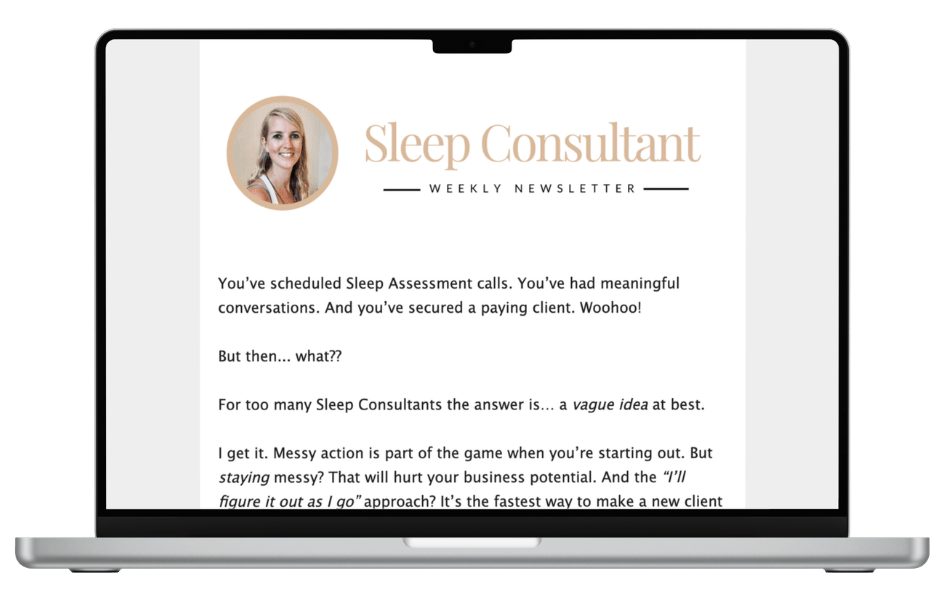
The Sleep Consultant Newsletter
Weekly tips, strategies and marketing ideas for sleep consultants written by a fellow sleep consultant. 1500+ active subscribers!
I’ll only send helpful emails, and you can unsubscribe anytime with one click.
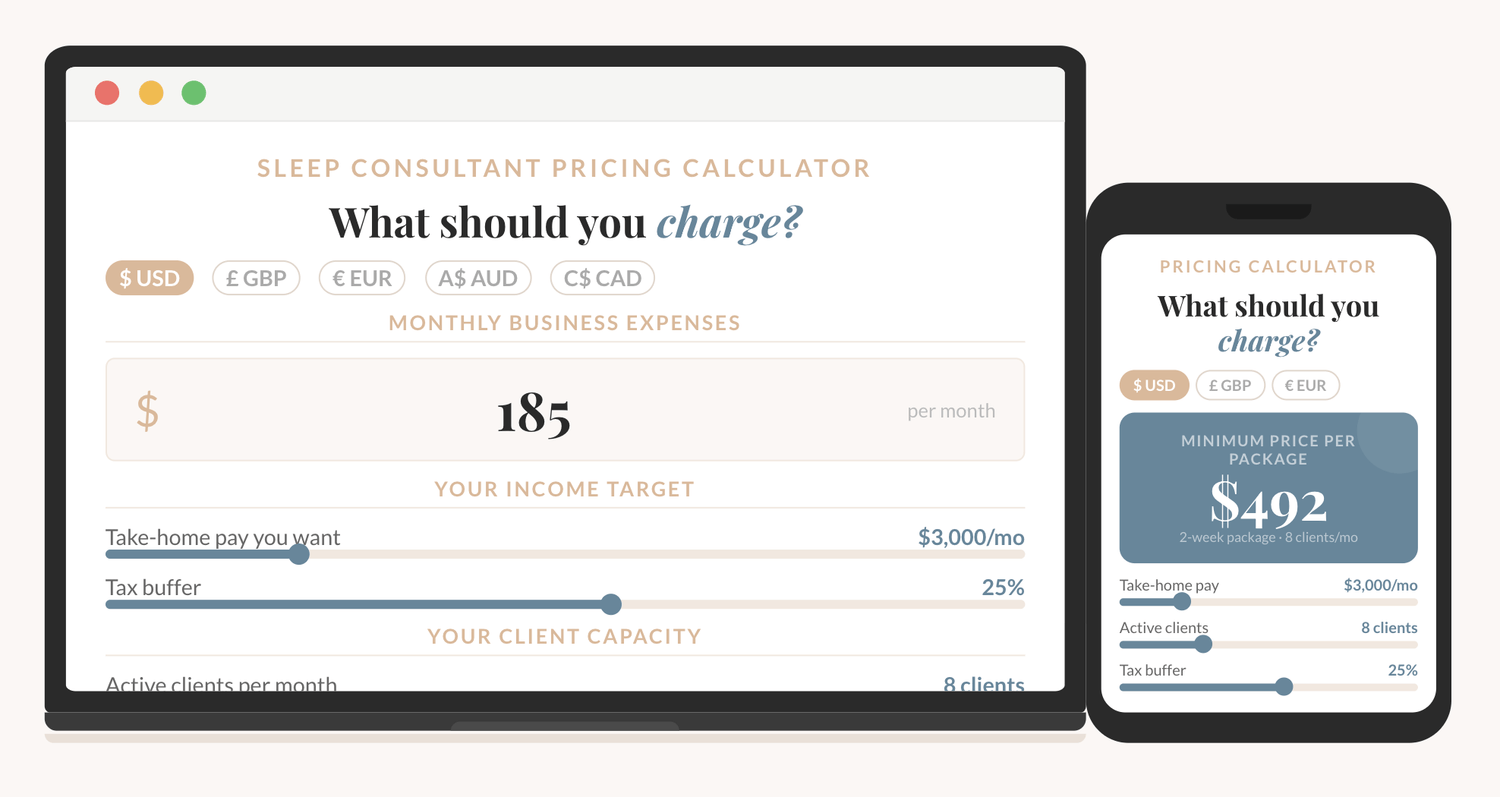
How to price your sleep consulting services?
The Sleep Consultant Pricing Calculator shows you exactly what to charge, based on your real expenses, your income goal, and how many clients you want to take on.
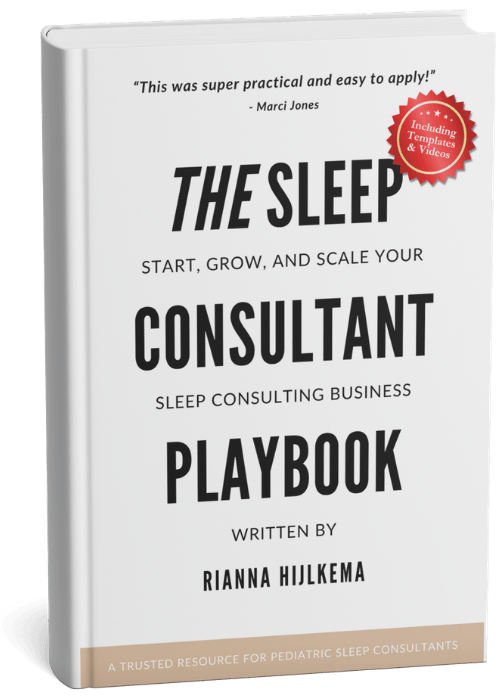
I'm thrilled to offer you an exclusive preview of what’s inside!
You can read the first 22 pages of The Sleep Consultant Playbook and get a taste of the value, insights, and actionable strategies that are waiting for you.
Other articles you might be interested in:
© 2021-2026 Sleep Consultant Business. All Rights Reserved.