
The Pricing Paradox: Should You List Your Prices on Your Website or Not?
In this guide
- Why this question follows every Sleep Consultant around
- The case for listing your prices
- The case for keeping prices off your website
- The middle ground most Sleep Consultants land on
- How to decide what's right for you
- Common pricing-page mistakes Sleep Consultants make
- Frequently asked questions
You've built your website. You've written your services page. And then you hit the price field and freeze.
Should the number go up, plain and visible? Or should it stay tucked behind a "Sleep Assessment Call" button? You've probably read advice pointing both directions, sometimes from the same person in the same week. That's because this isn't a question with one correct answer. It's a genuine trade-off, and what's right for one Sleep Consultant can be exactly wrong for another.
This article isn't going to tell you which one to pick. It's going to lay out what each path actually costs you and what it actually gives you, so you can make the call based on your business, not based on whoever posted about it most recently.
Why This Question Follows Every Sleep Consultant Around
Part of why this feels so unresolved is that the advice itself splits down the middle, and both sides have a point.
One camp says transparency builds trust and respects people's time. The other says price needs context before it lands right, and a number with no story behind it just becomes something to react to. Neither side is wrong. They're optimising for different things: one for efficiency, the other for conversion through connection.
When I was setting up my own services page, I went back and forth on this more than once. What helped was realising it wasn't really a website question. It was a business-stage question. Where you are right now changes what the right answer is.
The Case for Listing Your Prices
It respects people's time, including yours
A parent who knows your price before they reach out has already decided it's within range. That means fewer calls that go nowhere because the number was never going to work. Your Sleep Assessment Calls fill up with people who are genuinely ready to move forward, not people testing the water on something they can't actually afford.
It filters for fit
Visible pricing does some of the qualifying work before you ever speak to someone. Parents who are price-shopping across five Sleep Consultants will self-select out fast. The ones who reach out are doing it with intention, not just curiosity.
It signals confidence
A clear number on a page reads as someone who knows their worth and isn't hiding behind a process to find out. For some parents, a hidden price reads as evasive, even when that's not the intention at all. Visible pricing avoids that impression entirely.
It's faster for parents who already trust you
If someone found you through a referral or a strong testimonial, they may already be sold on you. In that case, a hidden price just adds a step between them and booking. Some parents want to move quickly and will appreciate not having to schedule a call to get a number.
The Case for Keeping Prices Off Your Website
A number with no context invites a reflexive reaction
Seeing a price before understanding what it actually solves tends to trigger a gut response, usually "that's expensive," before the value has had any chance to register. On a call, you can connect the price to the transformation first. On a page, the number has to do all the work alone.
It protects the conversation you haven't had yet
A lot of parents don't fully understand what a Sleep Consultant does or why it costs what it costs until someone explains it to them. Keeping the price off the page means that explanation happens before the number does, not after.
It keeps the door open for people who are early in deciding
Some parents land on your site not fully sure if sleep consulting is even the right move yet. A visible price can shut that exploration down before they've had a chance to picture working with you. Without it, they're more likely to reach out and let the conversation do the convincing.
It gives you more conversations to practice
If you're newer, more calls means more practice talking about your value, handling questions, and getting comfortable with your own pricing. Filtering people out early through a price tag means fewer chances to build that muscle.
The Middle Ground Most Sleep Consultants Land On
Plenty of Sleep Consultants don't pick a hard side. They land somewhere in between, and there are a few common versions of that.
Show a starting price, not a fixed one
Something like "Packages start from $X" gives parents a general sense of range without locking in a number that might not reflect what they actually need. This keeps the door open for a conversation about which package fits, while still giving people enough information to know if you're in their budget territory.
List prices for some packages, not others
Some Sleep Consultants list pricing for simpler, lower-cost offers like a single follow-up session, but keep full package pricing behind a call. This gives transparency where it's low-risk and protects the conversation where the investment is bigger.
Frame the number instead of just stating it
If you do list a price, how you present it matters. "Investment: $500" reads very differently from "Investment: $500 for a customised sleep plan that brings peace back to bedtime." Same number, but the second version gives the price somewhere to land instead of sitting there bare.
How to Decide What's Right for You
Rather than a checklist, ask yourself these honest questions and see which way you lean.
- How full is your calendar right now? If you have more enquiries than you can take on, visible pricing helps filter and protects your time. If you're still building momentum and need every conversation you can get, keeping it off the page may serve you better.
- How comfortable are you talking about your price out loud? If saying your number still feels shaky, more calls give you more practice. A visible price removes some of those reps before you've had the chance to build that confidence.
- How well-known is sleep consulting in your market? If most people in your area already understand what a Sleep Consultant does and what it costs, a visible price won't need as much context. If you're introducing people to the concept itself, the conversation is doing more work than the number ever could.
- What's your gut telling you when you imagine both versions of your page? Notice which version makes you feel more at ease. That reaction is worth paying attention to, even if it isn't the "strategic" answer.
None of these have a single right answer attached. They're meant to help you notice where you actually stand, not talk you into a particular choice.
Common Pricing Page Mistakes Sleep Consultants Make
Changing the approach every time someone says no
One declined call isn't data. Switching your whole pricing display strategy after a single no usually means reacting to a feeling, not a pattern. Give whichever approach you choose a real stretch of time before deciding it isn't working.
Listing a bare number with zero context
If you do list prices, a number with nothing around it is the version most likely to trigger sticker shock. Pair it with what it actually includes and what changes for the family.
Hiding pricing so completely that the page feels evasive
There's a difference between not listing a number and giving parents zero sense of what to expect. If your page gives no signal at all, even a "packages start from" range or a general sense of investment level, it can feel like you're avoiding the topic rather than guiding the conversation.
Copying a competitor's approach without knowing why it works for them
A Sleep Consultant with a three-month waitlist and one starting out have very different reasons for whatever pricing display they use. Copying the page without understanding the business behind it usually means importing a strategy that doesn't fit your situation.
Frequently Asked Questions
Will hiding my prices make me lose potential clients?
Some, yes. Parents who only want a quick number and nothing else may move on. But many of those enquiries were unlikely to convert anyway, and the trade-off is the chance to explain your value before a bare number gets the final say.
Does listing prices make me look less professional?
No. Plenty of well-established, highly respected Sleep Consultants list their prices clearly and confidently. Professionalism comes from how the price is presented and what it's tied to, not from whether it's visible.
Should I list prices once I'm fully booked?
This is often when visible pricing makes the most sense, since the goal shifts from gaining experience to managing demand. A clear price helps filter enquiries so the people reaching out are already aligned with your rate.
What if different packages need different approaches?
That's completely reasonable. You might list a price for a smaller, lower-investment offer while keeping your full package pricing behind a Sleep Assessment Call. There's no rule that says your whole site needs one consistent approach.
Can I change my approach later without it looking inconsistent?
Yes. Your pricing display isn't a permanent identity decision. As your business stage changes, from building experience to managing a full calendar, it's normal and expected for your approach to evolve with it.
Key Takeaways
- There's no universal right answer to listing prices on your website. It's a genuine trade-off, not a solved question.
- Listing prices filters enquiries, respects time, and can read as confident, but it removes the chance to build value before the number lands.
- Keeping prices off your site protects the value conversation and gives newer Sleep Consultants more practice, but it adds friction some parents won't tolerate.
- A middle ground, like a starting price or framed pricing, gives you some of both without fully committing to either extreme.
- Your calendar, your comfort talking about your price, and your local market all influence which approach fits you right now.
- This decision isn't permanent. What works at the start of your business may not be what works once you're consistently booked.
If you're still working out what your prices should actually be before deciding how to display them, the guide to pricing your sleep consulting services is the place to start.
Next Article: How to Package Your Sleep Consulting Services
Related: How to Run a Sleep Assessment Call
Disclaimer: The information shared in these articles is for educational and informational purposes only. It does not constitute legal, financial, or professional advice. Always consult with a qualified professional regarding your specific situation.

Rianna Hijlkema
Certified Pediatric Sleep Consultant, Certified Postpartum Doula, Former Teacher & School Director, Founder of Sleep Consultant Design & Sleep Consultant Business and the author of The Sleep Consultant Playbook (available on Amazon).
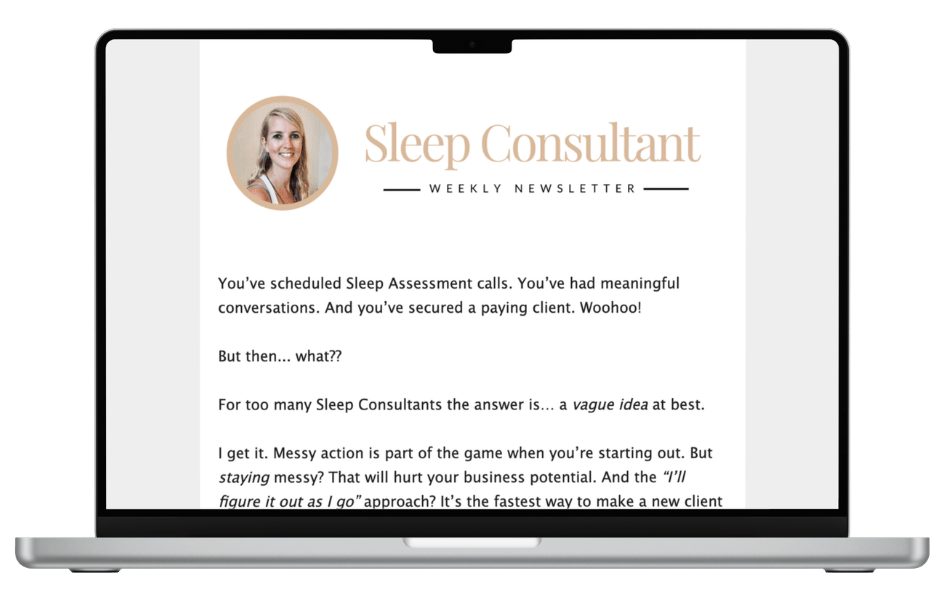
The Sleep Consultant Newsletter
Weekly tips, strategies and marketing ideas for sleep consultants written by a fellow sleep consultant. 1500+ active subscribers!
I’ll only send helpful emails, and you can unsubscribe anytime with one click.
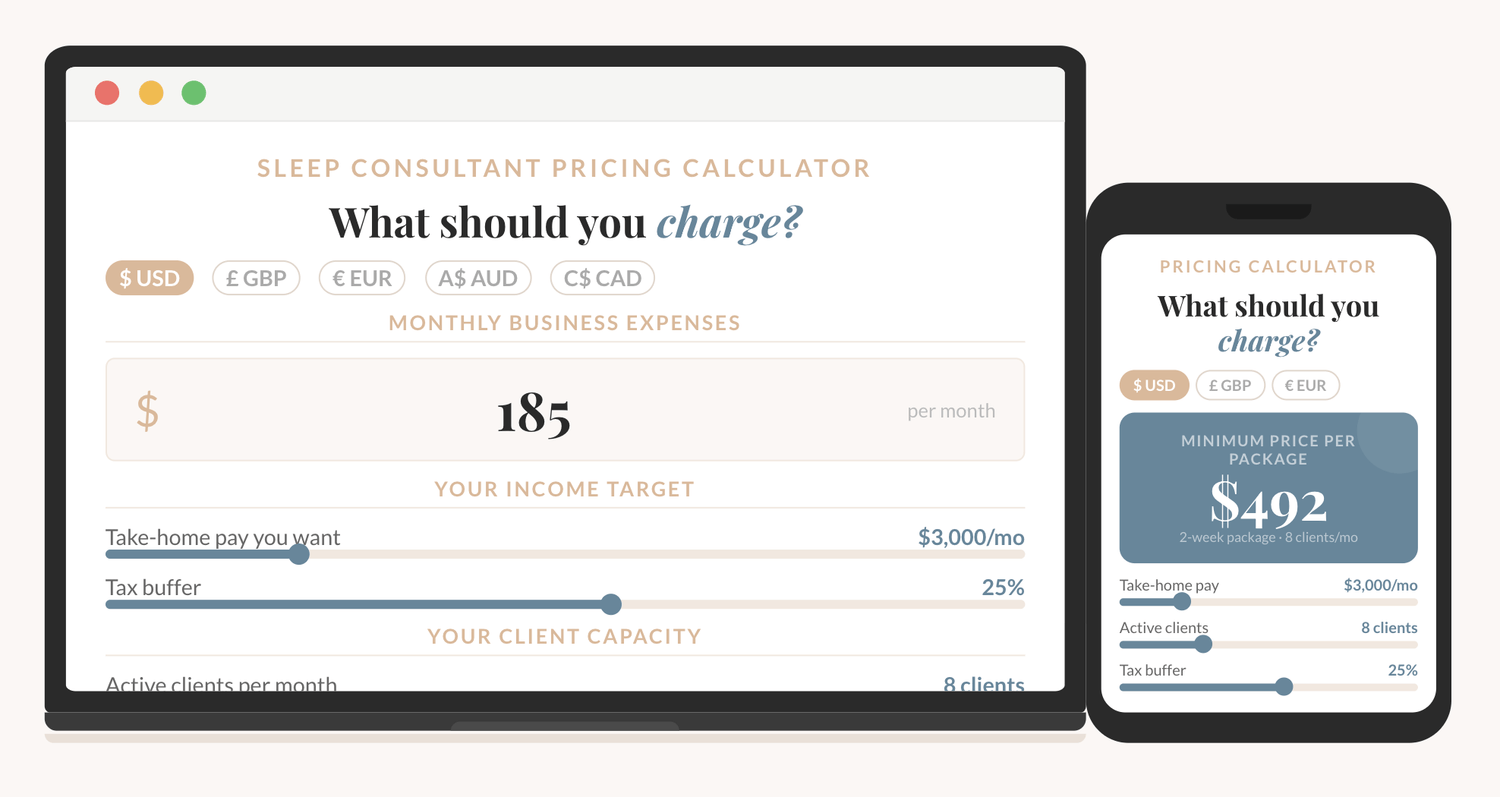
How to price your sleep consulting services?
The Sleep Consultant Pricing Calculator shows you exactly what to charge, based on your real expenses, your income goal, and how many clients you want to take on.
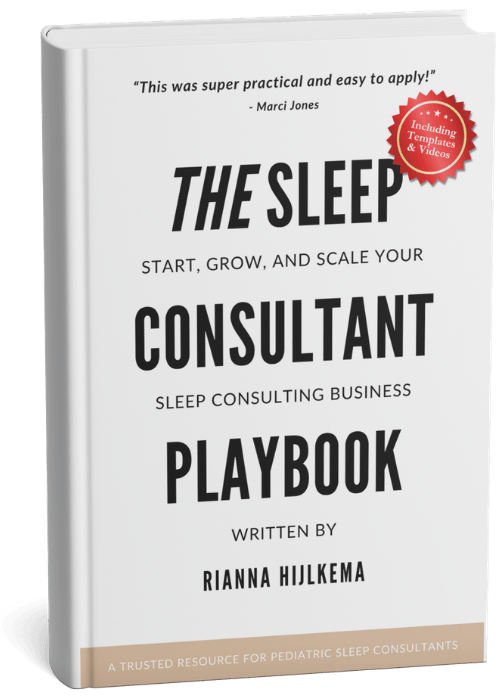
I'm thrilled to offer you an exclusive preview of what’s inside!
You can read the first 22 pages of The Sleep Consultant Playbook and get a taste of the value, insights, and actionable strategies that are waiting for you.
Other articles you might be interested in:
© 2021-2026 Sleep Consultant Business. All Rights Reserved.