
How to Align Your Business with Your Values and Priorities
Before you build a website, set up your Instagram, or take your first client, get clear on five things: your core values (Authenticity), what you do best with little effort (Leverage), the change you want to create (Impact), how you'll measure progress (Growth), and what you won't compromise on (Non-Negotiables). Together, these make up the A.L.I.G.N. framework. It's not a traditional business plan. It's the foundation that makes every decision easier, keeps you from burning out, and ensures the business you build actually feels like yours.
In this guide
- Why we're not starting with a business plan
- A: Authenticity: What's true to you?
- L: Leverage: What do you do best with little effort?
- I: Impact: What change do you want to create?
- G: Growth: How will you measure progress?
- N: Non-Negotiables: What won't you compromise on?
- Using A.L.I.G.N. as your decision-making guide
- Frequently asked questions
Most new sleep consultants do the same thing. They finish their certification, feel the excitement of finally being able to start, and immediately rush to build a website, set up Instagram, and create a logo. And then a few months in, something feels off. The messaging doesn't quite land. The business doesn't feel like them. Decisions feel hard to make because there's no clear foundation to make them from.
This isn't a website problem. It's a clarity problem. And clarity doesn't come from getting the website right. It comes from knowing yourself well enough that everything else flows from that.
This is why the very first chapter of The Sleep Consultant Playbook has nothing to do with marketing, websites, or clients. It's about building the foundation those things need to sit on. The A.L.I.G.N. framework is that foundation. Five elements: Authenticity, Leverage, Impact, Growth, Non-Negotiables. Spend real time here, and every decision you make after this becomes cleaner, faster, and more confident. Skip it, and you'll keep making decisions that feel like guesswork.
Why We're Not Starting With a Business Plan
Traditional business plans were designed for businesses chasing investors or trying to impress a boardroom. Endless sections on market analysis, competitor research, financial projections. That's not you. You're not pitching your sleep consulting business to a room full of venture capitalists. You're building something that fits your life, your values, and the way you want to show up for the families you serve.
What you actually need at the start isn't a plan. It's a framework. Something clear and flexible that keeps you aligned with what matters most to you when the inevitable tough decisions come. Like how to grow. Where to focus. What to let go of. What to say no to.
That's what A.L.I.G.N. is. Not rules. Not a rigid plan. A set of five questions you come back to again and again, especially when you're unsure. It starts with you: your values, your strengths, your boundaries, rather than external research or someone else's template of what a business should look like.
I know you're eager to get your website up and your social media running. That urge is real and it's good. It means you care. But these next elements are the foundation that make everything in your business easier. The sleep consultants who rush past this and go straight to building end up with scattered messaging and a business that feels like it doesn't fit. The ones who take their time here build something they're genuinely proud of, and that clients can feel from the very first interaction.
A: Authenticity: What's True to You?
Authenticity isn't posting unfiltered selfies or writing captions that sound like you've had too much caffeine. It means being deeply aligned with what matters to you and allowing that to shape everything you do. It's building a sleep consulting business that isn't a copy-paste version of what you've seen someone else do online, but one that genuinely feels like you.
When you show up as yourself, something shifts. You attract the right clients: parents who appreciate your specific approach, who trust you, and who are genuinely excited to work with you. No forcing, no pretending, and no awkward sales tactics. Just real, meaningful connections built on the fact that who you are and what you believe comes through in everything you put out.
Your authenticity is rooted in your core values, the things you believe in so deeply you wouldn't compromise them for anything. To find them, read through a list of values (compassion, integrity, growth, freedom, creativity, family, education, community, whatever feels like it lands) and narrow down to your top three. Don't overthink it. Your core values are the things that consistently show up in your actions and decisions whether you're working with a client, spending time with your family, or making a business decision at 11pm.
Those three values become the filter everything else gets run through. Does this marketing direction feel like me? Does this client feel right? Does this pricing model align with what I believe? The answers become clearer when you know your values.
L: Leverage: What Do You Do Best With Little Effort?
Everyone has something they're naturally good at: something that feels so easy it almost doesn't seem valuable. That easy thing? That's your superpower. And when you build your sleep consulting business around it, you create something that's both sustainable and genuinely impactful.
Maybe you have a gift for making complex sleep science feel simple and accessible to overwhelmed parents. Maybe you're exceptional at making people feel heard and seen in a way that immediately lowers their defences. Maybe you can create beautiful, clear resources that parents actually use. These aren't just nice qualities. They're the things you can do with minimal effort that create maximum impact for your clients.
The comparison trap is real here. It's easy to see other sleep consultants launching courses, landing press features, or nailing Instagram trends and think "should I be doing that too?" But here's the thing: our education system and our culture have trained us to focus on fixing weaknesses. The result is that we become average at everything instead of exceptional at what we actually love and do best.
Your job is to double down on the things that feel effortless and joyful. To ask: what feels so natural that people constantly say "how do you make that look so easy?" What tasks make you lose track of time? What do you get complimented on most? If you're not sure, ask the people who know you best: friends, colleagues, family. Others can often see your natural talents more clearly than you can.
Then write a one-sentence leverage statement. Something like: "I can break complex sleep strategies down into steps parents actually follow." Or: "I can build deep trust with anxious parents quickly." That sentence tells you where to put your energy, and where not to.
I: Impact: What Change Do You Want to Create?
The work of a sleep consultant is more than helping families get better sleep. Sure, that's part of it. But dig deeper. Are you giving parents the confidence to trust their own instincts? Helping couples reconnect after months of sleepless, resentful nights? Creating a ripple effect where a well-rested family feels calmer, happier, and more present with each other?
Impact is the why behind your business: the reason you show up even when it's hard, the fuel that keeps you going when motivation runs dry. When you're clear on the change you want to create, decisions become easier. You know what to say yes to, what to let go of, and what's worth fighting for. Impact gives your business direction, focus, and purpose.
Write your impact statement using this formula as a starting point: "I help [specific audience] achieve [specific transformation] through [your approach or values]." This isn't about getting it perfect. It's about getting something down that makes you feel genuinely excited and proud. If it doesn't make you feel that way, tweak it until it does.
Helping one family sleep better doesn't just fix their nights. It transforms their days, their relationships, and their overall sense of capacity as parents. The ripple effect of your work is genuinely powerful. When you feel that deeply, it shows in how you talk about what you do, how you price your services, and how you show up in consultations. Knowing your impact isn't a nice-to-have. It's the fuel that sustains the whole thing.
G: Growth: How Will You Measure Progress?
Growth looks different for everyone. It's not always about how much money you make or how many clients you book, though those matter. Sometimes growth is about the freedom to spend more time with your family. The confidence to raise your rates. The peace of mind that comes from knowing your systems finally run without you. The ability to take a guilt-free vacation and actually switch off.
Most people didn't choose to build a business so they could recreate the grind of a 9 to 5. They chose it to make an impact and create a life that actually feels fulfilling. The trick is to measure progress in a way that reflects both the business and the life you want. What does success look like when it's not just about the numbers?
Success metrics make growth intentional. Here's what that looks like in practice:
- If your metric is working fewer than 30 hours a week, you'll focus on automating tasks and setting firm boundaries, rather than just saying yes to every client who enquires.
- If your metric is changing ten families' lives each month, you'll focus on depth of transformation rather than loading your calendar with as many clients as possible.
- If your metric is earning enough for three guilt-free holidays a year, you'll make financial decisions that prioritise freedom over chasing endless revenue growth.
Growth metrics keep you grounded. They shape your strategy so that your growth isn't just outward-facing (more money, more clients) but inward-facing (more joy, more balance, more of the life you actually want). Write down two or three success metrics that feel genuinely aligned with your vision for both your business and your life.
N: Non-Negotiables: What Won't You Compromise On?
As a sleep consultant, your energy is your most valuable resource. You're holding space for families who are stressed, sleep-deprived, and often at the end of their rope. If you're not careful, it's easy to overwork yourself, blur the lines between personal and professional time, and burn out completely. Your non-negotiables protect against that.
Non-negotiables are the lines you draw in the sand. They give you clarity, confidence, and the power to make decisions that feel good without having to think through every situation from scratch. They help you say yes to the right things and no to the things that don't serve you, before you're in the uncomfortable position of having to say no on the spot.
Non-negotiables are personal. Some examples:
- Your schedule: no calls after 6pm, no weekend consultations.
- Your pricing: no discounts that undervalue your work.
- Your clients: you only work with parents whose approach aligns with your values.
- Your personal time: Friday afternoons are yours. No exceptions.
In the early stages it's tempting to bend these. You want clients. You want momentum. You want to prove yourself. But when you compromise your non-negotiables at the start, you set a precedent. Before you know it, you're answering late-night texts, making exceptions you resent, and wondering why your business feels hard and out of alignment. Every yes is a no to something else. Decide now what is non-negotiable, and protect it.
Setting boundaries isn't about shutting people out. It's about creating space to show up at your best. When you honour your non-negotiables, you're not just protecting yourself. You're delivering your best to the families who rely on you. A sleep consultant who is burned out, resentful, and running on empty cannot give families the support they need. Your boundaries are part of your professional standard.
Using A.L.I.G.N. as Your Decision-Making Guide
Once your A.L.I.G.N. framework is clear, it becomes your decision-making tool for everything that comes after. A new opportunity lands in your inbox. A potential collaboration comes up. Someone asks you to offer a service outside your niche. You're not sure whether to launch a course or focus on one-on-one work. Run it through these five questions:
| Letter | Question to ask |
|---|---|
| A | Authenticity: Does this align with my core values? |
| L | Leverage: Does this play to my strengths? |
| I | Impact: Will it contribute to the change I want to create? |
| G | Growth: Does it match my vision of success? |
| N | Non-Negotiables: Will it respect my boundaries? |
If you're nodding yes to all five, that's a green light. If even one is a no, that's your signal to pause, reconsider, or move on without guilt. This isn't about rigid rules. It's about cutting through the noise of an endless stream of decisions, shiny distractions, and opportunities that seem exciting but aren't the right fit right now. The framework keeps you anchored to what actually matters so that every move you make gets you closer to the business and life you're building, not just closer to busy.
Come back to your A.L.I.G.N. framework regularly. As you grow and gain experience, some elements will deepen, refine, or shift. That's healthy. It's a living document, not a one-time exercise. The goal is that you can always look at it and feel: yes, this is exactly who I am and how I want to run this business.
Frequently Asked Questions
What if I'm not sure what my core values are?
Start with what feels most important right now. Think about what drives you, what you stand for, and what kind of work and life you want to create. Your core values don't have to be set in stone. They'll deepen as you gain experience. The important thing is to identify something to work from and then let it guide you, rather than waiting for absolute certainty before you begin.
What if I don't know what my strengths are?
Ask the people who know you best. Ask what they see as your natural talents. You'll often be surprised. Others can see your strengths more clearly than you can because they're not in the middle of doubting themselves about them. Pay attention to what people regularly thank you for, what they come to you for advice on, and what tasks you do that others find difficult but you find second nature.
Is it okay to change my A.L.I.G.N. framework as my business grows?
Not only okay, but expected. Your values, strengths, and vision evolve as you gain experience and grow both professionally and personally. Revisit the framework regularly. Some sleep consultants do this annually, others after major transitions like a niche shift or a new offer launch. Each time you review it, you'll find it's become more specific and more honest about who you actually are now rather than who you thought you'd be when you started.
How do I hold my non-negotiables when I'm just starting out and feel like I can't afford to say no?
This is the hardest one, and it's the most common place where new sleep consultants cave. Here's a useful exercise: say yes to something that goes against one of your non-negotiables, and notice exactly how it feels. The energy drain. The resentment. The sense of things being off. That feeling is your non-negotiable telling you it was right to exist. Once you've experienced that a couple of times, it becomes much easier to hold the boundary the next time, because you know what honouring it protects you from.
What if my growth vision doesn't look like financial success?
Then that's exactly what it is, and it's completely valid. Success metrics that are personal (time freedom, family presence, creative fulfilment, impact depth over client volume) are not less legitimate than purely financial ones. The danger is defining success the way you think it should look rather than the way it actually needs to look for your life to feel good. It's not the money itself that brings happiness. It's what the money allows you to do. Start from that truth and work backwards.
Key Takeaways
- Don't start with a website. Start with clarity. The sleep consultants who build alignment first build businesses that feel right and last longer.
- Authenticity (A): identify your top three core values. These are the filter every business decision gets run through.
- Leverage (L): find the thing you do so naturally it almost doesn't feel like work. Build your business around that, not around what others are doing.
- Impact (I): write your impact statement. The specific transformation you want to create for the specific people you want to serve. If it doesn't make you feel genuinely excited, keep refining it.
- Growth (G): define two or three success metrics that reflect the life you actually want, not just the revenue target. Let those metrics shape your strategy.
- Non-Negotiables (N): decide now what you won't compromise on. Your schedule, your pricing, your clients, your personal time. Hold these from day one.
- Use A.L.I.G.N. as your decision-making filter. When something new comes up, run it through all five questions. Five yeses is a green light. Any no is a reason to pause.
Start today: grab a notebook and work through each of the five elements. Don't aim for perfect. Aim for honest. A rough A.L.I.G.N. framework that's actually yours will serve you better than a polished one that doesn't quite fit.
Disclaimer: The information shared in these articles is for educational and informational purposes only. It does not constitute legal, financial, or professional advice. Always consult with a qualified professional regarding your specific situation.

Rianna Hijlkema
Certified Pediatric Sleep Consultant, Certified Postpartum Doula, Former Teacher & School Director, Founder of Sleep Consultant Design & Sleep Consultant Business and the author of The Sleep Consultant Playbook (available on Amazon).
The Sleep Consultant Newsletter
Weekly tips, strategies and marketing ideas for sleep consultants written by a fellow sleep consultant. 1500+ active subscribers!
I’ll only send helpful emails, and you can unsubscribe anytime with one click.
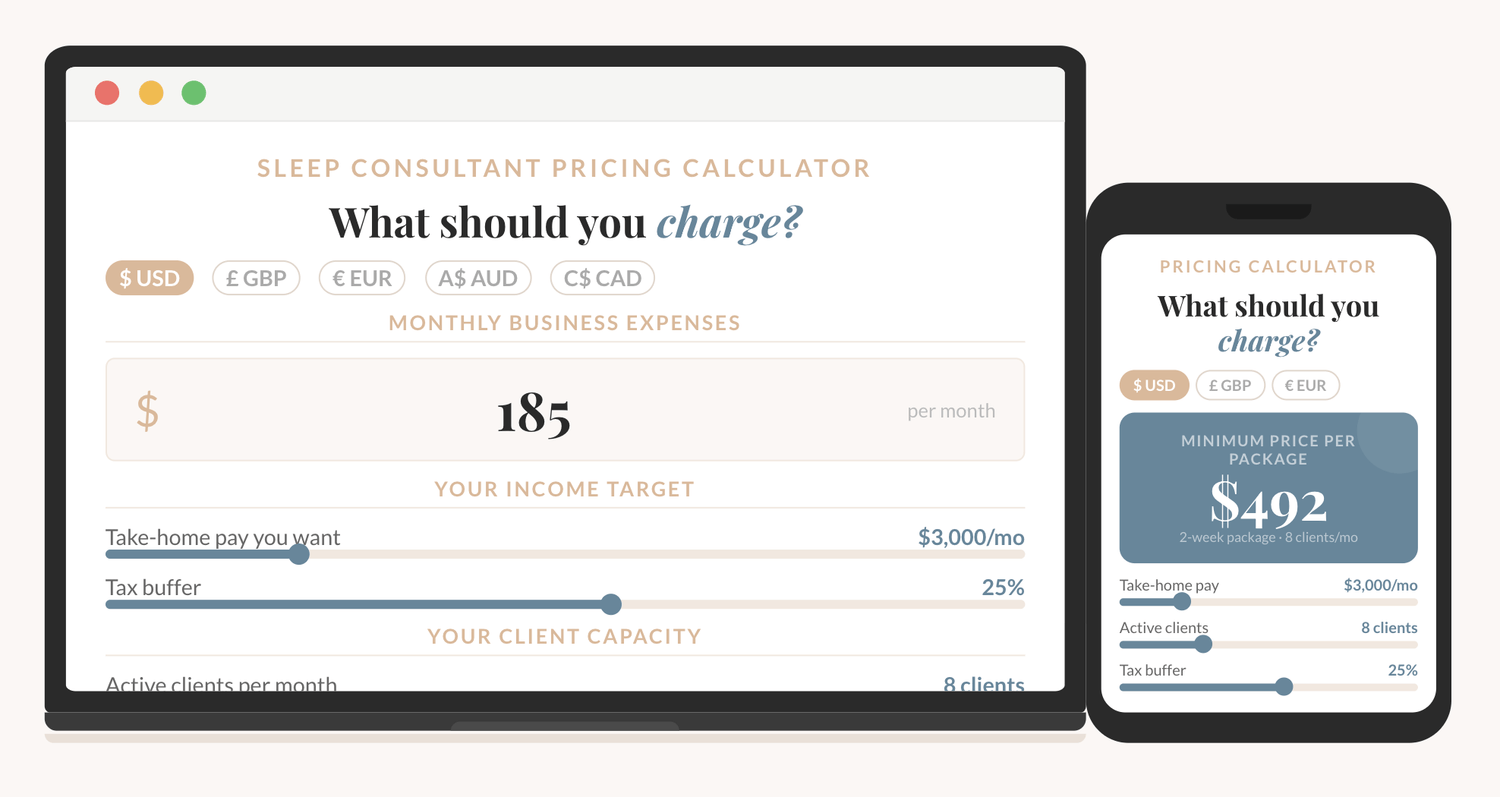
How to price your sleep consulting services?
The Sleep Consultant Pricing Calculator shows you exactly what to charge, based on your real expenses, your income goal, and how many clients you want to take on.
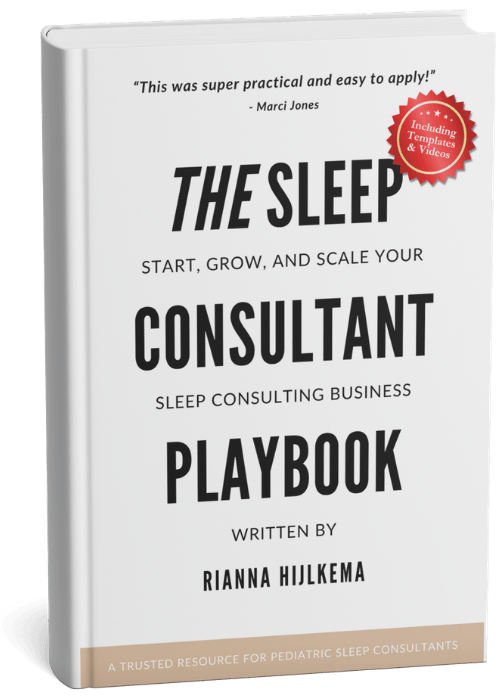
I'm thrilled to offer you an exclusive preview of what’s inside!
You can read the first 22 pages of The Sleep Consultant Playbook and get a taste of the value, insights, and actionable strategies that are waiting for you.
Other articles you might be interested in:
© 2021-2026 Sleep Consultant Business. All Rights Reserved.