
How to Write a Welcome Email Sequence for Your Sleep Consulting Business
A welcome email sequence is a short run of automated emails a new subscriber receives after they sign up for your freebie or newsletter. For you as a Sleep Consultant, its job is to move a tired, skeptical parent from stranger to someone who trusts you enough to book a Sleep Assessment Call. A strong sequence runs about five emails over a week: deliver the freebie, show you understand their exhaustion, give one quick win, handle their biggest doubt, then invite them to a call. You write it once, and it works while you sleep.
In this guide
- What a welcome email sequence does for you, as a Sleep Consulting business
- The five questions every new subscriber is asking
- The five-email welcome sequence, mapped out
- What to send after the welcome sequence ends
- Rules for a welcome sequence people open and act on
- Common welcome sequence mistakes Sleep Consultants make
- Frequently asked questions
It's 2am. A parent is sitting on the edge of the bed with a crying baby, scrolling on their phone, and they land on your free nap guide. They type in their email. They hope, that someone finally has an answer.
Then what happens? For most Sleep Consultants, not much. The guide sends, and the relationship goes cold. One email, then silence for three weeks until there's something to sell.
The moment a parent hands you their email address is the warmest they'll ever be toward you. A welcome email sequence is how you hold onto that warmth. It's a short run of emails, written once and sent automatically, and it helps a stranger to go from "who is this person" to "I think she can help me." This guide walks through what to send, and in what order.
When I built my first welcome sequence, I circled it for weeks before writing a word. The writing itself took an afternoon. Then it started booking calls while I was asleep in another time zone. That's the best part. Once it exists, it keeps working without you.
What a Welcome Email Sequence Does for a Sleep Consulting Business
A welcome email sequence has one job: build enough trust that a parent takes the next step with you. For you as a Sleep Consultant, that next step is booking a Sleep Assessment Call. Everything in the sequence points there.
Think about what the parent on the other end truly wants. Not a sleep plan. Not a PDF of wake windows. They want their evenings back. They want to stop dreading bedtime. They want to feel like a person again instead of someone running on ninety-minute sleep cycles. The freebie was the first small step toward that. Your sequence is what keeps them moving forward.
There are two stages, and they blur into each other. The first is the welcome: the handful of emails right after signup that introduce you and warm the parent up. The second is nurture: the ongoing weekly emails that keep the relationship alive for the parents who aren't ready to book yet. Most Sleep Consultants skip both and wonder why their list feels dead. Email is the highest-return channel you have, but only if you use it well.
The Five Questions Every New Subscriber Is Silently Asking
A new subscriber doesn't know you. They're wary, tired, and they've probably tried three things that didn't work. Before they'll trust you with their child's sleep, they need answers to five quiet questions. Every email you send should chip away at one of them.
- Who are you, and why should I listen? They need a reason to trust your voice over the hundred others in their inbox.
- Do you understand what my nights are like? If you sound like a textbook, they'll tune out. They want to feel seen.
- Can you help MY baby, or only the easy ones? Every parent believes their situation is uniquely difficult. Speak to that.
- Is this going to cost a fortune? The money worry sits under everything, even when they don't say it out loud.
- Is this worth my time when I'm this exhausted? A wiped-out parent has no energy for fluff. Every email has to be worth opening.
Underneath these questions are feelings: trust, belief that you can help, and the fear of being sold to or let down again. You reinforce the good feelings and remove the fear. A welcome sequence written to answer real (!) questions beats a clever one written to just sound impressive.
The Five-Email Welcome Sequence, Mapped Out
There's no magic number of emails. Some sequences work at three, some at eight. Five is a strong starting point for you as a Sleep Consultant because it gives you room to build trust without overwhelming a tired parent. Each email has one goal and points to one action. Here's the sequence, email by email.
Email 1: Deliver and welcome (sends right after signup)
Give them what they signed up for immediately, in the first line, with a clear link. Then introduce yourself in two or three warm sentences: who you are, who you help, and what they can expect from you. Set the tone. This email confirms they made a good decision. One goal, one link: open the guide.
Email 2: Show you understand (day 1 to 2)
This is the email where they decide whether you get it. Describe their nights back to them so accurately they wonder if you've been watching. The 5pm dread. The bedtime battle. The 3am rocking while resentment and guilt fight it out. Share a short piece of your own why, then ask one open question and invite a reply: what's the hardest part of your nights right now? Replies tell your email provider you're a real person they want to hear from, and they start a conversation.
Email 3: Give one quick win (day 3)
Teach them one small thing they can try tonight without hiring you. A single adjustment to the bedtime routine, a fix for early waking, one myth worth dropping. When your free advice works, they trust that your paid help works even more. Giving away a real win is how you prove value, and it's the opposite of gatekeeping. Close with a soft nudge: try it, then reply and let me know how it goes.
Email 4: Handle the doubt (day 5)
By now they're warming up, and the doubts get louder. "Will this even work for my baby?" "I don't want to leave her to cry." Name the fear directly and reframe it. Then tell a short client story: a family who felt exactly the same, and where they are now. A real transformation does more than any list of credentials. This email removes the last emotional block before the invitation.
Email 5: Invite them to a Sleep Assessment Call (day 7)
This email has one job and one link. Invite them to book a Sleep Assessment Call. Remind them what's possible, keep it warm and low-pressure, and make the booking link impossible to miss. Don't bury it at the bottom. Put it early, then again at the end. If your emails have done their work, this is the natural next step, not a hard pitch.
The invitation email is the one most Sleep Consultants soften into nothing. They hint. They apologise. They add three CTAs so no single one feels pushy. When I wrote my first one, I hedged so hard it wasn't clear I was even offering a call. Say it plainly. "I'd love to help you fix this. Book a free Sleep Assessment Call here."
Notice what's not in the sequence: your price. You don't share a number in these emails. A parent who sees a figure before they're emotionally connected to the outcome will react with "too expensive" on reflex. The price belongs on the call, where you can frame it against everything they stand to gain. Keep it off the page until then.
The sequence at a glance:
| When it sends | Its one job | The single CTA | |
|---|---|---|---|
| 1. Deliver and welcome | Right after signup | Hand over the freebie, introduce yourself | Open the guide |
| 2. Show you understand | Day 1 to 2 | Make them feel seen | Reply with your hardest part |
| 3. Give a quick win | Day 3 | Prove value with free help | Try it, then reply |
| 4. Handle the doubt | Day 5 | Remove the fear, share a win | Read the client story |
| 5. Invite to the call | Day 7 | Convert to a booked call | Book your Sleep Assessment Call |
What to Send After the Welcome Sequence Ends
Most parents won't book on day seven. That's normal. Some are still on the fence, some aren't in enough pain yet, some forgot they signed up. This is where nurture takes over, and it's the part almost everyone drops.
When the welcome sequence finishes, the subscriber rolls into your regular emails. Keep mailing them at least once a week. Not because you always have something to sell, but so your name stays familiar in their inbox. When the sleepless nights finally push them to act, you're the person they already trust.
Nurture emails are mostly value: a tip, a myth you want to bust, a short story about a family you helped, an honest take on something parents get told online. Give first. Then, in most of those emails, mention softly that you help families one on one when they're ready. Not a hard pitch every week, but a quiet, steady reminder that the door is open. Over months, that steady contact is what turns a cold subscriber into a client. For more on the wider strategy, see how to use email to convert followers into sleep consulting clients.
Worried this will eat all your time? It won't, if you set the welcome sequence to run automatically and batch your weekly emails ahead. You can keep the personal feel while the system does the sending. There's more on this in how to automate your sleep consulting business without losing the personal touch.
Rules for a Welcome Sequence People Open and Act On
The structure matters, but a few habits separate sequences people read from sequences people ignore. Hold to these.
- One email, one goal. Each email builds toward the booked call, and each one has a single job. Two competing asks in the same email means the parent does neither.
- Repeat the one CTA, don't multiply it. Put your single link near the top and again near the bottom. More chances to click, same one action. Two links to the same place, not two different asks.
- Write plain text, not a brochure. A simple email that looks like it came from a real person lands in the main inbox and feels personal. Write like you're emailing one exhausted friend.
- Point somewhere in every email. Not every email is a pitch, but every email gives one clear next step: open this, reply to me, try this, or book a call. An email with no direction is a wasted send.
- Stop judging your emails by open rates. Open tracking is unreliable and it makes you optimise the wrong thing. Watch replies and booked calls instead. Those are the numbers that pay you.
- Don't over-segment early. You don't need ten audience groups in year one. Split your list by the problem the parent has (newborn schedules, toddler bedtime battles, early waking) and match your help to it. Simple beats clever when you're the only person running the business.
Common Welcome Sequence Mistakes Sleep Consultants Make
Dumping your whole method into email one
I made this exact mistake early on. I front-loaded my entire approach into the first email, thinking more information meant more value, and I wondered why nobody replied. A wiped-out parent can't absorb your full framework at 2am. Give them one thing at a time. Let the sequence breathe.
Pitching the sale too hard, too fast
Selling in email one, before you've earned any trust, reads as desperate. The parent doesn't know you yet. Build belief and understanding first, then invite. And I highly recommend you keep your price off the page Read here why.
Making it look like a corporate newsletter
Big banner images, brand colours everywhere, three columns of buttons. It looks polished to you and impersonal to the parent, and it hurts your deliverability. Warm and plain wins. You're a real person who understands their nights, not a brand blasting a promotion.
Going quiet after the sequence ends
A parent finishes the welcome sequence, doesn't book, and never hears from you again until you launch something. By then they've forgotten who you are. The money is in the follow-up. Keep the weekly emails going.
Ending with no clear invitation
You warm the parent up beautifully across four emails, then the sequence stops without ever asking them to book. All that trust, nowhere to go. The final email exists to make the ask. Don't skip it, and don't soften it into a hint.
Frequently Asked Questions
How many emails should a Sleep Consultant welcome sequence have?
There's no fixed number. Five is a solid starting point because it gives you room to build trust across deliver, understand, teach, reassure, and invite without overwhelming a tired parent. Some Sleep Consultants run three, some run eight. Start with five, watch your replies and bookings, and adjust from there.
How often should I email my list after the welcome sequence?
At least once a week. It sounds like a lot when you're starting out, but weekly contact is what keeps you familiar. Most parents book when their own exhaustion forces the decision, and you want to be the trusted name in their inbox at that moment. Consistency matters more than volume.
How do I know if my welcome sequence is working?
Look at replies and booked calls, not opens. Are parents writing back when you ask a question? Are Sleep Assessment Calls landing on your calendar from the sequence? Those are the signals that matter. If the emails go out and nothing comes back, rework the ones asking for a reply and the final invitation first.
Do I need special software to set up a welcome sequence?
You need a tool that captures the signup, delivers the freebie, and sends the emails automatically on a schedule. That's an email sequence with an opt-in form connected to it. You don't need anything complicated, and you don't need to stitch five separate tools together to do it. One platform that handles the form, the emails, and the automation is enough.
Key Takeaways
- A welcome sequence helps a new subscriber to go from stranger to a booked Sleep Assessment Call, automatically, once you write it.
- Five emails over a week works well: deliver, understand, quick win, handle the doubt, invite to the call.
- Every email answers one of the five quiet questions a wary, exhausted parent is asking before they'll trust you.
- Keep your price off the page. It belongs on the call, framed against the outcome.
- Write plain and personal, one goal per email, and judge success by replies and bookings, not opens.
- The follow-up is where the money is. Keep emailing weekly long after the welcome sequence ends.
Write the sequence once, set it to send, and let it do the quiet work of turning tired parents into clients while you focus on the families already in front of you.
Disclaimer: The information shared in these articles is for educational and informational purposes only. It does not constitute legal, financial, or professional advice. Always consult with a qualified professional regarding your specific situation.

Rianna Hijlkema
Certified Pediatric Sleep Consultant, Certified Postpartum Doula, Former Teacher & School Director, Founder of Sleep Consultant Design & Sleep Consultant Business and the author of The Sleep Consultant Playbook (available on Amazon).
The Sleep Consultant Newsletter
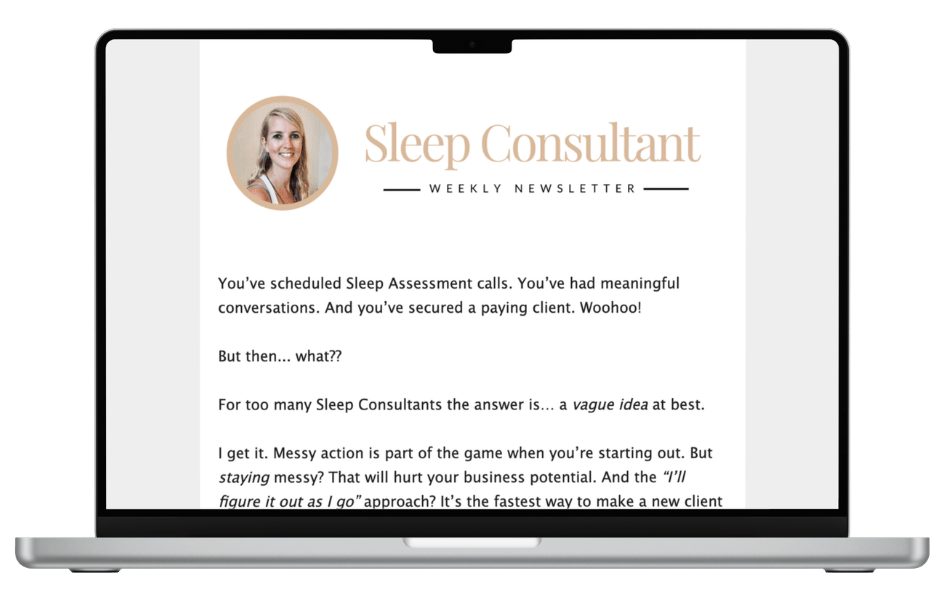
Weekly tips, strategies and marketing ideas for sleep consultants written by a fellow sleep consultant. 1500+ active subscribers!
I’ll only send helpful emails, and you can unsubscribe anytime with one click.
How to price your sleep consulting services?
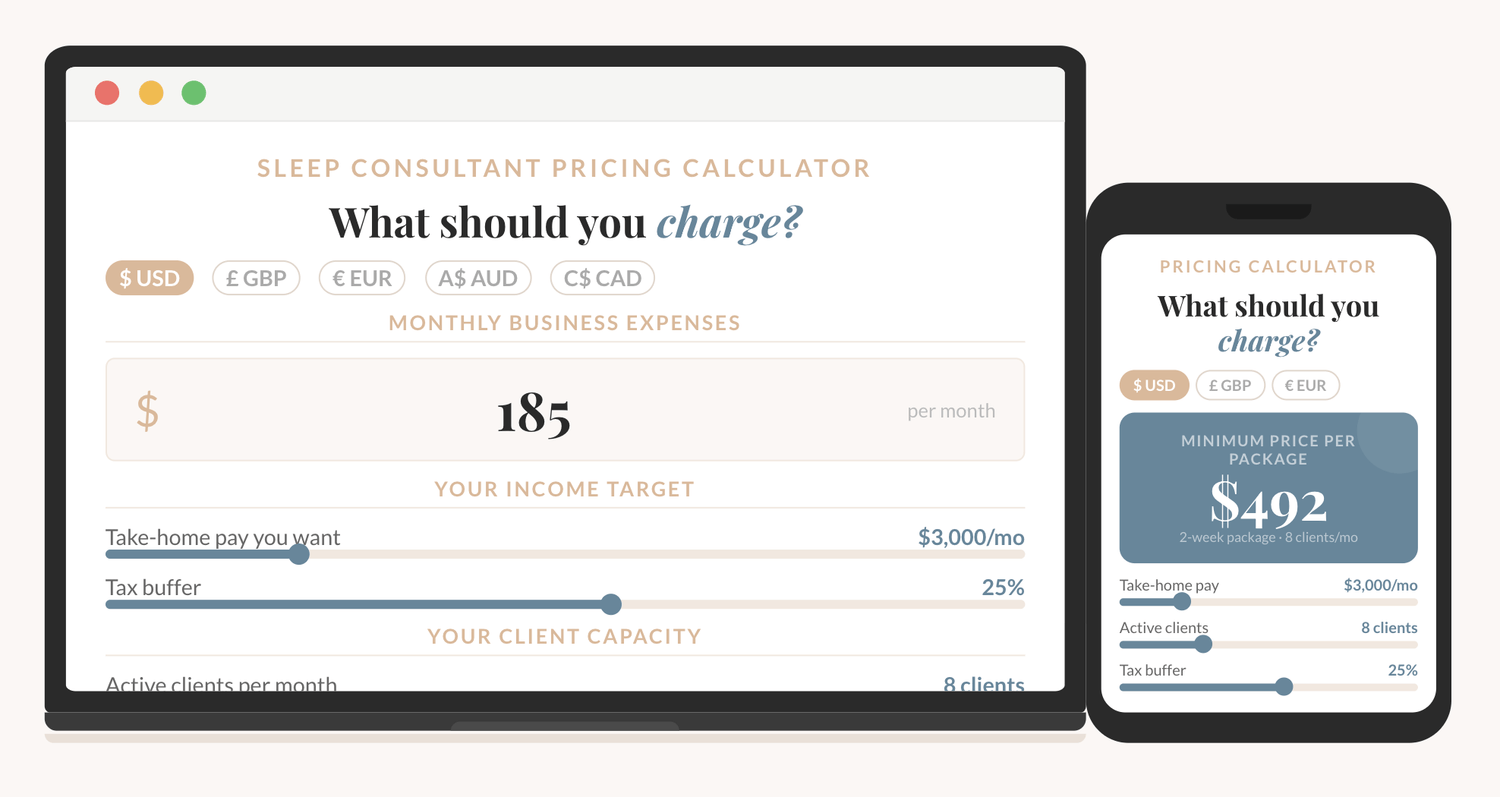
The Sleep Consultant Pricing Calculator shows you exactly what to charge, based on your real expenses, your income goal, and how many clients you want to take on.
I'm thrilled to offer you an exclusive preview of what’s inside!
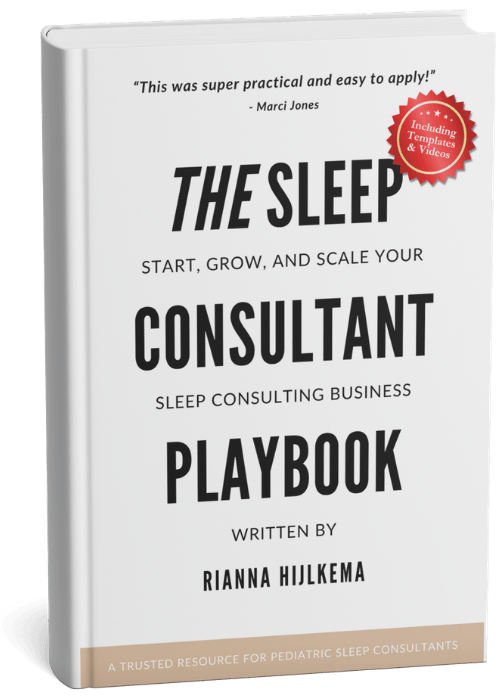
You can read the first 22 pages of The Sleep Consultant Playbook and get a taste of the value, insights, and actionable strategies that are waiting for you.
Other articles you might be interested in:
© 2021-2026 Sleep Consultant Business. All Rights Reserved.