
How to Use Email to Convert Followers into Sleep Consulting Clients
Social media attracts followers. Email turns them into clients. The system works like this: you create a free resource (lead magnet) that solves one specific problem for your ideal client, set up a simple opt-in page, and then send a 5 to 6-email sequence that builds trust, shows your expertise, and invites parents to book a Sleep Assessment Call. The whole thing runs on autopilot once it's built. Unlike social media followers, your email list belongs to you. No algorithm changes, no account shutdowns, and far higher engagement rates.
In this guide
- Why email works differently from social media
- Creating a lead magnet that actually attracts the right parents
- Your opt-in page and thank you page
- The 5-email nurture sequence that converts
- How to grow your list beyond your website
- Common email marketing mistakes sleep consultants make
- Frequently asked questions
You've got Instagram followers. Maybe some people are watching your Stories and engaging with your content. But none of them are booking. Sound familiar?
The gap between a follower and a paying client is trust. And while social media can start to build that trust, it rarely finishes the job on its own. Email is what closes it. Email is where you get to show up consistently, speak directly to a parent's specific struggles, and guide them step by step toward the decision to work with you.
This article walks through the whole system: what a lead magnet actually is, how to create one that works, what your opt-in page needs, and how to write a nurture sequence that converts curious followers into booked clients.
Why Email Works Differently From Social Media
Social media and email do completely different jobs. Social media is where parents discover you. It's great for visibility, first impressions, and getting a sense of who you are. But you don't own your social media followers. Algorithms change. Reach gets limited. Accounts get blocked (it's happened to me). All that hard work building an audience, gone in an instant.
Your email list is yours. A parent who gives you their email address has already done something your Instagram follower hasn't: they've actively chosen to invite you into their inbox. That's a different level of trust. No algorithm decides whether your email arrives. You send it, they get it. And engagement rates are significantly higher than social media, which means more of the parents on your list actually see and respond to what you send.
The relationship works like this: social media attracts followers, your funnel turns them into email subscribers, and your email sequence turns subscribers into clients. Each stage does a distinct job. Trying to skip from follower to client without the email step in the middle is like asking someone to marry you on the first date. You need the relationship-building stage in between.
I see sleep consultants focus all their energy on Instagram and then wonder why bookings are inconsistent. Here's the thing: social media is like renting a space you don't own. Your email list is the business you actually build. It's not about having a huge list either. A smaller list of 200 genuinely interested parents is far more valuable than 5,000 people who don't really care what you offer. Quality over quantity, always.
Creating a Lead Magnet That Actually Attracts the Right Parents
A lead magnet is a free resource you offer in exchange for a parent's email address. Think of it as a small gift that shows off your expertise and genuinely helps someone with something they need. The goal isn't just to collect emails. It's to attract the right people: parents who are genuinely interested in what you offer and who will eventually be ready to work with you.
That's why I think of it as a qualifier as much as a freebie. A good lead magnet filters in your ideal client and quietly filters out everyone else.
Start with your audience, not the format
Most sleep consultants start by thinking about what kind of lead magnet to create: a checklist, a guide, a video. That's the wrong starting point. Start with your audience. What's keeping them up at night (other than the baby)? What's one specific problem they're struggling with right now, and what's the first step toward solving it? Your lead magnet should deliver that first step as a complete solution, even though it only solves part of the bigger problem.
If your ideal client is a busy full-time working mum, don't create a 30-minute video she doesn't have time for. If your ideal client is an anxious mum who needs lots of reassurance, a one-page cheat sheet might feel too shallow. The format follows the audience, not the other way around.
The $50 test
Before you finalise your lead magnet, ask yourself honestly: would I pay $50 for this? If the answer is no, keep refining it until it's a clear yes. You're trying to create something so genuinely useful that the parent who downloads it thinks "if this is what she gives away for free, imagine what the paid service is like." That reaction is the whole point. Your lead magnet is your first chance to prove you understand their struggles and have real solutions.
Practical tips for your lead magnet
- Solve one specific problem. A targeted lead magnet that addresses one challenge really well builds more trust than a sprawling guide that tries to cover everything.
- Make it actionable and easy to use. Busy parents don't have time to work through a 40-page guide. A well-designed checklist or short guide they can apply today is more valuable than a comprehensive resource they'll never finish.
- Make the title speak directly to your ideal client. "A Guide to Better Baby Sleep" attracts everyone. "3 Things Keeping Your 8-Month-Old Awake at Night (and How to Fix Them)" attracts the right parent.
- Make it look professional. A polished-looking resource signals that your paid service will be even better. Canva makes this easy and free to design.
Your Opt-In Page and Thank You Page
The opt-in page
This is the page where a parent exchanges their email for your lead magnet. Keep it clean and focused. It needs four things: a headline that's clear about what they're getting and why it matters, a brief description of the specific benefit (not the features, the benefit), a simple form with just a first name and email, and a button that uses action language instead of "Submit" or "Sign Up." Try "Get My Free Guide" or "Yes, Send It To Me."
Clarity converts. "Subscribe for updates" tells a parent nothing. "Get your free guide: 5 reasons your toddler won't stay in bed (and what actually helps)" tells them exactly what they're getting and makes the decision easy. If you have a few testimonials, adding a line like "Join 500+ parents who've used this guide to get better nights" builds extra trust.
The thank you page
Most sleep consultants set up a thank you page that just says "thanks, check your email." That's a missed opportunity. The parent just took an action and they're engaged right now. Use that moment. Confirm the lead magnet is on its way, then offer one next step. Just one. That might be a related blog post, a short video that explains more about your approach, or an invitation to follow you on Instagram. Don't overwhelm them with options. One clear action keeps the momentum going.
The 5-Email Nurture Sequence That Converts
When someone signs up for your lead magnet, they've taken a step toward you. The next step is to keep building that relationship through a short automated email sequence. Think of it like dating: you wouldn't propose on the first date. You take time to connect, build trust, and get to know each other. Your email sequence does exactly that.
A 5 to 6-email sequence works well. Each email has a specific job. The goal is to support and connect, not to push. Here's how the sequence works:
Email 1: "Here's your..."
Deliver the lead magnet immediately. Thank them for signing up, briefly introduce yourself and your mission, and tell them what to expect from your upcoming emails. This one goes out automatically the moment they sign up.
Email 2: "You don't need..."
Move them from problem-aware to solution-aware. Describe the problem they have, explain what they actually need to solve it, and bust a common myth about what they think they need to do. Finish by creating excitement for the next email.
Email 3: "It's not your fault that..."
Demonstrate your expertise and relieve guilt. Tell a real client story with a clear before, during, and after. Remind them that this is hard stuff and nobody teaches it to parents. Then present your solution and encourage them to take one small action: reply to the email, or book a call.
Email 4: "Imagine if..."
Help them visualise life after working with you. There's no sales pitch that matches the picture a parent can create in their own head. Walk them through the benefits they'd feel right away, in a few weeks, and in the months ahead. Invite them to take action.
Email 5: "Now is the time to..."
Bring in urgency and social proof. Share a testimonial or a relatable story, paint a picture of what continues to happen if they don't take action, address a common objection or FAQ, and give them a clear, direct invitation to book a Sleep Assessment Call.
A few things that make every email in this sequence land better. Keep it conversational: write as if you're talking to a friend, not presenting a webinar. Avoid long paragraphs; busy parents skim, so make your emails easy to read in 90 seconds. Always end with one clear call to action. And add a PS at the bottom. People skim straight to the PS and it's a great place to restate the key point or CTA in a friendly, casual way.
One small but powerful copywriting tip: say "sleeps through the night" not "slept through the night." The present tense ("her baby sleeps") signals that the results are ongoing. The past tense ("her baby slept") implies they ended. Whenever you're writing about client results, use present tense. It changes how the transformation lands.
How to Grow Your List Beyond Your Website
Once your funnel is live and tested, the next job is getting parents into it. Don't just post the link once and hope people find it. Talk about your freebie all the time. Here's where to share it:
- Instagram bio. Place the link front and centre. It's the first thing a parent sees when they land on your profile after finding you through a post.
- Social media posts and Stories. Mention your freebie regularly, not just when you launch it. "Struggling with short naps? My free guide walks you through exactly what to try, link in bio" works any week of the year.
- DMs. When chatting with a parent who mentions a specific challenge, guide them to your freebie naturally. "I actually have a free guide that walks through exactly that, want me to send you the link?" That's helpful, not pushy.
- Facebook parenting groups. If you're offering free advice in a parenting group, follow it with a mention of your freebie for parents who want to go deeper.
- Your email signature. Even people already on your list might see a link to a related resource in your signature and click through. It keeps them engaged and guides them further into your content.
- Podcast guesting or collaborations. If you're ever a guest on a podcast or partnering with another business, share your lead magnet link rather than just your homepage. Make it memorable and direct.
One important rule: before you create a second funnel or a new lead magnet, make sure the one you have is actually working. Most sleep consultants barely tap the potential of their existing funnel before moving on to build something new. Track your numbers. How many people visit your opt-in page? How many sign up? How many emails get opened? If conversions are low, the answer is to tweak what you have, not to start from scratch.
Common Email Marketing Mistakes Sleep Consultants Make
Not having a funnel at all
This is the biggest one. Sleep consultants focus on social media, content, and networking, and forget to build any system that consistently collects and nurtures leads. It doesn't need to be complicated. A lead magnet, a simple opt-in page, and a short email sequence is genuinely all you need to start.
Creating a lead magnet nobody wants
A generic "baby sleep guide" attracts everyone and converts nobody. The more specific the lead magnet, the better it filters in the right people and filters out the wrong ones. If your lead magnet is attracting expecting mums but your service is for families with babies 4 to 12 months old, you're building a list that won't convert. Specificity is what makes a lead magnet work.
Delivering the lead magnet and then going silent
A parent downloads your freebie and then hears nothing for two weeks. By then, they've forgotten who you are and why they signed up. The nurture sequence is what keeps you in their mind between the moment they discover you and the moment they're ready to book. Without it, you're doing the hard work of building the list and then throwing it away.
Selling before you've built any trust
Sending a "book a call" pitch in the first email, before you've offered anything of value, is the email equivalent of proposing on the first date. It feels pushy and it doesn't convert. Give first. Genuinely, generously give. By the time email five arrives with a clear invitation to book, the parent has had enough contact with your expertise that saying yes feels natural, not pressured.
Building the funnel and forgetting to promote it
Setting up the funnel and mentioning the freebie once is not enough. Your lead magnet needs to be in your bio, in your posts, in your Stories, in your DMs, in your email signature. Talk about it all the time. The parents who need it won't always see it the first time you mention it.
Panicking about unsubscribes
Unsubscribes are normal and actually healthy. They mean someone who wasn't the right fit has removed themselves from your list, which keeps your list clean and your engagement rates higher. Focus on serving the people who stay. Those are the parents who are genuinely interested in what you offer.
Frequently Asked Questions
What platform should I use for email marketing?
If you're using my recommended platform (see the tools section) it has a built-in email marketing tool that connects directly to your opt-in page and automates your sequence. If you prefer a standalone tool, Mailerlite and ConvertKit are both well-suited to sleep consultants. Avoid overthinking this one. Pick a platform, set it up, and move on. The tool matters far less than actually having the system in place.
How often should I send emails after the welcome sequence ends?
Once or twice a month is a good starting cadence for a newsletter. Weekly works well if you consistently have something valuable to share. What you want to avoid is going weeks with no contact and then suddenly appearing with a sales pitch. Consistency matters more than frequency. Even one email a month that genuinely helps parents is better than silence punctuated by occasional promotion.
My emails aren't getting opened. What's wrong?
Usually the subject line. The subject line is the only thing determining whether someone opens an email, so it deserves more attention than most people give it. Test different approaches: a question ("Is your baby's sleep getting worse before it gets better?"), a specific claim ("3 things that make the 4-month regression harder"), or something that feels like it's just for them ("For parents of babies who won't nap longer than 30 minutes"). Also check when you're sending. Early morning or evening tends to work well for a parent audience.
What if I'm not a good writer?
Your emails don't need to be perfect. They need to be genuine. Parents respond to real, conversational communication far more than polished copy. Write as if you're emailing a friend who is struggling with their baby's sleep. Keep it simple and from the heart. The more you write, the easier it gets. Subscribe to newsletters from business owners you admire and notice what makes their emails feel good to read. You'll start to develop your own voice naturally.
I'm getting sign-ups but nobody's booking. What do I check?
Two things to look at first. One: is your lead magnet attracting the right people? If your freebie is pulling in an audience that doesn't match who you actually work with, the sequence will never convert them. Two: is your call to action clear in the final emails? A vague "reach out if you're interested" is very different from "click here to book your free Sleep Assessment Call. I have three spots available this month." Be specific and direct in your ask.
Do I need GDPR or privacy policy compliance for my email list?
Yes, if you have subscribers in the European Union you need to comply with GDPR, which means having a clear privacy policy, getting explicit opt-in consent, and making it easy for people to unsubscribe. Most email marketing platforms handle the mechanics of this for you, but you're responsible for having a privacy policy on your website. If you're based in the EU or have a significant EU audience, it's worth a quick check with a local legal advisor to make sure you're set up correctly.
Key Takeaways
- Social media attracts followers. Email turns them into clients. Your list belongs to you, no algorithms, no shutdowns, and higher engagement than any social platform.
- Start your lead magnet with your audience, not the format. What's one specific problem your ideal client has right now? Solve the first step of that problem completely.
- Apply the $50 test. If you wouldn't pay $50 for your lead magnet, refine it until you would. It's your first chance to prove you understand and can help.
- A 5-email sequence is all you need to start: deliver, educate, build credibility, paint the transformation, invite action.
- Talk about your freebie all the time. Bio, posts, Stories, DMs, email signature. Don't mention it once and move on.
- Don't build a second funnel until the first one works. Track your numbers, tweak what's underperforming, and maximise what you have before adding more.
Once your email system is running, it works for you every day, on autopilot. That's the goal: a business that keeps nurturing relationships even when you're not actively online.
Disclaimer: The information shared in these articles is for educational and informational purposes only. It does not constitute legal, financial, or professional advice. Always consult with a qualified professional regarding your specific situation.

Rianna Hijlkema
Certified Pediatric Sleep Consultant, Certified Postpartum Doula, Former Teacher & School Director, Founder of Sleep Consultant Design & Sleep Consultant Business and the author of The Sleep Consultant Playbook (available on Amazon).
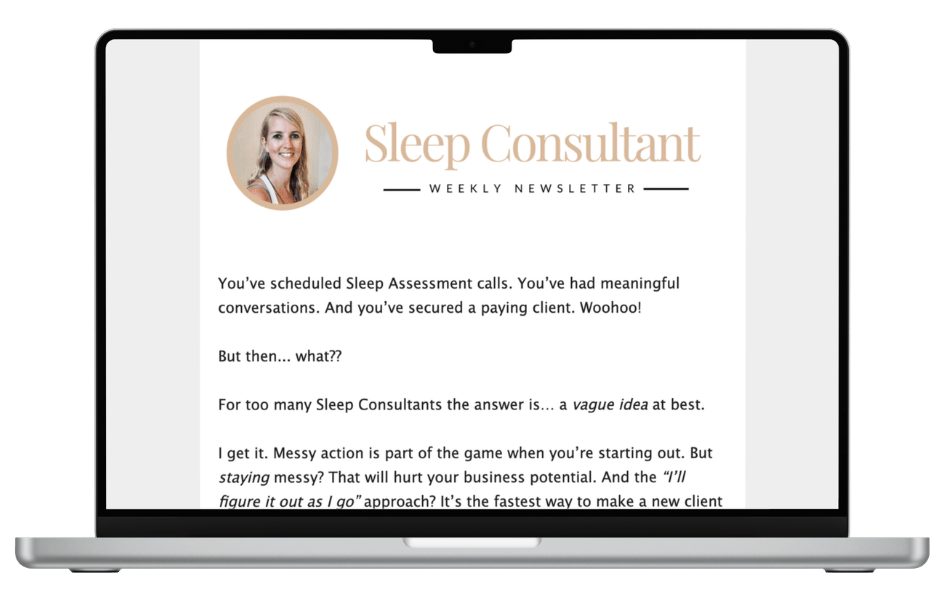
The Sleep Consultant Newsletter
Weekly tips, strategies and marketing ideas for sleep consultants written by a fellow sleep consultant. 1500+ active subscribers!
I’ll only send helpful emails, and you can unsubscribe anytime with one click.
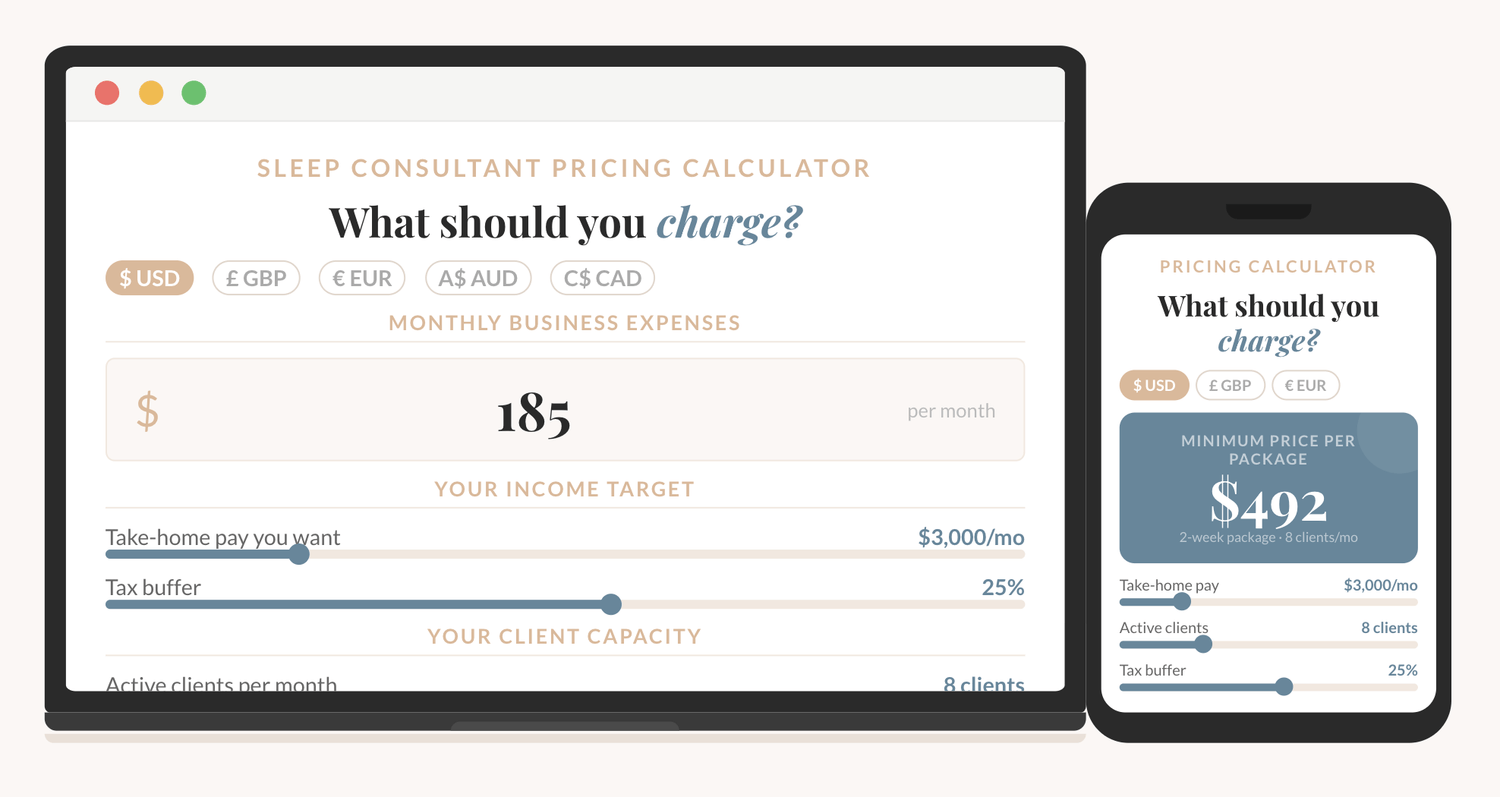
How to price your sleep consulting services?
The Sleep Consultant Pricing Calculator shows you exactly what to charge, based on your real expenses, your income goal, and how many clients you want to take on.
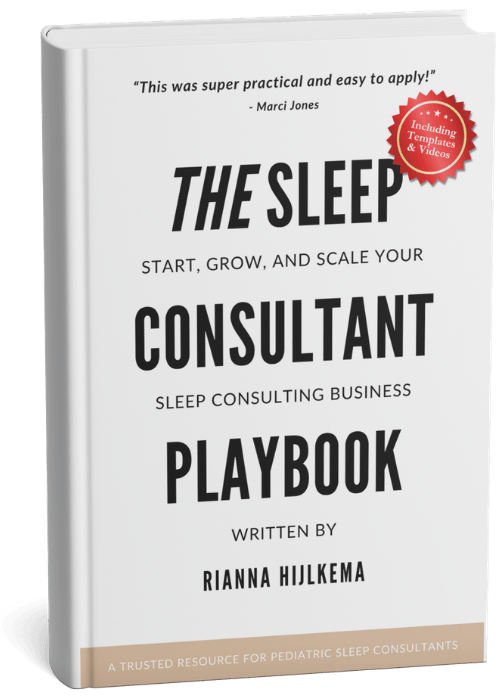
I'm thrilled to offer you an exclusive preview of what’s inside!
You can read the first 22 pages of The Sleep Consultant Playbook and get a taste of the value, insights, and actionable strategies that are waiting for you.
Other articles you might be interested in:
© 2021-2026 Sleep Consultant Business. All Rights Reserved.