
Tips for Hosting Workshops as a Sleep Consultant
Hosting workshops or webinars as a sleep consultant lets you teach, build trust, and convert a room full of parents in one session. No social media post or blog article can replicate that. The key is to structure your content using the Why-What-How-What If framework to reach every type of learner, deliver genuine value before you make any offer, and set up proper pre-event and post-event systems so the event keeps working for you after it ends. This guide covers the full process from idea to follow-up.
In this guide
- Why workshops work for sleep consultants
- Webinar, workshop, or speaking engagement?
- How to structure your content: the Why-What-How-What If framework
- Create real value before you make your offer
- Before the event: promotion and preparation
- On the day: running it well
- After the event: follow-up and repurposing
- Clear calls to action
- Pricing and speaking fees
- Common mistakes sleep consultants make
- Frequently asked questions
Why Workshops Work for Sleep Consultants
A blog post can explain sleep regression. A social media post can share a tip. But nothing builds trust faster than showing up live in front of parents, answering their real questions in real time, and demonstrating in 60 minutes that you know exactly what you're talking about.
Workshops and webinars are one of the most powerful tools a sleep consultant has for three reasons. First, they move parents from symptom-aware ("my baby won't sleep") to solution-aware ("this person can help me fix it") in a single session. Second, they let you reach many families at once rather than one at a time. Third, when you record them, they keep working long after you've closed the laptop.
Unlike static content, live events create real-time engagement. Parents ask questions. You respond with specifics. They see your personality, your confidence, your care. That combination builds the kind of trust that converts into bookings, often within 24 hours of the event ending.
Webinar, Workshop, or Speaking Engagement?
These three formats serve different purposes and require different preparation levels.
| Format | Duration | Best for | Typical pricing |
|---|---|---|---|
| Webinar | 30–60 min | Lead generation, ending with a pitch to a paid offer | Free (lead magnet) |
| Workshop | 60–90 min | Deep-dive teaching, paid or free, online or in-person | $27–$97 |
| Speaking engagement | 15–45 min | Credibility building, guest speaking at someone else's event | Free to $500+ depending on event |
Whatever format you choose, keep the focus tight. One specific problem, one clear topic. "How to Tackle Early Morning Wakings" or "When and How to Wean Your Toddler Off the Pacifier." A focused topic attracts exactly the right parents and makes it far easier to deliver a strong session than a broad overview of baby sleep ever would.
How to Structure Your Content: the Why-What-How-What If Framework
Every audience contains four types of learners. Your workshop content needs to speak to all of them. This framework does exactly that.
Why-People: start with the emotional connection
These are the parents who need to feel seen before they can hear anything else. Start by sharing relatable stories or facts that highlight the sleep challenges your audience is facing. Show them you understand their situation and establish why this topic matters, and why you are the right person to teach it. This is where you create the emotional connection that makes them want to stay for the rest.
What-People: outline what they'll learn and why existing approaches fail
These parents want a clear map before they commit their attention. Outline exactly what the workshop will cover, what their problem really is (beyond the surface symptom), what they may have already tried that didn't work (and why), and what they'll walk away with. This builds trust and manages expectations from the start. These types love research and statistics too. If you have any, bring them here.
How-People: give them something they can use immediately
These parents are practical. They don't want theory. They want steps. Share your actionable frameworks, strategies, or techniques with enough specificity that someone could actually implement something before the day is over. Keep it simple and focused. This is where the bulk of your teaching content lives, and it's where you prove you know your stuff.
What If-People: address their concerns and doubts
These parents are the ones thinking "but what if my child is different?" or "what if I've already tried this and it didn't work?" End your session with a Q&A, or proactively address the most common objections and concerns out loud. When these parents hear their exact worry acknowledged and answered, their resistance drops, and their willingness to book goes up.
Make sure your promotional emails before the event also speak to all four types. Explain why they should join (Why), what they'll gain (What), how the session will run (How), and include a Q&A section for their questions (What If). That one adjustment to your pre-event emails alone can significantly increase your attendance rate.
Create Real Value Before You Make Your Offer
This is where many workshop hosts go wrong. They spend most of the session building up to their offer rather than delivering real content, and parents can feel it. The session starts to feel like a long advertisement. Trust evaporates, and conversions tank.
Deliver genuinely useful content first. Teach something a parent can use tonight. Share a framework they haven't heard before. Give them a quick win that makes them think "she actually knows what she's talking about." Only when you've earned trust through substance should you introduce your offer.
Practical ways to build real value in your sessions:
- Start with education. Share something specific and actionable: a common misconception about baby sleep, a framework for identifying why a child is waking, a step-by-step technique parents can try immediately.
- Use real examples. Case studies or client stories (with permission, or anonymised) show parents the actual impact of your work and make your offer feel concrete rather than abstract.
- Share your story. Why did you become a sleep consultant? What was your own experience that made this personal? Authenticity builds connection, and connection builds trust.
- Consider inviting a past client. A real parent sharing their experience live in your session is one of the most powerful social proof tools available to you.
Before the Event: Promotion and Preparation
Start promoting at least two to three weeks in advance. A registrant who signed up four weeks ago and hasn't heard from you since will often forget to show up. A registrant who received three warm, useful emails in the week leading up to the event is far more likely to actually attend.
- Email your list. Multiple reminders in the lead-up: announcement, week before, day before, morning of. Each email should remind them what they'll get, not just when to show up.
- Social media posts, stories, and countdown stickers. Create anticipation rather than just announcing. Share a teaser of what you'll cover, a Q&A box for questions to address in the session, a poll relevant to the topic.
- Collaborations and partnerships. Ask fellow sleep consultants, parenting experts, or local parent groups to share your event. A warm introduction from someone their audience already trusts is worth more than any ad.
- Pre-event survey. Send registered attendees a short survey asking what their biggest sleep struggle is right now. Use the responses to shape your content and to name specific situations during the session that make parents feel genuinely seen.
- Automated reminders. Set up reminder emails 24 hours and 1 hour before the event. This single step significantly reduces no-shows.
On the Day: Running It Well
Set up your tech before participants arrive. Test your audio, your screen sharing, your slides, and your recording. A technical problem in the first five minutes of a live event kills momentum in a way that's hard to recover from.
Open the session with a welcome that sets the tone, introduces you briefly, and immediately establishes what participants are about to get. Don't spend ten minutes on your bio. Parents showed up for the content, not your CV.
Engage your audience from the start. Ask a question in the chat ("How old is your baby?", "What's your biggest sleep challenge right now?"). This wakes people up, gives you live data to work with, and helps address specific situations in real time rather than speaking into the void.
Have a clear agenda on screen so attendees know the shape of the session. And always record it. The recording becomes an asset you can sell, repurpose, or use to run automated webinar funnels later.
After the Event: Follow-Up and Repurposing
The event ending is not the end. It's actually one of the most important moments in the whole process. The hour after a workshop ends is when purchase intent is at its highest. If you're not following up immediately and systematically, you're leaving bookings on the table.
Set up an automated post-event email sequence before the event goes live. It should include:
- A thank-you email within an hour of the event ending. Warm, personal, and including the replay link if applicable. Also include your offer with a clear call to action and a deadline or bonus for acting quickly.
- A follow-up email 24 hours later. Share a client result or testimonial relevant to what you taught. Remind them of your offer. Ask if they have any questions.
- A final email before your offer closes or the early-bird bonus expires. Create a gentle sense of urgency based on a real deadline, not fake scarcity.
For the replay attendees (parents who watched the recording rather than attending live) acknowledge them directly in the follow-up email ("If you're watching the replay, welcome!"). Their purchase intent is slightly lower than live attendees, so make the offer feel especially relevant to where they are.
After the follow-up sequence is done, repurpose. Turn your talk into a YouTube video, a podcast episode, or a blog post. Share clips on social media. If the webinar performed well, automate it into a pre-recorded funnel that runs on autopilot and brings in leads even when you're not hosting anything live.
Clear Calls to Action
Every workshop or webinar needs a clear next step for the audience, and that next step should be the same thing, said multiple times, not five different things said once each.
Be specific. "Check this out" is not a call to action. "Book your free Sleep Assessment Call using the link in the chat, spaces this week are limited" is. Tell them exactly what to do, exactly why to do it now, and make the link impossible to miss.
Mention your CTA at least three times during the session: once when you introduce it, once at a natural content transition point, and once at the close. Add it to your slides. Drop the link in the chat. Repeat it in your follow-up emails. Most people need to see an offer multiple times before they act on it. Life is busy. A tired parent may fully intend to book and then forget before they get to the end of the session.
Pricing and Speaking Fees
If you're hosting your own paid workshop, ticket prices typically range from $27 to $97 depending on depth, duration, and your audience size. A 60-minute practical session with clear takeaways can comfortably sit at $47. A 90-minute deep-dive with resources, templates, or ongoing access can go higher.
If you're speaking at someone else's event, speaking engagements can be free (excellent for exposure and networking, especially early in your career) or $500+ for paid opportunities, with significantly higher rates for specialised expertise or corporate events like workplace wellness programs.
For free webinars used as lead generation, price is obviously not the point. The value you deliver is. A free webinar that genuinely teaches something useful will convert more attendees to clients than a free webinar that holds back the good stuff for paid offers.
Common Mistakes Sleep Consultants Make
Choosing a topic that's too broad
"All About Baby Sleep" doesn't attract anyone specifically. "How to Handle the 4-Month Sleep Regression Without Crying It Out" speaks directly to a parent who is living that right now. Specific topics attract specific, highly motivated parents, and motivated parents convert.
Skipping the follow-up sequence
A single email after the event is not a follow-up strategy. Set up a three-email sequence before the event goes live. If you're waiting until after the event to figure out follow-up, you'll lose the window when purchase intent is highest.
Not recording the session
A workshop you didn't record is a one-time event. A workshop you recorded is a piece of content you can sell, repurpose, and eventually automate into an evergreen funnel. Always hit record before you go live.
Waiting for the "right time" to start
Your first workshop will feel scary. That's completely normal and it doesn't go away by waiting. It goes away by doing. Start with a smaller, lower-stakes format: a free 30-minute webinar for your existing audience. Get the experience. Improve from there. A monthly webinar rhythm builds credibility in a way that sporadic, heavily produced events never will.
Frequently Asked Questions
What platform should I use to host a webinar?
Zoom is the most accessible starting point. It's free, familiar to most parents, and handles video calls, screen sharing, and recording. For more structured webinar experiences with registration pages, email integrations, and replay hosting, platforms designed specifically for webinars offer those features in one place. Check the Sleep Consultant Business Operating System™ for what's built in to your existing platform before adding new tools.
How do I get people to sign up for my first workshop?
Start with your warm audience: the people who already follow you, have engaged with your content, or are on your email list. Post about it multiple times across multiple formats (a grid post, stories, a countdown). Consider collaborating with a local parent group, postnatal class, or related professional who can share it with their audience. For your first event, ten engaged attendees is a better result than fifty disengaged ones.
Should I offer a free or paid workshop first?
Free for your first one. It removes the barrier to entry, fills the room more easily, and lets you practice the format without the pressure of people feeling they've paid for something. Use the free workshop to generate bookings for your paid service. Once you're comfortable and have social proof from the session, a paid workshop becomes a much easier sell.
How often should I host workshops?
One live webinar a month is a strong rhythm to aim for. It's frequent enough to build consistent momentum and audience growth, but not so demanding that it becomes the only thing you're doing. Once a webinar has performed well, automate the recording as an evergreen funnel and replace it with a new live topic, so you're always adding fresh content while your best-performing sessions run in the background.
Key Takeaways
- Live events build trust faster than any static content. A single well-run workshop can generate more bookings than months of social media posts.
- Use the Why-What-How-What If framework to structure your content so every type of learner in your audience feels engaged and served.
- Deliver real value before you pitch anything. The trust you build through substance is what converts attendees into clients.
- Promote for at least two to three weeks in advance, set up automated reminders, and send the pre-event survey to shape your content around real audience struggles.
- Always record. A recorded workshop is content you can sell, repurpose, and eventually automate.
- Set up your post-event email sequence before the event goes live, not after. The hour following the event is your highest-converting window.
- Start with a free 30-minute webinar for your existing audience. Get the reps in. Improve from there. One monthly webinar builds more long-term credibility than one annual event.
Decide on a topic this week. The sleep question you get asked most often is your starting point. Set a date four weeks out. Open registrations. The rest you'll figure out as you go, and that's exactly how it's supposed to work.
Disclaimer: The information shared in these articles is for educational and informational purposes only. It does not constitute legal, financial, or professional advice. Always consult with a qualified professional regarding your specific situation.

Rianna Hijlkema
Certified Pediatric Sleep Consultant, Certified Postpartum Doula, Former Teacher & School Director, Founder of Sleep Consultant Design & Sleep Consultant Business and the author of The Sleep Consultant Playbook (available on Amazon).
The Sleep Consultant Newsletter
Weekly tips, strategies and marketing ideas for sleep consultants written by a fellow sleep consultant. 1500+ active subscribers!
I’ll only send helpful emails, and you can unsubscribe anytime with one click.
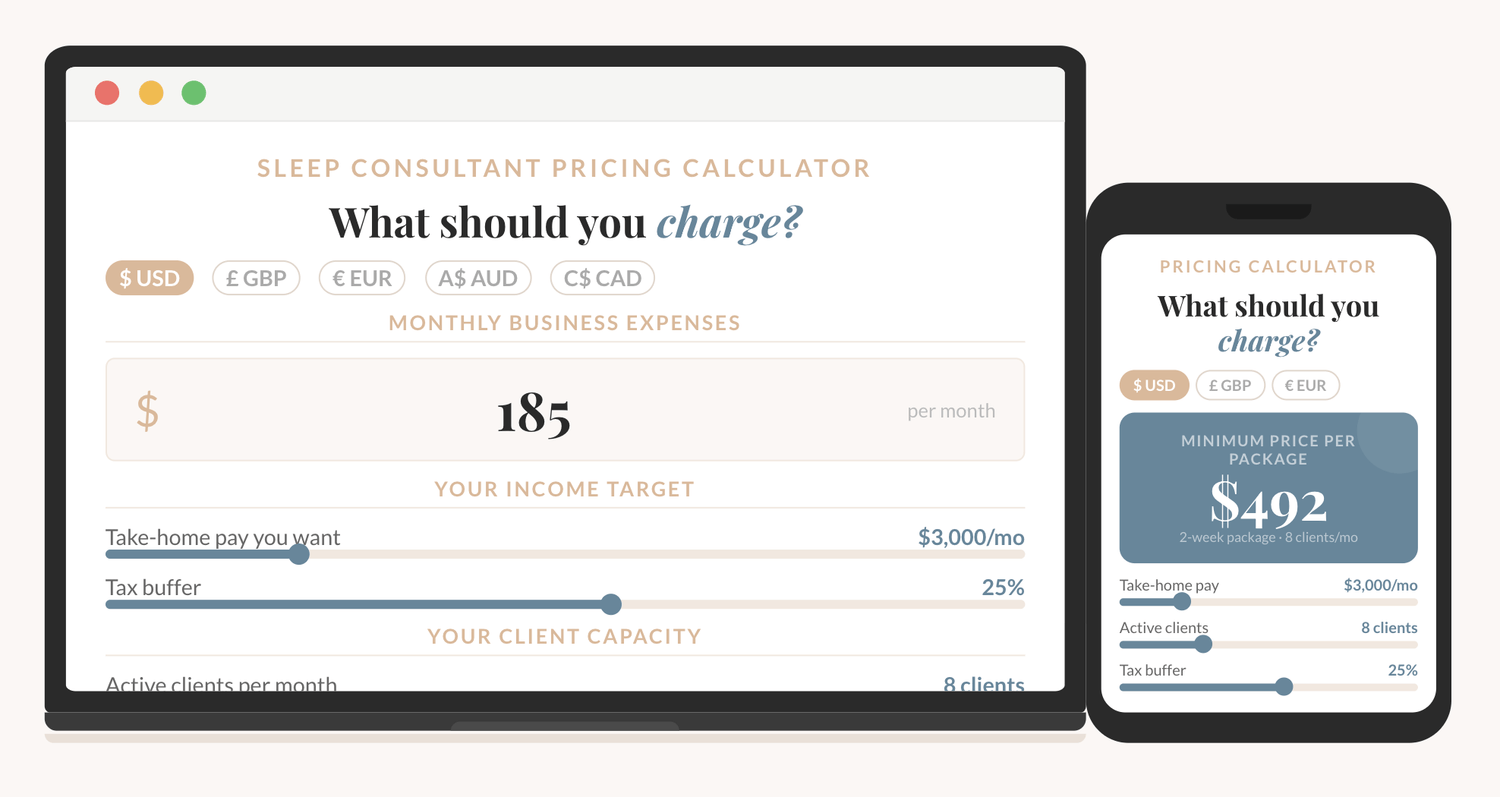
How to price your sleep consulting services?
The Sleep Consultant Pricing Calculator shows you exactly what to charge, based on your real expenses, your income goal, and how many clients you want to take on.
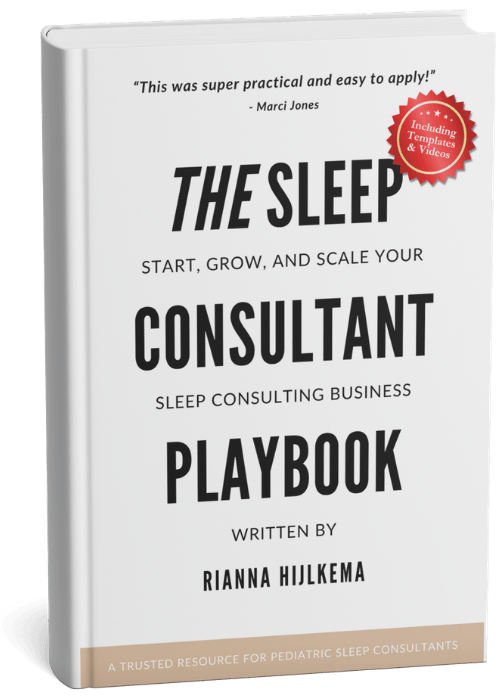
I'm thrilled to offer you an exclusive preview of what’s inside!
You can read the first 22 pages of The Sleep Consultant Playbook and get a taste of the value, insights, and actionable strategies that are waiting for you.
Other articles you might be interested in:
© 2021-2026 Sleep Consultant Business. All Rights Reserved.