
How to Build a Content Strategy as a Sleep Consultant
A content strategy is a plan that helps you show up consistently and intentionally without staring at a blank screen wondering what to post. It starts with one platform, not five. Then you pick 3 to 5 content pillars, the core topics you'll return to again and again. You rotate three types of content across those pillars: educational, growth, and sales. You batch the creation so it doesn't eat your week. And you repurpose everything so one idea becomes many pieces. Consistency over intensity, every time.
In this guide
- Start with your goal, not your content
- Pick one platform and get good at it
- Define your content pillars
- The three types of content every sleep consultant needs
- Build an idea vault so you never start from scratch
- Batch and repurpose so one idea goes further
- Consistency over intensity
- Common content strategy mistakes sleep consultants make
- Frequently asked questions
Think about the parent who's up at 2am, baby finally asleep, phone in hand, quietly Googling "why does my toddler keep waking at 4am." Your content is how she finds you. It's how she reads something you wrote and thinks: this person gets it. This is the person who can help us.
Content creation is one of the most powerful things you can do for your sleep consulting business. It's also one of the things that most easily turns into overwhelm, especially when you're also running client calls, writing sleep plans, and managing the whole business solo.
The solution isn't to post more. It's to have a strategy. A content strategy is simply a plan that helps you show up consistently and intentionally, whether that's through social media, a blog, a podcast, or email. With the right system, you know exactly what to post, when to post it, and why. No more blank screen, no more panic-posting, and no more burning out trying to do it all.
Start With Your Goal, Not Your Content
Before you plan a single post, get clear on what you're actually trying to achieve. Are you trying to book more Sleep Assessment Calls? Grow your email list? Attract parents to a workshop? Build local visibility? Each of those goals points to a different content focus, and without clarity here, you'll create content that feels busy but doesn't move the needle.
Be specific. Not "I want more clients." That tells you nothing. Try "I want to book five Sleep Assessment Calls this month." Now every piece of content has a job: does this move someone closer to booking a call? If yes, great. If not, is it building the trust that eventually leads there? Every post should be able to answer that question.
Write your goal down somewhere visible. On your desk. On a sticky note on your laptop. Every time you sit down to create content, check it against the goal. This one habit stops you from creating content that feels productive but doesn't actually serve your business.
Pick One Platform and Get Good at It
You do not need to be on Instagram, Facebook, LinkedIn, TikTok, YouTube, Pinterest, and whatever new app drops next week. Trying to be everywhere is a recipe for burning out, doing a mediocre job on all of them, and attracting nobody. The sleep consultant who masters one platform for twelve months will always outperform the one spreading herself across five.
So how do you choose? Two things: your ideal client and your own strengths.
Your ideal client: Where are they already spending their time? Millennial parents scrolling between wake-ups tend to be on Instagram. Parents who prefer deeper, more researched content often search YouTube or blogs. Professionals looking for credentialed experts may be on LinkedIn. You want to be where they already are, not where you think you should be.
Your own strengths: Do you love writing? Blogs and email newsletters are powerful and underused. Are you comfortable on camera? Instagram Reels, Stories, or YouTube could be natural fits. Hate all social media? Local networking and community events are a completely valid content strategy. There's no one-size-fits-all. The platform you'll actually show up on consistently is the right one, even if it's not the trendy one.
Many sleep consultants try to follow the exact path of their certification teachers. What worked for them may not work for you. There's no one-size-fits-all strategy here. Don't be intimidated by other sleep consultants who seem to be everywhere. Most of them burn out within a few months. Stay steady. Focus on one thing for twelve months. Before you know it, you'll be crossing the finish line while they're still trying to keep up. The tortoise wins this race every time.
Define Your Content Pillars
Content pillars are the 3 to 5 core topics you'll return to again and again, across every platform and format. Think of them as buckets. Every post, every article, every email drops into one of those buckets. This is what stops content creation from feeling like a random panic and turns it into a system.
Your pillars should sit at the intersection of your expertise and what your audience actually needs. Here's an example for a sleep consultant who specialises in twin families:
| Pillar | What it covers |
|---|---|
| Twin sleep strategies | Syncing nap schedules, managing regressions with two babies, bedtime routines that work for both |
| Client wins | Before-and-after stories from real twin families, showing the transformation |
| Parent empowerment | Helping parents trust their instincts and feel confident navigating the challenges of two |
| Behind the scenes | Personal insights, what it's like to work with twin families, the human side of the business |
| Myth-busting | Addressing misconceptions like "twins must have identical schedules" or "you can't sleep train twins at the same time" |
Your pillars will look different depending on your niche. The point is that you pick 3 to 5 and commit to them. When you sit down to create content, you're never starting from zero. You're just deciding which pillar you're working in today. That clarity alone removes a huge amount of the mental friction.
The Three Types of Content Every Sleep Consultant Needs
Not all content does the same job. A healthy content strategy mixes three types, each serving a different purpose in the relationship between you and your potential clients.
Type 1: Educational content
This is where you demonstrate your expertise. Tips, explanations of common sleep challenges, answers to questions parents search for. Examples: "5 signs your baby might be overtired," "one simple tweak to help your toddler sleep longer," "the top three mistakes parents make with baby sleep and how to avoid them."
Don't hold back here. Share your best knowledge freely. Parents don't come to you because they can't find sleep tips on the internet. They come because they're overwhelmed and they need someone they can trust to cut through the noise and give them exactly what works for their specific family. If you think your value is information, AI is going to beat you. Your real value is your support, your presence, your accountability. The more you share, the more parents see you as the expert to call when they're ready for real help.
Type 2: Growth content
This is designed to expand your reach, grab attention, and encourage shares and saves. It entertains, surprises, or sparks a conversation. A funny Reel about sneaking out of a sleeping baby's room. A poll: "What's your bedtime routine: chaos or calm?" A guest spot on a parenting podcast. Content that makes someone tag a friend because they recognise themselves in it.
Growth content is often the hardest for sleep consultants to write because it feels less "professional." But it's what brings new people into your world. You don't have to be a comedian. You just have to be relatable. Honest, human, and a little bit real about how hard this is for families.
Type 3: Sales content
This invites people to take action: book a call, download your lead magnet, enquire about your service. "Exhausted parents, I'm here for you. I create personalised sleep plans that give you back your nights. DM me to book a free consultation." A client case study. A testimonial post. A direct invitation.
Most sleep consultants avoid sales content because it feels pushy. Here's the reframe: if someone has been following you for weeks, reading your tips, recognising themselves in your posts, the kindest thing you can do is make it easy for them to take the next step. You're not interrupting their day. You're giving them permission to ask for help.
Speak to what your audience wants, not just what they need. Parents don't buy "better sleep habits." They buy calm bedtimes, uninterrupted nights, more energy for themselves, and quality time with their partner. Meet them where they are. Lead with the want, then guide them toward what they actually need. "Help your toddler sleep through the night so you can finally have your evenings back" will always land better than "implement a consistent sleep routine."
Build an Idea Vault So You Never Start From Scratch
One of the biggest reasons content creation feels hard is starting with a blank page. The fix is an idea vault: a running list of content ideas you capture in the moment, so when it's time to create, the thinking is already done.
Every time a client or potential client asks you a question, write it down. That question is a content idea. Because if one parent is asking it, a hundred more are Googling it at 2am. Every time a parent says something in a consultation that surprises you, or every time you notice a common misconception coming up again, write it down. Your goldmine of content ideas is already sitting inside your client work. You just need to capture it.
Keep the vault somewhere simple: a note on your phone, a Google doc, a notebook on your desk. Doesn't matter where. What matters is that you capture ideas immediately when they come, rather than trusting your memory. The idea that seems obvious at 11am on a Tuesday disappears by Thursday.
When you sit down to plan your content for the week or month, pull from the vault. You're not inventing ideas under pressure. You're selecting from a list of things you already know resonate with real clients.
Batch and Repurpose So One Idea Goes Further
Batching
Creating content last-minute is like realising at 6pm that there's nothing for dinner. You panic, throw something together, and hope for the best. Batching is meal prepping for content: you do the work upfront, store it, and serve it when needed.
The key to batching is doing similar tasks together, not trying to write, design, and schedule all in one sitting. Each of those tasks requires different mental energy. Switching between them constantly drains you. Instead:
- Day 1: Write all captions and copy for the week
- Day 2: Design all graphics
- Day 3: Schedule everything in one sitting
This frees up the rest of your week for what actually belongs in it: client work, real engagement, and breathing room. Once your content is scheduled, your job shifts to showing up for the people who respond to it, not frantically creating more.
Repurposing
You don't need more ideas. You need to get more from the ones you have. One piece of content, used well, can become many.
- An Instagram carousel becomes a Reel or splits into two shorter posts with new covers and captions
- An insight from a client session becomes a social post this week, then next week gets reframed as a question to spark engagement
- A detailed blog post breaks down into four or five bite-sized social posts, each covering one specific point
- A podcast episode generates a newsletter, a social post, and a quote graphic
And here's the shift that makes this even easier: document your work rather than constantly creating from scratch. You have a steady flow of clients and real scenarios coming up in your work every day. Use those. A question a client asked you today is a post for this week. A challenge a family worked through last month is a case study for next month. You're not manufacturing content. You're capturing what's already happening.
Consistency Over Intensity
Trying to post every day is not a strategy. It's a fast track to burnout and a guarantee that quality will drop. What actually works is a realistic schedule you can maintain for months, not weeks.
A solid starting point for most sleep consultants: three social media posts per week, one blog or newsletter per week, and one podcast episode per week if that's your medium. Set the schedule, then commit to it for at least three months before evaluating. If life happens and you drop to two posts a week, that's fine. Adjust and keep going. Don't quit. Quitting and starting over costs far more than just slowing down for a week.
Think of each post as a seed. Some sprout quickly, others take months. But the more you plant, the more your garden grows. Your 100th post will be significantly better than your first. You won't get to the 100th without posting the first 99. Perfectionism dressed up as "I'll post when it's ready" is just procrastination. Your audience doesn't want perfection. They want your presence.
It's not about pushing hard. It's about sticking to it. A steady 70% for a whole year beats going all-out at 200% for one month every time. Don't stress too much about the algorithm either. The algorithm's job is to connect good content with the right people. Your job is to create content that speaks directly to your ideal client, and to respond when people engage with it. When you focus on consistency, relevance, and genuine connection, the algorithm works for you.
Common Content Strategy Mistakes Sleep Consultants Make
Trying to be everywhere at once
Pick one platform. Master it. Then, and only then, consider adding a second. A mediocre presence on five platforms is invisible. A strong, consistent presence on one platform builds an audience. This isn't a compromise. It's the strategy.
Posting without a plan
Content created reactively, when you happen to feel inspired, produces inconsistent output with no strategic thread. Define your pillars first. Give yourself buckets to create within. Then batch within those buckets. This is the difference between content that feels random and content that builds a recognisable brand over time.
Holding back your best knowledge
The fear that giving away good information for free will stop people booking is one of the most common and most unfounded fears in content creation. Parents don't book you because they can't Google sleep tips. They book you because they're overwhelmed, they trust you, and they need someone in their corner. Giving away valuable content is how you build that trust. Share freely.
Only posting educational content and never asking for the booking
Educating builds trust. But if you never make an offer, you're leaving bookings on the table from people who are already warm and ready. Mix in sales content regularly. Not every post, but consistently. A parent who's been following you for a month needs a direct invitation to take the next step. Give it to them.
Writing about what parents need instead of what they want
"Establish a consistent bedtime routine" is a need. "Finally have your evenings back" is a want. People are emotionally pulled toward the outcome they desire, not the process required to get there. Lead with the want. Once they're engaged, guide them toward the work. Frame every piece of content through the lens of what life looks like after they solve this problem.
Scrolling other sleep consultants' content for inspiration
This is a comparison trap, and it will leave you stuck. Instead of drawing inspiration from what other consultants are doing, draw from your own client work. What questions did you answer this week? What challenge did a family work through? What misconception came up again? Your real-life client interactions are the richest content source you have. Use them.
Frequently Asked Questions
How often should I post?
Three times a week on social media is a good sustainable starting point. For blogs or newsletters, once a week works well. The right frequency is the one you can maintain without burning out. Start lower than you think you need to, then increase from a place of momentum rather than trying to sustain an unsustainable pace from day one.
What if my first posts get no engagement?
That's completely normal. Algorithms favour accounts with existing engagement, which creates a chicken-and-egg problem at the start. Don't let early silence be a signal to quit. Your 10th post will perform better than your first. Your 50th better than your 10th. Keep going. Engage actively with other people's content in your niche. Reply to every comment you get, even if it's only one. Respond to DMs. Engagement is a conversation, and conversations start small.
Should I show my face in content?
It helps, especially in a field built on trust. Parents need to feel they know you before they hand over their most vulnerable situation. That said, if showing your face feels like a barrier to even starting, start without it. Text posts, carousels, and written content can build real authority. As your confidence grows, add face-to-camera content. Don't let the absence of the "ideal" content type stop you from starting at all.
How do I deal with the fear of being criticised or judged?
When you're just starting, a useful trick: share personal experience rather than giving direct advice. Instead of "here's how to transition your baby from two naps to one," try "here's how I transitioned my baby from two naps to one." It's a subtle shift, but it's more relatable, less open to professional critique, and it humanises you. As your confidence and client base grow, direct advice becomes easier to share because you have evidence and testimonials to back it up.
What makes a good content hook?
A hook is the first line or heading that stops someone mid-scroll. The best hooks create immediate recognition in the reader, as if the hook was written specifically for them. Some that tend to work well for sleep consultants: "3 disturbing trends in sleep training (the third one will surprise you)," "Red flags in your child's sleep routine to watch out for," "Before giving your child melatonin, read this," "3 simple hacks to end your toddler's bedtime battles." Notice what they all share: specificity, a clear audience, and either a problem or a promise.
When should I start tracking analytics?
Once you've been posting consistently for at least a month. Before that, the sample size is too small to tell you anything meaningful, and checking analytics daily when you're just starting creates anxiety rather than insight. After a month, look at which posts got the most saves, shares, and profile visits. Those signals tell you what to create more of. Then adjust your content plan accordingly and keep going.
Key Takeaways
- Start with a specific goal. Every piece of content should be traceable back to it.
- One platform, mastered, beats five platforms done poorly. Pick the one that fits your ideal client and your own strengths. Show up there consistently.
- Define 3 to 5 content pillars. These are your buckets. Every post drops into one. No more blank screens.
- Mix all three content types: educational (builds trust), growth (expands reach), and sales (invites action). Most sleep consultants over-index on educational and forget the other two.
- Build an idea vault. Capture client questions and real scenarios as they happen. Your goldmine is already inside your work.
- Batch by step, not by post. Write all copy on one day, design on another, schedule on a third. This protects your energy and your output quality.
- Consistency over intensity, always. A steady 70% for twelve months beats 200% for one month. Your 100th post will be much better than your first, but you have to post the first 99 to get there.
Start this week: write down your one content goal for the month. Then write down your 3 to 5 pillars. Then open your idea vault and drop in the last three questions a client asked you. That's your first week of content, right there.
Disclaimer: The information shared in these articles is for educational and informational purposes only. It does not constitute legal, financial, or professional advice. Always consult with a qualified professional regarding your specific situation.

Rianna Hijlkema
Certified Pediatric Sleep Consultant, Certified Postpartum Doula, Former Teacher & School Director, Founder of Sleep Consultant Design & Sleep Consultant Business and the author of The Sleep Consultant Playbook (available on Amazon).
The Sleep Consultant Newsletter
Weekly tips, strategies and marketing ideas for sleep consultants written by a fellow sleep consultant. 1500+ active subscribers!
I’ll only send helpful emails, and you can unsubscribe anytime with one click.
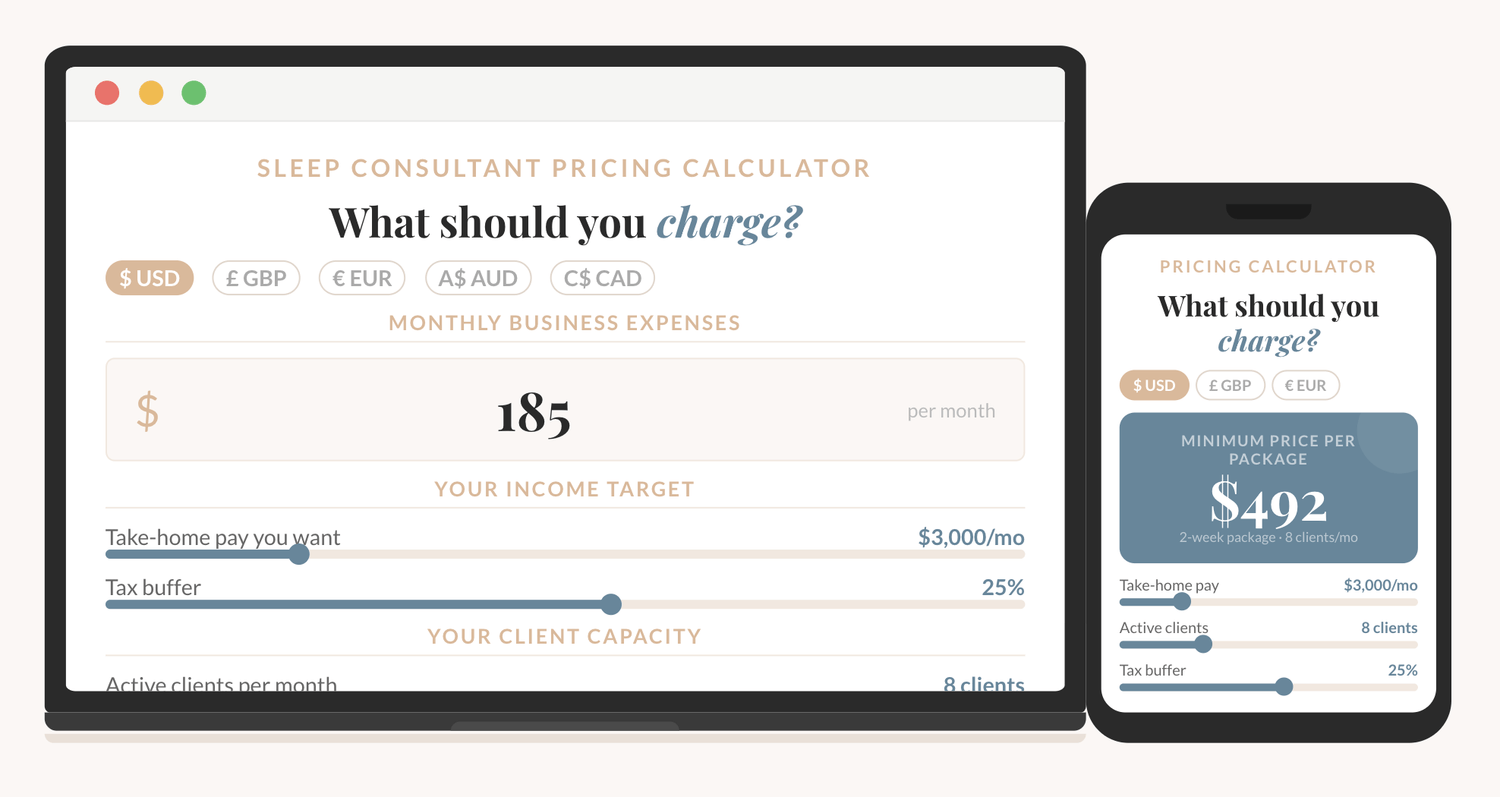
How to price your sleep consulting services?
The Sleep Consultant Pricing Calculator shows you exactly what to charge, based on your real expenses, your income goal, and how many clients you want to take on.
I'm thrilled to offer you an exclusive preview of what’s inside!
You can read the first 22 pages of The Sleep Consultant Playbook and get a taste of the value, insights, and actionable strategies that are waiting for you.
Other articles you might be interested in:
© 2021-2026 Sleep Consultant Business. All Rights Reserved.