
How to Write a Blog That Ranks for SEO and Gets Cited by AI
Writing a great blog for your sleep consulting business still starts with genuine value: helpful, specific, experience-grounded content that answers exactly what exhausted parents are searching for. The difference now is that you need to write and structure that content in a way that both Google's algorithm and AI tools like ChatGPT and Claude can find, understand, and cite. This means clear structure, direct answers, and the kind of depth that signals expertise. The fundamental principle hasn't changed. How you organise and present the content has.
In this guide
- SEO still matters, it's just not the whole picture anymore
- What is AI optimisation and why does it matter for sleep consultants?
- Value is still the key: for humans, for Google, and for AI
- How to structure your blog for both SEO and AI
- Choosing the right topics
- Consistency beats perfection
- One blog post, many places
- Common blogging mistakes sleep consultants make
- Frequently asked questions
SEO Still Matters: It's Just Not the Whole Picture Anymore
When most sleep consultants think about blogging, they think SEO. Keywords, search rankings, Google. That thinking is still correct. SEO is how organic search traffic finds you, and a well-ranked blog post on "how to stop early morning wakings" can bring in parents who are actively searching for help right now. That's powerful.
The landscape has shifted, though. An increasing number of people don't start their search on Google anymore. They ask ChatGPT, Perplexity, Claude, or another AI assistant. "Why does my baby wake up at 4am?" "What's the 4-month sleep regression?" "How do I choose a sleep consultant?" They get an AI-generated answer, and that answer cites sources. Websites that are well-structured, clear, specific, and genuinely authoritative get cited. Websites that are vague, thin, or overly optimised for keywords don't.
So the question for sleep consultants is no longer just "how do I rank on Google?" It's "how do I write content that Google and AI tools both recognise as genuinely useful and authoritative?" The answer turns out to be the same for both: write real content that actually helps people.
What Is AI Optimisation and Why Does It Matter for Sleep Consultants?
AI optimisation (also called Answer Engine Optimisation or AEO) is the practice of structuring your content so that AI tools can find it, understand it, and choose to cite it when answering relevant questions.
AI tools process web content differently from a human reader. They're looking for content that:
- Directly answers a question: ideally within the first few sentences, not buried three paragraphs down
- Is clearly organised with descriptive headings (H2s and H3s) that signal what each section covers
- Uses specific, accurate language, not vague generalities that could apply to anyone
- Demonstrates expertise through depth, nuance, and real-world application
- Is trustworthy, written by a named expert, with a clear author biography and professional credentials visible
Sound familiar? These are the same things that have always made content good. The difference is that being sloppy about structure used to cost you some SEO benefit. Now it can mean being invisible to an entirely different category of search that's growing fast.
This site is a practical example of walking the talk. Every article in the Sleep Consultant Business Library is structured to directly answer specific questions sleep consultants are actually asking, using clear headings, a Quick Answer at the top, and FAQ sections that target the exact language people use when searching. That's AEO in action, not as a technical trick, but as a genuine commitment to making every piece of content as immediately useful as possible. If you want to see how it looks in practice, explore the library.
Value Is Still the Key: for Humans, for Google, and for AI
Before you change anything about how you structure a blog post, understand this: the most important thing you can do is write content that genuinely helps the parent reading it. Nothing else in this guide matters if the underlying content is thin, generic, or vague.
Helpful content comes from your actual experience. You've worked with real families facing real sleep challenges. You know what works, what doesn't, what parents try first (that usually makes things worse), and what actually shifts things. That knowledge is your competitive advantage as a content creator. No AI tool or competitor can replicate your direct, nuanced experience with specific families.
The algorithm's job is to connect the right content with the right people. Your job is to create content so genuinely useful that the algorithm has an easy time recommending it. Trying to game SEO without having good content underneath is a short-term strategy with an increasingly short shelf life. Google's updates consistently reward depth, specificity, and demonstrated expertise. AI tools are even more demanding in this regard. They're not indexing keywords. They're evaluating whether your content actually knows what it's talking about.
How to Structure Your Blog for Both SEO and AI
The structure of your blog post is where the practical changes happen. Here's what to include and why each element matters for both SEO and AI discovery.
A direct answer in the first paragraph
Many sleep consultants bury the answer deep in the article after a long introduction. Flip this. Put the most direct, useful answer to the main question in the first paragraph, then use the rest of the article to expand, explain, and provide context. This is how AI tools extract the "answer" from a piece of content. It's also how Google determines whether to show your page in a featured snippet. And it's a better reader experience: parents who are sleep-deprived and searching at 2am don't want to wade through preamble.
Descriptive H2 and H3 headings
Your headings should function as a mini-table of contents for the whole article. "Section 2" tells a reader (and an AI) nothing. "Why babies wake more frequently during the 4-month regression" tells them exactly what's coming. Write headings that could stand alone as a question or a clear statement of a subtopic. A reader should be able to scan the headings and understand the shape of the whole article without reading a word of body copy.
An FAQ section at the end
FAQ sections are one of the most powerful structural elements for both SEO and AEO. They target the natural language questions people type into search engines ("can a 6-month-old sleep through the night?") and ask AI tools ("what's the difference between sleep training and sleep coaching?"). Each question-and-answer pair in your FAQ is a separate opportunity to appear in a featured snippet or an AI citation. Keep each answer direct and self-contained. It should make sense on its own, without needing the rest of the article for context.
Your author information and credentials
Google's E-E-A-T framework (Experience, Expertise, Authoritativeness, Trustworthiness) now formally factors in who wrote a piece of content. An article written by a named, certified sleep consultant with an author biography and links to their professional credentials signals authority in a way that anonymous content does not. AI tools make similar trust assessments when deciding what to cite. Make sure every blog post has a visible author name, ideally with a brief bio and a mention of your certification.
Internal links to related content
Linking between your own articles shows search engines that you have a body of related, authoritative content rather than isolated posts. It also keeps readers on your site longer, which is itself a positive signal. When you write about the 4-month sleep regression, link to your article on newborn sleep. When you mention sleep training methods, link to your post on how to choose the right approach. Build a web of content that holds together rather than a collection of unconnected posts.
| Element | Why it matters for SEO | Why it matters for AI |
|---|---|---|
| Direct opening answer | Featured snippet eligibility | AI extracts this as the answer to cite |
| Descriptive H2/H3 headings | Keyword targeting, content structure signals | Helps AI navigate and categorise content |
| FAQ section | People Also Ask rankings, long-tail keywords | Each Q&A is a citable answer unit |
| Author bio + credentials | E-E-A-T signals (Google's trust framework) | AI assesses source credibility before citing |
| Internal links | Site authority, topical depth signals | Signals a coherent body of expertise |
| Specific, practical content | Engagement, dwell time, reduced bounce rate | Depth signals genuine expertise vs. filler |
Choosing the Right Topics
Start with the questions you get asked most often. What does an exhausted parent message you about at 11pm? What comes up on every single Sleep Assessment Call? What do parents Google before they find you? Those are your blog topics, because they're the exact searches real parents are making right now.
Organise your topics into three to five content pillars that align with your expertise and your niche (see How to Build a Content Strategy as a Sleep Consultant for a full breakdown). Typical pillars might include: sleep science basics, sleep training methods, age-specific sleep challenges, family wellbeing, and behind-the-scenes business content. Working within a set of pillars means every post is part of a coherent body of expertise rather than a random collection of posts.
For AI specifically: write posts that answer specific, named questions rather than broad topics. "Baby sleep" is a topic. "Why does my 8-month-old wake every 2 hours?" is a question someone actually types into an AI tool. The more specifically your post title and content match the actual language a parent uses, the more likely it is to appear as an AI citation when that question gets asked.
Consistency Beats Perfection
A blog post published every week at "good enough" is more valuable than a perfect post published twice a year. Search engines reward consistent, recent content. AI tools draw from a wide and regularly updated web. A site that hasn't published anything new in six months signals a less active, less current source.
A realistic starting target: one blog post per week. Aim for 800 to 1,500 words per post, long enough to go deep on a topic but short enough that a tired parent can actually read it. If one post a week feels like too much, batch-write your content: pick a day each month and write four posts at once, then publish one a week. This approach is far less mentally draining than writing every week from scratch.
Your hundredth post will be significantly better than your first. The only way to get there is to start posting and keep posting. Don't wait until you feel like a confident writer. Confidence comes from doing.
One Blog Post, Many Places
A completed blog post is a content goldmine. Each section can become an Instagram carousel post. The FAQ section can fuel a week of Instagram Stories or Reels. The key points can become an email newsletter. A detailed blog can be the foundation of a workshop outline or a short video script.
This is the single most efficient content strategy available to a solo sleep consultant: write one genuinely good, structured blog post and then extract from it across multiple platforms. You're not creating more content. You're reaching more people with the same content. One piece of work, many seeds planted.
Common Blogging Mistakes Sleep Consultants Make
Writing for the algorithm instead of the parent
Keyword-stuffed posts that repeat the same phrase seventeen times and read unnaturally don't rank well anymore, and they're invisible to AI tools, which actively penalise unnatural language. Write for the parent first. Include your keywords naturally where they genuinely fit. The algorithm follows quality, not the other way around.
Being too general
"Tips for better baby sleep" competes with every major parenting website in the world. "How to handle the 8-month sleep regression when your baby has started refusing naps" speaks to a very specific parent in a very specific situation. Specificity wins in both search and AI. The more precisely your content matches a real question, the less competition you face and the more clearly you're recognised as the source worth citing.
Burying the answer
Long introductions that don't get to the point lose readers and lose AI visibility. Answer the main question in the first paragraph, then expand. The parent who gets their answer quickly and then keeps reading because your content is good is worth more than the one who gives up after three paragraphs of preamble.
Publishing without a visible author
Anonymous content signals nothing about expertise. Your name, your certification, your years of experience with families: these are what make your content more trustworthy than a generic advice article. Make sure your name and credentials appear on every post.
Writing one post and waiting for results
SEO compounds over time. A post published today may take three to six months to rank well in search results. A body of ten interconnected, well-structured posts signals more authority than any single post, however good. Consistent publishing is the strategy, not publishing and waiting.
Frequently Asked Questions
How long should a sleep consultant blog post be?
Between 800 and 1,500 words is a good range for most topics. Simple, specific posts (answering one clear question) can be shorter. More complex topics that cover multiple angles may warrant 2,000 words. What matters more than word count is whether the post actually covers the topic thoroughly. A 600-word post that fully answers a specific question is more valuable than a 2,000-word post that pads out a thin idea.
Do I need to do keyword research?
Some basic keyword awareness is useful: knowing whether a topic gets searched at all, and what language parents use when searching for it. Free tools like Google Search Console and Google's auto-suggest (what appears when you start typing in the search bar) give you useful signal without paying for expensive software. Start by writing posts that answer your most-asked client questions in natural language. The keywords will often be there already.
Can I use AI tools to write my blog posts?
AI tools can help with structure, ideas, and drafts, but your blog content needs your voice, your experience, and your specific clinical knowledge to be genuinely useful and genuinely trustworthy. A post that could have been written by anyone won't differentiate you. Use AI as a starting point or an editing tool, then rewrite it in your voice with your expertise added. The parents who read your blog are trusting a certified expert. Give them that.
How quickly will I see results from blogging?
For SEO, typical timelines are three to six months for a new post to rank meaningfully. For AI citation, it can happen faster. AI tools index the web continuously and can cite a new post relatively quickly if it's well-structured and relevant. The compounding effect of a consistent blog is the long game: six months of weekly posts starts to create real organic traffic that builds month on month without requiring ongoing advertising spend.
What's the most important thing to get right when starting a sleep consultant blog?
Start with a direct answer and write for the parent, not the algorithm. Everything else (structure, keywords, FAQs) supports that. A post that genuinely helps a parent will always outperform a technically optimised post that doesn't actually answer the question.
Key Takeaways
- SEO and AI optimisation both reward the same thing: genuine, specific, well-structured content that actually helps people. No tricks required.
- Structure your posts for both humans and machines: direct opening answer, descriptive H2 headings, FAQ section, author credentials, internal links.
- Write for a specific parent with a specific question, using the language they actually use when searching. Specificity beats breadth.
- Your certified expertise is your competitive advantage. It's what makes your content more trustworthy than anything anonymous or generic.
- Consistency compounds. One post a week for six months outperforms one perfect post. Publish, keep publishing, and improve as you go.
- Repurpose everything. One good blog post is a week of social media content, an email newsletter, and potentially a workshop outline.
Write your first post this week. Answer the question you get asked most often, in the most direct and useful way you know how. Start there. The rest follows.
Disclaimer: The information shared in these articles is for educational and informational purposes only. It does not constitute legal, financial, or professional advice. Always consult with a qualified professional regarding your specific situation.

Rianna Hijlkema
Certified Pediatric Sleep Consultant, Certified Postpartum Doula, Former Teacher & School Director, Founder of Sleep Consultant Design & Sleep Consultant Business and the author of The Sleep Consultant Playbook (available on Amazon).
The Sleep Consultant Newsletter
Weekly tips, strategies and marketing ideas for sleep consultants written by a fellow sleep consultant. 1500+ active subscribers!
I’ll only send helpful emails, and you can unsubscribe anytime with one click.
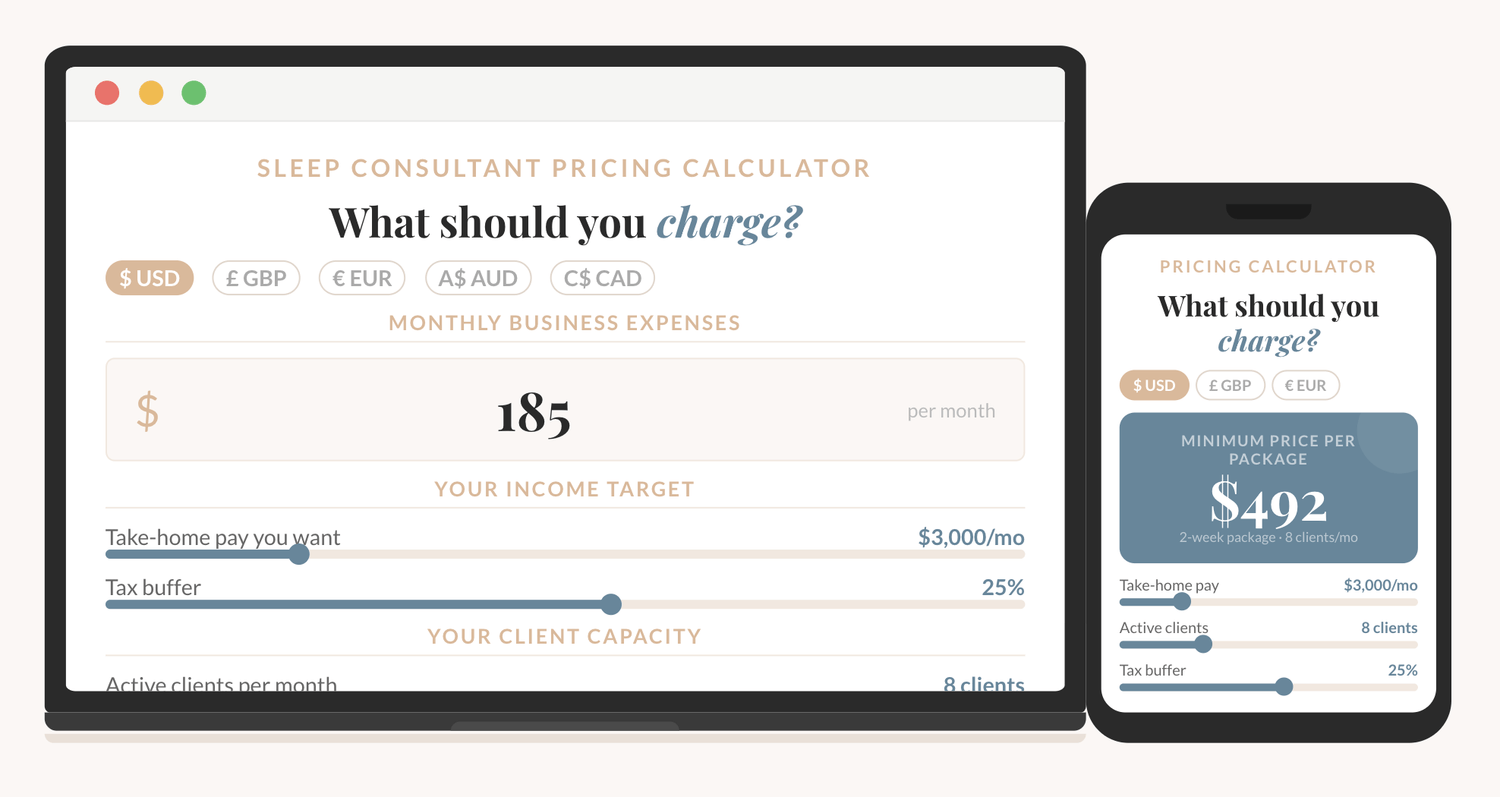
How to price your sleep consulting services?
The Sleep Consultant Pricing Calculator shows you exactly what to charge, based on your real expenses, your income goal, and how many clients you want to take on.
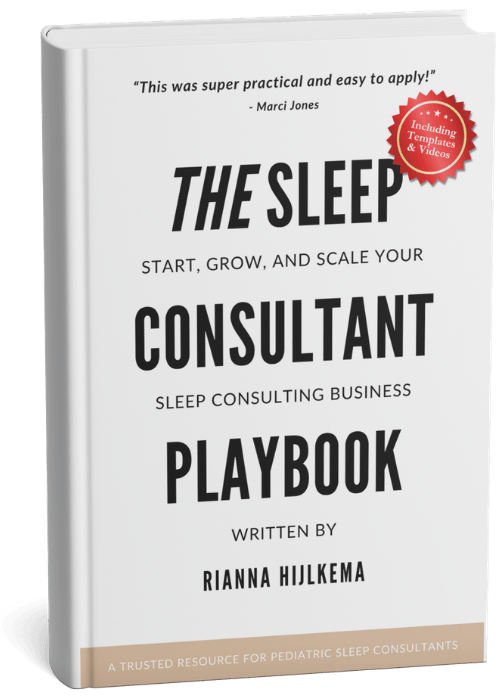
I'm thrilled to offer you an exclusive preview of what’s inside!
You can read the first 22 pages of The Sleep Consultant Playbook and get a taste of the value, insights, and actionable strategies that are waiting for you.
Other articles you might be interested in:
© 2021-2026 Sleep Consultant Business. All Rights Reserved.