
Stop Turning Away Clients: A Simple Waiting List System for Fully Booked Sleep Consultants
Set up a waiting list only when your paid client spots for the month are full and you have new inquiries you cannot take. A parent becomes a client once payment reaches your account, not after a Sleep Assessment Call. Hold each waiting list spot with a deposit, so people commit instead of drifting away. Give every waitlisted parent a clear start date and a self-guided prep resource they can begin straight away. They feel progress while they wait, and you keep the extra work off your plate until a spot opens.
In this guide
- When you need a waiting list (and when you don't)
- Why a parent is only a client once they've paid
- How to set up a waiting list that holds
- How to keep parents from booking elsewhere
- How to let them start without adding to your plate
- Common waiting list mistakes to avoid
- Frequently asked questions
Inquiries are coming in faster than you can take them. Your calendar for the month is booked, and there's another parent in your inbox asking if you have space. It feels like a good problem to have, and it is. It's also the moment a lot of Sleep Consultants make their first real capacity mistake.
Here's where it goes sideways. You look at your week, see six Sleep Assessment Calls on the calendar, and think you're fully booked. So you start telling new inquiries you have a waiting list. Then three of those calls don't convert, two ghost you, and suddenly you've turned away paying parents to protect spots for people who were never going to book. Calls aren't clients. A packed calendar of conversations tells you people are interested. It doesn't tell you your month is full.
A waiting list is one of the strongest signals you can send about your value, but only when it's real. This guide covers when you need one, how to build it so people stay committed instead of drifting off to the next Sleep Consultant, and how to keep waitlisted parents moving forward without a single extra hour of work from you until a spot opens.
When You Need a Waiting List (and When You Don't)
You need a waiting list when two things are true at the same time. Your paid client spots for the period are full, and you have new inquiries you cannot serve within a reasonable timeframe. Both have to be true. One without the other means you don't have a capacity problem yet.
Start by deciding how many clients you can support well in a month. The number where every family gets your full attention and you still have a life. For a lot of Sleep Consultants in their first year, that's three to five active clients at once, depending on package depth and support length. Once you've decided on that number, your capacity math becomes simple. Full means that many paying clients are booked and working with you. Anything below that number is open space, and open space gets filled before anyone goes on a list.
Being booked out is worth protecting. When you tell a parent "I'm fully booked this month, I can add you to my waiting list for next," you're telling them other families chose you and there's demand for your time. Handled with warmth, that raises your value in their eyes. Faked, it does the opposite. If you say you're booked and a parent later senses you had space all along, you've lost trust you can't easily earn back.
The first time I had a calendar full of calls, I panicked and started a waiting list. Half those calls never turned into anything. I'd told two ready-to-pay families I had no room, and by the time my "list" evaporated, they'd moved on. Now the rule I stick to is boring but it works: I only count a spot as taken when the money is in my bank.
Why a Parent Is Only a Client Once They've Paid
This is the part that decides whether your waiting list helps you or hurts you. A parent is a client when payment has cleared into your account. Full stop. Not when they booked a Sleep Assessment Call. Not when they said "this sounds perfect." Not when they replied "let me talk to my partner and get back to you." Until the money's in, they're a lead, and leads change their minds all the time.
Why does this matter so much for a waiting list? Because if you build your capacity picture on interest instead of income, you'll turn away real clients to guard spots that were never spoken for. Ten warm conversations feel like ten clients when you're excited. They convert like the leads they are. Some book, some vanish, some go quiet for six weeks and resurface when your slot's gone.
So run your sleep consulting business on a clean definition. The stages break down like this.
| Stage | What it means | Counts toward your capacity? |
|---|---|---|
| Inquiry | A parent has reached out or booked a call | No |
| Interested lead | They've had the call and said yes in principle, no payment yet | No |
| Held spot | They've paid a deposit to reserve a place | Yes, as a confirmed waitlist spot |
| Client | Full payment (or first instalment on a plan) has cleared | Yes, an active client |
Notice the shift in the middle. The moment money changes hands, even a deposit, the relationship changes. That's the mechanism your waiting list runs on.
How to Set Up a Waiting List That Holds
A free waiting list is a wish list. People say yes because it costs them nothing, then book the first Sleep Consultant who has space next week. To build a list that holds people, you need commitment, clarity, and a smooth handoff. Follow these steps.
Step 1: Confirm you're full before you offer a list. Check your capacity number against paid clients only. If a spot is truly open, fill it. The waiting list only comes out when the paying spots are gone.
Step 2: Take a deposit to hold the spot. This is the difference between a name on a list and a committed parent. A deposit filters for real intent and gives them skin in the game. Credit it toward their package fee, so it feels like a head start rather than an extra cost. Aim for 20 to 25 percent of your package price. On a package of 400 that's 80 to 100. Below 10 percent the deposit is too small to stop someone booking elsewhere, and above 30 percent it starts to feel like a big decision they'd rather sleep on. The 20 to 25 percent range is high enough to hold them and low enough to say yes to in the moment. Run the number on your own package and round it to something clean.
Step 3: Give a real start date, not a vague promise. "I'll be in touch when something opens" sends people shopping. "Your start date is the week of the 6th, and I'll confirm the exact day by the 1st" gives them something to hold onto. A date they can plan around is a date they'll wait for.
Step 4: Put the terms in writing. Send a short confirmation that states the deposit amount, whether it's refundable, the start date, and what happens next. Clarity here prevents the awkward conversations later. It also makes you look like the professional you are.
Step 5: Work the list in order when a spot opens. Deposit-holders come first, in the order they paid. When a place frees up, you reach out to the top of the list with the date and the balance due. No scrambling, no guessing who was serious.
Deposit rules and refund terms vary by country, and consumer protection law can affect what you're allowed to keep. Verify locally with an accountant or advisor before you set a non-refundable policy, and always state your terms in writing before taking payment.
How to Keep Parents From Booking Elsewhere
A tired parent with a baby who won't sleep is not a patient parent. Every day they wait is a day they might type "Sleep Consultant near me" and book whoever answers first. Silence is your biggest risk. If a parent joins your list and then hears nothing, you've given them no reason to stay loyal to you specifically.
Two things keep them with you. The first is the deposit, because people rarely walk away from money they've already put down. The second is momentum. A parent who feels like their journey with you has already started is far less likely to go looking for someone else. This is where most Sleep Consultants stop short. They secure the spot and then leave the parent in a holding pattern with nothing to do.
The fix is to give them a warm, structured wait. Stay in light contact so you're present without being demanding, and give them a way to make progress before you've done a single hour of live work. That progress is what turns "I'm waiting for you" into "I've already started with you." And a parent who's started with you doesn't go shopping.
How to Let Them Start Without Adding to Your Plate
The trick is to let the parent begin without pulling you into live work you don't have room for yet. You want them busy and reassured, and you want your hours protected until a real spot opens. A self-guided prep system does both. Set it up once, and it runs on autopilot for every parent who joins your list.
Hand them this the moment their deposit clears:
- A welcome and confirmation email that goes out automatically. It thanks them, confirms their start date, and tells them exactly what to do next. This is the first thing that makes the wait feel like a beginning.
- A prep-while-you-wait resource they can work through alone. Think a short readiness guide, a sleep environment checklist, or a foundations video they watch at their own pace. It's useful on its own, and it means the groundwork is already laid when you start.
- Their intake form to complete early. When the questionnaire is done before their spot opens, you start faster and lighter. The admin that usually eats your first day is already handled.
- A short nurture sequence that drips a little value and keeps their start date in view. A message a week is plenty. Enough to stay present, not so much that it feels like the paid work has started early.
Every piece of this is self-serve. The parent feels looked after and makes real progress. You do nothing after the initial setup, and when their spot opens you step into a family who's already prepped, informed, and further along than a cold start would be. Less waiting for them, less work for you. That's the whole point.
Something that helped me was building this once and never touching it again. The confirmation email, the prep guide, the intake, the weekly nurture, all set to trigger the second a deposit lands. It runs whether I'm working, sleeping, or on a beach in Bali. That's the kind of system that lets a full calendar feel calm instead of frantic.
Common Waiting List Mistakes Sleep Consultants Make
Building the list off calls instead of payments
This is the big one. A calendar full of Sleep Assessment Calls feels like a full business. It isn't. Count paid clients toward your capacity, and treat every unpaid conversation as interest that may or may not land. Turning away real clients to protect imaginary ones is the most expensive mistake here.
Making the list free
A free list has no teeth. Parents say yes to be polite, then book elsewhere the moment a faster option appears. A deposit is what separates the parents who'll wait for you from the ones who were only ever browsing. Skip it and your list will melt the first week another Sleep Consultant has space.
Giving a vague timeline
"I'll let you know when I have room" is a green light to keep looking. A tired parent needs a date to hold onto. Give them a specific window and a day you'll confirm by, even if it's a few weeks out. Certainty is what keeps them from wandering.
Leaving them in silence
Radio silence after a parent joins your list is how you lose them. No contact, no prep, no sign their journey has started. Give them something to do and a reason to feel looked after, or they'll assume you've forgotten them and move on.
Running the whole thing by hand
If every waitlist parent means manual emails, manual reminders, and manual intake chasing, you'll burn out before their spot even opens. The waiting list is supposed to buy you breathing room, not steal it. Automate the confirmation, the prep, and the nurture so the list works for you while you serve the clients you already have.
Frequently Asked Questions
When should a Sleep Consultant start a waiting list?
When your paid client spots for the period are full and you still have inquiries you cannot serve in a reasonable timeframe. Both conditions have to be met. If you have open capacity, fill it with a paying client rather than starting a list. A waiting list built on interest instead of income will cost you real bookings.
Should I charge a deposit for my waiting list?
Yes. A deposit is what turns a name on a list into a committed parent. Aim for 20 to 25 percent of your package price. That's enough to stop a parent booking elsewhere, and small enough that saying yes still feels easy. Credit it toward their package fee so it reads as a head start, not an extra charge. A free list rarely holds anyone.
Is a waiting list deposit refundable?
That's your call, and it should be stated in writing before you take payment. Many Sleep Consultants use a small non-refundable hold, since a deposit people can walk away from doesn't create much commitment. Refund rules and consumer law vary by country, so verify locally before you set your policy.
How long should parents wait on a Sleep Consultant waiting list?
Give a clear window rather than an open-ended promise. A few weeks is usually workable if you keep them warm with a start date and a prep resource. Beyond a month, a tired parent's patience thins fast, so be honest about your timeline and only take deposits for spots you can realistically deliver.
What if a parent on the waiting list finds another Sleep Consultant?
It happens, and a deposit plus a warm wait makes it far less likely. The parents most at risk are the ones sitting in silence with nothing to do. Keep them moving with a prep resource and light contact, and most will happily wait for the Sleep Consultant they already chose and already started with.
Does a Sleep Assessment Call mean someone is a client?
No. A Sleep Assessment Call is a conversation with an interested lead, not a booking. A parent becomes a client once payment reaches your account. Until then they can change their mind, go quiet, or book elsewhere. Build your capacity picture on cleared payments only, never on calls or verbal yeses.
Key Takeaways
- Only start a waiting list when you're full, meaning your paid spots are booked and you still have inquiries you can't serve.
- A parent is a client once payment clears, not after a Sleep Assessment Call or a verbal yes. Build capacity on income, not interest.
- Hold every spot with a deposit, credited toward the package. A free list is a wish list that melts the moment someone else has space.
- Give a real start date and put terms in writing, so parents have certainty to wait for instead of a vague promise that sends them shopping.
- Let them start without you, with an automated welcome, a self-guided prep resource, and early intake. They feel progress, you keep the workload off your plate.
Once a spot opens and payment clears, your next move is a clean, confident start, so head to How to Onboard a Sleep Consulting Client to make that first week feel effortless for both of you.
Disclaimer: The information shared in these articles is for educational and informational purposes only. It does not constitute legal, financial, or professional advice. Always consult with a qualified professional regarding your specific situation.

Rianna Hijlkema
Certified Pediatric Sleep Consultant, Certified Postpartum Doula, Former Teacher & School Director, Founder of Sleep Consultant Design & Sleep Consultant Business and the author of The Sleep Consultant Playbook (available on Amazon).

The Sleep Consultant Newsletter
Weekly tips, strategies and marketing ideas for sleep consultants written by a fellow sleep consultant. 1500+ active subscribers!
I’ll only send helpful emails, and you can unsubscribe anytime with one click.
How to price your sleep consulting services?
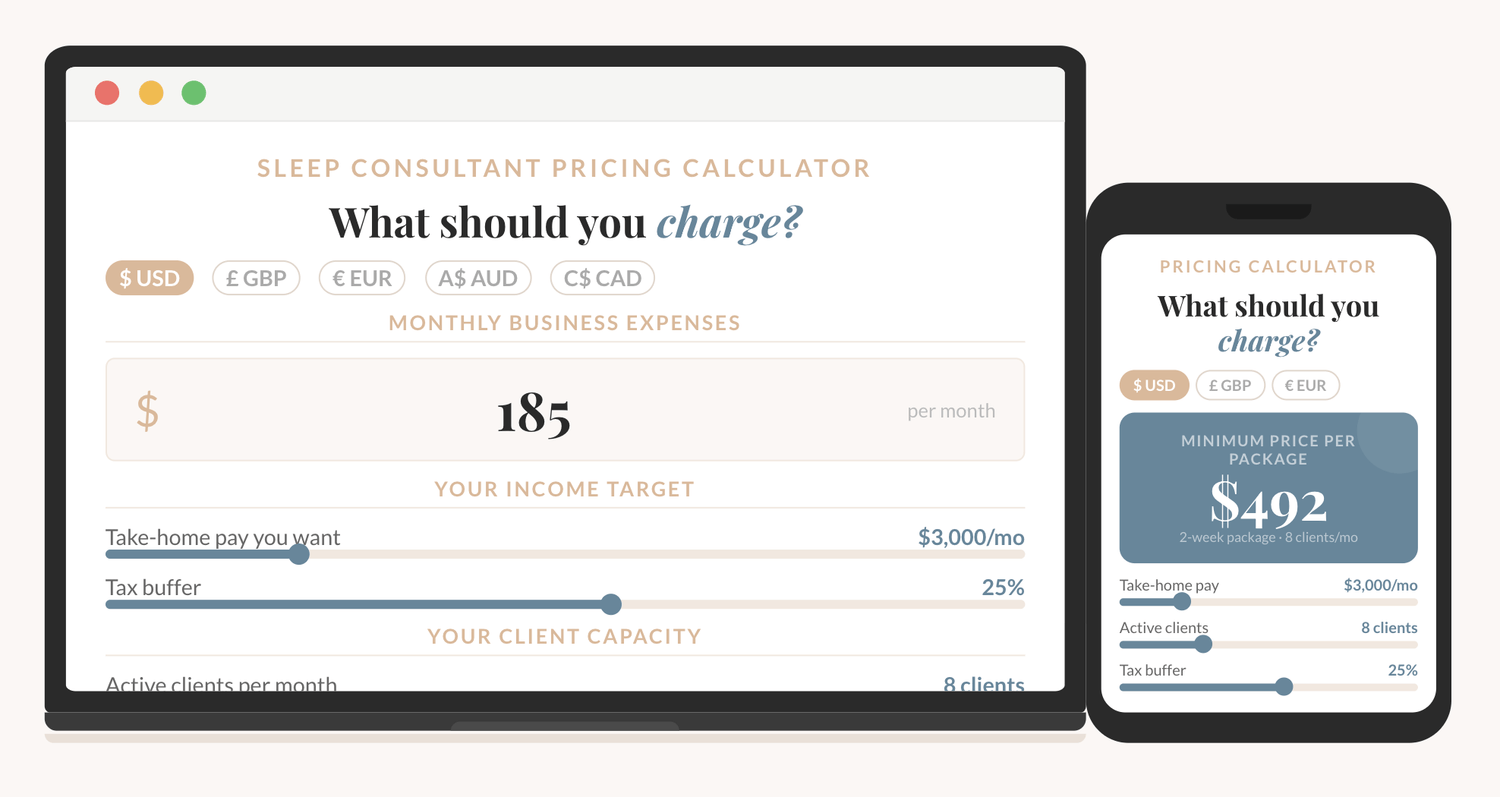
The Sleep Consultant Pricing Calculator shows you exactly what to charge, based on your real expenses, your income goal, and how many clients you want to take on.
I'm thrilled to offer you an exclusive preview of what’s inside!
You can read the first 22 pages of The Sleep Consultant Playbook and get a taste of the value, insights, and actionable strategies that are waiting for you.
Other articles you might be interested in:
© 2021-2026 Sleep Consultant Business. All Rights Reserved.