
How Do Sleep Consultants Get Their First Clients?
Newly certified sleep consultants get their first clients through their warm network: the friends, family, former colleagues, and acquaintances who already know and trust them. The method is direct personal outreach, not social media, not paid ads, not waiting for Google to send traffic. You create a list of at least 50 people in your network, reach out to a minimum of five per day with a personalised message, start a genuine conversation, and introduce what you do naturally. Statistically, around 2% of your list will become clients, which means 50 contacts gives you roughly one client, and consistent daily outreach over 30 days builds the momentum that gets a new business moving.
In this guide
- The biggest mistake newly certified sleep consultants make
- Warm audience versus cold audience: why it matters
- The list of 50: your fastest path to a first client
- How to reach out: what to say and how to say it
- The three outcomes and how to handle each one
- What to do when someone does not reply
- Using a launch offer to land your first few clients faster
- Frequently asked questions
You have studied, practised, and earned your certification. And now you are sitting with your freshly built website, your new Instagram account, and the growing realisation that clients do not appear just because you have a certificate. So how does it actually work? Where do the first bookings come from?
The answer is not what most new sleep consultants want to hear, because it is not a marketing system or a social media strategy. It is a conversation. Specifically, it is a series of direct, personal conversations with people who already know you. This article explains exactly how to have those conversations, how many to have, what to say, and how to stay consistent until the results start coming in.
The Biggest Mistake Newly Certified Sleep Consultants Make
The most common pattern among newly certified sleep consultants who are not getting clients is this: they spend their time designing logos, tweaking websites, posting on social media, and researching marketing funnels, and they wonder why their calendar is empty. The problem is not that those things are bad. The problem is that none of them are what gets a new sleep consultant their first client.
Social media takes months to build an audience large enough to generate consistent enquiries. A website gets no traffic until it earns search engine authority, which also takes months. Paid ads require budget and testing. All of these are valid strategies for a sleep consultant who already has some clients, some testimonials, and some momentum. But for someone starting from zero, these are slow and indirect routes to a first booking.
The fastest and most reliable path to a first client is personal outreach to your warm network. Not because it is the only way, but because it is the one method that works immediately, costs nothing, and builds real relationships rather than follower counts. Every successful sleep consultant has done this at some point, most of them in the first weeks after certification.
Three months from now, you will either have three months of excuses or three months of progress. You do not need more time, a better plan, or a perfect setup. You need to start. The sleep consultants with full schedules and great testimonials got there by taking action and starting conversations, even when it felt uncomfortable. Over time, the discomfort became part of their process.
Warm Audience Versus Cold Audience: Why It Matters
Your warm audience is made up of people who already know, like, and trust you: friends, family, former colleagues, neighbours, parents from your child's school, people you have met through community groups, and anyone who would recognise your name and feel comfortable receiving a message from you. They do not all need to have young children. They just need to exist in your network.
Your cold audience is everyone else: strangers who find you through social media, search engines, or advertising. Reaching a cold audience is possible and eventually necessary for growth, but it requires a foundation of trust that a new sleep consultant has not yet built. Without testimonials, a track record, or a visible presence, converting cold leads is slow and effortful.
The warm audience is the correct starting point because the trust already exists. When you reach out to someone who knows you, they are not evaluating a stranger's pitch. They are hearing from someone they already have a positive relationship with. That is a fundamentally different conversation, and it converts at a dramatically higher rate than cold outreach of any kind.
And even if the person you reach out to does not need sleep consulting themselves, they may know someone who does. Your aunt might mention you to a colleague. A former classmate might share your details with a neighbour whose baby has not slept through the night in four months. This ripple effect is how most new sleep consultants land their first two or three clients, and those clients produce the testimonials that eventually make the cold audience work.
The List of 50: Your Fastest Path to a First Client
The first concrete action is to create a list of at least 50 people from your personal network. This is not a marketing list. It is a list of real people you have a relationship with, however distant. Statistically, around 2% of your warm contacts will convert to clients, which means 50 names gives you roughly one client when you have worked through the list. The more names you have, the faster the momentum builds.
To build the list, write down names without filtering or judging. Include friends and family, former colleagues and classmates, parents you have met at school or daycare or community events, neighbours and acquaintances, and professionals in your broader network such as your child's paediatrician, a doula you have met, a preschool teacher. Then check your Facebook, Instagram, and LinkedIn contacts for people you interact with or who still engage with your posts. Anyone who would recognise your name and not immediately ignore your message belongs on the list.
They do not all need to be parents of young children. Someone without children can still refer you to a sibling, a colleague, or a friend whose baby is not sleeping. Think of the list as a network rather than a list of potential clients, because many of the best referrals will come through people who would never hire you themselves.
Do not move to the next step until you have a list with at least 50 names. "I don't know 50 people" is almost never true — it is a sign you are thinking too narrowly. Expand your circles: social media contacts, local community groups, people from previous jobs, people from previous cities. The 50-person threshold exists because the numbers only work in your favour when you have enough contacts to reach.
How to Reach Out: What to Say and How to Say It
Once you have your list, the task is to reach out to a minimum of five people per day, every day, for the next 30 days. Not five per week. Five per day. This consistency is what builds the momentum a new business needs in its first month. It is not hard. It is just uncomfortable. And the discomfort decreases rapidly with repetition.
Choose your platform
Use the platform where you already have the most natural communication with the people on your list. For most people this is WhatsApp, Instagram DMs, Facebook Messenger, or email. Pick one and stay consistent with it so your conversations are easy to track and follow up.
Make it personal
Do not send a generic broadcast message. Personalisation is what separates a warm conversation from a pitch that gets ignored. Before you write, look at what is happening in the person's life. Then open with something genuine about them: "Hey, I saw you got a new puppy, how is that going?" or "Congratulations on the new house, it looks amazing." Lead with them. Not with you, not with sleep, not with your new business.
Transition naturally
Once the conversation is flowing and they ask what is new with you, here is how to introduce what you do without it feeling like a pitch: "I just wrapped up my certification as a sleep consultant, and I am super excited to start helping families." Or: "I had such a tough time with my youngest's sleep that I ended up hiring a sleep consultant. It worked so well I decided to become one too." This opens the door naturally for them to ask more, which is the right moment for the next step.
Introduce your services without selling
Once you have opened the door, bring it in gently: "Do you happen to know anyone who is struggling with their child's sleep? I specialise in helping families get everyone sleeping better, and I am currently looking for my first few clients to build up some case studies." You are asking for a referral, not making a sale. That framing is far less intimidating for the other person, and far less uncomfortable for you.
Track every outreach in a notebook or spreadsheet. Every name, every message, every response. The act of tracking keeps you accountable and makes it easy to follow up at the right time.
The Three Outcomes and How to Handle Each One
When you reach out, one of three things will happen. Knowing how to handle each one keeps you calm and consistent regardless of the response.
| Outcome | What it sounds like | What to do |
|---|---|---|
| They don't know anyone | "No, I can't think of anyone right now." | Thank them warmly. Ask if they could keep you in mind. Follow up in a few weeks. People's situations change. |
| They refer someone | "Oh, actually my sister-in-law has been really struggling." | Ask if they can make a quick group introduction via text or message. A warm intro transfers trust instantly. Note the contact and follow up. |
| They need you themselves | "Actually, we have been having a really hard time with sleep." | This is the jackpot. Ask a few questions about their situation, express genuine empathy, and invite them to a free Sleep Assessment Call to explore how you can help. |
The most likely outcome is outcome one. Most people will not immediately know someone or need your services themselves. That is completely fine and completely expected. Every "no" and every silence keeps the door open for a future referral. Keep the relationship warm and move on to the next person on the list.
What to Do When Someone Does Not Reply
Send another message. Silence is not rejection. People miss messages, get distracted, are driving, are in a meeting, or are having a hard day. A follow-up is not pushy. It is what you would do with any other normal conversation.
If you have sent two messages over two or three days and still heard nothing, give it space. Follow up again a few weeks later. People's circumstances change. The person who had no one in mind in week one might think of someone in week four when their neighbour mentions their toddler has not slept through the night since the new baby arrived.
If following up with a specific person feels genuinely uncomfortable, skip them and replace them with someone new from your list. The goal is to keep moving forward, not to squeeze every possible response from every possible contact. Keep the momentum going.
And when you are tempted to interpret silence as failure: if you check your outreach tracker after a month and see consistent daily activity, you are on track. If you check it and see a blank, the silence is not the market telling you it does not work. It is the absence of action telling you what needs to change.
Using a Launch Offer to Land Your First Few Clients Faster
A common and effective approach for newly certified sleep consultants is to offer the first few clients a discounted rate in exchange for a detailed testimonial. This is not the same as working for free. You are still charging for your services and delivering full professional value. The discount is a transparent exchange: reduced investment from them, a testimonial that builds your credibility from you.
A tiered approach works well here. Offer the first five clients a meaningful discount, the next five a smaller discount, and the following five a smaller discount still, until you are comfortably charging your full rate. This gives you a structured path to building your client base and testimonials without undervaluing your work long-term.
When you mention the discount, be explicit about why. "My standard package is [your rate]. I am currently offering a reduced rate for my first few clients in exchange for a testimonial, because I am building my case studies." Transparency makes the offer feel professional and intentional rather than desperate. And it works: clients who understand why the discount exists treat it as the genuine exchange of value it is.
Do not offer your services for free entirely. Keeping a financial component, even a reduced one, maintains the professional nature of the relationship and ensures the client takes the process seriously.
Frequently Asked Questions
Do I need my website finished before I start reaching out?
No. Your first clients from your warm network will not find you through your website. They will book because you reached out, had a conversation, and made it easy for them to say yes. A basic website with your name, what you do, and a booking link is enough. Do not delay outreach because your homepage is not perfect. The outreach comes first.
What if I feel embarrassed or awkward reaching out to people I know?
Almost every new sleep consultant feels this way. The discomfort is real, and it does not mean anything is wrong. It is the normal feeling of doing something new and vulnerable. The shift that helps most people is this: reframe what you are doing. You are not asking people for a favour. You are offering access to something that could genuinely change a family's life. Keeping that knowledge to yourself because you feel awkward does not serve anyone. The discomfort shrinks significantly after the first five messages.
How long before I get my first client?
With consistent daily outreach of five or more messages per day, most sleep consultants land their first enquiry within one to two weeks, and their first confirmed client within the first month. Some move faster. The variable is not how saturated the market is. The variable is how consistently you do the outreach.
What if I do not feel ready to take on clients yet?
You will not feel 100% ready. That feeling does not go away by waiting, it goes away by doing. Confidence is built through experience, not through more preparation. Start with what you know, trust that you will learn as you go, and remember that your clients are not expecting a sleep scientist with twenty years of experience. They are expecting someone who will listen carefully, understand their specific situation, and give them a clear plan. You can do that right now.
Do I need to do this forever?
No. Warm network outreach is a launch strategy, not a permanent acquisition channel. As you build testimonials, your Google Business Profile gains reviews, your website starts ranking, and referrals begin coming in organically. The daily outreach work of the first 30 to 60 days is what creates the foundation that all of those other channels eventually build on. Once word of mouth is active and your online presence is earning attention, you shift from active outreach to managing inbound interest.
When should I start working on social media and my website?
After you have your first few clients. Not before. A basic website and an Instagram profile are worth having from day one as a place to send people who want to learn more. But investing significant time in content creation, branding refinement, or SEO before you have any clients or testimonials is misaligned effort. The warm outreach comes first. The marketing infrastructure builds behind it, not ahead of it.
Key Takeaways
- Your first clients will come from your warm network, not social media. Personal outreach to people who already know and trust you is the fastest and most reliable path to a first booking.
- Create a list of at least 50 contacts and reach out to a minimum of five per day. Track every message. The 2% conversion rate only works in your favour when you have enough volume.
- Lead with them, not with you. Personalise every message. Start a real conversation before you mention sleep consulting. The introduction comes after trust is re-established.
- There are three possible outcomes: no referral, a referral, or a direct enquiry. All three are useful. Handle each one calmly and keep the relationship warm regardless of the immediate response.
- Silence is not rejection. Follow up. People miss messages, get busy, and change circumstances. Consistent follow-up is not pushiness — it is professionalism.
- A launch discount in exchange for a testimonial is a legitimate and effective strategy for getting your first few clients while building the social proof your future marketing depends on.
- This approach is temporary. Thirty to sixty days of consistent warm outreach builds the foundation. After that, word of mouth and your online presence take over.
Next Article: How to Run a Sleep Assessment Call
Related: How to Build a Referral System as a Sleep Consultant
Disclaimer: The information shared in these articles is for educational and informational purposes only. It does not constitute legal, financial, or professional advice. Always consult with a qualified professional regarding your specific situation.

Rianna Hijlkema
Certified Pediatric Sleep Consultant, Certified Postpartum Doula, Former Teacher & School Director, Founder of Sleep Consultant Design & Sleep Consultant Business and the author of The Sleep Consultant Playbook (available on Amazon).
The Sleep Consultant Newsletter
Weekly tips, strategies and marketing ideas for sleep consultants written by a fellow sleep consultant. 1500+ active subscribers!
I’ll only send helpful emails, and you can unsubscribe anytime with one click.
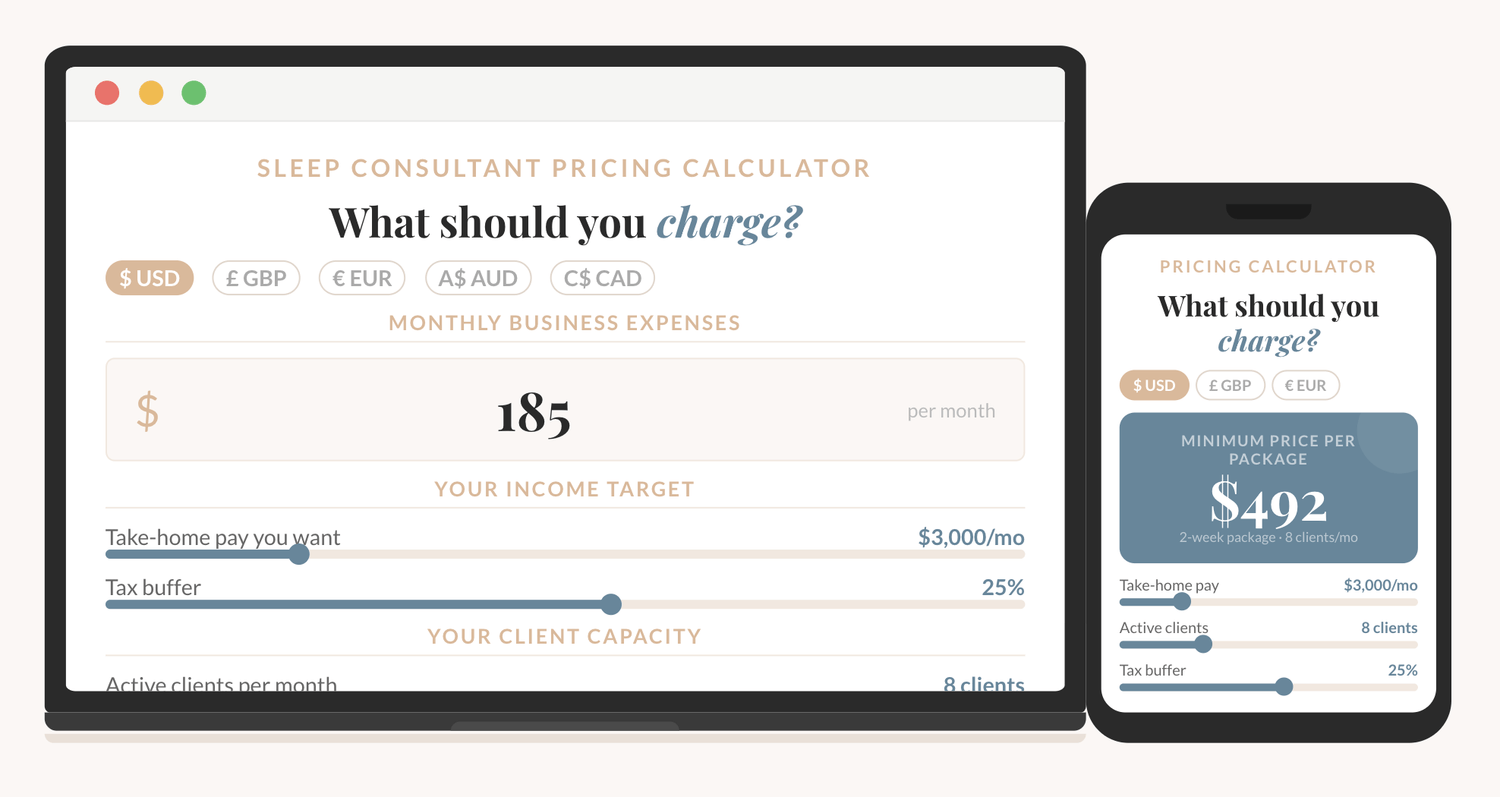
How to price your sleep consulting services?
The Sleep Consultant Pricing Calculator shows you exactly what to charge, based on your real expenses, your income goal, and how many clients you want to take on.
I'm thrilled to offer you an exclusive preview of what’s inside!
You can read the first 22 pages of The Sleep Consultant Playbook and get a taste of the value, insights, and actionable strategies that are waiting for you.
Other articles you might be interested in:
© 2021-2026 Sleep Consultant Business. All Rights Reserved.