
How to Track Leads and Clients in Your Sleep Consulting Business
A client tracking pipeline is a simple system that shows you exactly where every lead, prospect, and client is in their journey with you, from the moment they download your freebie to the moment they're referring friends to you. Without it, warm leads go cold because nobody followed up, "not right now" parents get forgotten, and potential clients disappear between stages without you realising. You can run a pipeline on paper, in a spreadsheet, or in dedicated software. What matters is that you have one, and that you actually use it.
In this guide
- Why every sleep consulting business needs a pipeline
- The complete pipeline stages: from lead to raving fan
- What to do at each stage
- Handling no-shows, ghosts, and "not right now"
- How to run your pipeline: paper, spreadsheet, or software
- Common mistakes sleep consultants make
- Frequently asked questions
Why Every Sleep Consulting Business Needs a Pipeline
Here's a situation that happens to almost every sleep consultant without a tracking system. A parent downloads your freebie. You send the welcome sequence. She opens a couple of emails. Then life gets busy and she disappears. Three months later she's ready to book, but you have no idea she exists. She ends up finding someone else, because you never followed up.
Or this one: you have a great Sleep Assessment Call. The parent says "let me think about it." You make a note to follow up. Two weeks pass. You forget. She booked with someone else.
Silence is rarely a "no." It's almost always a "not right now." And "not right now" turns into "yes" all the time, but only if you show up again at the right moment. A pipeline makes sure you do.
A pipeline is simply a visual system that shows you where every person is in their journey from first contact to loyal client. It tells you who needs a follow-up, who's waiting on a proposal, who just paid, and who is three weeks post-service and due for a check-in. Instead of keeping all of this in your head (which is exhausting and unreliable) it lives in one place you can check at any time.
Many opportunities are found in the second or third follow-up message, not the first. Sleep consultants who follow up consistently with warm leads will always out-convert sleep consultants who are technically better but assume that no response means no interest. The pipeline is what makes consistent follow-up possible without relying on memory.
The Complete Pipeline Stages: From Lead to Raving Fan
Every person who interacts with your business can be placed in one of these stages at any given time. A pipeline tracks all of them simultaneously, so you always know who needs your attention and what kind of attention they need.
Here is the full journey:
| # | Stage | What it means | Your next action |
|---|---|---|---|
| 1 | Lead | Has signed up to receive your lead magnet and is on your email list | Nurture email sequence runs automatically |
| 2 | Warm Lead | Has engaged with your content, replied to an email, or made direct contact | Invite to book a Sleep Assessment Call |
| 3 | Call Booked | Has scheduled their Sleep Assessment Call | Send personal message between booking and call; automated 24h and 1h reminders running |
| 4a | No-Show | Booked but did not attend the call | Follow up warmly within 24 hours, offer to reschedule |
| 4b | Call Happened | Attended the Sleep Assessment Call | Send proposal within the hour if interested; move to correct sub-stage based on outcome |
| 5a | Not Right Now | Interested but not ready to commit today | Note the reason and a follow-up date; circle back in 4–6 weeks |
| 5b | Ghosted | Stopped responding after the call or after receiving the proposal | Follow up once more after 3–5 days, then circle back in 4–6 weeks |
| 5c | Not a Fit | Not the right client for your service right now | Close the stage warmly; keep them on your email list |
| 6 | Proposal Sent | Has received the proposal and payment link; awaiting response | Follow up after 2–3 days if no response |
| 7 | Contract Signed / Paid | Payment confirmed; now officially a client | Automated welcome email fires; move to delivery pipeline |
| 8 | Questionnaire Completed | Intake form returned; ready for consultation preparation | Prepare sleep plan; schedule consultation call |
| 9 | In Active Support | Consultation done; follow-up support phase underway | Proactive check-ins throughout the plan period |
| 10 | Service Complete | Active support phase has ended | Send offboarding email; request testimonial or feedback |
| 11a | Testimonial Requested | Offboarding email sent; awaiting testimonial | Follow up gently if no response within a week |
| 11b | Testimonial Received | Left a review or provided a testimonial | Send thank-you; offer follow-up call (after testimonial, not before) |
| 12 | Post-Service Nurture | Automated check-in emails running at 2 and 4 weeks post-service | System runs automatically; monitor for replies that need a personal response |
| 13 | Raving Fan | Has referred at least one new person to you or actively advocates for your services | Thank them warmly; acknowledge the referral; keep them connected to your content |
What to Do at Each Stage
Stages 1–2: Lead and Warm Lead
When someone downloads your lead magnet and joins your email list, they become a lead. Your automated nurture sequence handles the relationship from here: a series of emails that deliver value, share your story, and build trust over the coming days and weeks. You don't need to personally track every email subscriber, but you do want to know when someone becomes a warm lead: they've replied to an email, messaged you on social media, or reached out directly. That's your signal to invite them personally to book a Sleep Assessment Call.
Stage 3: Call Booked
Once someone books a Sleep Assessment Call, add them to your pipeline immediately. Send a short personal message between booking and the call, not a form email, something brief and warm that references why they reached out. This dramatically increases show-up rates and starts building the relationship before you've even spoken. Automated 24-hour and 1-hour reminders should also be running in the background.
Stage 4: After the Call
Every Sleep Assessment Call ends in one of three places. The parent is ready to move forward: send the proposal within the hour while enthusiasm is still high. The parent says "not right now": log their reason and set a follow-up reminder for 4 to 6 weeks. They don't show up: follow up warmly within 24 hours to offer a reschedule. Each outcome needs its own pipeline stage so you can see at a glance who falls into which category and what action each person needs next.
Stages 5a–5b: Not Right Now and Ghosted
These two stages are where sleep consultants lose the most potential revenue. The lead wasn't a dead end. Nobody followed up. A parent who said "the timing isn't right" in March may be fully ready in May. A parent who went quiet after receiving your proposal may have just been overwhelmed. One warm, low-pressure follow-up weeks later can reopen the conversation.
The pipeline is what makes this possible. Without it, you have to remember who said what and when, which is impossible once you're managing more than a handful of leads. With it, you check your "follow up" column each Monday and know exactly who needs a message this week.
Stages 6–9: Proposal to Active Support
Once a proposal is sent, track it. If you don't hear back within 2 to 3 days, send a gentle follow-up: "I just wanted to check in. Did you have any questions about the proposal?" Keep the tone open and helpful rather than pushy. When payment arrives, move them immediately to the delivery side of your pipeline: welcome email fires automatically, questionnaire is sent, consultation is scheduled. From here your pipeline tracks where they are in their service journey.
Stages 10–12: Post-Service
When the active support phase ends, the pipeline doesn't stop. This is where many sleep consultants drop the ball. They close the engagement and move on. A relationship that could have generated three referrals just quietly ends. Your pipeline should track whether the testimonial has been requested, whether it's been received, and whether the post-service email sequence has been sent at the 2-week and 4-week marks. A client who hears from you three times after the service ends feels supported and remembered, and is far more likely to refer someone.
One important note on testimonials: always request the testimonial before offering any follow-up call or bonus. Offering the bonus first can look like an incentive for a positive review, which undermines both the credibility of the testimonial and your compliance with platform guidelines. Get the testimonial first, then send the thank-you bonus.
Stage 13: Raving Fan
A raving fan is a past client who actively refers others to you. This is the most powerful stage of the whole pipeline. A single raving fan can generate more new clients than months of social media posting. When someone refers a friend, acknowledge it warmly and immediately. Thank them personally, mention the referral specifically, and let them know you'll look after the family they've sent your way. People refer more when they feel that their referral reflects well on them. Make it easy for that to be true.
Handling No-Shows, Ghosts, and "Not Right Now"
These three situations feel like rejection. They're not. They're just people at different stages of readiness, and with the right follow-up approach, many of them will convert later.
No-shows almost always have a mundane reason: a nap ran long, a work meeting overran, they got the time zone wrong. Follow up within 24 hours: "I missed you on our call today. I hope everything is okay. Would you like to find another time that works?" Keep it warm, not transactional. Most no-shows reschedule when you reach back out.
Ghosts often go quiet because they got overwhelmed with the decision, something came up in their family, or the timing shifted. Wait 3 to 5 days, then send one more message. Keep it short: "I wanted to check in on the proposal I sent. Is there anything you'd like to go over, or has the timing changed?" If you still hear nothing after that, move them to a 4 to 6 week follow-up reminder rather than giving up entirely.
"Not right now" is one of the most valuable pipeline stages you have, because you know these parents are interested. They just aren't ready yet. Note their reason. Set a reminder. When you follow up weeks later, reference the original conversation: "I was thinking about you and wanted to see if the timing had changed." That one sentence shows you remembered them as a person, not a lead number. And it works.
How to Run Your Pipeline: Paper, Spreadsheet, or Software
The best pipeline is the one you'll actually use. Here's how each approach works in practice.
Paper or a physical board
Write the stage names across the top of a piece of paper or a whiteboard. Each person gets a sticky note or a line that you physically move from column to column. Simple, visual, zero learning curve. It works as a starting point, but it has clear limits: you can't set automated reminders, you can't search for a specific person's history, and it doesn't scale past a handful of leads at a time.
A spreadsheet
A Google Sheet or Excel file with columns for name, contact details, current stage, last contact date, next follow-up date, and notes. Filter by stage to see everyone in a specific part of the journey. Sort by follow-up date to know who needs attention this week. This is a big step up from paper and works well for many sleep consultants throughout their first year. The limitation is that it still requires manual updates and doesn't connect to your email or scheduling tools.
A visual pipeline inside your business platform
A dedicated pipeline view inside an all-in-one business platform is the most powerful option. You can see all your stages as columns, drag and drop contacts between stages, set follow-up reminders, log notes, and link directly to their email history, all in one place. When someone books a Sleep Assessment Call, they appear automatically. When they pay, they move automatically. You spend your energy on the parts that need a human decision, not on keeping the system updated manually.
Start with whatever you'll actually use today. A paper pipeline you look at daily beats a sophisticated software pipeline you set up once and forget. Upgrade when the volume of leads makes the simpler tool genuinely limiting.
Common Mistakes Sleep Consultants Make
Only tracking active clients, not leads
Many sleep consultants track current clients perfectly but have no visibility on the 15 people who showed interest in the last two months and haven't heard back. Those people represent future revenue. Track everyone from the moment they first make contact, not just from the moment they pay.
Giving up after one follow-up
One message, no reply, assume they're not interested. This is the single most expensive mistake in the pipeline. A parent who doesn't reply isn't necessarily saying no. Life is busy. Messages get buried. Follow up again. Then set a reminder for 4 to 6 weeks. The sale that happens on the third follow-up two months after the initial call is just as real as the one that closes the same day.
No "not right now" stage
Treating "not right now" as a closed lead wastes enormous potential. These parents have already told you they're interested. They just need more time. Give them their own stage, set a follow-up reminder, and check in when the timing is more likely to work. Many of them become clients within three to six months.
Stopping the pipeline at the end of the service
The post-service stages (testimonial requested, testimonial received, post-service nurture, raving fan) are where many sleep consultants leave significant growth on the table. A client who receives thoughtful follow-up at two and four weeks post-service is far more likely to refer someone than one who heard nothing after the final email. Build the full pipeline, including the relationship stages after the service ends.
Keeping it all in your head
Memory is not a system. It works when you have two or three leads. It fails completely when you have fifteen. A pipeline externalises your memory so that nothing depends on you remembering it. The moment you have more than five people in progress at any stage, you need something written down.
Frequently Asked Questions
How many stages should my pipeline have?
As many as you need to know what action to take next, and no more. The 13-stage pipeline in this article covers the full journey comprehensively, but when you're just starting out, you might begin with 7 or 8 stages and add more as your process becomes clearer. The right number of stages is the number that means every person in your pipeline has an obvious next action. If a stage doesn't tell you what to do next, combine it with another.
How often should I review my pipeline?
Once a week minimum. A Monday morning pipeline review (five to ten minutes, not more) tells you who needs a follow-up this week, who's overdue for a check-in, and whether anyone has slipped through the cracks. This one habit is the difference between a pipeline that works and one that just exists.
What information should I record for each person?
At minimum: name, contact method, current stage, last contact date, next follow-up date, and a brief note about their situation or what was discussed. The note is especially valuable for "not right now" leads. When you follow up weeks later and reference their specific situation, it makes the message feel personal and considered rather than generic.
When should I remove someone from my pipeline?
When you've followed up at least twice and received a clear "not interested", not a silence, but a clear no. Even then, you can move them to an "archive" stage rather than deleting them entirely. Situations change. A parent who said no in January because they wanted to try it themselves may be ready for professional support in June. A "closed" lead is not the same as a lost lead.
Do I need separate pipelines for leads and clients?
It depends on your volume. When you're starting out, one pipeline covering the full journey works fine. As you grow, you might find it cleaner to separate the pre-sale stages (leads through proposal) from the delivery stages (paid through raving fan) so each has its own focused view. Most business platforms that include pipeline features allow you to create multiple pipelines (one for sales, one for delivery) that work alongside each other.
Key Takeaways
- A pipeline shows you where every lead and client is in their journey so you always know the right next action for every person.
- Silence is rarely a no. "Not right now" and "ghosted" parents are future clients, but only if you follow up. The pipeline makes that follow-up possible without relying on memory.
- Track from first contact, not from first payment. The leads and warm prospects in your pipeline represent future revenue that disappears if you don't stay visible.
- The pipeline doesn't stop when the service ends. Post-service stages (testimonial requested, post-service nurture, raving fan) are where referrals are generated.
- Start with whatever you'll actually use: paper, a spreadsheet, or software. Review it every Monday. Move people through it consistently.
- A weekly five-minute pipeline review is the single habit that keeps leads from falling through the cracks.
Set up your pipeline this week. Even if it's a single piece of paper with 8 column headings. Every person you're currently in conversation with goes in immediately. Then check it every Monday. That habit alone will recover leads you didn't know you had.
Next Article: The Three Systems Every Sleep Consulting Business Needs
Related: How to Run a Sleep Assessment Call
Disclaimer: The information shared in these articles is for educational and informational purposes only. It does not constitute legal, financial, or professional advice. Always consult with a qualified professional regarding your specific situation.

Rianna Hijlkema
Certified Pediatric Sleep Consultant, Certified Postpartum Doula, Former Teacher & School Director, Founder of Sleep Consultant Design & Sleep Consultant Business and the author of The Sleep Consultant Playbook (available on Amazon).
The Sleep Consultant Newsletter
Weekly tips, strategies and marketing ideas for sleep consultants written by a fellow sleep consultant. 1500+ active subscribers!
I’ll only send helpful emails, and you can unsubscribe anytime with one click.
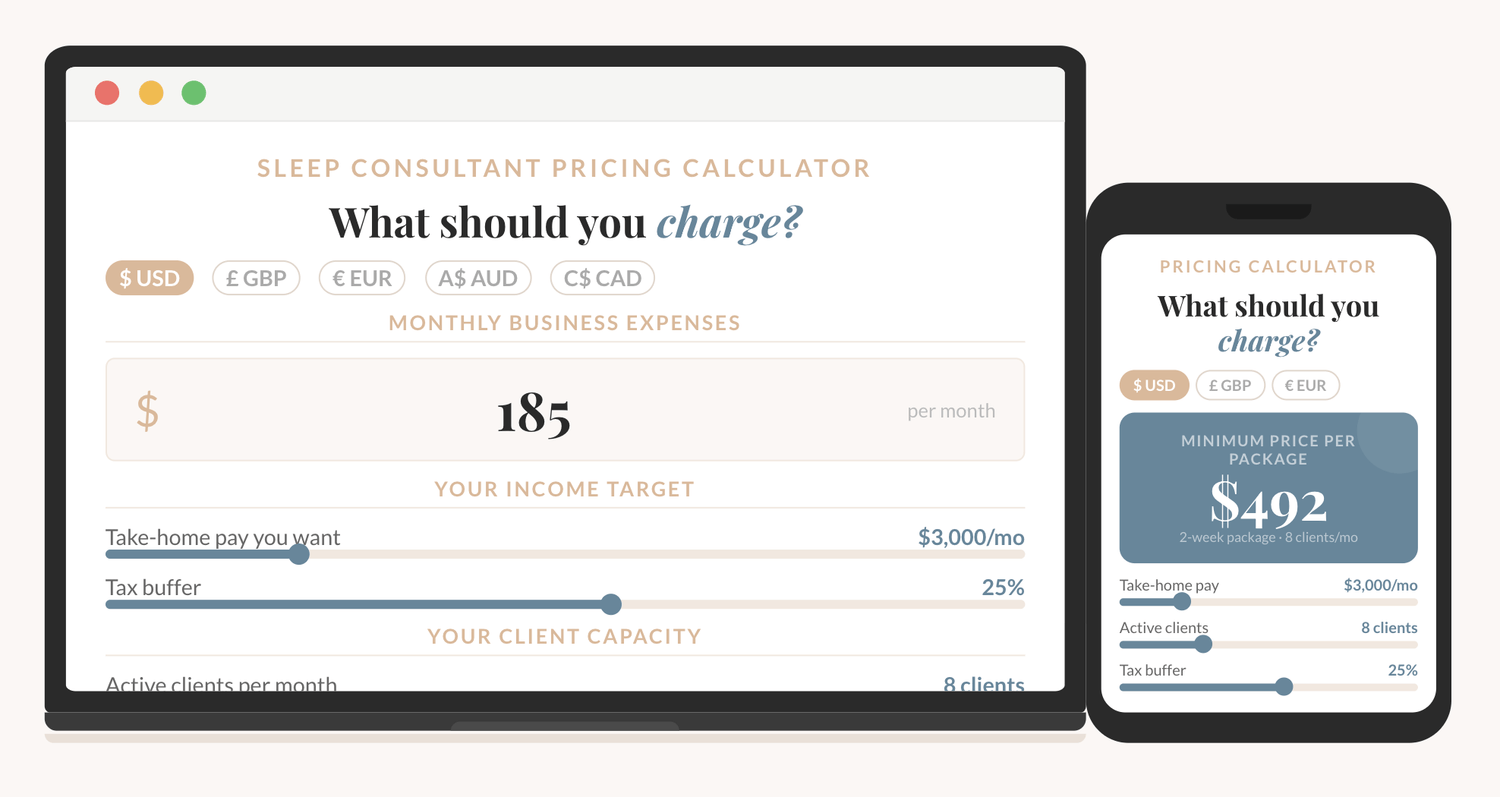
How to price your sleep consulting services?
The Sleep Consultant Pricing Calculator shows you exactly what to charge, based on your real expenses, your income goal, and how many clients you want to take on.
I'm thrilled to offer you an exclusive preview of what’s inside!
You can read the first 22 pages of The Sleep Consultant Playbook and get a taste of the value, insights, and actionable strategies that are waiting for you.
Other articles you might be interested in:
© 2021-2026 Sleep Consultant Business. All Rights Reserved.