
How to Set Up an Online Store as a Sleep Consultant
Setting up a digital store for your sleep consulting business lets you sell products like sleep guides, templates, and courses without needing to be present for every transaction. The most important thing to compare when choosing a platform is not the monthly subscription price. It's whether the platform takes a percentage of every sale on top of that. Some take 3–5% per transaction in addition to payment processor fees. Others take nothing and only pass through the standard card processing fee. That difference adds up to hundreds of pounds or dollars a year once your store is generating consistent revenue.
In this guide
- Why sleep consultants need a digital store
- What to sell in your store
- The fee structure most sleep consultants miss
- What a good store platform needs
- Checkout features that increase your average order value
- Setting up your store: step by step
- Common mistakes sleep consultants make
- Frequently asked questions
You've created something: a sleep guide, a set of templates, a mini-course, a resource pack. Now you need somewhere to sell it. That's what a digital store is: a page (or a set of pages) where parents can find your product, pay for it, and receive it automatically, without you needing to do anything.
A good store is one of the most powerful things you can add to your sleep consulting business. Once it's built, it generates revenue whether you're in a consultation, on holiday, or asleep. The product sells. The payment processes. The download or course access is delivered. You find out about it when you check your email the next morning.
Getting there requires choosing the right platform. And choosing the right platform requires understanding what you're actually comparing when you look at the options, and it's a bit more nuanced than most sleep consultants realise before they sign up for something.
Why Sleep Consultants Need a Digital Store
Your one-on-one service is capped by time. There are only so many clients you can take in a month, and once you're full, you're full. A digital store breaks that ceiling. A guide you write once can sell to a thousand parents. A template set you build over a weekend can generate income for years. A mini-course you record in your kitchen can answer the questions every client asks before they book, and convert browsers into buyers.
Digital products also let you serve parents who aren't ready (or can't afford) your full service package. A $27 sleep guide is a real option for a parent on a tight budget. It builds the relationship. It demonstrates your expertise. And when that family has another baby and is ready for full support, they already know who to call. The store is not separate from your service business. It feeds it.
For more on what to create and how to price it, see How to Create and Sell Digital Products as a Sleep Consultant.
What to Sell in Your Store
Most sleep consultants start with one of three product types:
- Digital downloads. A PDF sleep guide, a nap schedule template, a bedtime routine checklist, a gentle settling e-book. These are created once, sold indefinitely, and delivered instantly. They require the least amount of tech to set up and are a great first product.
- Online courses. A structured, multi-lesson programme walking parents through a sleep approach step by step. Typically higher-priced ($97–$297+) and higher-value. Requires a platform that can host video or audio lessons, track progress, and control access.
- Memberships or subscriptions. Ongoing access to resources, community, or monthly content for a recurring fee. The most complex to set up and run, but generates predictable monthly income once established.
You don't have to launch all three at once. Start with one product, get the store working, and build from there.
The Fee Structure Most Sleep Consultants Miss
When sleep consultants compare store platforms, they almost always compare the monthly subscription price. That's the visible number, so it feels like the right comparison. It's not the whole picture.
Most platforms charge two layers of fees. The first is the platform's own transaction fee: a percentage they take from every sale you make through their system. This is separate from and on top of the payment processor fee (Stripe or PayPal). The second is the payment processor fee itself, which is charged by Stripe or PayPal regardless of what platform you're using.
This matters more than it seems at first. Here's the real-world difference:
| Scenario | Sale price | Platform fee | Stripe/PayPal fee | You keep |
|---|---|---|---|---|
| Platform with 5% fee | $47 | $2.35 | ~$1.67 | $42.98 |
| Platform with 0% fee | $47 | $0.00 | ~$1.67 | $45.33 |
| On 100 sales per month: $235 extra kept per month, $2,820 per year, just from avoiding the platform fee. | ||||
The payment processor fee (Stripe or PayPal) is unavoidable. Every platform passes this through because it's charged by the card network, not the platform itself. The standard Stripe fee is 2.9% + $0.30 per transaction (this varies slightly by country and card type). PayPal has similar rates. This is the cost of accepting card payments online, and it applies regardless of which platform you use.
The platform's own fee on top of that is where the real difference lies. A platform that charges 0% keeps your revenue where it belongs: with you.
What a Good Store Platform Needs
Beyond fee structure, a platform for a sleep consulting store needs to handle several functions well. Here's what matters:
Product hosting and delivery
For digital downloads, the platform needs to store your files and deliver them automatically when someone pays. For courses, it needs to host your video or audio lessons, organise them into modules, and control access so only paying students can view the content. This should all happen without any manual effort from you after the initial setup.
Checkout pages
A checkout page is where the actual purchase happens. It needs to be clean, fast to load, and trustworthy-looking. A parent who gets to the checkout and has second thoughts about the page design will abandon the cart. A good checkout page shows the product, the price, a brief summary of what they're getting, and a straightforward payment form. No unnecessary steps, no distractions.
Stripe and PayPal integration
These are the two most trusted payment processors for digital products globally. Parents expect to see them. A platform that integrates directly with both (rather than routing through a third party) gives buyers the familiar, trusted payment experience that reduces hesitation at checkout.
Coupon and discount code support
Discount codes let you run time-limited promotions, reward newsletter subscribers, or create exclusive offers for your existing clients. Being able to create and manage coupon codes without technical effort is a feature worth having.
Email automation triggered by purchase
When someone buys something from your store, they should automatically receive a confirmation email, the product or access link, and ideally enter a post-purchase email sequence that nurtures the relationship. This requires your store and your email system to be connected, ideally in the same platform, so there's no integration complexity or risk of things falling out of sync.
Affiliate programme capability
An affiliate programme lets other people (other sleep consultants, parenting bloggers, doulas) earn a commission for referring buyers to your store. This is one of the most powerful ways to grow a digital product business without spending on advertising. Your affiliates do the marketing, you pay them only when a sale happens. Not every sleep consultant needs this on day one, but it's worth having available as the store grows.
Checkout Features That Increase Your Average Order Value
Two features that dramatically increase how much each buyer spends, without requiring any extra marketing, are order bumps and upsells. They're small additions to the checkout flow that significantly change the economics of your store.
Order bumps
An order bump is a small checkbox on the checkout page that adds a complementary product to the cart with one click. A parent buying your newborn sleep guide sees a checkbox: "Add the 0–6 month nap schedule template for $9." They're already buying. They're already committed to solving their sleep problem. Adding something small and relevant at that moment converts at a much higher rate than a separate upsell would. A good platform lets you create order bumps easily and test which offers work best.
Post-purchase upsells
A post-purchase upsell appears immediately after a buyer completes their purchase, before they leave your site. "Congratulations on your order! Because you just bought the newborn sleep guide, I'd like to offer you the full newborn sleep course at 40% off." They've just bought, which means they trust you. The credit card details are already entered. This is the highest-conversion moment in your entire store. A single well-designed upsell page can add 20–40% to your average order value.
Every platform that charges a transaction fee makes these features more expensive. If your platform takes 5% and a parent spends $97 after an upsell, you've just paid $4.85 in platform fees on top of the Stripe fee. On a platform that takes 0%, that $4.85 stays with you. The more effective your order bumps and upsells become, the more this difference matters.
Setting Up Your Store: Step by Step
Once you've chosen a platform, the setup process follows the same basic sequence regardless of which one you're using.
- Connect your payment processor. Link your Stripe and/or PayPal account to the platform. This is usually done in the platform's settings and takes about five minutes. Once connected, every payment goes directly to your account.
- Create your product. Upload your PDF, set up your course modules, or configure your membership access. Add a clear title, a compelling description that speaks to the result the buyer will get, and a price.
- Build the checkout page. Keep it simple: product name, what's included, price, and payment form. Add a brief testimonial or trust signal if you have one. Remove anything that distracts from the single action of clicking buy.
- Set up automated delivery. Configure the platform to send the download link or grant course access automatically when payment is confirmed. Test this yourself by making a test purchase before you go live.
- Add your order bump and upsell. Even if they're simple at first ("add this for $9" or "upgrade to the full course at 30% off"), set them up before launch. You can refine them later.
- Set up the post-purchase email. A confirmation email that arrives immediately, confirms the purchase, and delivers the product or access link. Then a short nurture sequence that checks in a few days later and points buyers to related resources or your core service.
- Test everything end to end. Make a real purchase using your own details. Check that the email arrives, the download works, the course access is granted, and any upsell page appears as expected. Fix anything before you send a single person to the store.
Common Mistakes Sleep Consultants Make
Choosing the cheapest monthly plan and ignoring the transaction fee
A $10/month platform that takes 5% of every sale will cost you more than a $30/month platform that takes 0% the moment you start making consistent sales. Run the maths before you commit. Total monthly cost = subscription + (transaction fee × number of sales). On 50 sales of a $47 product, a 5% platform fee costs $117.50. That's $87.50 more than the difference in subscription price.
Launching without testing the purchase flow
The most common reason a store loses sales in the first week is a broken link, a delivery email that never arrived, or a checkout page that doesn't display correctly on mobile. Test it yourself on both desktop and phone. Ask a trusted friend to buy a test product. Fix every issue before you tell anyone the store is open.
Using a different platform for everything
One platform for the store, another for email marketing, another for course hosting, another for checkout pages, each with their own monthly fee, their own login, and their own integration that can break at any moment. This is expensive, complex, and fragile. An all-in-one platform that handles your store, course hosting, email sequences, and checkout pages in one place is significantly simpler and almost always cheaper when you add up the individual tool costs.
Not setting up the post-purchase email sequence
A buyer who purchases your sleep guide and hears nothing from you afterwards is a missed relationship. A brief post-purchase sequence (a check-in a few days later, a tip related to the content they bought, a soft mention of your consulting service) turns a one-time buyer into someone who knows you, trusts you, and thinks of you when they need more support.
Frequently Asked Questions
Do I need a separate website for my store?
No. Your store can live on the same domain as your main website, ideally as a page or section within it. If your platform handles both your website and your store, there's no need for a separate setup at all. The simpler the better: parents who want to buy should be able to find the product, check out, and receive it all in one seamless experience.
What currency should I sell in?
Sell in the currency that matches your primary audience. If most of your clients and followers are in Australia, price in AUD. If you have a genuinely international audience, USD is the most widely recognised pricing currency for digital products globally. Your payment processor handles the currency conversion for international buyers, so the practical barrier is lower than it might seem.
Do I need to charge VAT or GST on digital products?
This depends on your country and your revenue. In the EU, VAT on digital products sold to consumers is charged at the buyer's local rate regardless of where the seller is based. In Australia, GST applies if your revenue exceeds AUD $75,000. In the US, digital product sales tax rules vary by state and are still evolving. This is an area to verify with an accountant in your jurisdiction before you launch, especially if you're selling internationally.
How do I drive traffic to my store?
The same ways you already drive traffic to your content: Instagram, your email list, your blog, referrals from existing clients, and over time, organic search. Your store doesn't need paid advertising to start. Your warmest audience (people who already follow you and trust your expertise) is the best first market for any product launch. Tell your email list before you tell anyone else.
What's a realistic first-month revenue from a digital store?
For a first launch to a small but warm audience, anywhere from a few hundred to a few thousand dollars is realistic depending on your audience size, your product price, and how actively you promote it. The goal for a first launch is not maximum revenue. It's proving the concept, getting the first buyers, and collecting feedback. Every first launch teaches you something that makes the second launch better.
Key Takeaways
- A digital store generates income without your time being present. Build it once, and it works while you sleep.
- The monthly subscription price is not the most important comparison. Check whether the platform takes a percentage of every sale. That fee compounds across every transaction and matters far more than the plan cost at any meaningful sales volume.
- The Stripe or PayPal processing fee (2.9% + $0.30) is unavoidable and applies regardless of platform. It's the cost of accepting card payments online, not a platform decision.
- Order bumps and post-purchase upsells significantly increase average order value without requiring extra marketing. Set them up from launch, even if they're simple.
- An all-in-one platform that handles your store, email sequences, and course hosting is simpler, cheaper, and less fragile than stitching multiple tools together.
- Test everything end to end before you launch. A broken delivery email on launch day is the kind of thing that costs you sales you'll never get back.
Your first product doesn't need to be perfect. It needs to exist, be priced fairly, and be delivered reliably. Start there. Improve from the first sale onwards.
Disclaimer: The information shared in these articles is for educational and informational purposes only. It does not constitute legal, financial, or professional advice. Always consult with a qualified professional regarding your specific situation.

Rianna Hijlkema
Certified Pediatric Sleep Consultant, Certified Postpartum Doula, Former Teacher & School Director, Founder of Sleep Consultant Design & Sleep Consultant Business and the author of The Sleep Consultant Playbook (available on Amazon).
The Sleep Consultant Newsletter
Weekly tips, strategies and marketing ideas for sleep consultants written by a fellow sleep consultant. 1500+ active subscribers!
I’ll only send helpful emails, and you can unsubscribe anytime with one click.
How to price your sleep consulting services?
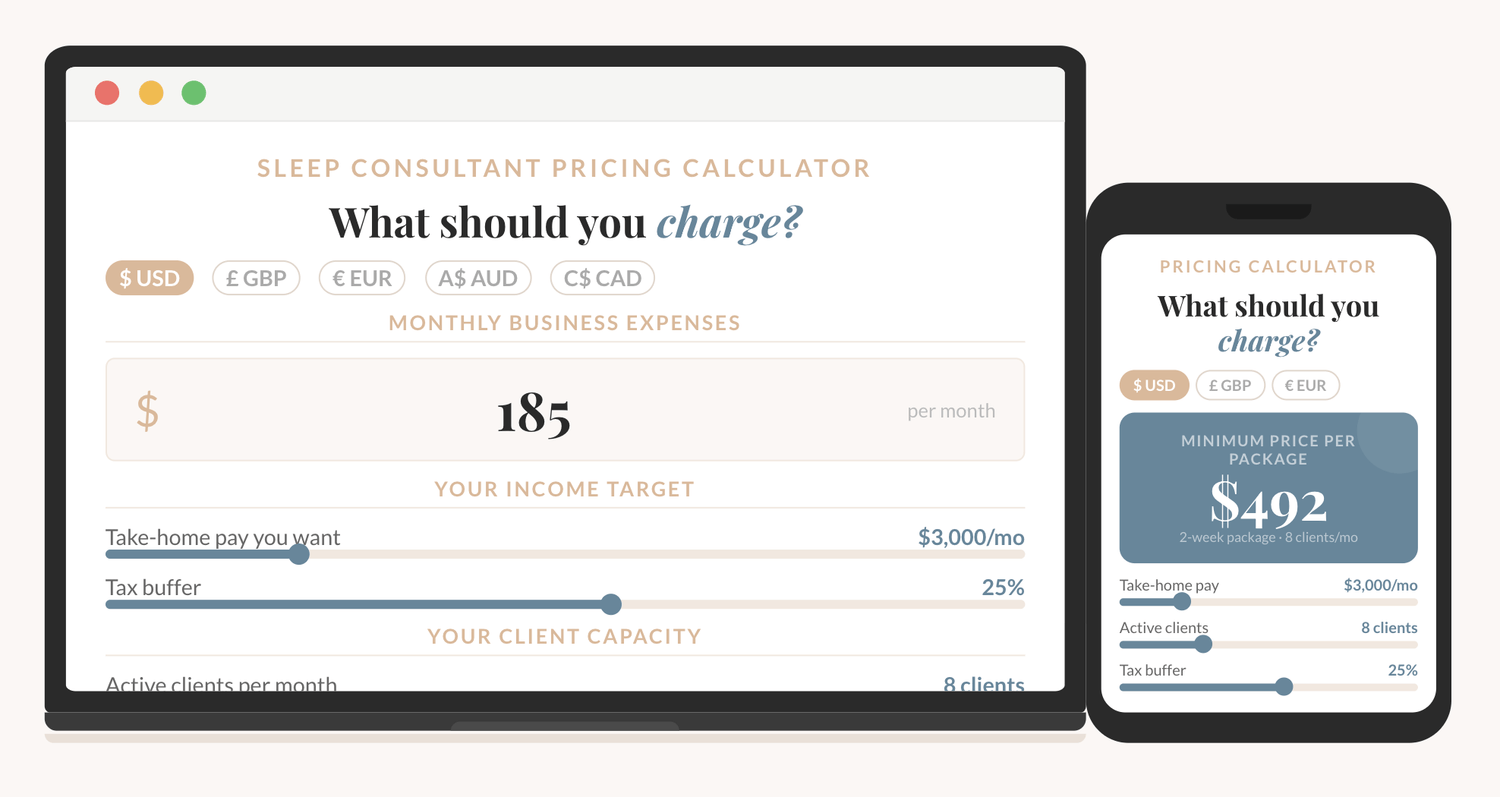
The Sleep Consultant Pricing Calculator shows you exactly what to charge, based on your real expenses, your income goal, and how many clients you want to take on.
I'm thrilled to offer you an exclusive preview of what’s inside!
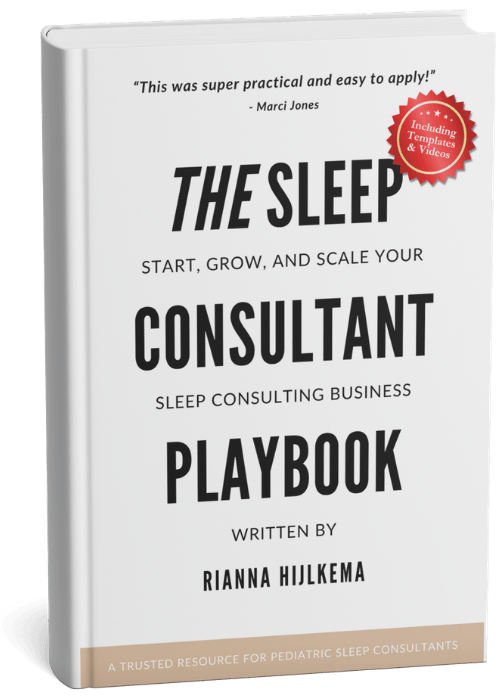
You can read the first 22 pages of The Sleep Consultant Playbook and get a taste of the value, insights, and actionable strategies that are waiting for you.
Other articles you might be interested in:
© 2021-2026 Sleep Consultant Business. All Rights Reserved.