
How to Register Your Sleep Consulting Business
To officially register your sleep consulting business, you need to choose a legal structure (most new sleep consultants start with a sole proprietorship or LLC), register your business name with your local government, get a Tax ID number, open a business bank account, and sort out any required insurance. The process is more straightforward than it sounds, costs between $0 and $500 depending on your country and structure, and is something you can do yourself without a lawyer. This guide walks you through each step.
In this guide
- Why registering your business matters
- Step 1: Choose your business structure
- Step 2: Register your business name
- Step 3: Get your Tax ID number
- Step 4: Get insurance
- Step 5: Open a business bank account
- Staying compliant once you're registered
- Common mistakes sleep consultants make when registering
- Frequently asked questions
Tax IDs, business structures, and legal registrations probably weren't on your vision board when you decided to become a sleep consultant. And yet here they are, demanding your attention before you can do anything else. Sound familiar?
Most new sleep consultants get stuck here. Not because this stuff is genuinely hard. It's because it feels overwhelming. The good news is that you don't need to be a legal or financial expert to handle this. You need a clear sequence, and the willingness to do one step at a time. That's it.
Registering your business is what takes your sleep consulting practice from an idea to something real and official. It's what lets you open a business bank account, file taxes properly, sign contracts, and show clients (and yourself) that you mean business. The legal foundation isn't the exciting part of building a sleep consulting practice. But skip it, and everything you build later sits on shaky ground.
Why Registering Your Business Matters
Operating an unregistered business isn't just a legal risk. It's a practical one. Without formal registration, you can't open a business bank account in your business name. You can't accept payments under a business name. Your contracts have weaker standing. And come tax time, you have no clean separation between your personal and business finances, which creates headaches that compound year after year.
Registration also signals professionalism. A client who searches for you and finds a properly registered business with a professional email address and a website on your own domain is going to feel more confident handing over their trust (and their money) than one who finds a Gmail account and no verifiable business presence.
Many sleep consultants rush through or skip these foundational steps because they feel tedious. But operating without a contract, without a registered business, and without separated finances creates real chaos later. Think of this chapter as an investment in your future self. The sleep consultant who gets this right at the start spends dramatically less time untangling things at tax time and dramatically more time actually helping families.
Step 1: Choose Your Business Structure
Your business structure determines how you're taxed, how much personal liability you carry, and how much paperwork is involved. The good news for newly certified sleep consultants: you don't need anything complicated to start. Here are the three main options.
Option 1: Sole Proprietorship
The simplest structure. Almost no paperwork, minimal setup cost ($0 to $50), and easy to maintain. You and the business are legally the same entity, which means setup is fast but your personal assets (savings, home) are at risk if something goes wrong legally.
Best for: sleep consultants who want to start immediately, have low risk tolerance for paperwork, and are comfortable with some personal liability while getting off the ground.
Option 2: LLC (Limited Liability Company)
The middle ground. An LLC separates your personal finances from your business finances, which means if the business faces a legal claim, your personal assets are protected. More setup paperwork and costs ($50 to $500 depending on your country or state), and some ongoing annual fees and filings to maintain it.
Best for: sleep consultants who want peace of mind that their personal finances are protected, and who plan to treat the business as a separate entity from day one.
Option 3: Corporation
The most complex and expensive structure ($500 to $1,000 or more to set up, plus ongoing compliance requirements). Offers the strongest legal protection and some tax advantages for larger businesses, but is significantly more work to maintain.
Best for: sleep consultants planning to scale significantly, hire a team, or attract investors. Not typically recommended as a starting point.
How to decide
Ask yourself three questions. How much personal liability are you comfortable with? If the idea of your personal finances being at risk bothers you, an LLC is worth the extra cost. What are your financial goals right now? If keeping costs minimal is the priority, a sole proprietorship gets you started. How simple do you want this to be? Both a sole proprietorship and an LLC are manageable for a solo sleep consultant. A corporation is not.
There's no perfect answer here. There's only the one that fits where you are right now. And importantly, you can change your structure later as your business grows. Making a decision today and moving forward is always better than waiting for certainty that isn't coming.
Structure names vary by country. Here's the equivalent in common markets:
| Country | Equivalent of Sole Proprietorship | Equivalent of LLC |
|---|---|---|
| USA | Sole Proprietorship | LLC |
| UK | Sole Trader | Limited Company (Ltd) |
| Australia | Sole Trader | Proprietary Limited (Pty Ltd) |
| Canada | Sole Proprietorship | Corporation or Ltd |
| Netherlands | Eenmanszaak | BV (Besloten Vennootschap) |
| New Zealand | Sole Trader | Limited Company |
| South Africa | Sole Proprietor | Private Company (Pty Ltd) |
| Germany | Einzelunternehmen (Freiberufler) | GmbH |
Rules vary and change. Verify with a local accountant or your government's business registration portal.
Most sleep consultants choose the wrong business structure without realizing it. I break it down here: Business Structures for Sleep Consultants
Step 2: Register Your Business Name
If you're operating under your own name (Sarah Mitchell Consulting), many jurisdictions don't require a separate registration. But if you're using a unique business name like "Restful Beginnings Sleep Consulting," you'll need to register it officially before you can legally operate under it and open a business bank account in that name.
In the US this is called a DBA (Doing Business As). In the UK and Australia, it's a Trading Name. Other countries have equivalent terms. The process is usually straightforward and something you can handle yourself.
Step 1: Find your local registration site. Search "[your state or country] business name registration" and look for the official government website (ending in .gov or equivalent). Avoid third-party services that charge extra fees for something you can do free or cheaply yourself.
Step 2: Gather your information. You'll need your business name, your chosen structure, your business address and contact details.
Step 3: Pay the fee. Registration fees typically range from $50 to $500 depending on your location and structure. Most are a one-time cost, though some structures (like LLCs) have small annual renewal fees.
Step 4: Check for extra requirements. Some locations require additional local business licences or industry-specific permits. Your local government office or small business centre can confirm what applies to you.
Once you're registered, keep a copy of your registration documents somewhere accessible: physical and digital. You'll need them to open a bank account, apply for any permits, and file taxes. A dedicated folder on Google Drive or Dropbox is a simple habit that saves real time later.
More information in this article: How to Choose a Business Name for Your Sleep Consulting Business
Step 3: Get Your Tax ID Number
A Tax ID is a unique identifier for your business that allows you to manage taxes, open a business bank account, and handle official paperwork. It goes by different names depending on where you live, but the purpose is the same everywhere.
| Country | Name | Where to apply |
|---|---|---|
| USA | EIN (Employer Identification Number) | IRS.gov. Free, online, takes under 30 minutes |
| UK | UTR (Unique Taxpayer Reference) | gov.uk. Register as self-employed to receive your UTR |
| Australia | ABN (Australian Business Number) | abr.gov.au. Free, online |
| Canada | BN (Business Number) | Canada Revenue Agency (CRA). Online |
| Netherlands | KVK-nummer + BTW-nummer | kvk.nl. Register with Kamer van Koophandel |
| New Zealand | IRD Number | ird.govt.nz |
| South Africa | Income Tax Reference Number | SARS. sars.gov.za |
| Germany | Steuernummer | Finanzamt (local tax office) |
The application process is typically online and takes less than 30 minutes. It's also usually free. Once you have your Tax ID, save it in both digital and physical form and put it in that same dedicated documents folder. You'll need it for your bank account, tax filings, and official paperwork.
Step 4: Get Insurance
Sleep consulting isn't a high-risk profession. Nobody is rappelling down buildings or guiding paragliding trips. But unexpected situations can still arise, and in some locations certain types of insurance are legally required. It's also increasingly expected by parents who want to know they're working with a credible professional.
Here are the main types relevant to sleep consultants:
- Professional Liability Insurance (Errors and Omissions): The most important one for sleep consultants. This protects you if a client claims your advice caused harm. Even if the claim is unfounded, legal defence costs money. This is the policy to prioritise.
- General Liability Insurance: Covers third-party claims like injury or property damage. Less critical for a fully online sleep consulting practice but relevant if you ever do in-home visits.
- Business Interruption Insurance: Covers lost income if your business has to pause due to circumstances beyond your control (illness, natural disaster). Optional for most new sleep consultants but worth knowing about.
- Property Insurance: Covers damage to equipment. More relevant if you have a dedicated home office setup. Low priority for most newly certified sleep consultants working from a laptop.
Get at least three quotes from different providers, check what your local regulations require, and don't wait for something to go wrong before you look at your policy exclusions. Your certification programme may have recommended insurance providers or group rates, so it's worth checking before you search independently.
Step 5: Open a Business Bank Account
Mixing personal and business finances is a recipe for chaos. You don't want to be scrolling through your bank transactions trying to work out whether a charge was a client payment or your morning coffee. More than a convenience issue, if you've set up an LLC, keeping finances separate is legally non-negotiable. Mixing funds undermines the limited liability protection that the structure was designed to give you.
To open a business bank account you'll need your Tax ID number, your business registration documents, and proof of identity. Look for an account designed for small businesses with low or no monthly fees, good online banking, and no punishing minimum balance requirements. Many banks charge fees that add up quickly for a business making its first few hundred dollars a month. Check the small print before you commit.
Once the account is open, commit to using it exclusively for all business transactions. Client payments in. Business expenses out. Nothing personal touches it. This habit, started from your very first client, makes tax time and financial planning dramatically cleaner as the years go on.
Staying Compliant Once You're Registered
Registering your business is not a one-time event. There are ongoing requirements that protect what you've built. The key areas to stay on top of:
- Renew licences and permits. Some business licences, professional certifications, and industry permits require annual or periodic renewal. Miss a deadline and you may be technically operating illegally.
- Pay your taxes on time. In the US, self-employed people typically pay quarterly estimated taxes. Other countries have similar requirements. The 20 to 30% rule applies everywhere: set aside a percentage of every payment received into a dedicated tax savings account so the money is there when the bill arrives.
- File annual reports (if required). LLCs and corporations in many locations must file a yearly update with their local authority. It's usually a simple form and costs $50 to $200, but missing it can result in penalties or even dissolution of your registration.
- Keep your insurance current. Review your policy annually. Check expiry dates, update your coverage as your business grows, and confirm it still covers what you actually do.
- Update your records. Changed address? New contact details? Updated these with your bank, your registration, and any relevant authorities promptly. Outdated records create confusion at the worst possible times.
Create a simple compliance calendar: a document or spreadsheet with every renewal date, tax deadline, and reporting requirement for the year ahead. Set reminders a few weeks in advance. This takes about 30 minutes to set up and saves significant stress across every year you're in business.
Managing your own bookkeeping is completely doable when you're starting out. But for tax preparation and bigger financial decisions, an accountant or tax advisor is worth the investment. They help you avoid costly mistakes, identify deductions you'd miss, and free up your time to focus on actually building the business. You don't need one from day one, but add it to the plan as soon as you can afford it.
Common Mistakes Sleep Consultants Make When Registering
Skipping registration entirely to "start taking clients first"
You might get away with it for a few months. But operating unregistered creates real problems: you can't open a proper business bank account, your contracts have less legal weight, and you're building habits (mixing finances, informal payments) that become harder to undo the longer they continue. Register first. It takes a week at most and removes a lot of risk.
Mixing personal and business finances
This is the most common financial mistake newly registered sleep consultants make, and it snowballs. Open the business account before your first client payment, not after a few months when you're trying to untangle which transactions were which. If you've set up an LLC, mixing finances can actually compromise the legal protection the structure gives you.
Not setting aside tax from day one
Every payment you receive isn't entirely yours. A portion belongs to the tax authority. The sleep consultants who get a nasty surprise in their first tax year are almost always the ones who spent everything they earned without setting anything aside. Start the tax savings account habit from your very first client payment, even if the amounts feel small.
Operating without a contract
Registration and a contract are two separate things, but both are foundational. A registered business without a client contract is still vulnerable if a client relationship goes sideways. Your contract is what protects you when expectations aren't met or disputes arise. If you don't have one yet, make it the very next thing you sort out after registration.
Not tracking compliance deadlines
Registration is a process, not a one-time task. Annual reports, licence renewals, tax deadlines. These all have due dates that don't care whether you remembered them or not. A compliance calendar is not optional if you want to stay properly registered. Set it up when you register, update it annually, and check it quarterly.
Frequently Asked Questions
Do I need to register before I take my first client?
Technically you can take a client before registering in some jurisdictions, but it's not recommended. Without registration you can't open a business bank account, your contracts are weaker, and you're mixing personal and business finances from the start. The registration process takes a week or less in most countries. Do it before you send your first invoice.
Do I need a lawyer or accountant to register?
For a sole proprietorship or basic LLC, no. The process is designed for business owners to handle themselves, and official government websites walk you through every step. Where a lawyer or accountant genuinely adds value is in more complex structures (corporations), reviewing your client contracts, and handling your tax filings once your income grows. You don't need one on day one, but add it to your plan as your business develops.
Can I change my business structure later?
Yes. Many sleep consultants start as sole traders or sole proprietors and move to an LLC or limited company once their income and risk profile justify it. The transition requires filing new registration paperwork and potentially updating your bank account and tax ID, but it's a manageable process. Starting as a sole proprietorship is not a trap. It's a starting point.
What if I'm in one country but serve clients in another?
In most cases, you register in the country where you live and operate, regardless of where your clients are located. An online sleep consulting practice serving international clients typically doesn't require registration in each client's country. Where it gets more complex is around VAT or GST. Some countries require you to register for tax in their jurisdiction once you reach a certain revenue threshold from their residents. This is worth verifying with a local accountant as your international client base grows.
Is professional liability insurance mandatory?
It depends on your country and sometimes your certification programme. Some certifications require it as a condition of maintaining your certification. Some clients, particularly high-end or corporate referral clients, may ask to see proof of insurance before engaging you. Even where it's not mandatory, it's strongly recommended for any sleep consultant taking on clients. The cost of a single unfounded claim without coverage can exceed years of premium payments.
How much does it cost to register a sleep consulting business?
Sole proprietorship or sole trader: $0 to $50 in most countries. LLC or limited company: $50 to $500 depending on your location. Corporation: $500 to $1,000 or more. Your Tax ID is typically free. Annual renewal fees for LLCs and corporations range from $50 to $200 per year depending on jurisdiction. Insurance costs vary widely by country and coverage level but typically run $200 to $600 per year for basic professional liability coverage for a solo sleep consultant.
Key Takeaways
- Register before you take your first client. It takes a week, costs under $500, and protects everything you build from here.
- Most new sleep consultants start with a sole proprietorship or LLC. Choose the one that fits your risk tolerance and financial goals right now. You can always upgrade later.
- Get your Tax ID immediately after registering. It's free, takes 30 minutes, and you need it for almost everything else.
- Open a business bank account before your first payment lands. Keep business and personal finances completely separate from day one.
- Set aside 20 to 30% of every payment for tax. A separate savings account, automatic transfer, don't touch it.
- Create a compliance calendar with every renewal date and tax deadline. Set reminders. Check it quarterly.
- A registered business without a client contract is still vulnerable. Registration and a solid contract go together.
This week: decide on your structure, find your local registration website, and get the process started. It's less daunting than it looks from the outside, and completing it will make everything else feel much more real.
Disclaimer: The information shared in these articles is for educational and informational purposes only. It does not constitute legal, financial, or professional advice. Always consult with a qualified professional regarding your specific situation.

Rianna Hijlkema
Certified Pediatric Sleep Consultant, Certified Postpartum Doula, Former Teacher & School Director, Founder of Sleep Consultant Design & Sleep Consultant Business and the author of The Sleep Consultant Playbook (available on Amazon).
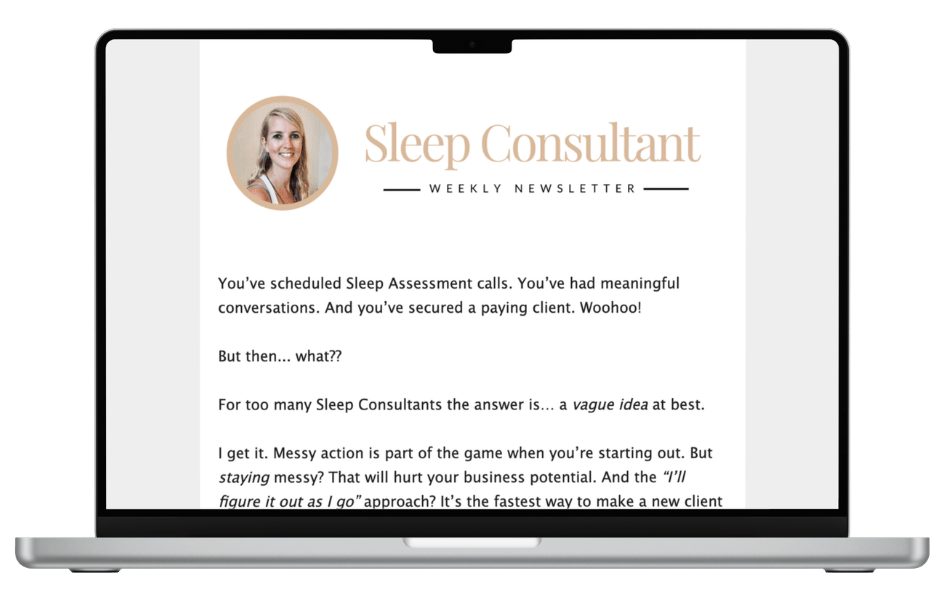
The Sleep Consultant Newsletter
Weekly tips, strategies and marketing ideas for sleep consultants written by a fellow sleep consultant. 1500+ active subscribers!
I’ll only send helpful emails, and you can unsubscribe anytime with one click.
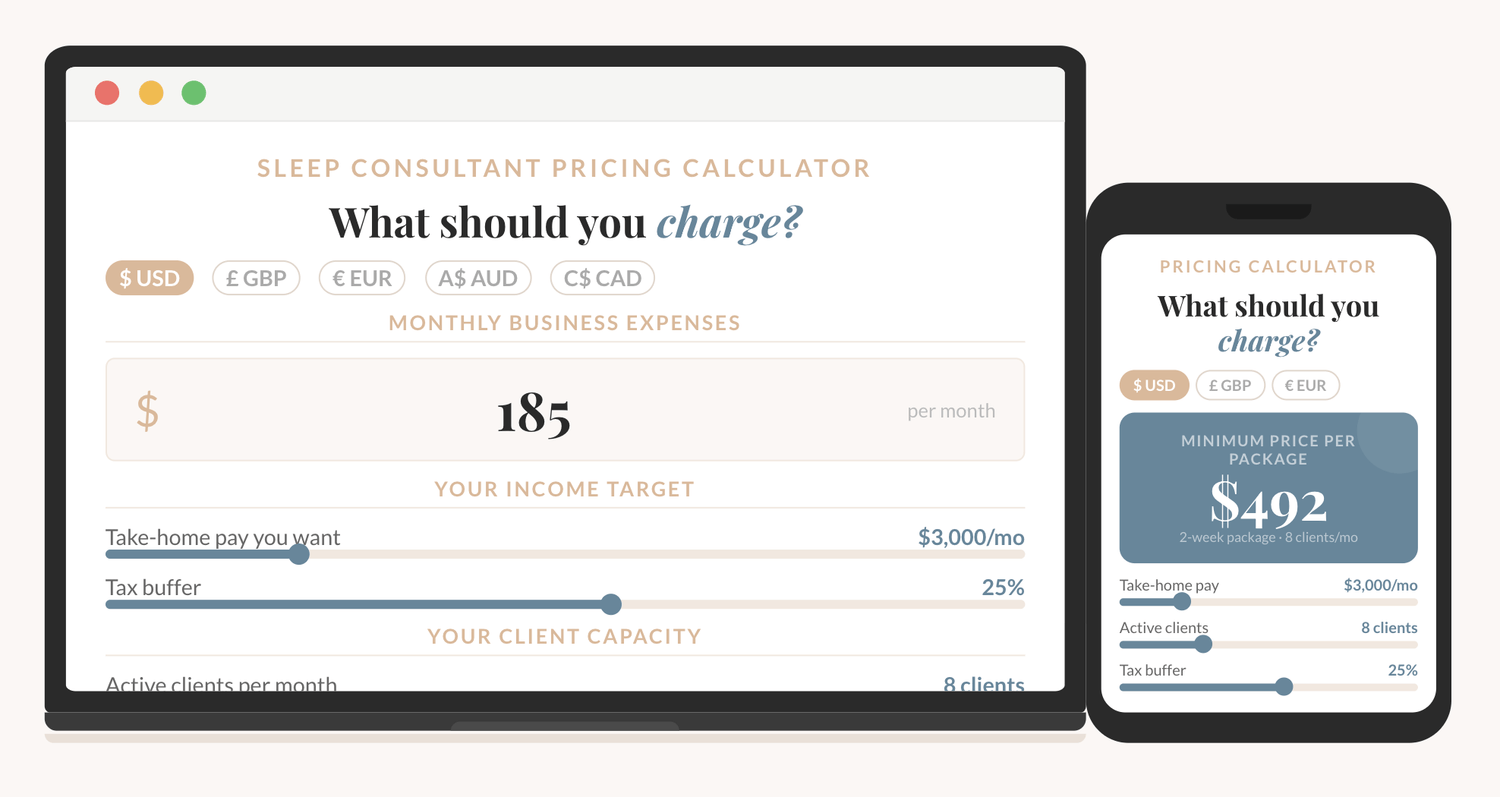
How to price your sleep consulting services?
The Sleep Consultant Pricing Calculator shows you exactly what to charge, based on your real expenses, your income goal, and how many clients you want to take on.
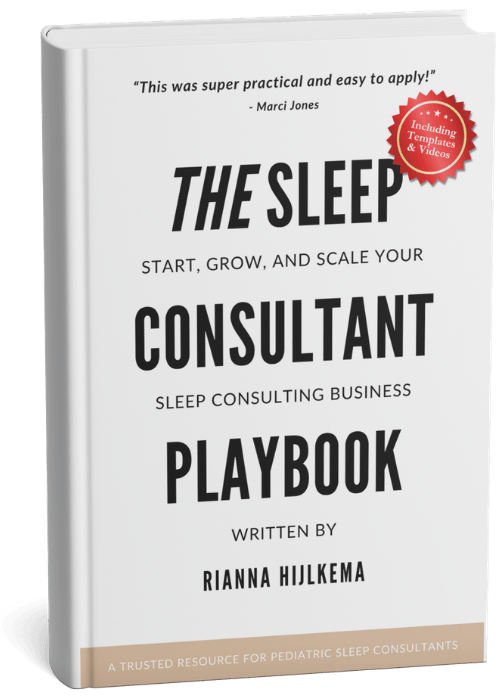
I'm thrilled to offer you an exclusive preview of what’s inside!
You can read the first 22 pages of The Sleep Consultant Playbook and get a taste of the value, insights, and actionable strategies that are waiting for you.
Other articles you might be interested in:
© 2021-2026 Sleep Consultant Business. All Rights Reserved.