
Contract Essentials for Sleep Consultants: What to Include
A sleep consultant contract must include at minimum: scope of services, payment terms, cancellation policy, confidentiality, and a liability disclaimer clarifying that your advice is not medical. Beyond these essentials, clear clauses around communication boundaries, what happens when a child is unwell, and intellectual property over your sleep plans round out a solid agreement. Keep it plain English. A contract that is easy to read is one that actually gets read, and a read contract protects everyone.
In this guide
- Why every sleep consultant needs a contract
- Scope of services
- Payment terms
- Cancellation and rescheduling policy
- Liability disclaimer and medical disclaimer
- Confidentiality and privacy
- Communication terms
- Additional clauses worth including
- How and when to send your contract
- Frequently asked questions
The friendly conversation you had on the assessment call can turn into a frustrating misunderstanding if neither of you has anything in writing about what was agreed. A contract is not a sign that you don't trust your clients. It's a sign that you run a professional business and that you take your work seriously enough to protect it, and them.
Every client who books with you should sign a contract before the work begins. Not most clients. Every one. The contracts you'll be most grateful for are the ones you didn't think you'd need.
I've seen sleep consultants without contracts end up in back-and-forth email battles over whether a "quick follow-up question" includes 27 messages at 2am, or whether a cancellation three days before a session owes a refund. Both situations are entirely avoidable. A clear contract answers these questions before they become arguments. Write it once, have it reviewed by a local lawyer if possible, and use it for every engagement from day one.
Why Every Sleep Consultant Needs a Contract
A contract serves three purposes. First, it protects you legally: it defines what you agreed to provide and limits your liability if results don't meet expectations. Second, it protects the client: they know exactly what they're getting, when, and what happens if circumstances change. Third, it protects the relationship. Most conflicts between consultants and clients come from unclear expectations. A contract sets those expectations in writing before any conflict can arise.
The goal is not an intimidating legal document full of jargon. The goal is a clear, readable agreement that both parties understand. Keep the language plain, keep the clauses specific, and skip anything that doesn't apply to your actual service.
Scope of Services
This is the most important section. It defines exactly what you are providing. Be specific: not "sleep consulting support" but "one initial consultation call of up to 60 minutes, one personalised written sleep plan, and two weeks of daily message support Monday to Friday."
Include what is not included. If weekend support is not part of the package, say so. If the plan covers one child only, say so. If revisions to the sleep plan are limited to two rounds, say so. The scope section is where every "but I thought this included..." conversation gets resolved before it starts.
Payment Terms
State your fees clearly. The total package price, whether payment is in full or in instalments, the payment due date (most sleep consultants require payment before work begins), and your accepted payment methods.
If you offer payment plans, include the instalment schedule and what happens if a payment is missed. If you require a deposit to secure a booking, include the deposit amount, when it's due, and whether it's refundable if the client cancels.
Include what happens with late payments: a grace period (if any) and any late payment fee. You don't have to be punitive, but having it in writing means you're not having an awkward conversation about money without any framework.
Cancellation and Rescheduling Policy
Life happens with families. Babies get sick, circumstances change, parents have emergencies. Your contract should make it clear what happens in these situations without leaving it open to interpretation each time.
Common elements: a notice period for cancellation (typically 24 to 48 hours for consultation calls), what happens to payment if a client cancels within or outside that window,, how many reschedules are permitted within a package, and whether unused sessions can be refunded or are forfeited after a certain period.
A specific and important clause: what happens if a child is unwell at the time of a planned call or in-person support. Most sleep consultants pause the plan when a child is sick and extend the support period accordingly. Say this explicitly so there's no question about what the client is owed.
Liability Disclaimer and Medical Disclaimer
This clause is non-negotiable. Your services are not medical advice. Your sleep plans are not a substitute for medical diagnosis or treatment. Results are not guaranteed. You can provide the best possible plan and the client still needs to implement it consistently for it to work.
Write this section clearly and plainly. Something like:
Also include a general liability limitation: that your liability is limited to the fees paid for the service. This protects you from outsized claims in the unlikely event that something goes wrong.
Confidentiality and Privacy
Clients share deeply personal information with you: their child's health history, family dynamics, relationship stress, postpartum experiences. They need to know that information stays with you.
Your confidentiality clause should state that you will not share any personally identifiable information about the client or their family with third parties without consent, and that case studies or testimonials will only be used with explicit written permission. If you're working in a jurisdiction covered by GDPR, HIPAA, or other data protection legislation, make sure your privacy practices comply. This is worth a brief check with a local lawyer or your professional association.
Communication Terms
This clause defines when you are available, how clients can reach you, and what response time they can expect. Include your contact hours, your primary communication channel for client support, and your response time commitment during those hours.
This prevents the 2am message expectation. If your contract says "Monday to Friday, 9am to 6pm, with responses within 4 hours during contact hours," there is no ambiguity about what a client is entitled to. See How to Set Client Communication Boundaries as a Sleep Consultant for the full framework on building this policy.
Additional Clauses Worth Including
Intellectual property
The sleep plan you create is your intellectual property. Clients may use it for their own family but may not share, republish, or sell it. Include this stating this, particularly if your sleep plans are detailed and unique.
Testimonial and photo permission
If you'd like to use client testimonials, include an optional consent clause in your contract. This is easier than requesting permission retroactively and means you have documented consent when you use a testimonial in marketing.
Safe sleep acknowledgement
A brief clause stating that you follow and recommend current safe sleep guidelines (or specify which body's guidelines: AAP, NHS, SIDS charities, etc.) and that you are not responsible for any deviation from those guidelines by the client. This protects you in the rare but serious situation where a family does not follow safe sleep practices.
Dispute resolution
A brief clause stating how disputes will be handled if they arise, typically starting with a good-faith attempt at direct resolution, then mediation if needed, and which jurisdiction's laws govern the agreement. Most sleep consultants will never need this clause. Having it means you're prepared if the rare situation arises.
How and When to Send Your Contract
Send your contract immediately after a client says yes on the assessment call, along with the payment link. Tell them on the call: "I'll send over two things after we hang up: the contract and the payment link. Once I receive both back, your spot is secured and we can get started."
Do not begin any work until the contract is signed and payment is received. Not even a preliminary intake form. The deal isn't done until both are in.
Contract Checklist
Frequently Asked Questions
Do I need a lawyer to write my contract?
Not to write it. A clear, plain-English contract you've written yourself is far better than no contract. Then you can decide to having a local lawyer review it once for legal compliance in your jurisdiction (typically $200 to $500). This one-time review catches anything you've missed and gives you confidence that your contract actually protects you the way you intend it to.
What if a client refuses to sign a contract?
Don't work with them. A client who refuses to sign a standard professional services contract is a red flag about how the engagement will go. A contract is a normal part of hiring any professional. Framing it as "something I require with every client" (rather than "I need you to sign this because I don't trust you") makes it easy and professional.
Should my contract be the same for all packages?
The core terms can be the same. The scope of services section may vary by package. The simplest approach is a master contract with the core terms, and a separate "service schedule" or addendum that specifies the package details for each engagement. This means you only maintain one set of core terms and customise the specific scope per client.
Key Takeaways
- Every client needs a contract, signed before work begins. No exceptions.
- The five non-negotiable clauses: scope of services, payment terms, cancellation policy, liability disclaimer, and confidentiality.
- Be specific in the scope section. Every conflict between a sleep consultant and a client can be traced back to unclear scope.
- The medical disclaimer is essential. You are a certified sleep consultant, not a medical professional. Say so explicitly.
- Write it in plain English. A contract that is easy to read is one that actually gets read, and a read contract protects both parties.
- Have it reviewed by a local lawyer once. The one-time cost is worth the peace of mind and legal compliance.
Disclaimer: The information shared in these articles is for educational and informational purposes only. It does not constitute legal, financial, or professional advice. Always consult with a qualified professional regarding your specific situation.

Rianna Hijlkema
Certified Pediatric Sleep Consultant, Certified Postpartum Doula, Former Teacher & School Director, Founder of Sleep Consultant Design & Sleep Consultant Business and the author of The Sleep Consultant Playbook (available on Amazon).
The Sleep Consultant Newsletter
Weekly tips, strategies and marketing ideas for sleep consultants written by a fellow sleep consultant. 1500+ active subscribers!
I’ll only send helpful emails, and you can unsubscribe anytime with one click.
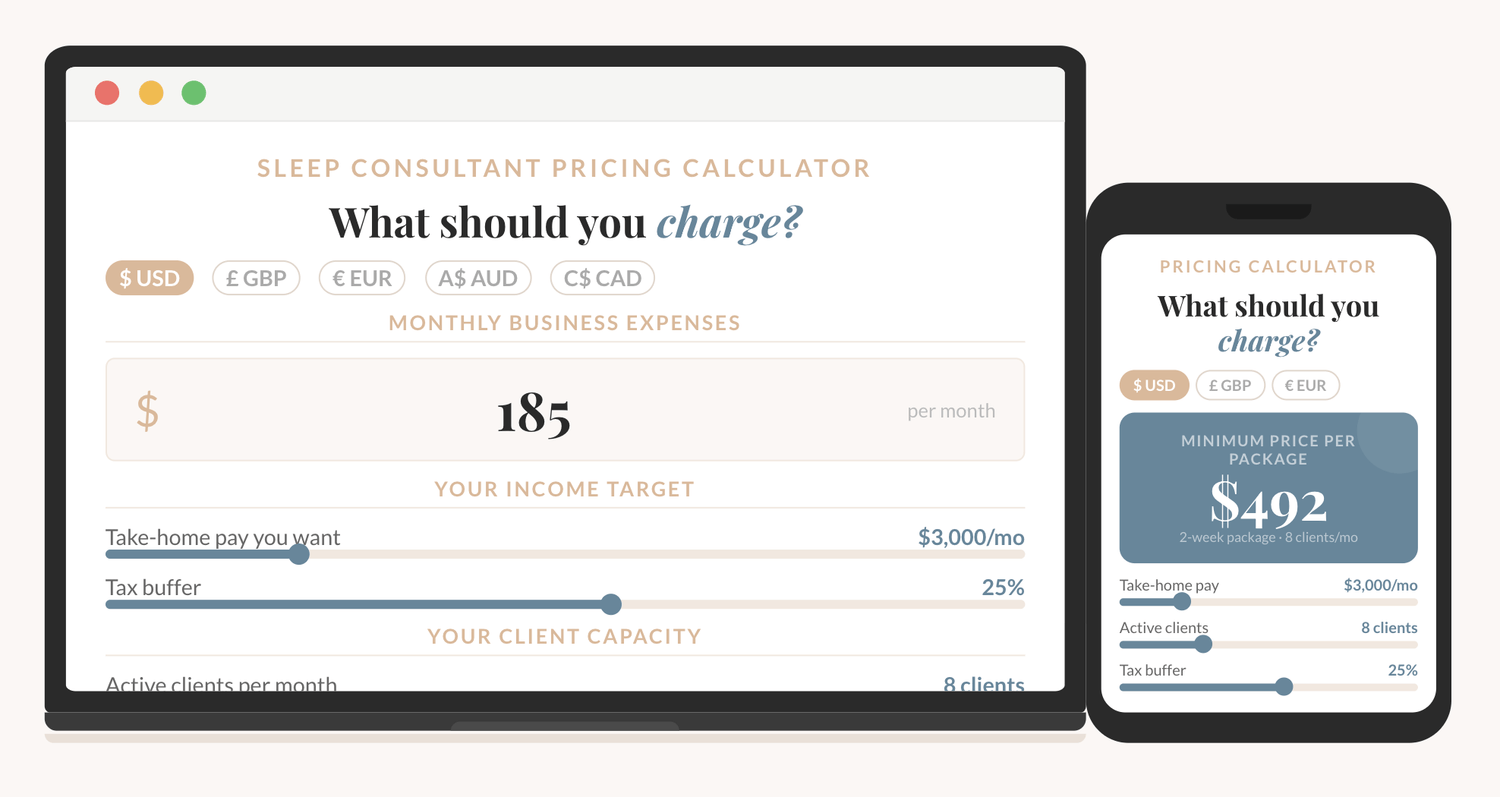
How to price your sleep consulting services?
The Sleep Consultant Pricing Calculator shows you exactly what to charge, based on your real expenses, your income goal, and how many clients you want to take on.
I'm thrilled to offer you an exclusive preview of what’s inside!
You can read the first 22 pages of The Sleep Consultant Playbook and get a taste of the value, insights, and actionable strategies that are waiting for you.
Other articles you might be interested in:
© 2021-2026 Sleep Consultant Business. All Rights Reserved.