
How to Write Your About Page as a Sleep Consultant
Your About page is usually the second most visited page on your website after the homepage, and it is where parents decide whether they trust you enough to reach out. The most effective About pages for sleep consultants follow a 3-step storytelling structure: Scene (where your journey started), Struggle (the challenge that changed you), and Solution (how you transformed and what you can now offer others). This structure works because parents hire someone they connect with, not just someone with credentials.
In this guide
- What your About page is actually for
- The 3-step storytelling framework
- Step 1: Scene, set the stage
- Step 2: Struggle, the turning point
- Step 3: Solution, the transformation
- Putting it all together: a full example
- What else to include on your About page
- Common About page mistakes sleep consultants make
- Frequently asked questions
Most sleep consultants write their About page last, rush through it, and end up with something that reads like a professional bio: certification details, years of experience, and a generic closing line about being passionate about helping families. Safe, forgettable, and unlikely to convert a single visitor into a client.
Parents don't choose a sleep consultant because of their qualifications. They choose them because they feel understood. Because they read something on the About page that made them think: this person gets it. This is someone I trust to help my family.
That feeling comes from story, not from credentials. Your About page is not a CV. It's the moment a parent decides whether they're going to reach out, and a 3-step storytelling framework makes it far easier to write than starting from a blank page.
What Your About Page Is Actually For
People love stories. Stories build trust. This is not a fluffy content marketing idea. It is how trust actually forms between a stranger and a professional they're considering hiring. A parent who has just found your website doesn't know you. Your qualifications tell them you're trained. Your story tells them you understand.
The parent visiting your About page is often sitting in the dark at some ungodly hour, running on almost no sleep, wondering if a sleep consultant can actually help them. They are not evaluating your CPD hours. They're asking one question: does this person understand what I'm going through?
Your About page answers that question. When it works, the reader finishes it and immediately scrolls to find the booking button. When it doesn't work, they close the tab and move on to the next sleep consultant.
The 3-Step Storytelling Framework
Every compelling About page for a sleep consultant follows the same basic arc. It has a starting point, a challenge, and a transformation. The 3-step framework gives you a structure to build that arc clearly, without it feeling forced or dramatic.
Each step serves a specific purpose. Together they move the reader from "who is this person?" to "I want to work with them." Let's go through each one.
Step 1: Scene, Setting the Stage
Every good story begins with a scene: a specific, concrete moment that pulls the reader in immediately. Not a vague introduction, not a summary of your career. A snapshot. Something the reader can picture.
The scene sets up where your journey began. It doesn't need to be dramatic. It needs to be real and specific enough that a tired parent reading it thinks: yes, that. That's exactly where I am right now.
Examples:
Notice what all three do: they put you somewhere specific. A time, a place, a feeling. They don't summarise. They drop you into a moment. That's what a scene does, and it's what makes a reader lean in rather than skim.
Your Scene prompt: Where did your journey begin? What was happening in your life when sleep became something you had to figure out, personally or professionally? Be specific about the moment. Where were you? What were you feeling? What makes it easy for a parent reading it to picture themselves in a similar situation?
Step 2: Struggle, The Turning Point
The struggle is the part of the story where you share the challenge or pain point that motivated you to change. Your struggle doesn't have to be dramatic. It doesn't need to be the darkest moment of your life. It needs to be real, honest, and recognisable to the parent reading it.
This is where connection happens. When you describe your struggle, you show parents that you have been where they are. You've felt the exhaustion, the frustration, the helplessness, the self-doubt. You're not someone who has always had it figured out. You're someone who found a way through, and that's exactly what they're hoping to do.
Examples:
This step is where vulnerability pays off. You don't need to share anything that feels too private. You just need to be honest enough that the reader sees a real person, not a polished professional who has always had everything together. The best About pages make parents feel less alone, and that starts with your struggle.
If you're worried that your story isn't unique enough or dramatic enough, here is what I want you to hear: your perspective is what makes you stand out. You don't need to have overcome something extraordinary. Your authenticity and empathy are what will resonate with clients. A parent who reads your honest struggle and thinks "that's exactly how I feel" has already decided to trust you, before they've even read your qualifications.
Your Struggle prompt: What was the biggest challenge you faced in your own sleep journey, or in the journey that led you to this work? What were you feeling? What did you try that didn't work? Write it honestly, without overstating it and without minimising it.
Step 3: Solution, The Transformation
The solution is where you show how you turned things around. This is the turning point in your story, and it does double duty: it completes your arc and it demonstrates to the parent reading it that transformation is possible, because it happened for you. This is also where your certification and your decision to become a sleep consultant naturally fit in.
The solution doesn't have to be a miracle. It just needs to be real and effective. Something that changed things for you and gave you a reason to want to help others find the same.
Examples:
The Solution step is where you pivot from your story to the reader's story. You've shared where you were, what you went through, and how you got through it. Now you connect that to what you can do for them. This is the moment where your About page becomes a bridge: from your past to their future.
Your Solution prompt: What changed for you? What worked when nothing else did? What did that transformation feel like, and how did it lead you to sleep consulting? What are you equipped to offer families now because of what you went through?
Putting It All Together: A Full Example
Here is how all three steps come together into a complete brand story. Read it and notice how naturally it flows from one step to the next without feeling scripted:
Scene
A few years ago, I was a first-time mum, sleep-deprived and overwhelmed. Every night, I'd pace the hallway with my crying baby, feeling like I was failing and desperate for some rest.
Struggle
I tried every sleep tip I could find, but nothing worked. I was exhausted, frustrated, and felt like I was losing myself in the process. I questioned everything: my instincts, my approach, my ability to figure this out.
Solution
That's when I decided to become a certified sleep consultant. I learned how to create gentle, personalised sleep plans that actually work. Now, I help parents like you go from sleepless nights to peaceful days, because I know exactly what it's like to be there, and I also know there's a way through.
Three short paragraphs. No jargon. No credential-listing. Just a story that a tired parent can see themselves in, followed by a clear statement of what the sleep consultant can now offer. That's it. That's the whole framework.
Once you've written your brand story using this structure, read it out loud. It should sound like you talking to a friend, not like a professional bio you're submitting for a directory. If it sounds stiff, informal it. If it sounds too casual, tighten it. The test is whether it sounds like you.
What Else to Include on Your About Page
The brand story is the heart of your About page, but it doesn't have to be the whole page. Here's what else works well:
Your credentials (briefly)
One or two sentences listing your certification body, any specialist training, and any additional relevant qualifications (postpartum doula, lactation support, nursing background, etc.). Credentials matter. Parents want to know you're properly trained. But they don't need half the page. The story builds connection. The credentials provide reassurance.
Your unfair advantage
What makes you different from every other certified sleep consultant? This is the thing only you can offer: your specific background, lived experience, or unique combination of skills. A single parent who understands what it means to do this without a partner. A sleep consultant who has worked with neurodivergent children because they have one. A nurse who brings a clinical perspective to a deeply human challenge. Your unfair advantage is the thing no amount of certification gives you. Name it on your About page.
A brief personal note
One or two sentences of something genuinely personal and human: where you live, your own children if relevant, something you love outside of work. Not a list of hobbies, just a brief moment that reminds the reader there's a real person behind the page. This is optional but adds warmth when it feels natural.
A clear call to action
Every About page needs to tell the reader what to do next. "Ready to get started? Book your free Sleep Assessment Call here." Or "Curious about how I work? Head to the Packages page." Don't leave a reader who is now warm and interested staring at the end of a page with no next step. Make it easy and obvious.
A professional photo
Your About page should have at least one photo of your face, and ideally more than one. Parents want to see who they're contacting. A warm, approachable, well-lit photo of you (not a stock image, not a logo) does more for trust-building than almost any amount of copy.
Common About Page Mistakes Sleep Consultants Make
Writing it like a CV
Certification, years of experience, list of trainings attended, statement about being passionate about helping families. This is what most About pages look like, and it's why most About pages don't convert. Credentials belong on your page, briefly. They are not the story. Start with the scene, not the certificate.
Talking about yourself rather than your client
An About page is called "About" but the best ones are fundamentally about the reader. Your story should constantly be pointing back to them: you've been where they are, you know how it feels, you found a way through, and now you can help them do the same. Every sentence of your story should pass the "so what does this mean for the parent reading it?" test.
Being vague about the struggle
"I know how hard sleep deprivation can be" is too vague to build connection. "I remember lying awake at 3am, listening to my baby cry and thinking I'd never sleep again" puts the reader in a moment they recognise. The more specific you are about your struggle, the more deeply parents will feel it.
Forgetting the call to action
A parent reads your About page, feels connected, and then... nothing. No obvious next step. They close the tab. Always end with a clear direction: book a call, see the packages, read more about how I work. Every page of your website should have a job, and on your About page the job is to convert a reader into a lead.
Writing it once and never updating it
Your About page should evolve as your business does. When you have new credentials, new specialisations, or when your niche shifts, update the page. A page that still says you're "newly certified" when you've been in practice for two years is doing you a disservice. Review it at least every six months.
Frequently Asked Questions
What if my story doesn't involve being a parent myself?
Your story does not have to be a personal parenting story. A nanny who spent years watching families struggle. A nurse who saw the impact of sleep deprivation on families in their care. A child development professional who became fascinated by sleep science. A doula who kept encountering the same exhausted parents again and again. Whatever led you to this work is your story. It doesn't need to be about your own baby.
How long should my About page be?
Long enough to build connection, short enough to hold attention. For most sleep consultants, the core brand story should be around 150 to 250 words, with credentials and a personal note adding another 100 to 150 words. Total page length of 400 to 500 words is a strong sweet spot. If you find yourself writing significantly more than that, the page is probably about you rather than the reader.
Should I write in first or third person?
First person, always. Writing about yourself in the third person ("Sarah is a certified sleep consultant with five years of experience...") creates distance and feels cold. First person ("I remember the exact night I decided to become a sleep consultant...") feels direct, warm, and human. It's your About page. Speak from it.
Can I use the same story on my About page and on social media?
Yes, and you should. Your brand story is your brand story across all channels. You'll naturally adjust the length and format: a condensed version for an Instagram caption, a fuller version for your About page, but the core Scene, Struggle, Solution arc stays consistent. Consistency across touchpoints builds recognition. Telling a different story in every place creates confusion.
I've started my business without much of a personal story. What do I do?
Start building one through your work. Your first client's transformation is a story. The moment a sleep-deprived parent sent you a thank-you message is a story. The pattern you're noticing across families is a story. Your personal journey doesn't have to be the only source of narrative material. Share what you observe, what drives you, and what you've learned from the families you've helped. That builds connection too.
Key Takeaways
- Your About page is where parents decide whether to trust you. It is the second most visited page on most sleep consultant websites. Treat it accordingly.
- Use the 3-step framework: Scene, Struggle, Solution. Scene pulls the reader in. Struggle creates connection. Solution demonstrates that transformation is possible and positions you to help them do the same.
- Be specific about your struggle. Specific details create connection. Vague summaries don't. The more a parent recognises themselves in your story, the more they trust you.
- Your story doesn't have to be dramatic. It has to be real. Authenticity and empathy are what resonate with tired parents, not a dramatic backstory.
- Add credentials briefly, personal note optionally, call to action always. The story builds connection. The credentials provide reassurance. The call to action converts the reader into a lead.
- Read it out loud before publishing. It should sound like you talking to a friend, not like a professional bio. If it doesn't sound like you, rewrite until it does.
Open a blank document right now and write your Scene. Just one paragraph. Where did your journey begin? Once you have that, the Struggle and Solution will follow naturally. The whole About page is usually done in an afternoon once you start. The hard part is starting.
Disclaimer: The information shared in these articles is for educational and informational purposes only. It does not constitute legal, financial, or professional advice. Always consult with a qualified professional regarding your specific situation.

Rianna Hijlkema
Certified Pediatric Sleep Consultant, Certified Postpartum Doula, Former Teacher & School Director, Founder of Sleep Consultant Design & Sleep Consultant Business and the author of The Sleep Consultant Playbook (available on Amazon).
The Sleep Consultant Newsletter
Weekly tips, strategies and marketing ideas for sleep consultants written by a fellow sleep consultant. 1500+ active subscribers!
I’ll only send helpful emails, and you can unsubscribe anytime with one click.
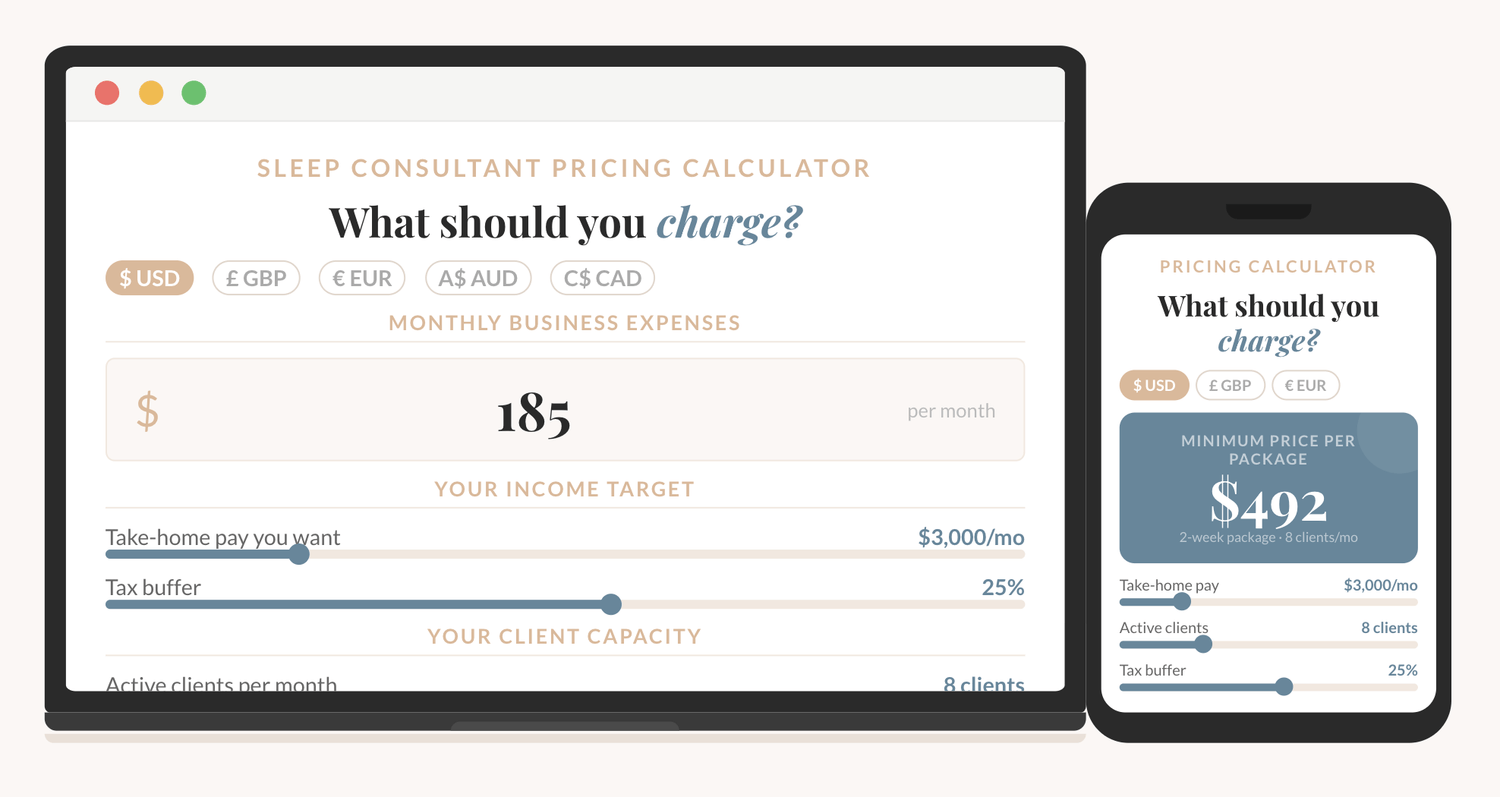
How to price your sleep consulting services?
The Sleep Consultant Pricing Calculator shows you exactly what to charge, based on your real expenses, your income goal, and how many clients you want to take on.
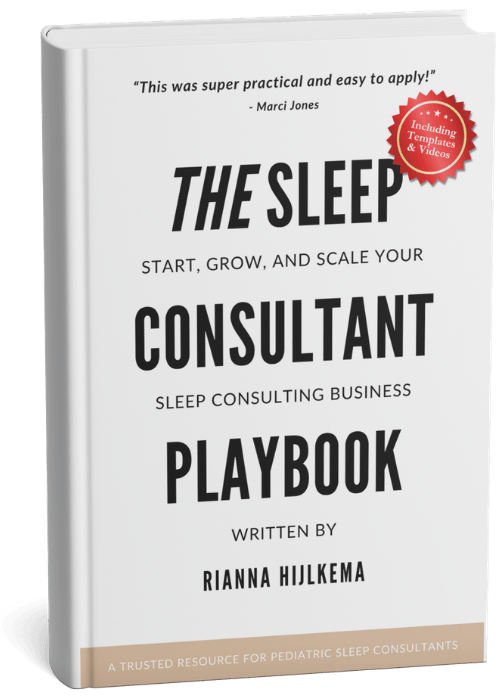
I'm thrilled to offer you an exclusive preview of what’s inside!
You can read the first 22 pages of The Sleep Consultant Playbook and get a taste of the value, insights, and actionable strategies that are waiting for you.
Other articles you might be interested in:
© 2021-2026 Sleep Consultant Business. All Rights Reserved.