
When and How to Bring on Support as a Sleep Consultant
You're ready to bring on support when your business is working but you're drowning in tasks that don't require your specific expertise. The right first hire for most sleep consultants is a virtual assistant to handle admin, scheduling, inbox management, and client onboarding logistics. Before you hire anyone, document your processes as SOPs so they can do the work at your standard without you having to explain things twice. Hire slow and intentionally. Start with a trial period. And never outsource the things that only you can do: client consultations, personalised sleep plans, and the trust-building work that makes your business yours.
In this guide
- How to know when you're ready
- The mindset shift that makes delegation possible
- What NOT to outsource
- What to delegate first
- How to write an SOP so your hire can actually do the work
- Map the role before you hire
- Hire slow, fire fast
- Common hiring mistakes sleep consultants make
- Frequently asked questions
Have you ever said "it's just faster if I do it myself"? Congratulations, you've just won the award for most overworked business owner of the year. And I say that with love, because I've been there too.
Doing everything yourself feels responsible. It feels like you're in control. But doing everything yourself is actually the fastest way to burn out and the slowest way to grow. There's a big difference between working in your business and working on your business. When you're buried in scheduling, inbox management, sending contracts, and updating client files, you're working in your business. Working on your business means thinking strategically, building new offerings, and creating the systems that let it grow without you being the one doing every single thing.
This article is about making that shift. When to do it, how to do it, and what to watch out for along the way.
How to Know When You're Ready
Here's a quick diagnostic. What would happen if you took a week off? Would things keep running smoothly? Or would everything grind to a halt the moment you stepped away? If your honest answer is the second one, you don't have a business yet. You have a job. And a very demanding one at that.
You're ready to bring on support when your business is working: clients are coming in, your process is solid, but you're consistently overwhelmed by tasks that don't require your specific expertise. You're answering emails you could have templated. You're manually sending contracts you could automate. You're spending hours on admin instead of on the actual sleep consulting work that only you can do.
Some signs you're at that point:
- Your inbox has hundreds of unread emails and it stresses you out every morning
- You're replying to client messages late at night because there's no other time
- Your lunch break is eating over your laptop while updating a spreadsheet
- You spend more time on admin than on actually working with families
- You've thought about hiring help but keep telling yourself you can't afford it or can't find anyone who'll do it right
That last one is worth addressing directly. Every hour you spend on a task that someone else could handle is an hour you're not spending on client care, on growing your business, or on resting. Investing in delegation isn't a luxury. It's a necessity for sustainable growth.
What would you do with an extra 5 to 10 hours a week? Maybe you'd book more consultations. Maybe you'd finally build that course you've been thinking about. Maybe you'd just take an afternoon off without guilt. Delegation is how you get those hours back. That's what you signed up for when you started this business. Not to be buried in admin forever.
The Mindset Shift That Makes Delegation Possible
Most sleep consultants resist delegation for one of three reasons: fear, perfectionism, or guilt. Let's look at each one.
Fear usually sounds like "what if something goes wrong?" or "what if my clients don't feel as supported if I'm not personally handling every detail?" This is real, and it's worth taking seriously. But the answer to it is SOPs and clear communication standards, not doing everything yourself indefinitely.
Perfectionism sounds like "no one can do this as well as I can." Sometimes that's true for specific things, which is exactly why the next section covers what not to outsource. But for admin tasks, inbox management, scheduling, and social media scheduling? Someone else can absolutely handle those at your standard, if you give them the right instructions.
Guilt sounds like "it feels indulgent to pay someone to do things I could do myself." Here's a reframe: you built this business to have freedom and flexibility. If you're doing every task yourself because spending money on help feels wrong, you haven't built freedom. You've built a more complicated version of working for someone else.
There's also a deeper one worth naming. A lot of our identity gets tied up in feeling needed in every part of our business. Ask yourself honestly: is it fear that someone will mess things up, or is it fear of not knowing who you are if you let go? That need to feel indispensable can become an addiction. And it quietly robs you of the freedom you're trying to build.
What NOT to Outsource
Before talking about what to delegate, it's worth being very clear about what to keep. Not because everything else is fair game, but because protecting the right things is what keeps your business yours.
Don't outsource what you're deeply passionate about. If client consultations, crafting personalised sleep plans, or speaking directly to parents is what lights you up, hold onto that. Outsourcing it might lighten your workload, but it disconnects you from the purpose that drives you. Your enthusiasm is often what draws clients to you in the first place. Protect it.
Don't outsource what only you can do well. If your specific strength is the way you connect with exhausted parents in a way that immediately makes them feel safe and understood, don't outsource the initial client call. That personal connection is your brand. Delegate around your strengths, not through them.
Don't outsource your core revenue drivers. If one-on-one consultations and sleep plans are your main income source, those stay with you. Delegating too much control over your marketing funnel or lead generation too early means you can lose sight of what's actually working in your business. Stay hands-on with the things that bring the money in until you have enough structure to hand off specific, well-defined pieces of it.
What to Delegate First
There's no single right answer here, because it depends where you're feeling the most pain. But there's a useful framework: start with whatever is eating the most time without requiring your specific expertise.
For most sleep consultants, that's administrative work: sending contracts, managing emails, scheduling calls, updating client files. These tasks are important but repetitive. They don't require a sleep science background. They just require a reliable, detail-oriented person with clear instructions. That's your first hire.
Beyond admin, here are common areas sleep consultants delegate as they grow:
- Client onboarding logistics. Welcome packets, contract sending, intake form follow-ups. A VA can handle all of this at your standard once your SOP is written.
- Inbox management. A VA with pre-approved responses can handle initial enquiries, follow-ups, and flagging urgent emails for your attention, without you living in your inbox.
- Social media scheduling. Note: not the strategy, and not the personal trust-building posts. But taking your existing content and scheduling, formatting, and posting it across platforms is something you can delegate once your brand voice is clearly documented.
- Initial sleep plan drafts. When your one-on-one volume is high enough, a junior sleep consultant can draft the initial plan based on the questionnaire. You review, personalise, and send. This is a more advanced delegation step that requires finding someone with proper training and clear quality standards.
- Financial tracking. A bookkeeper handling your income and expense tracking frees up hours and reduces errors. This one tends to be worth it sooner than people expect.
- Personal tasks. This one surprises people, but it's often the fastest win. Hiring someone to clean your house, do your grocery shopping, or manage household admin gives you mental clarity and time back. The clearer your mind, the better the decisions you make for your business.
Social media often feels like the obvious first thing to delegate because it's visible and takes a lot of time. But without a clear funnel to convert your social followers into leads and clients, outsourcing social media is just noise. Build the lead generation system first (the lead magnet, opt-in page, and email sequence). Once that's working and generating consistent enquiries, delegating the social media amplification on top of it makes sense.
How to Write an SOP So Your Hire Can Actually Do the Work
Here's why so many sleep consultants say "I tried a VA but it ended up taking me longer to fix their mistakes than if I'd done it myself." They delegated without documenting. They handed off a task without giving the person any way to know how to do it at their standard.
A Standard Operating Procedure (SOP) is just step-by-step instructions for how a task gets done in your business. That's it. Not a complicated document. Think of it like IKEA instructions. Without them, even a capable person can struggle and get things wrong. With them, almost anyone can build the furniture correctly every time.
Before you hire anyone, write an SOP for each task you plan to delegate. A good SOP is simple enough for someone with no knowledge of your business to follow without needing to ask you for clarification. If it needs clarification, rewrite it until it doesn't.
Here's the structure that works well:
SOP: [Task name]
Purpose: One sentence on why this task exists and what it achieves.
Step 1: The first specific action. Not "send the email" but "open the email template labelled [X] in the shared Google Drive."
Step 2: The next action, just as specific.
Step 3: Continue until the task is complete.
Quality check: What does "done correctly" look like? What should they double-check before marking it done?
Keep it simple. What can be done in three steps should never take four. And here's a bonus tip: record a short screen-share or video walkthrough of the task alongside the written SOP. A clear visual guide reduces mistakes and saves time on back-and-forth explanations. Most screen recording tools are free and the recording takes five minutes.
Start by looking at your client journey. What tasks do you repeat with every single client? Sending the contract. Sending the intake questionnaire. Scheduling the consultation call. Sending the sleep plan. Following up at four weeks. Every one of those is an SOP waiting to be written. Write them before you hire, not after.
Map the Role Before You Hire
One of the most common hiring mistakes is bringing someone on before you know what you actually need them to do. You hire a social media manager when the real bottleneck is your inbox. Or you hire a VA for tasks that could be automated. Then you're managing a person who isn't solving your actual problem.
Before you write a job description, go back to your client journey map (from Chapter 8 of the Playbook, and the article recommended below). Look at each phase: Awareness, Consideration, Purchase, Service, Loyalty. At which stages are you spending the most time on tasks that don't require your expertise? Where are you the bottleneck? Where do things slow down or feel chaotic?
That's where you hire. Not where you feel most uncomfortable, not where feels most exciting, but where the gap between what needs to happen and your available time and energy is creating the most friction.
Once you've identified the gap, write the role around outcomes rather than tasks. Not "the VA will send contracts" but "the VA ensures 100% of new clients are onboarded within 48 hours of booking." Define what success looks like and measure it. When you delegate results rather than just tasks, you empower the person to find their own efficient methods rather than micromanaging every step.
For most sleep consultants, the first hire is a virtual assistant. Here's why: a VA is the most cost-effective way to free up your time without delegating anything that requires deep sleep science knowledge or direct client trust. A VA handles the work that drains you. You focus on the work that only you can do.
Hire Slow, Fire Fast
Rushing the hiring process to get relief quickly leads to bigger headaches later. A poor hire costs you money, time, energy, and sometimes client trust. Hiring slowly doesn't mean procrastinating. It means being intentional about finding someone who actually fits.
A simple four-step hiring process
Step 1: Initial screening call (15 to 20 minutes)
Gauge basic interest and fit. Ask why they're interested in supporting a sleep consulting business. Be clear about where your business is now and where you want it to go. A good candidate will be just as curious about your business as you are about them. If they don't ask any questions, take note.
Step 2: Skills assessment
Give them a small real task related to the job: draft an onboarding email, create a sample social media post in your brand voice, or organise a sample inbox scenario. This tells you far more than a CV.
Step 3: Culture fit interview
Explore their values, work ethic, and communication style. Good questions: "How do you handle feedback?" and "Tell me about a time you solved a problem without clear instructions." These tell you whether they'll thrive in an environment where they're trusted to figure things out.
Step 4: Reference check
Speak with one or two previous clients or managers. Not to look for red flags specifically, but to validate that their work in practice matches how they present in interviews.
Always start with a trial period
Before committing to a long-term arrangement, do a 30 to 90-day trial. Define exactly what success looks like in that period and evaluate honestly at the end of it. A trial period removes the pressure of a permanent commitment and lets both of you assess whether the fit is real. If it's not working at 30 days, act on it. Holding on to an underperforming hire out of guilt or loyalty costs you more than ending the arrangement early.
What to include in the contract
Use your job description as the foundation, then add: a trial period clause, payment terms (rate, schedule, method), a non-disclosure agreement to protect client information, termination terms with notice period, and ownership of work produced. That last one matters especially if your hire creates content or materials for your business. State clearly that all work produced belongs to you. This prevents disputes later.
Also get clear on whether you're hiring an employee or an independent contractor, because legally they are not the same. Employees typically work set hours using your systems and require payroll tax handling. Contractors operate independently and handle their own taxes. Misclassifying a worker can create tax liabilities and legal issues. Check the rules in your country and jurisdiction before you decide which structure to use.
Common Hiring Mistakes Sleep Consultants Make
Hiring before writing SOPs
This is the most common mistake, and the most painful. You bring someone on, they make errors you have to spend time fixing, and you end up saying "it was easier when I did it myself." It wasn't easier. It just felt that way because you're the only one who knew how to do it at your standard. Write the SOPs first. Then hire.
Delegating social media before building the lead system
Social media is often the first thing people want to hand off because it's time-consuming and visible. But social media without a funnel behind it is just effort without conversion. Build the lead magnet, the opt-in page, and the email sequence first. Then delegate the amplification of content that's already proven to work.
Hiring out of desperation rather than strategy
Hiring the first person who seems competent because you desperately need help right now almost always ends badly. You end up with someone in a role that wasn't properly defined, doing tasks that weren't the actual bottleneck, at a cost that strains your finances. Slow down. Map the role properly. Define what success looks like before you start interviewing.
Holding on too long when it's not working
Hire slow, fire fast. That second part is just as important as the first. If a hire isn't working after a genuine trial period with clear expectations, ending the arrangement is the right call. Holding on because it feels uncomfortable or because you don't want to go through the hiring process again costs you more in the long run than making the decision early.
Micromanaging instead of delegating results
When you define results and KPIs rather than prescribing every step, you empower your hire to find their own efficient methods and bring their own problem-solving skills to your business. When you micromanage every detail, you exhaust yourself, you frustrate them, and you end up doing the work twice. Set the standard clearly. Then trust the process.
Frequently Asked Questions
Can I afford to hire someone if I'm still in my first year?
In most cases, no. And that's okay. Your first year should be focused on getting clients, delivering excellent work, and understanding what your business actually needs. The patterns you identify in that first year tell you what to hire for later. If you're still trying to land consistent clients, the answer is more outreach and better systems, not a hire. Once you have a steady flow of clients and the bottleneck is genuinely your time rather than your strategy, that's when a hire makes financial sense.
Where do I find a good VA?
Start with your own network before advertising publicly. Ask other sleep consultants or business owners who they use and trust. Referrals produce far better hires than cold searches. If you're looking more broadly, freelance platforms like Upwork, or communities of VAs on Facebook and LinkedIn are common places to post. Be specific in your job post about your niche: someone who has supported a service-based, parent-facing business will ramp up faster than someone with no context for your industry.
How many hours per week should a VA work for me to start?
Start small. Five to ten hours per week is usually enough to test whether the relationship and the role work before increasing scope. Most newly hired VAs start at a project or part-time retainer basis rather than full-time hours. Understand clearly what tasks need to get done in a week, estimate the hours honestly, and start there. You can always increase hours as trust builds and their understanding of your business deepens.
What if my VA makes a mistake that affects a client?
This is exactly why SOPs, quality checks, and a trial period exist. A well-written SOP with a quality check step at the end significantly reduces this risk. For your first few months, set up a review step for any client-facing communications your VA sends. Once they've proven consistent accuracy, you can reduce the oversight. Mistakes in the early stages are almost always a documentation problem, not a people problem.
Should I hire a contractor or an employee?
For a first hire at part-time hours, most sleep consultants start with an independent contractor. It's simpler administratively, the contractor handles their own taxes, and you have more flexibility to adjust scope or end the arrangement if needed. But misclassifying someone as a contractor when they're functionally working as an employee can create legal and tax issues. The rules vary by country. Check with a local accountant or HR professional before finalising the arrangement.
How do I maintain quality and brand consistency when someone else is representing my business?
SOPs, a brand voice document, and pre-approved email templates are your tools here. The more clearly you document how you communicate, what words you use, what tone you maintain, and what standards you hold, the easier it becomes for someone else to represent your business consistently. Keep the personal, trust-building posts and communications for yourself until you're confident your hire deeply understands your voice. Start by delegating the more transactional, process-driven tasks, and expand from there.
Key Takeaways
- Doing everything yourself is the fastest way to burn out and the slowest way to grow. Delegation isn't a luxury. It's how you build a business that supports your life rather than swallowing it.
- Protect the things only you can do. Client consultations, personalised sleep plans, and the trust-building work that makes your brand yours. Delegate everything around those things, not through them.
- Start with admin. Your first hire should free you from the repetitive, non-expertise tasks that are eating your time. A virtual assistant is the most cost-effective first step for most sleep consultants.
- Write SOPs before you hire. Not after. An SOP turns a task that only you know how to do into something anyone can do at your standard. Without it, delegation fails.
- Map the role around gaps in your client journey, not tasks you dislike. Hire to solve the real bottleneck, not the one that feels most uncomfortable.
- Hire slow, fire fast. Take your time finding the right fit. Use a trial period. Define success clearly. And if it's not working after a genuine trial, act on it early.
Start this week: write down ten tasks you do regularly that don't require your expertise. Next to each one, write whether delegating it would help you serve more clients, bring in more leads, or give you your sanity back. That list is your roadmap.
Next Article: How to Start a Membership as a Sleep Consultant
Disclaimer: The information shared in these articles is for educational and informational purposes only. It does not constitute legal, financial, or professional advice. Always consult with a qualified professional regarding your specific situation.

Rianna Hijlkema
Certified Pediatric Sleep Consultant, Certified Postpartum Doula, Former Teacher & School Director, Founder of Sleep Consultant Design & Sleep Consultant Business and the author of The Sleep Consultant Playbook (available on Amazon).
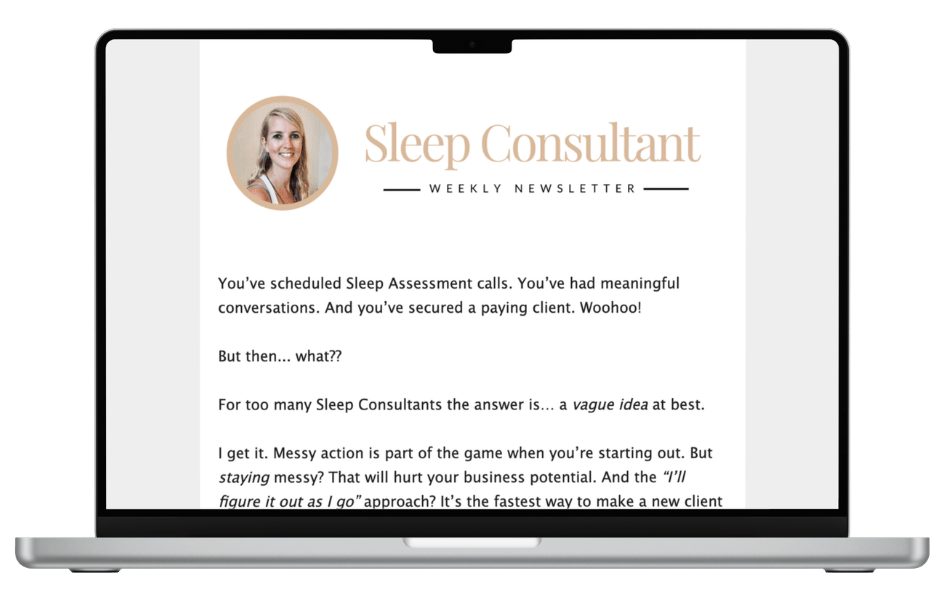
The Sleep Consultant Newsletter
Weekly tips, strategies and marketing ideas for sleep consultants written by a fellow sleep consultant. 1500+ active subscribers!
I’ll only send helpful emails, and you can unsubscribe anytime with one click.
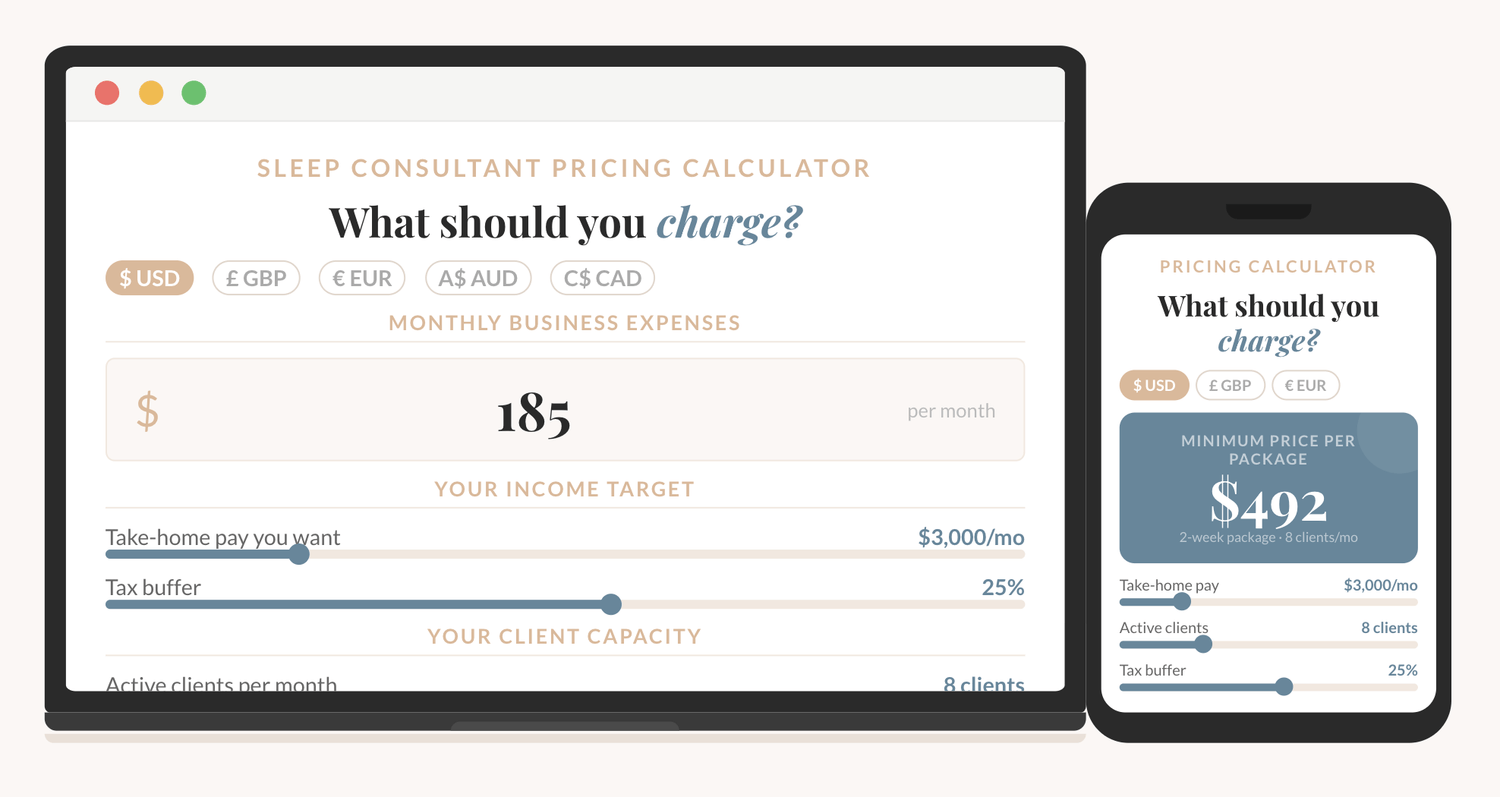
How to price your sleep consulting services?
The Sleep Consultant Pricing Calculator shows you exactly what to charge, based on your real expenses, your income goal, and how many clients you want to take on.
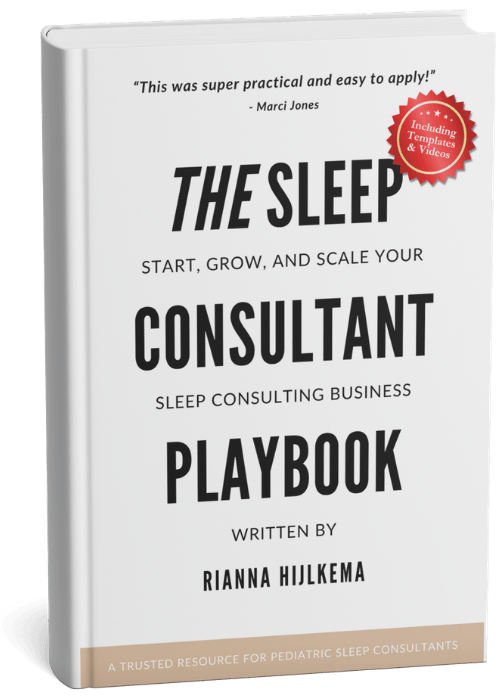
I'm thrilled to offer you an exclusive preview of what’s inside!
You can read the first 22 pages of The Sleep Consultant Playbook and get a taste of the value, insights, and actionable strategies that are waiting for you.
Other articles you might be interested in:
© 2021-2026 Sleep Consultant Business. All Rights Reserved.