
You Don't Have to Be on Instagram: Every Marketing Strategy for Sleep Consultants
There is no single right marketing strategy for sleep consultants. Instagram, blogging, YouTube, podcasting, workshops, referral partnerships, email newsletters, local directories, and more all work. Every one of them. The key is choosing one that fits how you actually like to show up, and committing to it long enough for it to produce results. The strategy that suits you is the one you will do consistently. Consistency is what builds a client base. The channel is just how you get there.
In this guide
- Why everyone defaults to Instagram
- All of these work. Consistency is the variable.
- Social media: Instagram, Facebook, TikTok, Pinterest, LinkedIn
- Blogging and SEO
- YouTube
- Podcast
- Workshops and live events
- Email newsletter
- Referral partnerships
- Local directories and Google Business Profile
- Guest content and podcast appearances
- How to choose the right one for you
- Frequently asked questions
When you finished your sleep consultant certification, chances are nobody handed you a marketing degree along with it. So you did what most people do: you looked around, saw other sleep consultants on Instagram, saw your certification instructor on Instagram, and concluded that Instagram must be what you're supposed to do.
Instagram is a valid strategy. But it's one option in a much longer list, and it's not automatically the right one for you. There are sleep consultants building full practices through a weekly podcast. There are sleep consultants fully booked through local workshop partnerships. There are sleep consultants with thriving businesses built entirely on a blog and a Google Business Profile, who have never once recorded a reel.
This article is a comprehensive guide to every major marketing strategy available to you, how each one actually works, and what kind of person it suits best. Read it, notice which ones make you think "I could actually do that," and make a deliberate choice rather than a default one.
Why Everyone Defaults to Instagram
Instagram is visible. You can see other sleep consultants doing it, which makes it feel like the obvious path. Your certification instructor probably modelled it. And there is nothing wrong with any of that. Instagram genuinely works for many sleep consultants.
The problem is that "visible" and "right for you" are not the same thing. Many sleep consultants spend months on Instagram feeling drained by it, producing content that feels forced, and wondering why it isn't working. Often the reason isn't that the strategy is wrong. It's that the strategy is wrong for them, specifically, and they never paused to ask whether there was a better fit.
Just like in sleep training, any strategy can work as long as you're consistent and committed. The key is finding what excites you, what you can show up for day in and day out, and what keeps you motivated over the long run. That's the strategy to pick.
All of These Work. Consistency Is the Variable.
Before going through each strategy, this point is worth making clearly: there is no strategy on the list below that doesn't work. Every single one of them has produced full client rosters for sleep consultants who committed to it.
What doesn't work is doing something for three months, seeing limited results, and switching. Three months of Instagram posts is not enough. Four blog articles is not enough. One workshop is not enough. Every strategy has a ramp-up period where you are building trust, building audience, building search visibility, or building a referral network. That period requires patience and repetition before results arrive. The sleep consultants who switch strategies every few months never get past the ramp-up phase on any of them.
Pick something you can commit to for at least six months. Ideally twelve. That's the actual strategy. The channel is just the vehicle.
Social Media: Instagram, Facebook, TikTok, Pinterest, LinkedIn
Social media is a cold audience strategy. You're creating content that helps strangers find you, trust you, and eventually reach out. It's not a fast strategy but it compounds over time, and it builds a public-facing presence that makes every other part of your business stronger.
The most common choice for sleep consultants, and for good reason. Parents of young children are active on Instagram, and the format suits the kind of quick, visually accessible tips and relatable content that sleep consulting naturally generates. Carousels work well for step-by-step content. Reels work well for reach. Stories build the personal connection that leads to DMs and bookings. To make Instagram work you need to post at least three times a week, consistently, for months before volume builds. Suits you if you enjoy visual content creation and can be comfortable on camera or at least in front of a screen.
Still highly active among parents, particularly in local parenting groups. A Facebook business page works similarly to Instagram, but Facebook Groups are where the real opportunity lies. Being a genuinely helpful, consistent presence in local parenting groups (without spamming your services) builds trust and name recognition that converts. Suits you if your ideal clients are slightly older millennial or Gen X parents, or if you serve a local market where community group activity is high.
TikTok
High organic reach potential and a genuinely engaged parenting community. Short-form video content about sleep topics performs strongly, and the algorithm is still friendlier to new accounts than Instagram's. Requires being comfortable on camera and consistent video creation. Suits you if you're comfortable with informal video and want to build reach quickly. Be aware that TikTok traffic tends to stay on TikTok, so you need a clear path to get viewers off the platform and into your funnel.
Pinterest is a search engine disguised as a social network. Parents actively search for parenting and sleep solutions on Pinterest, which makes it a surprisingly strong source of traffic for sleep consultant blogs and websites. It works best as an amplifier for existing content (blog posts, guides, free resources) rather than as a standalone social platform. Suits you if you already have a blog or resource library and want to drive more traffic to it without creating additional original content.
Less intuitive for sleep consulting but genuinely effective in the right situations. If your niche includes corporate parents, HR teams looking for employee parenting support, or if you offer B2B services like workplace wellbeing programmes, LinkedIn is where your buyers are. Also excellent for building professional partnerships with paediatric healthcare providers, doulas, and other professionals who can refer clients to you. Suits you if your market includes professionals or if partnership-building is part of your strategy.
Blogging and SEO
Blogging is the strategy with the highest long-term return of almost anything on this list. A well-written, SEO-optimised article answering a question parents search for at 3am can bring you new enquiries for years after you published it. It works while you sleep. Literally.
The trade-off: it's slow to start. Google takes time to index and rank new content. The first few months of blogging often feel like shouting into a void because the traffic hasn't built yet. But unlike social media, which starts generating results and then plateaus without ongoing effort, a blog's results accumulate. Fifty articles are significantly more powerful than ten. A hundred are more powerful than fifty. The investment compounds.
For blogging to be a real strategy rather than an occasional hobby, you need to publish at least one article per week. Preferably more in the early phase. The first articles won't be your best, and that's completely fine. You can not write a great 100th article without writing the first 99. What matters early on is volume and consistency, not perfection.
For everything you need to know about writing articles that rank in search and get cited by AI tools, see How to Write a Blog That Ranks for SEO and Gets Cited by AI.
Suits you if: You love writing, think clearly in text, and have the patience for a strategy that builds slowly but delivers compounding returns. You want content that works without your ongoing attention.
Does not suit you if: You need results within the first three months, or you find writing draining rather than energising.
YouTube
YouTube is the world's second largest search engine, and parents actively use it to search for sleep advice, demonstrations, and guidance. A video answering a specific question ("how to drop the third nap" or "4-month regression what to do") can rank in YouTube search and stay discoverable for years.
YouTube builds trust faster than most other channels because video is more personal than text. A parent who has watched you explain something for ten minutes feels like they know you before they've ever sent you a message. That warmth converts well into bookings.
The barrier is higher than most other strategies: decent audio, reasonable video quality, and the ability to present clearly and confidently on camera are all required. If those things feel manageable, YouTube is one of the most powerful long-term visibility channels available.
Suits you if: You're comfortable on camera, able to explain things clearly in a spoken format, and willing to invest in basic equipment and a weekly recording habit.
Does not suit you if: Being on camera feels exhausting or you're not willing to invest the setup time.
Podcast
Podcasting builds some of the deepest audience connection of any channel. A parent who listens to your podcast while driving to work, or during the baby's nap, spends 20 to 40 minutes with your voice every week. By the time they reach out, they already trust you thoroughly. That makes the conversion from listener to client far shorter than almost any other strategy.
Podcasting requires consistent weekly publishing to build and maintain a listener base. The technical setup is simpler than video. A decent microphone and basic editing software is all you need. The content can be solo episodes (you talking through a topic), interviews with other professionals, or Q&A sessions. It also repurposes well: a podcast episode can become a blog post, a newsletter, and a week's worth of social media content.
Suits you if: You think well out loud, enjoy conversation or monologue-style content, and have patience for a slow audience build with very high eventual loyalty.
Does not suit you if: You prefer writing, find speaking to a microphone unnatural, or need faster feedback from your marketing efforts.
Workshops and Live Events
Workshops are one of the most underused strategies in the sleep consulting world, and one of the most effective. A live session (whether in person at a local library, community centre, or parenting hub, or virtually via Zoom) gives parents direct access to your expertise in a way that builds trust immediately. By the end of a 45-minute workshop on sleep regressions, several people in the room are ready to book a consultation. They've heard you speak, asked you questions, and seen how you think. The trust-building that takes months on Instagram can happen in a single workshop session.
For workshops to be a real strategy they need to be recurring, not occasional. One workshop a month is a hobby. One workshop a week is a strategy. The first few will have small attendance. That's normal and fine. The families who attend and don't book immediately often come back later, or they refer friends. Consistent, frequent workshops build a local reputation that compounds over time.
Something I often hear is: "I don't have time for weekly workshops on top of everything else." What I've noticed with sleep consultants who try workshops seriously is that a 60-minute workshop, repeated weekly on the same topic, takes less total weekly preparation time than the average Instagram routine: deciding what to post, writing the caption, filming the content, editing the reel, responding to comments, and refreshing the analytics. Once you've run the same workshop three or four times, preparation takes about twenty minutes. Give it a real trial before assuming it's heavier than social media.
Suits you if: You enjoy presenting and direct interaction with people, you're comfortable in a group setting, and you serve a local or clearly defined community.
Does not suit you if: You strongly prefer one-on-one interaction, find group facilitation draining, or have no natural access to a local parent community.
Email Newsletter
Email is the only marketing channel you own completely. Social media platforms change their algorithm tomorrow and your reach halves. Your email list is yours. Every subscriber has actively chosen to hear from you, which makes them a significantly warmer audience than a social media follower who may or may not see your content.
A weekly email to your list with genuinely useful content builds a level of trust and familiarity that is very hard to replicate on social media. Parents who have read your emails for three months arrive on a call already feeling like they know you. The conversion from email subscriber to paying client is typically much higher than from a social media follower.
The challenge: you need to build the list before email can work as a strategy. This usually means having a lead magnet (a free guide, a checklist, a mini-course) that parents can receive in exchange for their email address. Once the list exists, a weekly newsletter is one of the most efficient and sustainable marketing activities you can run.
Suits you if: You love writing, prefer a direct channel over algorithms, and want to build an audience you own. Strong as a primary strategy once a list exists, or as a supporting strategy alongside any of the others.
Does not suit you if: You have no existing audience or lead generation system yet. In that case, email works better as a secondary strategy once you have a channel driving traffic to your lead magnet.
Referral Partnerships
People trust personal recommendations more than any form of advertising. A parent who hears about you from their midwife, their lactation consultant, their doula, or their paediatric physio is already primed to trust you before they've visited your website. That's the power of referral partnerships.
The strategy involves building genuine relationships with professionals who serve the same families you do. Postpartum doulas. Lactation consultants. Midwives. Paediatric GPs and nurses. Physiotherapists who work with babies. Neonatal nurses transitioning back into community care. Maternal mental health practitioners. All of them encounter parents who need sleep help. A simple, trusted referral from any of these professionals is worth more than a month of Instagram content.
Building referral partnerships means introducing yourself, explaining what you do clearly and briefly, leaving behind something they can share with clients (a card, a one-pager, a link), and checking back in regularly. It's relationship-based and not instantaneous, but once it's running it generates a steady warm stream of pre-qualified referrals.
Suits you if: You enjoy connecting with other professionals, are comfortable initiating relationships, and have or can build access to a local professional network.
Does not suit you if: You are not comfortable with professional outreach or if you operate in a market with very limited access to complementary practitioners.
Local Directories and Google Business Profile
When a parent searches "sleep consultant near me" or "baby sleep help [city]" they find three things: Google Maps results, Google Business Profiles, and local directories. If you're not in these places, you're invisible to everyone who searches for help locally rather than browsing social media.
A fully optimised Google Business Profile with your services listed, genuine reviews, and regular posts is one of the most powerful passive marketing tools available to sleep consultants who work locally. It works while you're doing something else entirely. Set it up properly once, maintain it with regular updates and review requests, and it generates enquiries without any ongoing content creation.
Local directories specific to your area (parenting directories, local business directories, Nextdoor, community websites) work similarly. Many are free to list on and require minimal maintenance once set up. See How to Use Local Directories to Get Found as a Sleep Consultant for the full setup guide.
Suits you if: You serve a local market, prefer low-maintenance ongoing strategies, or want passive visibility without ongoing content creation effort.
Does not suit you if: You serve an entirely online, international audience with no local component, though even then Google Business Profile can still be valuable for SEO purposes.
Guest Content and Podcast Appearances
Rather than building your own audience from zero, guest appearances let you borrow someone else's. A guest spot on a parenting podcast with an existing audience of 10,000 listeners puts you in front of more people in a single episode than most new Instagram accounts reach in six months.
Guest blog posts on parenting websites, wellness publications, or professional platforms work the same way. You contribute expertise, their audience discovers you, and some percentage of them follow a link to your website or social media. Done consistently, guest appearances accelerate audience building significantly.
The strategy requires actively pitching yourself to podcast hosts and publications. You need a clear pitch (who you are, what you'd talk about, why their audience would benefit), a one-paragraph bio, and a few topic ideas. Start with shows and publications slightly smaller than you'd love to be on. Build the portfolio of appearances and you'll have an easier time approaching the larger ones.
Suits you if: You're confident communicating your expertise, comfortable pitching yourself, and want to grow faster by leveraging existing audiences rather than building from scratch.
Does not suit you if: You find pitching yourself uncomfortable, or if you don't yet have enough of your own content and credentials to back up a pitch confidently.
How to Choose the Right One for You
Start with two simple questions.
First: where does your ideal client already spend time? Parents who are professional and research-oriented might find you through a blog or podcast. Parents who are scrolling for quick tips will find you on Instagram or TikTok. Parents in your local area will find you through Google, Facebook groups, and workshops. Match the channel to where your specific ideal client is.
Second: what can you actually sustain? Do you love writing? Blog. Do you think better out loud? Podcast. Do you enjoy being in front of people? Workshops. Do you hate social media but love building professional relationships? Referral partnerships plus a Google presence. Choose based on honest self-knowledge, not aspiration.
The recommendation is to pick one warm strategy (faster, relationship-based, shorter feedback loop) and one cold strategy (slower, broader, compounds over time). Do both consistently for at least six months. Review what's working. Build from there.
| Strategy | Warm or cold | Time to results | Best format strength |
|---|---|---|---|
| Direct outreach | Warm | Fast (weeks) | One-on-one conversation |
| Referral partnerships | Warm | Medium (months) | Professional relationship-building |
| Workshops | Warm | Fast (same session) | Live presenting |
| Email newsletter | Warm | Medium (once list exists) | Writing, consistency |
| Social media | Cold | Slow (6-12 months) | Visual content, short-form video |
| Blogging / SEO | Cold | Slow (6-18 months) | Writing, long-form explanation |
| YouTube | Cold | Slow (6-18 months) | Camera presence, long-form video |
| Podcast | Cold | Slow (6-12 months) | Speaking, storytelling |
| Directories / Google | Cold | Medium (3-6 months) | Passive, local SEO |
| Guest appearances | Cold | Variable | Public speaking, authority-building |
Frequently Asked Questions
Do I need to be doing all of these?
No. Trying to be everywhere is a fast path to burnout and mediocre results on all channels. Pick one warm strategy and one cold strategy, commit to both for at least six months, and build from there once they're running consistently. Mastering two channels is far more effective than doing a poor job on five.
I've tried Instagram for three months and it's not working. Should I switch?
Before switching, diagnose honestly: are you posting at least three times a week? Is your content specific to a clear niche, or is it generic sleep content? Does every post speak to a specific problem your ideal client has right now? Three months of consistent, targeted, niche-specific content is a beginning, not a complete test. If you can say yes to all of those things and have genuinely seen zero response, then yes, Instagram might not be the right channel for you. But most of the time, the issue is either frequency, specificity, or not enough time. Give it six months with clear intent before concluding it doesn't work.
What if I hate marketing entirely?
Marketing and sales are a completely different skill set from sleep consulting, and nobody teaches them in certification programmes. It's normal to find it uncomfortable at first because you're a beginner at it. Every experienced sleep consultant who makes marketing look effortless was awkward and unsure at the start. The discomfort gets smaller every time you do it. The first workshop is the hardest. The first ten blog posts feel strange. The first cold email to a potential referral partner is nerve-wracking. After enough repetition, it becomes part of how you run your business and the discomfort fades. The key is choosing a format that suits you enough to keep doing it through the awkward phase.
When should I add a third strategy?
When your two strategies are producing consistent results, feel genuinely sustainable, and you could run them in your sleep. Not before. Adding a third channel before the first two are solid just creates three inconsistent efforts rather than two strong ones.
Key Takeaways
- Instagram is one option, not the default. Every strategy on this list has built successful sleep consulting businesses. The channel is not the variable. Consistency is.
- Choose based on genuine fit. Where does your ideal client already spend time? What format suits how you naturally think and communicate? Those two questions will point you to the right strategy.
- Warm strategies produce faster results. Direct outreach, referral partnerships, workshops, and email get faster feedback and nearer-term clients. Start here if you need momentum now.
- Cold strategies compound over time. Blogging, YouTube, podcasting, and social media build slowly but deliver sustained long-term visibility without ongoing effort for every piece of content published.
- Pick one warm and one cold. Commit for six months minimum. Two channels, done consistently, will always outperform six channels done sporadically.
- Marketing is a skill. You start as a beginner. The discomfort is normal. It gets smaller with every rep. The only way through is through.
Go through the list above and notice which two make you think "I could actually do that." Write them down. Decide your minimum frequency for each. Then start this week, not next month, not when you feel ready. The first time is always the hardest. After that it gets easier, faster, and more natural every single time.
Disclaimer: The information shared in these articles is for educational and informational purposes only. It does not constitute legal, financial, or professional advice. Always consult with a qualified professional regarding your specific situation.
Rianna Hijlkema
Certified Pediatric Sleep Consultant, Certified Postpartum Doula, Former Teacher & School Director, Founder of Sleep Consultant Design & Sleep Consultant Business and the author of The Sleep Consultant Playbook (available on Amazon).
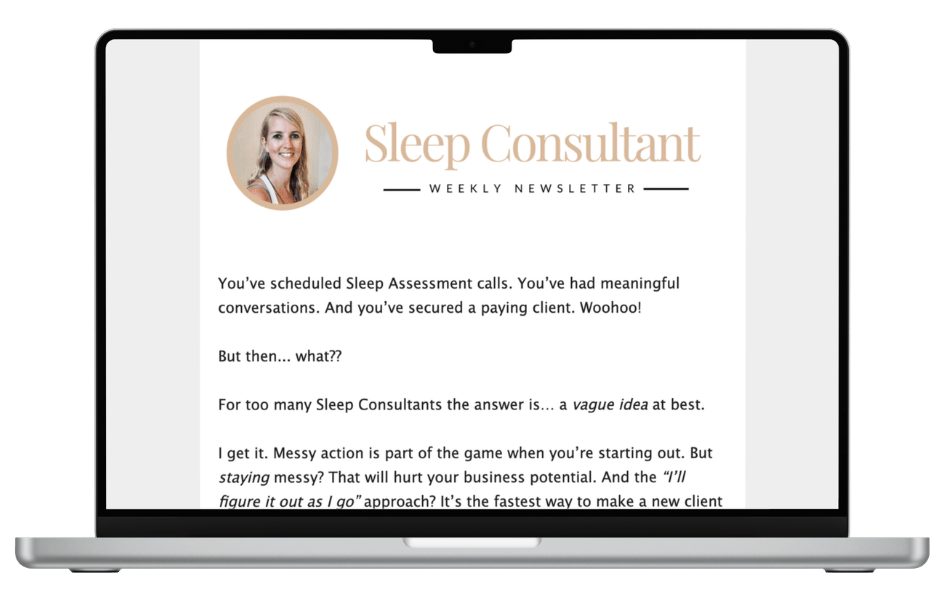
The Sleep Consultant Newsletter
Weekly tips, strategies and marketing ideas for sleep consultants written by a fellow sleep consultant. 1500+ active subscribers!
I’ll only send helpful emails, and you can unsubscribe anytime with one click.
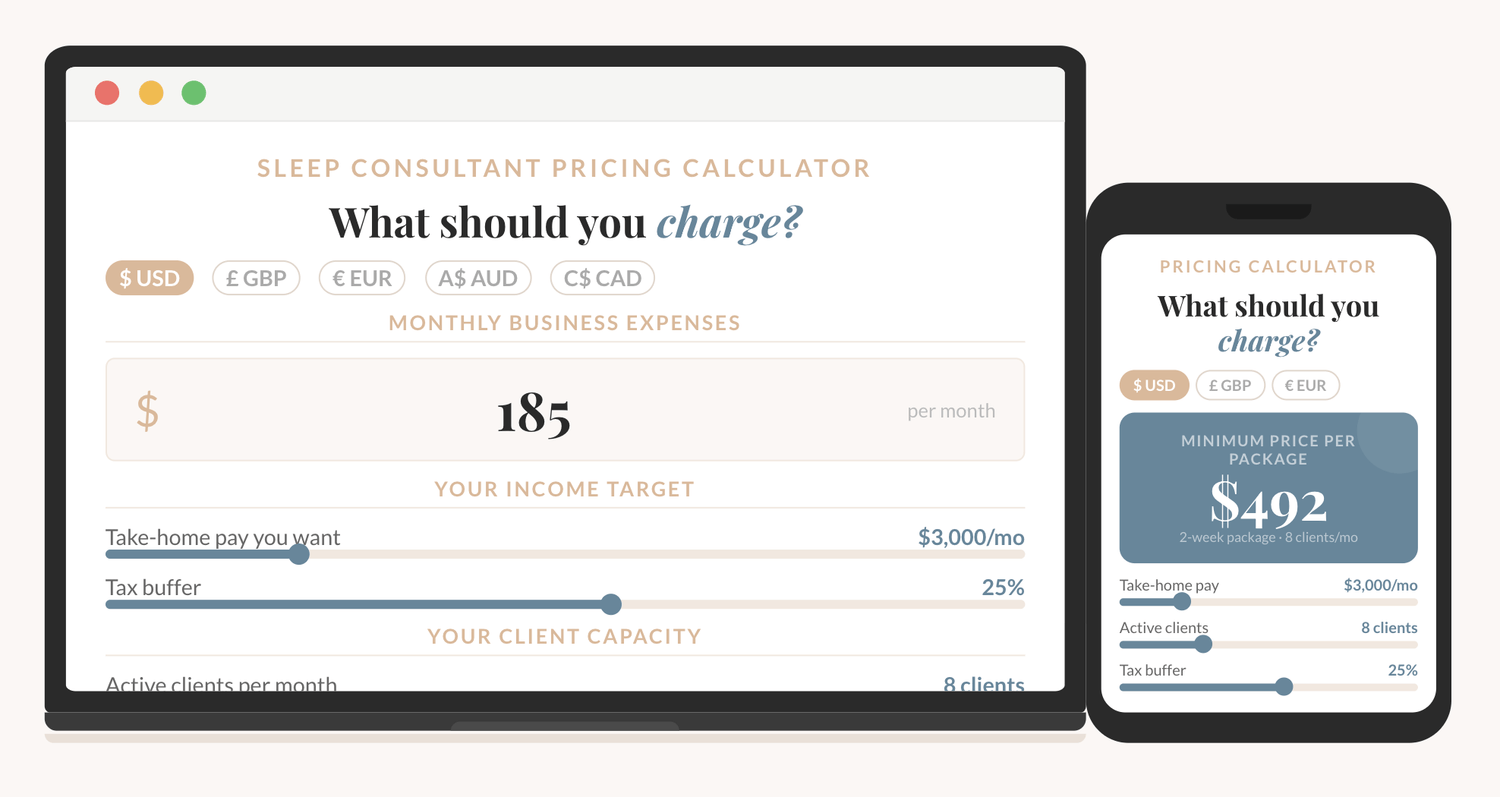
How to price your sleep consulting services?
The Sleep Consultant Pricing Calculator shows you exactly what to charge, based on your real expenses, your income goal, and how many clients you want to take on.
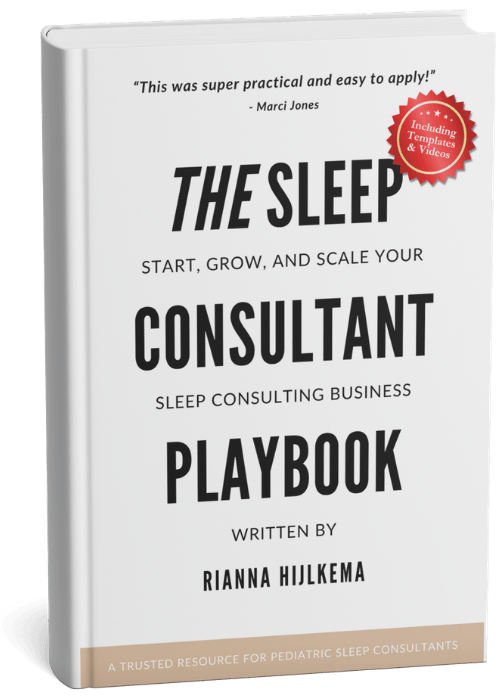
I'm thrilled to offer you an exclusive preview of what’s inside!
You can read the first 22 pages of The Sleep Consultant Playbook and get a taste of the value, insights, and actionable strategies that are waiting for you.
Other articles you might be interested in:
© 2021-2026 Sleep Consultant Business. All Rights Reserved.