
Should Sleep Consultants Share Free Information? Yes. Here's Why
Parents are not paying you for information. Every piece of sleep knowledge you have came from somewhere: a textbook, a course, a certification programme, years of working with families. It was never uniquely yours to begin with. What IS uniquely yours is how you apply it, how you adapt it to a specific child and a specific family, how you support a parent through the hard nights, and how you troubleshoot when the plan isn't working. That is what people pay for. Sharing your knowledge freely doesn't give that away. It demonstrates that you have it.
In this guide
- The fear that holds sleep consultants back
- The information was never really yours
- AI has already answered their question
- What you actually sell
- Giving freely builds the trust that gets you hired
- What to share, and how
- Frequently asked questions
The Fear That Holds Sleep Consultants Back
You spent months training. You studied sleep science, child development, safe sleep guidelines, behavioural approaches. You paid for a certification, read the books, attended the webinars, practised on families who trusted you. You worked hard to know what you know.
So when someone tells you to just give it all away on Instagram, that feels wrong, right? Surely if you share how to handle the 4-month sleep regression, parents won't need to book you? If you explain the chair method step by step, won't they just do it themselves? If you post your best nap transition tip, aren't you literally handing away the thing you get paid for?
This fear is understandable. It comes from a place of caring deeply about your work and wanting it to be valued. But it is based on a misunderstanding of what your work actually is, and holding back because of it is one of the most expensive habits a newly certified sleep consultant can have.
The Information Was Never Really Yours
Everything you know about baby sleep came from somewhere else first. The science of sleep cycles in infants was written in papers and textbooks before you read it. The gentle methods you use were developed by researchers and practitioners before your certification existed. The frameworks, the age-based milestones, the common reasons children wake at night: all of it has been published, studied, taught, and passed along through the sleep consulting community for decades.
That's not a criticism. It's simply how professional knowledge works. A doctor doesn't own the knowledge of how antibiotics work. A physiotherapist doesn't own the knowledge of how to rehabilitate a knee. They learned from the body of knowledge that exists in their field, and their value lies in how they apply it: to a specific person, in a specific situation, with skill and judgment developed through practice.
You are in exactly the same position. The information about sleep training methods, age-appropriate wake windows, sleep associations, or the 18-month regression is not your intellectual property. It belongs to the field. What belongs to you is the ability to take that information and translate it (accurately, compassionately, and practically) into a plan that works for the family sitting in front of you. That translation is the work. That is what parents pay for.
If another sleep consultant reads your post about the 4-month sleep regression and learns something. That's a good thing. You're contributing to a field that serves families. But that other sleep consultant is not stealing your livelihood. The parent in your target market is not going to read your post, implement it perfectly without guidance, and decide they never needed you. That is not how exhausted parents work.
AI Has Already Answered Their Question
Here is the reality of the world your business exists in right now. A parent at 2am, desperate and exhausted, can pick up their phone and ask an AI assistant why their baby keeps waking at 45 minutes. They will receive a detailed, accurate, well-structured answer within seconds. For free. It will explain sleep cycles, describe the concept of a sleep transition, suggest several approaches, and list them in order from gentlest to most structured.
That answer is already out there. It was already available before AI: in books, on parenting websites, in Facebook groups, in YouTube videos, in the community posts of other sleep consultants who share freely. The information economy around baby sleep has never been more saturated.
If you think your value is information, AI is going to beat you. It has an infinite supply, it's available 24 hours a day, and it's free. There is no version of this where hoarding your knowledge about nap schedules is a competitive advantage.
Parents don't come to you because they can't find sleep tips. They come because they've already tried the tips, and it didn't work. Or it worked for three nights and then stopped. Or they found five different methods that contradict each other and have no idea which one applies to their specific situation. Or they've read everything and still lie awake at 1am not knowing what to do when their baby wakes again.
They don't need more information. They need someone who can cut through the noise, assess their specific situation, and tell them exactly what to do. And then be there when things get hard.
What You Actually Sell
Your product is not a sleep plan. A sleep plan is a document. Parents can find templates online. What you sell is something much harder to replicate.
Personalisation
A generic sleep tip applies to a generic baby. Your sleep plan applies to this baby: with this specific temperament, this specific feeding history, this specific family situation, this specific set of parenting values. The questionnaire you use, the questions you ask on the consultation call, the judgment you exercise about which approach fits this family. That is the work. That cannot be Googled, because it requires a specific professional to gather specific information and make a considered professional recommendation.
Implementation support
Knowing what to do and being able to do it at 2am on night four when the baby is screaming and the parent is crying are two entirely different things. Parents who buy a plan without support often fail. The plan is usually fine. What's missing is someone to hold their hand through the moments when they're sure it isn't working. You are that person. That is a service AI cannot provide, because AI cannot sit with someone in the hard moment and say "you're doing it right, keep going."
Accountability
A parent who has paid a sleep consultant and knows a check-in is coming tomorrow behaves differently to a parent who tried to follow a blog post on their own. Knowing someone is watching, caring, and will ask how it went creates the follow-through that free information never can. Accountability is half the result. It's not a bonus feature of your service. It's core to why your service works.
Troubleshooting
Something almost always changes. The baby gets sick. The toddler starts climbing out of the cot. A regression hits midway through the plan. A parent realises on night two that they can't actually follow the method you agreed on. Sleep plans without a skilled professional to adapt them in real time frequently fall apart in the first week. Your ability to look at what's happening, understand why, and adjust the plan on the fly is a clinical skill developed through experience. No blog post, no AI summary, and no template can do that.
Your energy and presence
There is something that happens when a parent speaks to someone who deeply understands their situation and genuinely cares about their family's outcome. A sense of relief. A feeling of being seen. Permission to trust a plan and follow it. That is not delivered by information. It is delivered by you, by the quality of your presence on the consultation call, by how you respond to their messages, by the warmth in how you write their plan. That is entirely yours, and entirely uncopiable.
Giving Freely Builds the Trust That Gets You Hired
A sleep consultant who shares genuinely useful, specific, knowledgeable content, consistently over time, builds something that a sleep consultant who posts vague tips and holds back the good stuff never does: a reputation for being the person who actually knows what they're talking about.
When a parent reads your detailed post about why the 4-month sleep regression happens and what actually helps, two things happen. First, they learn something. Second, they think: this person knows their stuff. And when that parent reaches the point where they've tried everything and need professional help, which sleep consultant do they think of? The one who shared the useful post. Not the one who posted a quote about "the power of sleep" and a stock photo of a baby.
The more you share, the more visible your expertise becomes. The more visible your expertise becomes, the more parents see you as the person to turn to when they're ready for real, tailored help. Free content is not a competitor to your paid service. It is the most effective advertisement your paid service has.
There are parents out there right now, exhausted and overwhelmed, desperately searching for help. They don't know you exist yet. Your job is to show up for them, with real value, consistently, so that when they're ready, finding you feels like the obvious next step.
Selling is not pushing. When you truly believe in the transformation you offer, sharing your service, and your knowledge freely before it, is an act of generosity. Your 60 seconds of discomfort during a sales call could end years of sleep deprivation for a family. Not sharing your knowledge is holding back the impact you could have.
What to Share, and How
Sharing freely doesn't mean posting randomly. It means being strategic about the value you create, choosing topics that speak directly to where your ideal clients are, what they're Googling at midnight, and what questions come up on every Sleep Assessment Call.
Share your expertise, not just tips
Tips are everywhere. What differentiates you is the depth behind the tip: the why, the nuance, the "this works for most children but if your baby does X, try Y instead." That depth is what demonstrates that you're a qualified professional rather than someone who read the same things parents can read. Don't water it down to avoid giving too much away. Give the real answer. That's the content that builds trust.
Share your experience and story
Instead of "here's how to transition your baby from two naps to one," try "here's how I transitioned my baby from two naps to one." The same information, rooted in your actual experience, feels more human and is much harder to challenge. Your journey into sleep consulting, your own experience with sleep deprivation, the moment you realised this was the work you wanted to do. All of this is content that cannot be found in any book, because it's yours.
Share the complexity honestly
One of the most effective things you can share is why generic sleep advice often doesn't work, and what determines which approach is right for a specific baby. This content simultaneously educates parents and demonstrates why professional guidance is valuable. You're not just giving information. You're showing them that the information requires expertise to apply correctly. That awareness is what turns a reader into a client.
Share consistently, not perfectly
A mediocre post published every week beats a perfect post published twice a year. Visibility compounds over time. The sleep consultant who has been sharing knowledgeable, useful content for twelve months has an authority that cannot be purchased or shortcut. Show up consistently, share generously, and trust that the parents who need professional help will find their way to you, because you've made yourself findable. For a practical content strategy to make this sustainable, see How to Build a Content Strategy as a Sleep Consultant.
Frequently Asked Questions
What if other sleep consultants copy my content?
Copying your exact words is plagiarism and worth addressing. But another sleep consultant sharing the same topic, the same approach, even the same general advice? That is just the nature of a professional field with shared knowledge. The differentiator is never the information. It's the person sharing it. Your voice, your story, your way of explaining things, and the relationship parents build with you over time are things nobody else can copy.
What if parents use my content to DIY it and never book?
Some will. And that's genuinely fine. A parent who can successfully implement a plan from your free content was probably not going to book you regardless. Their situation simply didn't require professional support. The parents who will book you are the ones who've already tried the free content, found it overwhelming, partially implemented it, or hit a wall when something didn't work. Those parents are not deterred by you having shared useful information. They're reassured by it.
Doesn't sharing everything undermine my credibility as an expert?
The opposite. Expertise is demonstrated by sharing knowledge confidently and clearly, not by keeping it behind a paywall. The sleep consultant who explains things thoroughly and specifically reads as more expert than the one who shares vague advice and protects the details. Depth of knowledge shared freely is one of the strongest credibility signals available to you.
Should I share information that my competitors don't share?
Yes, and frame it around why it matters. If most sleep consultants aren't talking about a particular topic (the impact of feeding associations on overnight waking, or the difference between a sleep regression and a developmental leap), that's an opportunity to be the person who explains it clearly and accessibly. Being the source that educates parents on things they didn't know to look for is a powerful position to build.
How do I balance giving freely with still making the case to book?
Give genuinely in the content. Make the case to book at the end. These don't conflict. A post that teaches something real and then closes with "if you've tried this and are still struggling, I'd love to help you figure out exactly what's going on for your family" is not a bait-and-switch. It's an honest offer to the parent who needs more than a tip can give. The content demonstrates your expertise. The invitation to book is the natural next step for parents who are ready.
Key Takeaways
- The information was never uniquely yours. It came from courses, books, research, and the field you trained in. What is yours is how you apply it.
- AI can answer the question. You solve the problem. Parents who need professional help have already tried the free answers. They're hiring you for implementation, accountability, personalisation, and troubleshooting.
- Your value is not information. It's the personalised plan built around a specific child, the support through the hard nights, the accountability that creates follow-through, and the ability to adapt when things go sideways.
- Giving freely demonstrates expertise. The sleep consultant who shares specific, useful, in-depth content builds far more authority than the one who holds back to protect perceived secrets.
- Free content is your best advertisement. Parents who find useful content from you once, remember you. When they need professional help, you're who they call.
- Share consistently. A post a week that genuinely helps a parent is worth more than a perfect post twice a year. Visibility and trust compound over time.
The next time you write a post and hesitate before hitting publish because you think "this might be too much": that hesitation is the signal to post it. The best content is the content you almost held back.
Disclaimer: The information shared in these articles is for educational and informational purposes only. It does not constitute legal, financial, or professional advice. Always consult with a qualified professional regarding your specific situation.

Rianna Hijlkema
Certified Pediatric Sleep Consultant, Certified Postpartum Doula, Former Teacher & School Director, Founder of Sleep Consultant Design & Sleep Consultant Business and the author of The Sleep Consultant Playbook (available on Amazon).
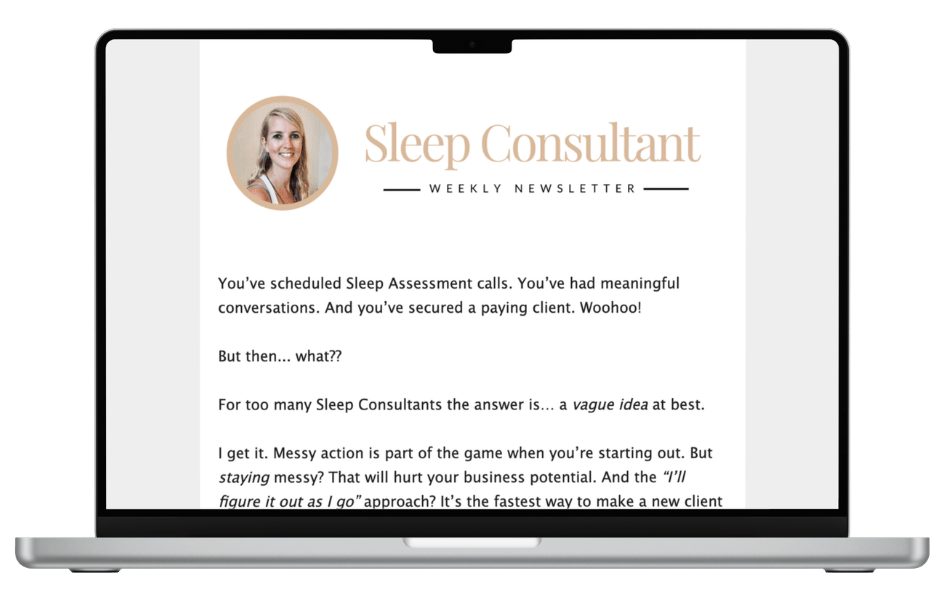
The Sleep Consultant Newsletter
Weekly tips, strategies and marketing ideas for sleep consultants written by a fellow sleep consultant. 1500+ active subscribers!
I’ll only send helpful emails, and you can unsubscribe anytime with one click.
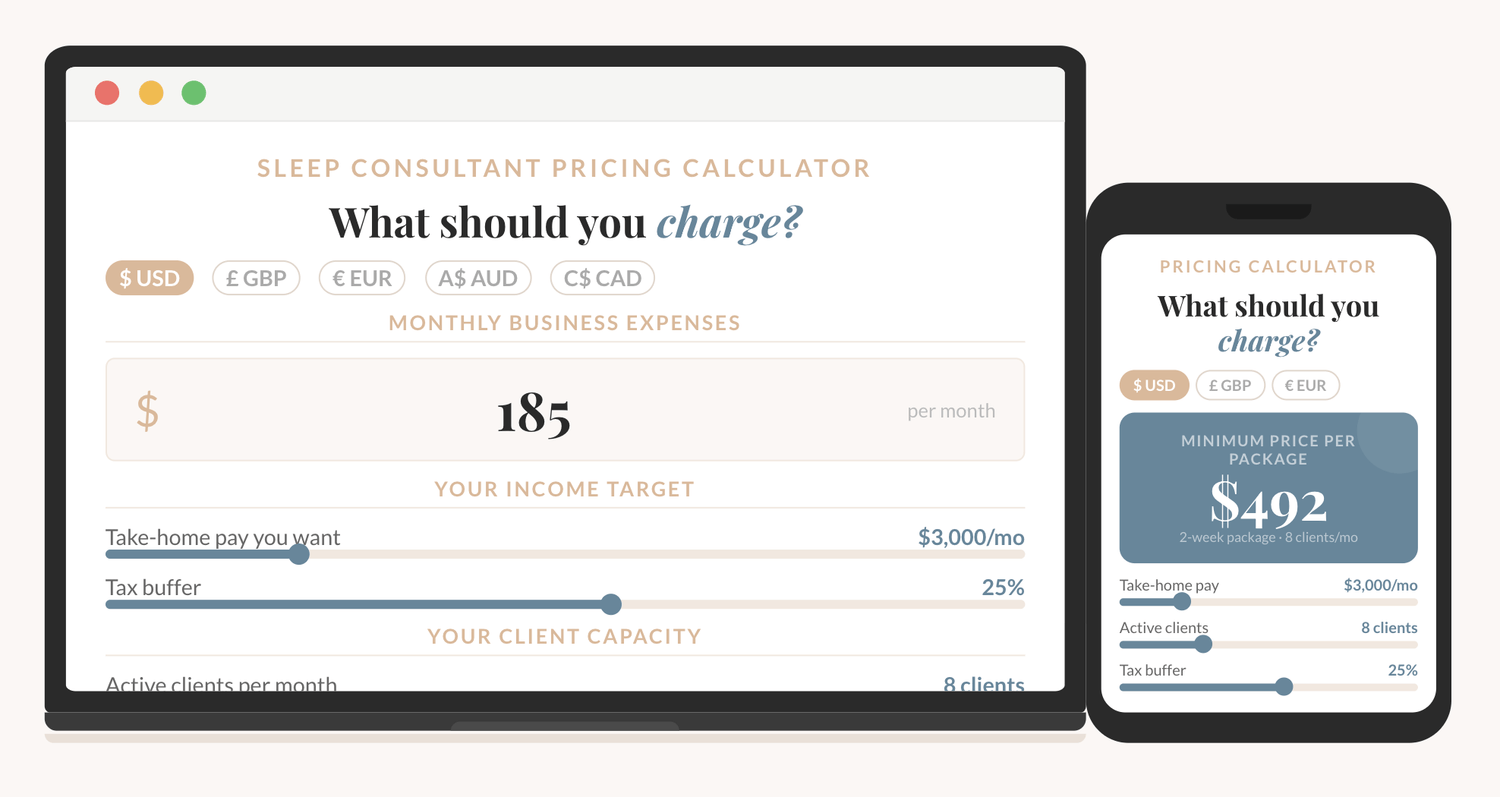
How to price your sleep consulting services?
The Sleep Consultant Pricing Calculator shows you exactly what to charge, based on your real expenses, your income goal, and how many clients you want to take on.
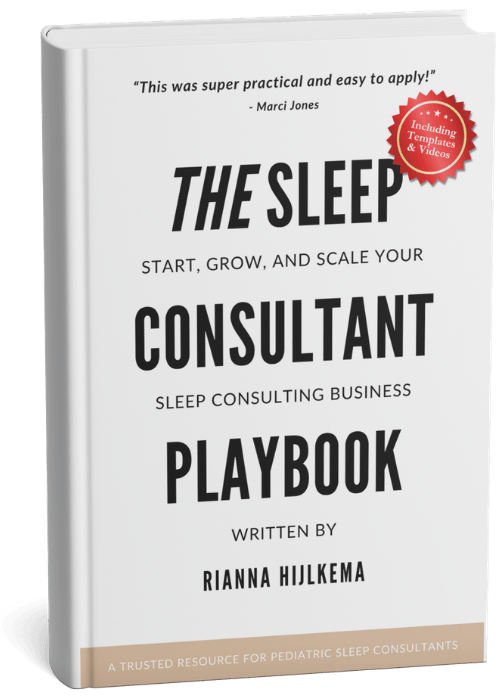
I'm thrilled to offer you an exclusive preview of what’s inside!
You can read the first 22 pages of The Sleep Consultant Playbook and get a taste of the value, insights, and actionable strategies that are waiting for you.
Other articles you might be interested in:
© 2021-2026 Sleep Consultant Business. All Rights Reserved.