
How to Use Google Alerts to Stay Informed as a Sleep Consultant
Google Alerts is a free tool that monitors the web for any keyword you choose and emails you when something new is published. For sleep consultants, it is one of the easiest ways to stay current on sleep research, safe sleep guidelines, parenting trends, and topics specific to your niche, without having to go looking. Set it up once and relevant information comes to you. It also gives you a steady stream of content ideas, things to share with clients, and topics to comment on that reinforce your expertise.
In this guide
- Why staying informed matters for your business
- How to set up Google Alerts step by step
- What to track as a sleep consultant
- How to use what you find
- Common mistakes sleep consultants make
- Frequently asked questions
One of the things that separates a trusted sleep consultant from one who feels generic is currency. Parents notice when you reference something they read last week, when you're aware of a recent study, or when you can speak to something in the news that's relevant to their child's sleep. It signals that you're actively engaged in your field, not just relying on what you learned during certification.
Google Alerts makes this easy. It's free, it takes about ten minutes to set up, and once it's running, the information comes to you. No more searching, scrolling, or hoping you'll stumble across something useful.
Why Staying Informed Matters for Your Business
Sleep research moves. Safe sleep guidelines get updated. New studies come out on topics your clients ask about constantly: screen time and sleep, feeding and wake windows, sleep regressions, room-sharing, and more. If you're not tracking these, you're operating on information that may be months or years old.
There are also commercial reasons to stay informed. When a parenting trend surfaces in the media (a new viral sleep method, a controversial safe-sleep debate, a study that contradicts popular advice), parents in your audience are reading it and forming questions. If you're aware of it and can respond with your professional perspective, you become the person they turn to. If you're not, someone else does.
Staying informed also feeds your content calendar. Knowing what's being discussed in your niche gives you an endless supply of relevant things to write about, post about, and share, without having to start from a blank page.
How to Set Up Google Alerts Step by Step
- Go to alerts.google.com. You'll need to be signed into a Google account. If you don't have one, create a free Google account first.
- Type your first keyword into the search box. For example: "infant sleep research". A preview of recent results will appear below so you can immediately see whether the keyword is pulling relevant content.
- Click "Show options" to customise the alert. You can set how often you receive emails (as it happens, once a day, or once a week), what sources to include (news, blogs, web, video, books, discussions), the region, and the language. For most sleep consultants, "once a day" or "once a week" digest works well. "As it happens" tends to flood your inbox.
- Set the delivery to your email or an RSS feed. Email is simpler for most people. Choose a dedicated email or a folder filter so alerts don't clutter your primary inbox.
- Click "Create Alert". That's it. Repeat for each keyword you want to track.
- Manage and refine over time. Go back to alerts.google.com at any time to edit, pause, or delete alerts. Give each alert a week or two before judging whether it's useful. You can always narrow or broaden a keyword if the results aren't what you expected.
Something that helped me early on was creating a simple Gmail filter so all my Google Alert emails land in one labelled folder rather than mixing with client messages. I check it once or twice a week rather than every day, which keeps it feeling manageable rather than like homework. Most weeks there are two or three genuinely useful things in there, and one of them almost always becomes a post, a client resource, or something worth mentioning in a welcome email.
What to Track as a Sleep Consultant
Start with 5 to 8 alerts. More than that becomes overwhelming quickly. You can always add more once you've settled into the habit.
Core sleep and child development topics
These keep you current on the science and guidelines that underpin your work. Good starting keywords: "infant sleep research", "toddler sleep study", "baby safe sleep guidelines", "pediatric sleep", "sleep regression", "childhood sleep disorders".
Your specific niche
If you specialise, track your specialisation directly. Examples: "twins sleep", "newborn sleep", "toddler bedtime", "sleep training controversy", "neurodivergent children sleep", "breastfeeding and sleep". The more specific the keyword, the more relevant the results.
Parenting news and trends
What parents are reading shapes what they ask you. Tracking "parenting sleep advice", "sleep training debate", or your country's equivalent of "SIDS guidelines [country name]" keeps you aware of what's circulating in the parent media space, so you're never caught off guard when a client says "I read something this week and I'm confused."
Your own name and business
Set an alert for your own name and your business name. This tells you if anyone mentions you online, links to your website, or publishes a review. Useful for reputation monitoring and catching things you'd otherwise never see.
| Alert category | Example keywords | Frequency |
|---|---|---|
| Sleep science | infant sleep research, pediatric sleep study | Weekly |
| Safe sleep | safe sleep guidelines, SIDS prevention, AAP sleep | As it happens |
| Your niche | twins sleep, toddler sleep regression, newborn wake windows | Weekly |
| Parenting media | sleep training debate, cry it out research, attachment parenting sleep | Weekly |
| Brand monitoring | Your name, your business name | As it happens |
How to Use What You Find
Getting the alert is only the first step. The value comes from what you do with the information.
Share with clients during the support phase
When you spot something directly relevant to a current client's situation, share it. A study on overtiredness and early morning waking. An updated guideline on room temperature. An article on the 4-month regression that explains why what they're experiencing is normal. This kind of personalised, timely sharing builds trust fast. You're not just sending a generic check-in. You're thinking about them.
Turn it into content
A new study comes out on the relationship between daytime naps and night sleep in toddlers. You share a post: "A study this week confirmed something I see with families all the time..." and give your practical take on it. You don't need to write a thesis. You need to make it relevant to your audience in two or three sentences. This is what builds your reputation as someone who knows their field.
Respond to what parents are already reading
When a sleep story goes viral in the parenting media, your audience is reading it and forming questions. If you're aware of it, you can address it proactively: "You might have seen the piece about X this week. My take..." This positions you as the trusted professional who helps parents make sense of the noise. It also dramatically increases engagement on posts, because you're speaking to something they're already thinking about.
Update your resources and sleep plans
When safe sleep guidelines update, you need to know. When research shifts on a topic you address in your sleep plans or client resources, that information should be reflected. Your Google Alerts for safe sleep and evidence-based topics should be set to "as it happens" so nothing slips through.
Common Mistakes Sleep Consultants Make
Setting too many alerts at once
Ten or fifteen alerts on broad keywords will generate so many emails that you'll stop opening them within a week. Start with five focused alerts, give it a month, and only add more when you've confirmed the habit is working. Three alerts you actually read are worth more than twenty you ignore.
Using keywords that are too broad
"Sleep" will bring you hundreds of results about everything from sleep disorders in adults to mattress reviews. "Infant sleep research" is specific enough to stay relevant. The more targeted the keyword, the more useful the results.
Sharing things without reading them first
A Google Alert is a starting point, not a fact-check. Before you share an article with clients or post about a study, read it. Check the source. Consider whether it's a peer-reviewed study, a news summary, or an opinion piece. Sharing misinformation in your niche damages your credibility in a way that's very hard to recover from.
Letting the folder fill up unread for weeks
Set a recurring ten-minute calendar slot once or twice a week to scan your alerts folder. Don't let it become a pile. You're not reading every article in depth. You're scanning headlines, opening anything that looks relevant, and saving the useful ones. Ten minutes is genuinely enough if you do it regularly.
Frequently Asked Questions
Is Google Alerts really free?
Yes, completely free. All you need is a Google account. There are no paid tiers or limits on the number of alerts you can create.
What if I don't get many results for my keyword?
Broaden the keyword slightly. "Newborn sleep consulting" might not generate much; "newborn sleep" will generate more. You can also try a related phrase or a synonym. If you're getting very little after two weeks, the topic simply isn't being covered much in new web content, which itself is useful information about your niche.
Are there other tools like Google Alerts?
Yes. Feedly is a popular alternative that aggregates RSS feeds from websites and blogs you choose, which gives you more control over sources. Reddit and Facebook groups in your niche are also worth monitoring for what parents are actively discussing (though not via alerts). For most sleep consultants starting out, Google Alerts is sufficient and significantly simpler to manage.
Can I use Google Alerts to track competitor activity?
You can set an alert for another sleep consultant's name or business, and you'll see when they're mentioned online. This is more useful for awareness than for strategy. Knowing what others in your space are doing is fine; building your business in reaction to theirs is usually a distraction. Focus your alerts primarily on the topics that serve your clients and your content.
Key Takeaways
- Google Alerts is free and takes ten minutes to set up. There is no reason not to use it.
- Start with 5 to 8 focused alerts. Core sleep science, safe sleep, your niche, parenting media, and your own name are good starting categories.
- Set safe sleep alerts to "as it happens". You need to know when guidelines change. Everything else can come as a weekly digest.
- Use what you find. Share relevant articles with current clients, turn studies into posts, respond to what parents are already reading. The alerts only add value when you act on them.
- Read before you share. Check the source, understand what the content actually says, and make sure it's accurate before it goes to a client or your audience.
- Block ten minutes a week to scan the folder. Set it in your calendar. Done consistently, this habit keeps you current without ever feeling like a burden.
Go to alerts.google.com and set up your first three alerts today. Sleep science, safe sleep guidelines, and your niche. It takes five minutes and the information will start coming to you this week.
Disclaimer: The information shared in these articles is for educational and informational purposes only. It does not constitute legal, financial, or professional advice. Always consult with a qualified professional regarding your specific situation.

Rianna Hijlkema
Certified Pediatric Sleep Consultant, Certified Postpartum Doula, Former Teacher & School Director, Founder of Sleep Consultant Design & Sleep Consultant Business and the author of The Sleep Consultant Playbook (available on Amazon).
The Sleep Consultant Newsletter
Weekly tips, strategies and marketing ideas for sleep consultants written by a fellow sleep consultant. 1500+ active subscribers!
I’ll only send helpful emails, and you can unsubscribe anytime with one click.
How to price your sleep consulting services?
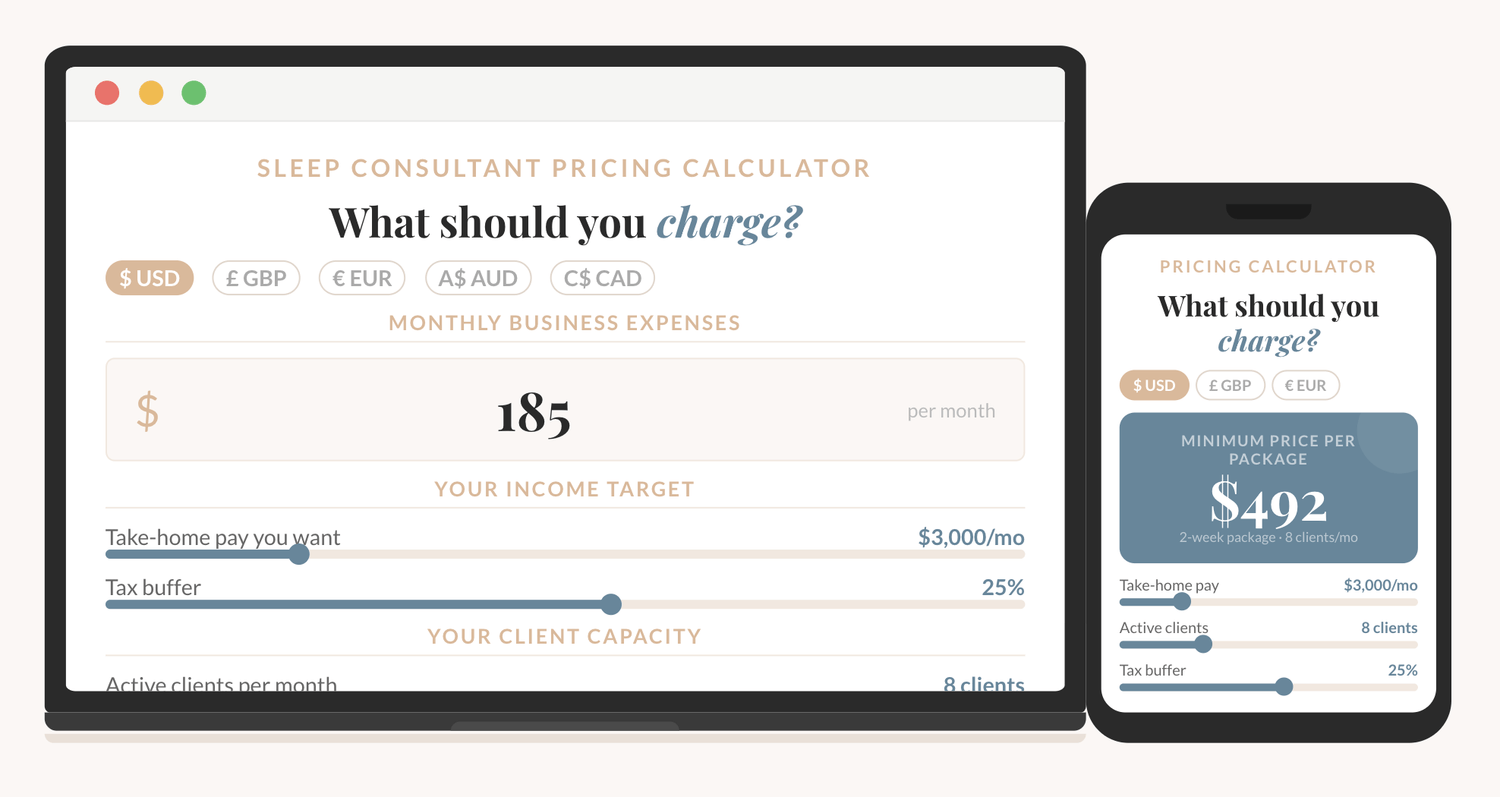
The Sleep Consultant Pricing Calculator shows you exactly what to charge, based on your real expenses, your income goal, and how many clients you want to take on.
I'm thrilled to offer you an exclusive preview of what’s inside!
You can read the first 22 pages of The Sleep Consultant Playbook and get a taste of the value, insights, and actionable strategies that are waiting for you.
Other articles you might be interested in:
© 2021-2026 Sleep Consultant Business. All Rights Reserved.