
Why Telling People What You Do Feels So Hard (And Why You Have to Do It Anyway)
The discomfort of telling people you're a sleep consultant isn't a sales problem. It's an identity problem. You're holding onto a version of yourself that no longer matches who you are, and stepping into the new version feels exposed. The reframe that makes it manageable: you're not promoting yourself. You're making yourself findable to the families who desperately need help right now. Staying quiet isn't being humble. It's keeping your solution from the people who need it most.
In this guide
- Why it feels weird to say "I'm a sleep consultant"
- The identity shift nobody warns you about
- The party story (and what my husband said)
- Why staying quiet is the selfish choice
- Two minutes of discomfort vs a family's sleep
- How to actually say what you do without it feeling like a pitch
- Common mistakes sleep consultants make
- Frequently asked questions
Someone asks what you do. A perfectly ordinary question at a perfectly ordinary gathering.
And you hesitate. You give a vague answer, or a partial one, or you deflect entirely. Maybe you say something like "I work with families" and hope they move on. Maybe you mumble something about sleep and change the subject. Maybe you still reach for your old job title, even though that chapter closed months ago (totally me!).
If you recognise any of that, you're not alone. Almost every sleep consultant I know has gone through a phase of not being able to say what they do without wincing slightly. This article is about why that happens, and what it actually costs you to stay in that phase.
Why It Feels Weird to Say "I'm a Sleep Consultant"
The awkwardness comes from several directions at once, and it's worth naming them so you can see what you're dealing with.
You're worried it sounds like you're selling. You've been on the receiving end of someone who corners you at a party to talk about their network marketing business, and you'd rather disappear into the floor than be that person. So you under-share. You hedge. You make your work sound smaller than it is so nobody feels ambushed.
You're not sure anyone will take it seriously. Sleep consulting is still a relatively new profession, and the sceptics are real. You've either encountered one already or you're anticipating one. So you soften your introduction before they get a chance to question it.
You don't fully feel like one yet. You're certified, yes. But you've had two clients, or five, or maybe none yet. The word "sleep consultant" still feels like a costume. You're waiting for some unofficial number of clients before it feels real. Trust me, that number never arrives on its own.
The Identity Shift Nobody Warns You About
Certification programmes teach you everything about sleep. They teach you virtually nothing about who you're becoming as a professional.
Most sleep consultants arrive at this work after being something else. A nurse. A teacher. A corporate professional. A stay-at-home parent. Whatever it was, that previous identity had weight. It was familiar, it was established, and other people understood it immediately. When I said "I'm a teacher" the whole room always nodded. No explanation needed.
"I'm a sleep consultant" doesn't land the same way yet. Not with the world, and often not with you either. The new identity is real. You've done the work, you have the training, you're building the business. But there's a gap between the reality of who you are now and the version of yourself that your nervous system has accepted as true.
That gap is exactly where the hesitation lives. It's not dishonesty. It's not impostor syndrome in the dramatic sense. It's simply that your brain hasn't caught up with your business card yet. And until you close that gap deliberately, you'll keep hedging every introduction.
The Party Story (And What My Husband Said)
I had been a teacher and then a school director for years. It was a big part of how I introduced myself. It was how people knew me. It had structure and status and familiarity attached to it.
When I made the shift to sleep consulting, I had done the certification. I had my first clients. I was actively building a business. By any objective measure, I was a sleep consultant.
But at a party, a few months in, someone asked what I did. And I said I was a teacher.
My husband turned around and looked at me. Not with judgment, more with quiet surprise. "You're not a teacher anymore," he said.
He was right. I had reverted to the old identity because it was safe and legible and required no explanation. The new one still felt uncertain. I hadn't fully claimed it yet. And in that gap between the two, I was invisibly shrinking the reach of my business every time I introduced myself.
This is not a unique story. I've heard versions of it from sleep consultants all over the world. Some come from teaching, some from nursing, some from corporate careers, some from years of being primarily a parent. The specific previous identity varies. The pattern doesn't.
The old identity is comfortable. The new one requires claiming. And claiming it out loud, to another person, is the moment that makes it real. It's also the moment most people avoid.
Why Staying Quiet Is the Selfish Choice
You're probably framing your hesitation as modesty. As not wanting to push yourself onto people. As being considerate of others' time and comfort.
Reframe that.
In any given room of ten parents, statistically speaking, at least one of them is struggling with their child's sleep right now. They've been up four times in the last week. Their relationship is strained. Their work performance is slipping. They've Googled everything and tried three things that didn't work and they're starting to wonder if they just have a difficult child who will never sleep. They feel like they're failing at something other parents seem to have figured out.
And you, the person who knows exactly how to help them, said you were a teacher.
Staying quiet about what you do isn't protecting anyone. It's keeping your solution away from the people who need it. Staying quiet is a disservice dressed up as consideration.
The most generous thing you can do in a room full of parents is make yourself findable. Not with a pitch. Not by cornering someone. Just by clearly and confidently saying what you do, so that the person who needs help knows that help is standing right in front of them.
Two Minutes of Discomfort vs a Family's Sleep
Let's be honest about the trade-off.
On one side: two minutes of mild awkwardness while you introduce yourself as a sleep consultant and wait to see if they respond with interest or confusion. That's the real cost of sharing what you do.
On the other side: a parent who goes home from that gathering still sleep-deprived, still frustrated, still thinking the problem is unsolvable, not knowing that they spent an hour in the same room as someone who could have changed that completely.
Two minutes of your discomfort versus months more of theirs. That's the actual exchange when you stay quiet.
Saying what you do is not about you. You're not telling them so they can be impressed or so you can feel validated. You're telling them so they can find help if they need it. That intention completely changes the energy of how you say it.
When you say "I'm a sleep consultant, I work with families helping babies and toddlers sleep through the night" with that intention behind it, it doesn't feel like a pitch. It feels like an introduction. Because it is.
How to Actually Say What You Do Without It Feeling Like a Pitch
The goal is a sentence or two. Clear, warm, specific enough to resonate with the right person and easy enough to say without rehearsing every time.
The basic formula
A few examples:
"I'm a pediatric sleep consultant. Basically, I help exhausted parents stop dreading bedtime."
"I work as a sleep consultant. I create customised sleep plans for families with babies who aren't sleeping well, and support them through the process."
Notice what's absent from all of these: any apology, any hedging, any explanation of why this is a real profession. You're not defending sleep consulting. You're describing it, clearly, to an adult who can form their own opinion.
When they light up (and they will)
Some people will respond with immediate recognition. Either they're in it themselves, or they know someone who is. When that happens, ask one question: "How old is your little one?" and let them talk. Your job in that moment is to listen, not to pitch. Ask questions. Let them describe their situation. At some natural point, you'll offer your card or mention that you'd love to help if they want to explore it.
When they're sceptical or dismissive
Some people will question it. "Is that a real thing?" or "Can't they just do controlled crying?" Let it land without defensiveness. "There's actually a lot more to it than most people think, and the results are pretty dramatic for families" is all the response that's needed. You don't owe anyone a dissertation on the legitimacy of your profession.
The version that doesn't feel like a pitch
The version that feels like a pitch is the one where you're trying to impress someone. The version that doesn't feel like a pitch is the one where you're simply making yourself available as a resource to anyone who might need one. Same words. Completely different energy. The difference is entirely internal.
Common Mistakes Sleep Consultants Make
Waiting until they feel ready
There's a threshold number of clients floating in your head at which point you'll feel legitimate enough to say it confidently. That number never triggers the feeling you're waiting for. Confidence comes from saying it, not from reaching some invisible milestone before you say it. You have to do the uncomfortable thing first. The comfort follows.
Burying the lead
"I used to be a teacher but then I did this certification and now I help families with their kids' sleep kind of thing..." The apologetic preamble is a reflex. It softens your professional identity before you've even stated it. Start with what you are now, not where you came from. Your previous career can come up naturally in conversation. It doesn't need to be the frame for your current work.
Only sharing it on social media
Many new sleep consultants are comfortable putting content online because it feels lower-stakes. A post doesn't have a face looking back at you. But the highest-converting conversations happen in person, with people who already know you. The neighbour, the parent at the school gate, the friend's cousin with a four-month-old at the family gathering. Real-life conversations are where most early clients come from. Don't neglect them because a screen feels safer.
Treating every conversation as a sales opportunity
The opposite extreme is equally unhelpful. Steering every conversation toward your services, mentioning your packages unprompted, or following up every social interaction with a DM explaining what you offer. That is the cornered-at-a-party experience nobody wants. Share what you do when it's natural. Let interest come to you from there.
Disconnecting your identity from your visibility
You post on Instagram but say nothing about your business at dinner with friends. You write content online but revert to your old job title in real conversations. The disconnect is a symptom of incomplete identity integration. Your professional identity should be the same in person as it is online. Not a performance, just consistent.
Frequently Asked Questions
What if I haven't had many clients yet? Does that make me less of a sleep consultant?
No. Your certification makes you a sleep consultant. The client count is a measure of where you are in your business journey, not whether you're qualified to call yourself what you are. A newly qualified doctor is still a doctor on day one. You don't wait for a patient threshold before you use the title. Say what you are. The experience follows.
I'm worried people will think I'm using every conversation to sell. How do I show I'm not?
By being genuinely interested in them, not in signing them as a client. Ask questions. Listen. Let the conversation go wherever it goes naturally. If their situation is relevant to your work, it'll come up. If it doesn't come up, that's fine too. Simply stating what you do is not a pitch. Turning every interaction into a consultation is.
How do I handle it when someone doesn't take sleep consulting seriously?
You don't need to change their mind. A calm, brief response is all that's required: "People are often surprised by the results. Sleep deprivation is no joke for families." Then move on. You're not on trial. The people who matter, the parents who are struggling and looking for help, will not question whether sleep consulting is real. They'll ask you how soon you can start.
What if I still feel like my old career defines me more than this one does?
That feeling is completely normal, and it usually means the identity shift is still in process rather than complete. It doesn't speed up by waiting. It speeds up by practicing. Say it out loud. Say it to people who know you. Say it to strangers at the school gate. Every time you say it and the world doesn't end, your nervous system relaxes a little more into the truth of it. The previous career doesn't disappear. It just stops being the headline.
Does this get easier?
Yes. Significantly. Most sleep consultants describe a specific moment, usually a few months in, where "I'm a sleep consultant" stops feeling like a claim and starts feeling like a fact. The transition happens through repetition, not through reaching a client milestone or waiting for a feeling to arrive. Say it before you feel ready. The feeling will follow.
Key Takeaways
- The awkwardness of saying "I'm a sleep consultant" is an identity problem, not a sales problem. You're still bridging the gap between who you were and who you are now.
- Staying quiet isn't modest. It keeps your solution away from the parents who need it most. It isn't a kindness.
- Your discomfort lasts about two minutes. A family's sleep struggle lasts months. That's the real trade-off.
- Saying what you do is not a pitch. It's making yourself findable. The intention behind those words determines how they land.
- Confidence follows action, not the other way around. You don't wait to feel ready. You say it before you feel ready, and the feeling catches up.
- Real-life conversations are where early clients come from. Post online by all means, but don't use the screen as a way to avoid saying it in person.
The next time someone asks what you do, say it clearly: "I'm a sleep consultant." No preamble, no apology, no old job title as a safety net. Let the conversation go where it goes. You might be surprised how many people in that room have been waiting for exactly that sentence.
Disclaimer: The information shared in these articles is for educational and informational purposes only. It does not constitute legal, financial, or professional advice. Always consult with a qualified professional regarding your specific situation.

Rianna Hijlkema
Certified Pediatric Sleep Consultant, Certified Postpartum Doula, Former Teacher & School Director, Founder of Sleep Consultant Design & Sleep Consultant Business and the author of The Sleep Consultant Playbook (available on Amazon).
The Sleep Consultant Newsletter
Weekly tips, strategies and marketing ideas for sleep consultants written by a fellow sleep consultant. 1500+ active subscribers!
I’ll only send helpful emails, and you can unsubscribe anytime with one click.
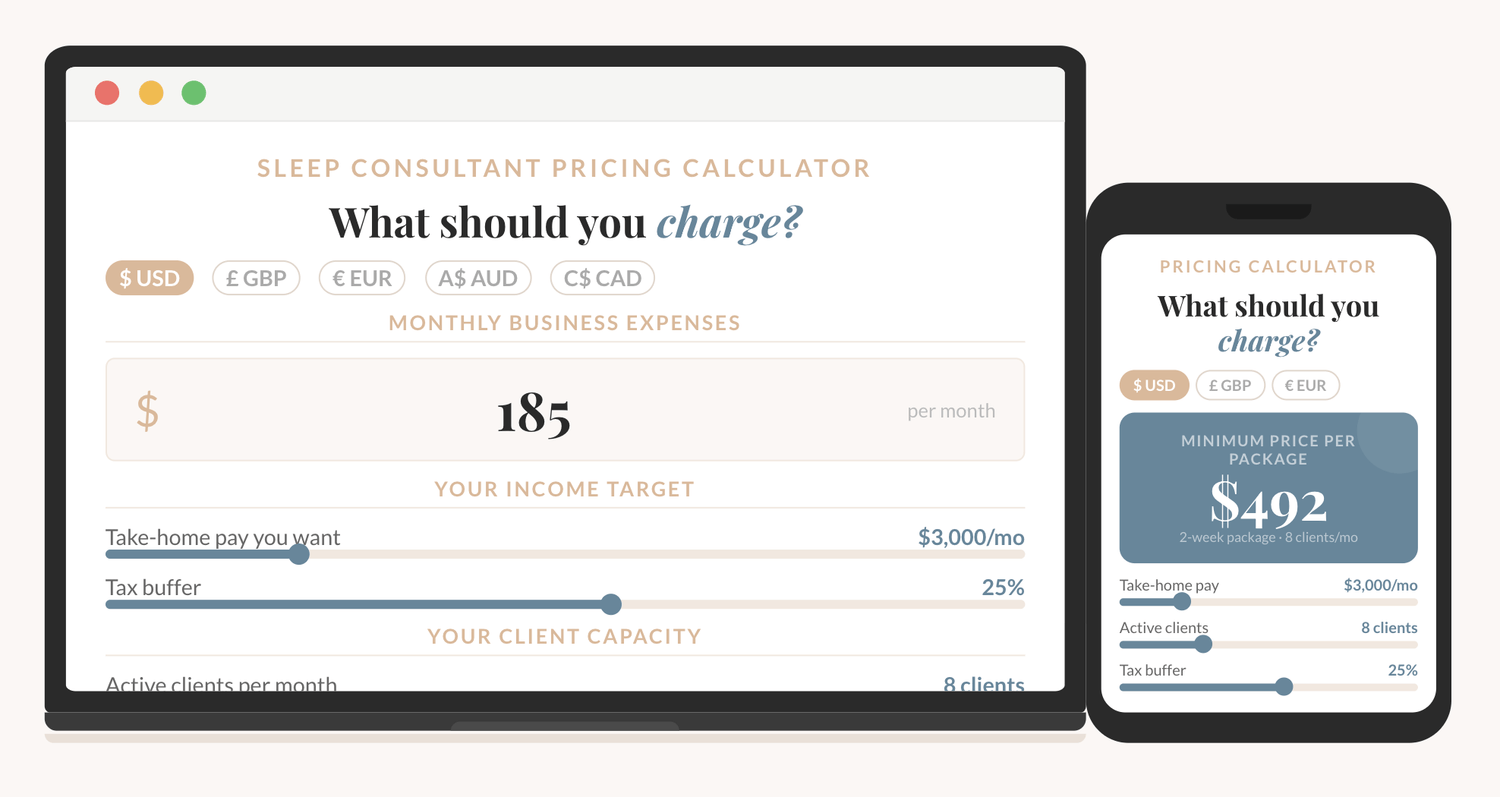
How to price your sleep consulting services?
The Sleep Consultant Pricing Calculator shows you exactly what to charge, based on your real expenses, your income goal, and how many clients you want to take on.
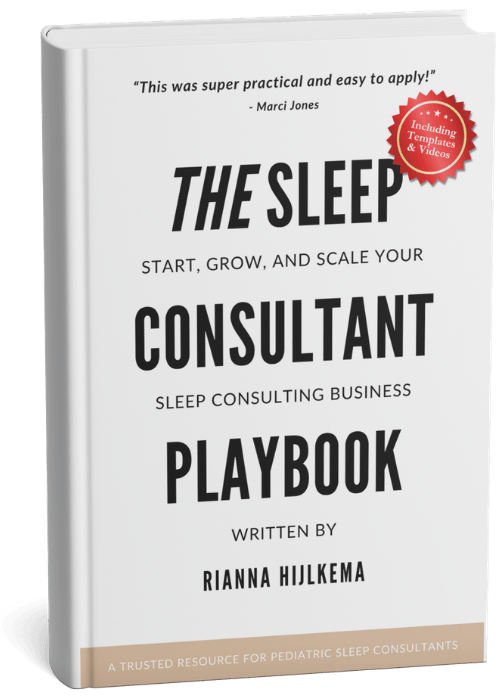
I'm thrilled to offer you an exclusive preview of what’s inside!
You can read the first 22 pages of The Sleep Consultant Playbook and get a taste of the value, insights, and actionable strategies that are waiting for you.
Other articles you might be interested in:
© 2021-2026 Sleep Consultant Business. All Rights Reserved.