
The Messy Middle: What to Do When You Have Some Clients But Not Enough
The messy middle is the phase between getting your first clients and having a consistently full practice. You're generating some income but not reliably. You're getting occasional bookings but not momentum. It is the most common place to be in years one and two, and almost no business content addresses it directly. The work in this phase is about identifying what is actually working and doing more of that, diagnosing specifically what is broken, and building the habits and systems that will make the next phase feel very different.
In this guide
- What the messy middle actually is
- Why it feels like failure (and isn't)
- Diagnose what's actually happening
- What actually moves things forward
- The mindset work that runs underneath it all
- When to genuinely be concerned
- Frequently asked questions
Almost every piece of business content aimed at sleep consultants addresses two phases: getting started, and scaling. How to get your first clients. How to build a membership or create a course. Both ends of the journey are well covered.
Nobody talks about the middle.
The middle is where you've had some clients. Maybe five or ten. You've proven to yourself that the service works and people are willing to pay for it. But you're not booking consistently. The months between three and eight clients feel the same as the months between zero and three. You're doing the things you're supposed to do: posting, following up, showing up, and the results are inconsistent. You start quietly wondering whether you're actually cut out for this.
This is the messy middle. It is normal, it is common, and it is survivable if you understand what's happening and what to do about it.
What the Messy Middle Actually Is
The messy middle is the gap between proof of concept (your first clients show you this works) and sustainable momentum (your pipeline fills itself). It's the phase where the initial burst of warm outreach has run its course, but your cold marketing channels haven't compounded yet. It's the phase where you're good enough at what you do to get results, but not yet known enough to attract clients without constant active effort.
It usually happens somewhere between month four and month eighteen, though the exact timing varies. And it can happen more than once. Some consultants hit a second messy middle when they're transitioning between audience stages (local to national, referral-based to content-based).
What it is not: a sign that you chose the wrong career, that the market is saturated, that you need to pivot your offer entirely, or that the consultants ahead of you have something you fundamentally don't. They've just been at it longer, and they went through the same phase.
Why It Feels Like Failure (and Isn't)
The messy middle feels like failure for a few reasons that have nothing to do with your actual performance.
You compare your behind-the-scenes to everyone else's highlight reel. The sleep consultants you see with full practices and confident social media presences are usually years ahead of where you are. You see their results. You don't see the messy middle they went through to get there. Most of them had one too.
Business growth is not linear. It's lumpy. You'll have a month with three clients and then a month with one. Then two months with four. The pattern looks inconsistent when you're inside it and looks like obvious upward progress when you look back at it six months later. The inconsistency is not a sign of failure. It's the nature of early-stage service businesses.
You expected it to feel different by now. You thought that by month six, or month twelve, it would feel solid and predictable. The timeline you had in your head was optimistic, and the gap between expected and actual is being interpreted as failure. Adjust the timeline. Building a service business takes longer than most people tell you upfront.
When I was working with sleep consultants in the messy middle, the ones who came out the other side all had one thing in common: they stayed. Not because everything was working or because they felt confident and motivated every week. They stayed because they decided the goal was worth the discomfort of the process. The ones who didn't come out the other side mostly quit when the messy middle felt the hardest, which is almost always just before things start to shift. Consistency, not intensity. Stay in the game long enough for the compounding to happen.
Diagnose What's Actually Happening
Before trying to fix anything, diagnose honestly. The messy middle has specific patterns and each one has a specific response. Ask yourself:
Are you reaching enough people?
How many genuine outreach conversations did you start this month? How many people visited your website? How many enquiries came in? If the numbers are very low, the problem is volume of outreach and visibility, not conversion. The fix is more conversations, more content, more presence in front of your ideal audience. See How to Set Goals That Actually Get You Sleep Consulting Clients for the lead metric framework.
Are people reaching you but not booking?
If you're getting enquiries but they're not converting to calls, or you're getting calls but they're not converting to bookings, the problem is somewhere in the conversion process. Is your website clear enough about what you offer and how to book? Are your discovery call skills letting you down at the price conversation? Is your offer not clear or not compelling? Each of these has a specific fix.
Are you getting clients but not retaining or getting referrals from them?
Happy clients refer other families. If you've worked with ten clients and none of them have sent you a referral, look at the client experience. Are you asking for referrals? Are you doing anything to keep the relationship alive after the engagement ends? Are clients leaving the experience feeling genuinely supported, or just serviced?
Are you showing up consistently for your marketing strategy?
Honestly: have you been consistent for at least six months with your chosen channels? Or have you been inconsistent, posting sporadically, trying different things without giving any of them long enough to compound? Inconsistency is the most common reason for the messy middle that looks like a strategy problem but is actually a habit problem.
What Actually Moves Things Forward
Go back to warm outreach
When momentum stalls, the fastest short-term fix is almost always warm outreach. Not social media. Direct personal conversations with people who already know you. Follow up with past clients. Reach out to referral partners you haven't spoken to in a while. Message people from your network who have young children. Warm outreach is the highest-conversion activity available to you. Use it.
Ask every past client for a referral explicitly
Most happy clients don't refer because it doesn't occur to them to do so. They're not being unhelpful. They just haven't thought of it. A simple, warm message asking specifically ("If you know any families who are struggling with sleep, I'd love for them to reach out, a referral from you means a lot") prompts the thought and gives permission. Do this with every client you've worked with in the past six months.
Fix the one thing that is most broken
Not three things. One. Based on your diagnosis, identify the single weakest point in your client pipeline and fix that one thing this month. If it's discovery call conversion, practice the call. If it's website clarity, rewrite the packages page. If it's outreach volume, set a daily outreach target and track it. Trying to fix everything simultaneously fixes nothing.
Pick a two-strategy minimum and protect it for six months
One warm strategy, one cold strategy. Set your minimum frequency for each. Protect those minimums like appointments you can't cancel. The messy middle is often sustained by inconsistency: doing everything a bit and nothing enough. Simplify to two things and do them properly.
Track the lead metrics, not just the results
Stop measuring your week by how many clients booked. Start measuring it by how many outreach conversations you started, how many pieces of content you published, how many referral partner follow-ups you sent. Those are the inputs you can control. The bookings are the outputs that follow when the inputs are consistent.
The Mindset Work That Runs Underneath It All
The messy middle is not just a business problem. It's a confidence problem dressed up as a business problem. When results are inconsistent, self-doubt rushes in to fill the gap. You start wondering if you're good enough, if you chose the right niche, if your pricing is the problem, if parents are choosing someone else because they're better than you.
Most of those doubts are the messy middle talking. They are not reliable evidence about your actual capability or the viability of your business.
A practical countermeasure: once a week, write down three wins from that week. Not "got a new client" level wins. Anything. A good testimonial. A message from a client who said the plan is working. A piece of content that got engagement. A referral partner who responded positively. Anything that reminds you that you are building something real, even when the momentum doesn't feel consistent. This practice is not fluffy. It actively counters the brain's tendency to overweight the negative and underweight the positive when you're under pressure.
When to Genuinely Be Concerned
The messy middle is normal. But there are signals that something genuinely needs to change, rather than more patience and consistency.
- You've been consistently active for 12 months and have had fewer than five paying clients total. This is not a consistency problem. It's likely a messaging, offer, or visibility problem that needs specific diagnosis and outside input.
- Your discovery calls consistently end without a booking and you can't identify why. If this is a pattern across 10 or more calls, the problem is likely in the call itself. Consider recording calls for review (with consent) or walking through your call process within one of the meet ups that's being offered at SleepPRO™.
- You're generating significant interest but nobody is booking, and it's been happening for months. Something in your offer, your pricing, or your website is creating a gap between interest and commitment. Get specific feedback from someone who bounced.
- The business is causing you genuine harm (financially, emotionally, or physically) and there is no realistic prospect of that changing. In that case, the conversation is different. Getting outside perspective from a business mentor or strategist is worth it before making any major decision.
Frequently Asked Questions
How long does the messy middle typically last?
For most sleep consultants who are showing up consistently, somewhere between six and eighteen months from their first paying client. It's not a fixed timeline. It depends on how much time you're investing, whether your marketing is targeted, how strong your referral network is, and how quickly your cold channels (SEO, social media) are compounding. There is no shortcut through it, but there are ways to shorten it: more outreach, more referral activation, and better conversion at the discovery call stage.
Should I lower my prices to get more bookings?
Almost never. Lowering prices rarely solves a booking problem. It usually makes it worse. Parents who object to your price are rarely price-sensitive in the way we assume. They're often uncertain about the value, or something in the discovery call left them unconvinced. Address those things. Don't undercut your own value in response to slow months.
Should I add more services to attract more clients?
Also almost never. Adding complexity when things are slow is a distraction. It splits your focus, dilutes your messaging, and means you're spending energy building something new instead of activating what you already have. Simplify during the messy middle. One core offer, done brilliantly, is more powerful than three average ones.
Is it normal to question the whole thing during this phase?
Yes. Completely normal. Most sleep consultants in the messy middle go through at least one serious round of "should I just go back to my old job." That feeling is not reliable information about whether you should quit. It's information about how hard the messy middle is. Acknowledge it, then look at your numbers and your evidence rather than your feelings to make any decisions.
Key Takeaways
- The messy middle is the most common place to be in years one and two, and it's almost never discussed honestly in sleep consulting content.
- It is not failure. It is the phase between proof of concept and sustainable momentum. Every sleep consultant who has a full practice went through it.
- Diagnose before fixing. Is the problem volume, conversion, retention, or consistency? Each has a different response.
- The fastest short-term fix is always warm outreach and referral activation. Go back to the basics before building anything new.
- Fix one thing at a time, not everything simultaneously.
- Track your inputs, not just your outcomes. Measure what you can control each week.
- The self-doubt that comes with this phase is normal. It is not reliable information about whether your business is viable.
If you are in the messy middle right now: you are not alone, and you are not as far behind as it feels. Most of what's needed is not a new strategy. It's more consistent execution of the one you already have. Stay in the game long enough for the compounding to happen.
Disclaimer: The information shared in these articles is for educational and informational purposes only. It does not constitute legal, financial, or professional advice. Always consult with a qualified professional regarding your specific situation.

Rianna Hijlkema
Certified Pediatric Sleep Consultant, Certified Postpartum Doula, Former Teacher & School Director, Founder of Sleep Consultant Design & Sleep Consultant Business and the author of The Sleep Consultant Playbook (available on Amazon).
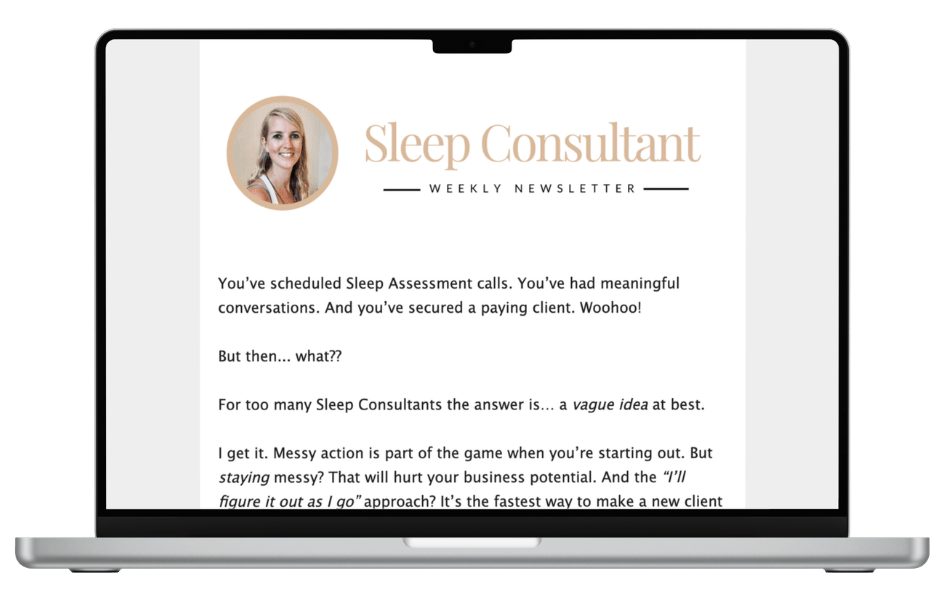
The Sleep Consultant Newsletter
Weekly tips, strategies and marketing ideas for sleep consultants written by a fellow sleep consultant. 1500+ active subscribers!
I’ll only send helpful emails, and you can unsubscribe anytime with one click.
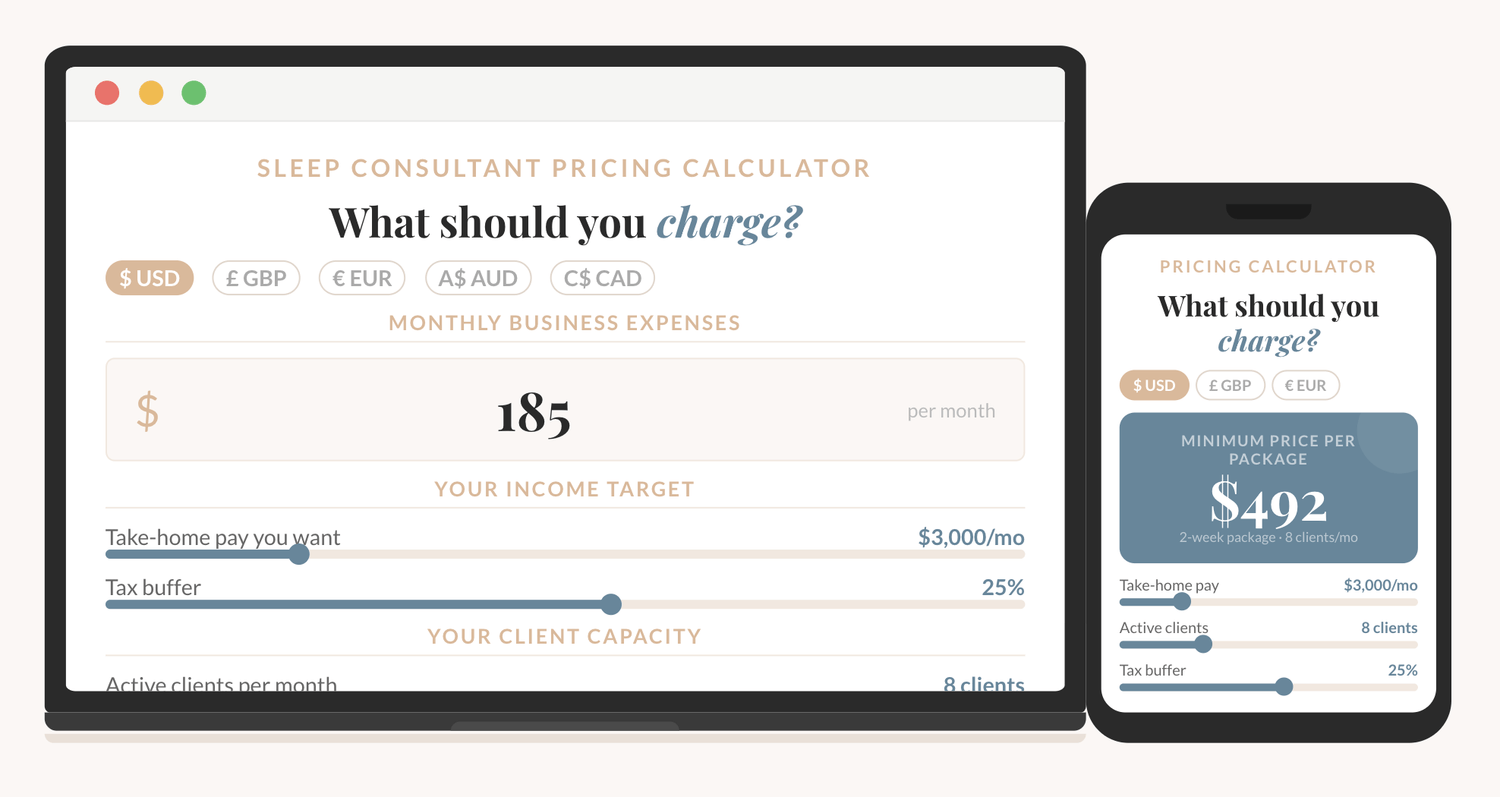
How to price your sleep consulting services?
The Sleep Consultant Pricing Calculator shows you exactly what to charge, based on your real expenses, your income goal, and how many clients you want to take on.
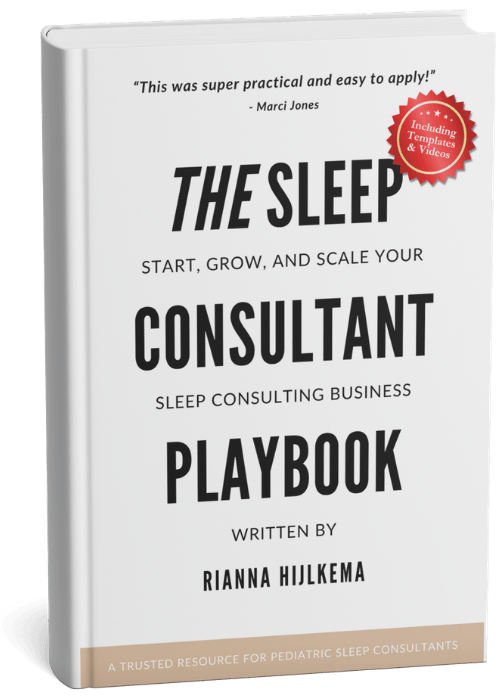
I'm thrilled to offer you an exclusive preview of what’s inside!
You can read the first 22 pages of The Sleep Consultant Playbook and get a taste of the value, insights, and actionable strategies that are waiting for you.
Other articles you might be interested in:
© 2021-2026 Sleep Consultant Business. All Rights Reserved.