
How to Build Referral Partnerships with Pediatricians, OBs, and Doulas as a Sleep Consultant
People trust personal recommendations far more than any form of advertising. A parent referred by their pediatrician, doula, or midwife arrives already primed to trust you. Referral partnerships with healthcare professionals who serve the same families you do are one of the most efficient and sustainable client-generation strategies available to sleep consultants. Building them requires a clear introduction, a compelling leave-behind, consistent follow-up, and the patience to treat these as long-term relationships rather than one-off asks.
In this guide
- Why professional referral partnerships work
- Who to partner with
- How to make the first approach
- What to leave behind
- How to maintain the relationship
- Formal referral programs: when and how
- Common mistakes sleep consultants make
- Frequently asked questions
While most sleep consultants focus on building social media followings to attract clients, some of the most full client rosters in the industry are built primarily through professional referral networks. A pediatrician who mentions you to every exhausted family at their six-month check is a pipeline that runs quietly in the background, delivering warm, pre-qualified leads without you posting a single reel.
These partnerships take longer to build than a viral post. But they're also far more durable, and the leads they produce convert at a dramatically higher rate because the trust is already established before the parent picks up the phone.
Why Professional Referral Partnerships Work
People are far more likely to trust a referral from someone they already trust than any form of advertising. When a pediatrician tells a parent "I know a great sleep consultant," that recommendation carries the full weight of the doctor's existing credibility. The parent doesn't need to research you, read your testimonials, or decide whether to trust you. Someone they already trust has done that work for them.
For sleep consultants this is especially powerful, because the other professionals in this space (pediatricians, midwives, lactation consultants, doulas, postpartum nurses) all encounter the same exhausted families you serve. They see the problem firsthand and often have no good answer for it. You are that answer. Becoming the trusted sleep consultant they refer to is genuinely valuable for them and their clients, not just for you.
Who to Partner With
| Professional | When they see your ideal client | Your value to them |
|---|---|---|
| Pediatrician / GP | Every well-baby check, every exhausted parent visit | A trusted referral for a problem they can't solve in a 15-minute appointment |
| OB / Obstetrician | Prenatal appointments, postpartum visits | Proactive resource for new parents before sleep deprivation becomes a crisis |
| Midwife | Antenatal and postnatal visits, home visits | Extension of their support into the sleep space they often can't cover |
| Postpartum doula | Daily with newborn families, often at the onset of sleep challenges | A specialist to refer families to once their doula role ends |
| Lactation consultant | New mothers at the intersection of feeding and sleep challenges | Complementary specialist: you address sleep, they address feeding |
| Pediatric physio / OT | Babies with reflux, tongue tie, torticollis, sensory needs | A trusted referral for the sleep component of complex cases |
| Maternal mental health practitioner | Postnatal depression and anxiety, where sleep deprivation is a significant factor | A practical intervention for a problem that underlies much of what they treat |
How to Make the First Approach
The first approach is an introduction, not a pitch. You are reaching out to offer something useful to them and their clients, not to ask for a favour. That framing matters enormously for how the conversation goes.
What I've noticed is that sleep consultants hesitate to reach out to pediatricians because they assume the doctor won't take them seriously, or they feel like they're asking for something. Shift that perspective. You're offering a trusted, professional resource for a problem the doctor sees every day and genuinely cannot fix in their appointment window. A good pediatrician wants this referral option. Walk in as a colleague, not as a salesperson.
In-person approach (most effective):
Email approach (for practices where a drop-in isn't practical):
"Hi Dr [Name], I'm [Name], a certified pediatric sleep consultant working with families in [area]. I work with babies and children from newborn to [age] on personalised sleep plans and family support.
I know sleep challenges come up constantly in your practice and there's rarely time to address them properly in an appointment. I'd love to be a resource you can point families to when that happens.
I'm happy to share more about how I work if it would be useful. Happy to also drop in a few cards at the front desk at a convenient time.
Thank you for your time, [Name]"
What to Leave Behind
Business cards are fine. A one-page professional summary is better. A small stack of something a parent can take home is best.
Your leave-behind should include: your name, your certification, what you help with (be specific: "I work with babies from birth to 5 years on personalised sleep plans"), how to reach you, and ideally one line from a client testimonial. Keep it to one page or a small card. Busy professionals will not read a brochure.
Consider also creating a small resource they can give directly to parents: a "sleep basics" one-pager, or a QR code linking to a free resource on your website. This makes it easy for the professional to provide value to their client right there and then, with your name attached.
How to Maintain the Relationship
A referral partnership is a relationship, not a transaction. The mistake most sleep consultants make is showing up once, leaving their cards, and expecting referrals to start flowing. Referral relationships require ongoing presence and genuine reciprocity.
- When a referred client comes to you, close the loop. A brief message to the professional letting them know the family got in touch (with appropriate discretion) keeps the relationship warm and shows you're reliable.
- Check in every few months. Drop in with new cards when your stock runs low. Send a brief email with a relevant sleep resource. Invite them to a workshop you're running. The relationship needs occasional maintenance or it goes cold.
- Refer back where appropriate. If a client mentions they need a lactation consultant or a postpartum doula and you know a great one, recommend them. Reciprocal referrals build stronger partnerships than one-directional ones.
- Keep your professional presence visible. Sharing relevant sleep research on LinkedIn, or occasionally mentioning them in a social post, keeps you in their awareness without requiring active effort on their part.
Formal Referral Programs: When and How
Not all referral partnerships need to be formal. Many work well as informal professional relationships built on trust. But a formal referral program (where you offer a clear incentive for referrals) can strengthen certain partnerships and make the arrangement explicit.
Common referral incentives: a percentage discount off future services for clients referred, a flat referral fee paid when a referred client books, or a reciprocal arrangement where both parties refer to each other. If you set up a formal program, put the terms in writing: who qualifies, what counts as a successful referral, when and how the incentive is paid.
Healthcare professionals (pediatricians, GPs, midwives) in many countries are ethically restricted from receiving financial incentives for patient referrals. Research the rules in your specific jurisdiction before offering any financial arrangement to a medical professional. With these partners, the relationship should be based on professional trust and mutual value, not financial exchange.
Common Mistakes Sleep Consultants Make
Waiting for partnerships to come to them
Referral partnerships don't appear organically. They require initiative. Most pediatricians won't seek out a sleep consultant to refer to . You need to introduce yourself. The professionals who refer consistently arethe ones who made the first move.
Approaching it as a sales call
Walking into a clinic with a pitch rather than an introduction will get you shown out. Your approach should be collegial and service-oriented: "I have something your patients need and I'd like you to know I exist." Not: "I'm looking for referral partners."
Making the introduction once and never following up
One drop-in, zero follow-up. Three months later, the front desk staff has changed, your cards are buried under a stack of leaflets, and your name isn't coming up. Schedule a quarterly check-in with every active referral partner.
Only building partnerships locally
If you offer remote services, your referral network doesn't have to be local. Online communities for doulas, lactation consultants, and postpartum professionals are active and collegial. Introducing yourself there and being genuinely helpful builds professional relationships that lead to referrals across geography.
Frequently Asked Questions
How many referral partners should I aim for?
Quality over quantity. Three active referral partners who regularly refer clients are worth more than twenty connections who have met you once and forgotten you. Start with five strong introductions, maintain those relationships properly, and expand from there once the system is working.
What if a pediatrician is skeptical of sleep consulting?
Some will be. Acknowledge it without being defensive. "I completely understand the skepticism. There's a lot of generic sleep advice out there that isn't evidence-based. What I do is highly personalised and I'd be happy to share my approach if it would help." Then let them lead. Some professionals will warm over time as they see results from the families they refer. Others won't. Move on and focus energy where there's genuine openness.
Should I offer a free service to referral partners so they can experience my work?
In some contexts this works well. A free workshop for the staff at a midwifery practice, or a complimentary one-pager they can give new parents, is a genuine value offer rather than a bribe. Offering free personal consultations to professionals themselves is less effective unless they genuinely have sleep-challenged children, and even then it's a personal relationship building tool rather than a professional one.
Key Takeaways
- Warm referrals convert faster and more reliably than cold marketing. A recommended client arrives with trust already built.
- Your best potential partners are professionals who see the same families you serve. Pediatricians, OBs, midwives, doulas, lactation consultants, physios, and mental health practitioners all encounter sleep-deprived parents every week.
- Approach as a colleague with something valuable to offer, not as a salesperson. You have a solution for a problem they see daily and cannot solve in their appointment window.
- The introduction is the beginning, not the work. Referral partnerships require consistent maintenance: follow-up, reciprocal referrals, and staying visible.
- Check healthcare referral ethics rules in your jurisdiction before offering financial incentives to medical professionals.
- Three active, maintained partnerships are worth more than twenty cold connections. Quality and consistency over volume.
Identify three professionals in your local area or network who serve the same families you do. Reach out to one this week. A brief, professional introduction is all it takes to start a relationship that could send you clients for years.
Disclaimer: The information shared in these articles is for educational and informational purposes only. It does not constitute legal, financial, or professional advice. Always consult with a qualified professional regarding your specific situation.

Rianna Hijlkema
Certified Pediatric Sleep Consultant, Certified Postpartum Doula, Former Teacher & School Director, Founder of Sleep Consultant Design & Sleep Consultant Business and the author of The Sleep Consultant Playbook (available on Amazon).
The Sleep Consultant Newsletter
Weekly tips, strategies and marketing ideas for sleep consultants written by a fellow sleep consultant. 1500+ active subscribers!
I’ll only send helpful emails, and you can unsubscribe anytime with one click.
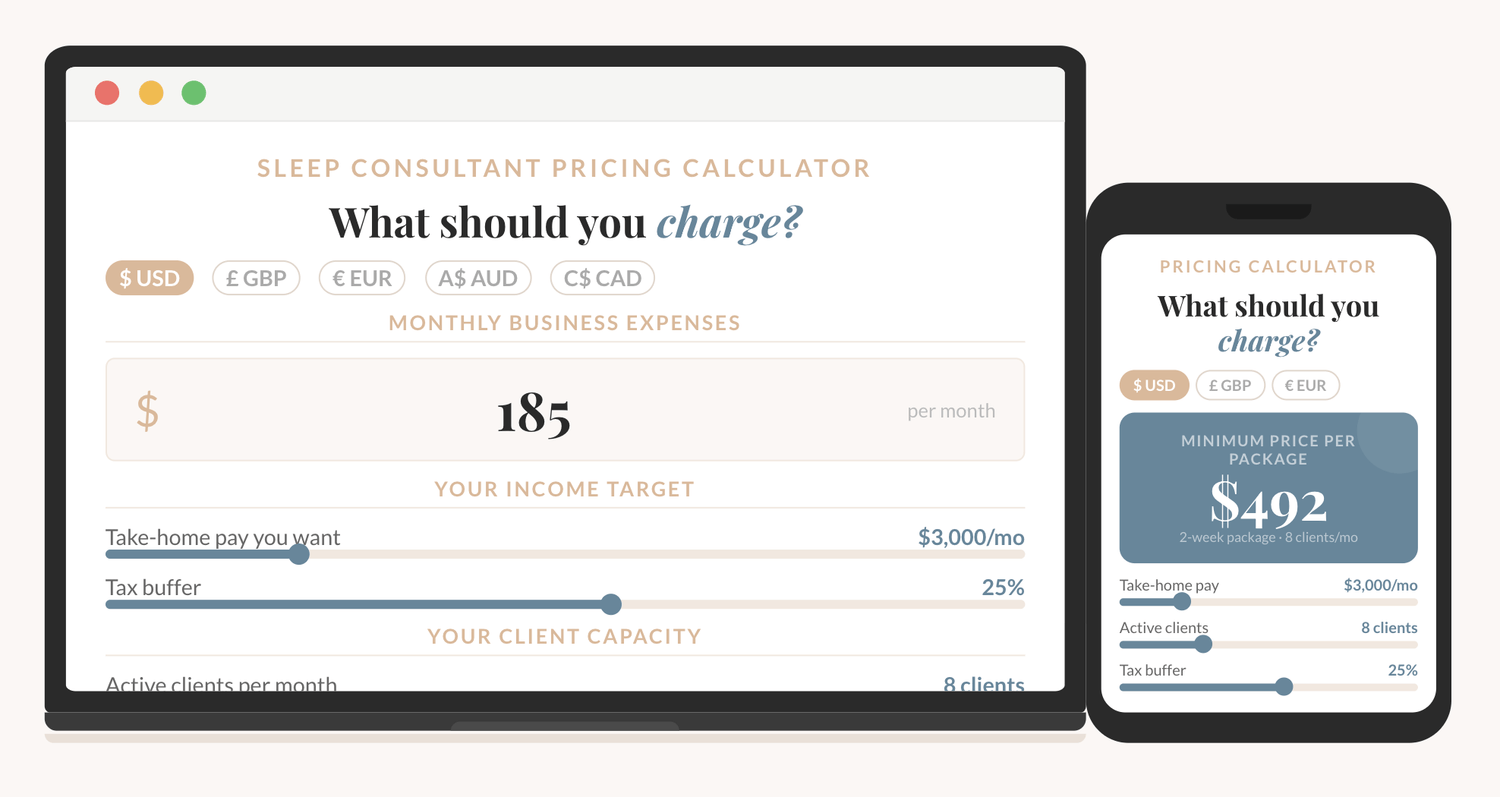
How to price your sleep consulting services?
The Sleep Consultant Pricing Calculator shows you exactly what to charge, based on your real expenses, your income goal, and how many clients you want to take on.
I'm thrilled to offer you an exclusive preview of what’s inside!
You can read the first 22 pages of The Sleep Consultant Playbook and get a taste of the value, insights, and actionable strategies that are waiting for you.
Other articles you might be interested in:
© 2021-2026 Sleep Consultant Business. All Rights Reserved.