
How Writing a Tiny Book Can Grow Your Sleep Consulting Authority
A book is one of the most powerful authority-building tools a sleep consultant can have. It lets potential clients experience your expertise before they ever book a call. The good news: it doesn't need to be big. Coach and author Rich Litvin recommends a "tiny book" of around 50 pages, with five chapters, each solving one specific problem your ideal client faces. Think 5 to 7 days of focused writing, not 5 to 7 years. A focused, well-written tiny book will do more for your positioning than months of social media posts.
In this guide
- Why a book changes how parents see you
- The tiny book: what it is and why it works
- Three-step framework for writing a tiny book
- What this looks like for a sleep consultant
- What to do with your book once it exists
- Common mistakes to avoid
- Frequently asked questions
Think about the last time you were looking for someone to help you with something important. A consultant, a therapist, a specialist of some kind. Now imagine two versions of that person: one has a well-written book sitting on the shelf, and one doesn't. Who do you call first?
That's the authority effect of a book. It signals expertise before a single word is exchanged. It says: this person knows this topic so thoroughly that they wrote a book about it. For an exhausted parent searching for a sleep consultant, that signal matters enormously.
Now, before you close this tab because you're picturing 300 pages and two years of your life, like I did when I wrote The Sleep Consultant Playbook, which is a step-by-step business roadmap from certification to scale. That's a big undertaking and not what I'm suggesting you do (at least not yet). What I'm talking about is something much more achievable, and in many ways more strategically powerful for where you are right now.
I'm talking about a tiny book. About 50 pages. Written to a very specific reader, solving a very specific set of problems. Based on the framework from coach and author Rich Litvin, this approach turns what you already know into something a parent can hold in their hands, transforming how they see you before they ever get on a call.
Why a Book Changes How Parents See You
Think about how a parent finds a sleep consultant. They search online, scroll Instagram, maybe ask in a Facebook parenting group. They're looking at three or four consultants who all seem broadly similar: certified, caring, good testimonials. How do they decide? Usually on a gut feeling of trust. And nothing builds that trust faster than a book.
A book does something an Instagram post or even a testimonial can't do. It lets a potential client spend real time with your thinking before they commit to a conversation. They read your words. They feel understood. They start to believe you really get their situation. By the time they reach out, the sale is largely made. You're not starting from zero on the assessment call. You're continuing a relationship they already feel invested in.
In other words, a book lets people experience you before they become a client. That experience is the trust-building work that social media can rarely do alone.
I never planned to write The Sleep Consultant Playbook. It wasn't part of some master plan. It was born out of necessity. I saw too many brilliant, passionate sleep consultants struggling not because they weren't talented, but because they didn't have a clear roadmap. So I poured everything I'd learned into it. The book has since opened doors, built credibility, and positioned my work in a way that no amount of posting ever could. You don't need to write 400 pages to get that effect. Start with fifty.
The Tiny Book: What It Is and Why It Works
The world has changed. Attention spans have shortened. A busy parent of a sleep-deprived toddler is not sitting down with a 300-page book on infant development. But a focused, 50-page guide that speaks directly to her exact situation? She'll read that in a single nap time. And she'll remember who wrote it.
The purpose of a tiny book has a threefold: stop a potential client in their tracks, show them you understand them deeply, and provide a solution for their biggest challenge. That's it. Not to win a literary prize. Not to top the Amazon charts. To create a direct connection with the exact parent you most want to work with.
A tiny book is typically around 50 pages. It has five chapters. Each chapter addresses one specific problem your ideal client is facing. It's written in your voice, with your stories, and it makes the reader feel deeply understood. When someone finishes reading it, their immediate thought should be: I need to work with this person.
It can be self-published. It can be designed to be given away, not sold. One of Rich Litvin's clients wrote a tiny book with the sole intention of placing it in the hands of dream clients. It was never listed anywhere for sale. That's a legitimate strategy. The goal isn't royalties. The goal is authority and connection.
Three-Step Framework for Writing A Tiny Book
This framework comes directly from Rich Litvin's article on tiny books. It's simple, which is exactly why it works.
Step 1: Stop them in their tracks
Write down five complaints or concerns you hear most often from clients and potential clients. Use their words, not yours. The goal is for someone to read the title or chapter heading and feel an immediate shock of recognition: that's exactly my situation. When a parent reads something that articulates their exact experience better than they could articulate it themselves, they stop. They lean in. They pay attention.
Step 2: Solve their biggest challenges
Turn each of those five complaints into a solution. Now you have five chapter titles. Each chapter promises to solve one specific problem. Not all sleep problems. Not everything you know about infant development. One problem, clearly named, with a real solution. This is also your filter: the reader who resonates with all five chapters is your ideal client.
Step 3: Build each chapter
For each chapter, write seven pages using this structure:
- Two pages describing the challenge. Make the reader feel completely seen. Name the experience they're living with specificity and empathy.
- Two pages describing the solution. What does this look like in practice? What specifically shifts?
- Two pages of stories. A client you helped with this exact problem. A before and after. Make sure the result is clearly described. Insider tip: say "her baby sleeps through the night" not "her baby slept through the night." Present tense shows the result is ongoing, not finished.
- One page of action steps. Something the reader can try today. This builds trust through immediate usefulness.
Then add one page at the start explaining who you wrote the book for (and who it's not for), and one page at the end about you and what you do. Add a visual or two per chapter if you can, since many people turn to diagrams first.
That's your tiny book. Five chapters of seven pages each, plus an intro and a close. Around 50 pages. Written before you're ready. Sent into the world before it's perfect. Done.
What This Looks Like for a Sleep Consultant
Let's make this concrete. Say your niche is toddler sleep. Step one is writing down the five things you hear most often. Maybe they sound something like this:
- "My toddler keeps getting out of bed and I don't know how to stop it."
- "We've tried everything and nothing works."
- "She only falls asleep if I'm in the room."
- "Early morning waking is destroying us."
- "I feel like a terrible parent for even considering sleep training."
Now turn each one into a chapter title that promises a solution:
| The complaint (their words) | Chapter title (your solution) |
|---|---|
| "She keeps getting out of bed." | Why toddlers escape their beds and the simple boundary that changes everything |
| "We've tried everything and nothing works." | Why sleep approaches fail, and what to do instead |
| "She only falls asleep if I'm in the room." | How to help your toddler fall asleep independently without tears or guilt |
| "Early morning waking is destroying us." | Early risers: what's really causing it and how to push that wake time later |
| "I feel like a terrible parent for considering sleep training." | Why helping your toddler sleep is one of the kindest things you can do for them |
A parent who recognises herself in all five of those complaints is your exact ideal client. She's not skimming this. She's reading every word. And when she gets to the page at the back where you explain who you are and what you do, she already trusts you. You haven't sold anything. She's sold herself.
What to Do With Your Book Once It Exists
Don't rush to run an Amazon bestseller campaign. That's not the point. You're a sleep consultant, not an author. Your goal is clients, not readers. The book is a means to that end.
Think of the book as a start point, not an end point. Here's how to actually use it:
- Send it to dream clients personally. Not en masse. One copy a day, with a handwritten note or a personalised message. Tell them why you chose that specific chapter for them. Make receiving the book feel personal and intentional, because it is. This is the opposite of a mail-out campaign. It's a warm, specific gesture that makes someone feel genuinely seen.
- Give copies to past clients. They're your best referral source. A book gives them something tangible to pass on to a friend who's struggling with exactly the problem your book addresses.
- Use it as a lead magnet. Offer a PDF version in exchange for an email address. Unlike a generic "5 tips" download, a book feels like genuine value and attracts people ready to invest in their child's sleep.
- Mention it everywhere. In your Instagram bio, in your email signature, on your website. "Author of [book title]" is a three-word authority signal that takes no extra effort once the book exists.
- Use it to open doors. Pitch yourself as a podcast guest, a speaker at a parenting event, or a contributor to a parenting publication. A book makes every one of those pitches significantly more credible.
- Build content from it. Every chapter is a series of Instagram posts, newsletter issues, or blog articles. The thinking is already done. Now you're just sharing it in different formats to build the audience that will eventually find the book.
The most important note on distribution: slow down. Don't send dozens of copies at once. Send one a day, each with a personal touch. When receiving the book feels like a thoughtful gift rather than a marketing campaign, people actually read it. And a book that gets read does its job. A book that gets shelved unread doesn't.
Common Mistakes to Avoid
Waiting until you feel ready
Write the book before you are ready. That feeling of "I don't know enough yet" or "I'm not qualified enough to publish something" is not a signal to wait. It's imposter syndrome doing what it does. You already know enough to help the parents you want to help. Write it now. Fix it later.
Making it too big too soon
Fifty pages and five chapters is not a compromise. It's the point. A tight, focused book that a parent can read in one sitting is more powerful than a comprehensive guide she never finishes. Save the comprehensive guide for when you've been in the industry long enough to write from deep, tested experience. Right now, start small and specific.
Writing for everyone
"A guide to better baby sleep" is a title for a book nobody will feel is written specifically for them. "Why your toddler fights bedtime and what to do about it this week" is a title that makes a specific parent feel found. The more specific and narrowly targeted your book, the harder it hits with the right reader. Write for one person. The right person will find it.
Treating it as the goal rather than the tool
The book's job is to create clients. Not to go viral, not to win awards, not to top a bestseller list. If you find yourself spending energy on Amazon ranking campaigns or obsessing over reviews, you've lost the plot. Send it to the right people. Use it as the trust-building tool it is. Measure its success by how many assessment calls it leads to, not by its star rating.
Using your language instead of theirs
Sleep consultants use words like "wake windows", "sleep associations", "circadian rhythms" and "overtiredness." Parents use words like "she won't go to sleep", "we've tried everything", and "I'm absolutely exhausted." The recognition that stops a potential client in their tracks comes from hearing their words, not yours. Write the chapter headings and opening paragraphs in the language your ideal client uses when they're lying awake at midnight Googling their situation.
Frequently Asked Questions
Do I need to have lots of clients before I can write a book?
Not necessarily. You need enough experience with your niche to write authentically about the challenges parents face and the solutions that work. If you've worked with even a handful of families, you've already heard the five complaints you need for Step 1. What you don't want to do is fabricate client stories or write solutions you haven't tested. Use what you genuinely know, be honest about what you're still learning, and write from real experience rather than theory.
Should I publish it on Amazon or self-publish?
Both are valid. Amazon gives it visibility and the credibility signal of being a published author. Self-publishing (through a service like BookBaby or IngramSpark) gives you more control over pricing, design, and distribution. A third option: don't sell it at all. Give it away as a premium trust-builder for your warmest potential clients. The strategy depends on your goal. If the goal is authority and client acquisition, giving it away strategically often works better than selling 50 copies at $12 each.
How long will it actually take to write?
With this framework, a dedicated week of writing is enough to get a complete first draft. Five chapters at seven pages each: if you write 1,500 words a day, you have a draft in under a week. The editing and design take longer, but the writing itself is achievable in a focused sprint. Block a week in your calendar, treat it like a client project, and get the draft done. Perfectionism is the enemy. Done and out in the world is infinitely better than perfect and still on your hard drive.
What if I'm not a confident writer?
Write the way you talk to clients. Not the way you write a professional email, and definitely not the way you think a book "should" sound. The most powerful tiny books sound like a knowledgeable friend who really gets the situation, not like an academic paper. If you speak warmly and directly to the exhausted parents you work with, that's exactly the voice your book needs. You can get an editor to clean it up later. First get it out of your head and onto the page.
Can I use AI to help write it?
Yes, as a thinking partner and structural aid. Use it to help you brainstorm chapter angles, tighten a paragraph, or push through a section you're stuck on. But the client stories, the specific insights, and the voice need to be yours. A book written entirely by AI and published under your name creates a gap between the authority signal the book sends and the actual experience a client gets when they work with you. Use AI to support your thinking, not replace it.
What should I do with the book once it's published?
Keep talking about what's inside it. Build your content strategy around the book's themes so your audience keeps encountering the ideas. Send copies to people one at a time with a personal message. Add "author of [title]" everywhere your name appears. Use it as a lead magnet. Pitch podcast appearances around the topic. Let the book become the centre of your content ecosystem rather than a one-time announcement. The book keeps working if you keep putting it in front of the right people.
Key Takeaways
- A book lets potential clients experience you before they become a client. No social media post builds trust the way a well-written book does.
- You don't need 300 pages. Fifty is enough. Five chapters, seven pages each, one specific problem solved per chapter.
- Start with their words, not yours. Write down the five complaints you hear most often from clients. Those are your chapter titles in disguise.
- Write it before you're ready. Waiting until you feel qualified enough is a delay tactic. You already know enough to write something valuable.
- The book is a tool, not a goal. Its job is to create clients. Send it to the right people, personally and intentionally, one at a time.
- Build your content strategy around it. Every chapter is a month of posts, emails, and articles. The thinking is done. Now just share it in different formats.
Start this week: write down the five complaints you hear most from clients. Use their exact words. Those five sentences are the beginning of your tiny book.
Disclaimer: The information shared in these articles is for educational and informational purposes only. It does not constitute legal, financial, or professional advice. Always consult with a qualified professional regarding your specific situation.

Rianna Hijlkema
Certified Pediatric Sleep Consultant, Certified Postpartum Doula, Former Teacher & School Director, Founder of Sleep Consultant Design & Sleep Consultant Business and the author of The Sleep Consultant Playbook (available on Amazon).
The Sleep Consultant Newsletter
Weekly tips, strategies and marketing ideas for sleep consultants written by a fellow sleep consultant. 1500+ active subscribers!
I’ll only send helpful emails, and you can unsubscribe anytime with one click.
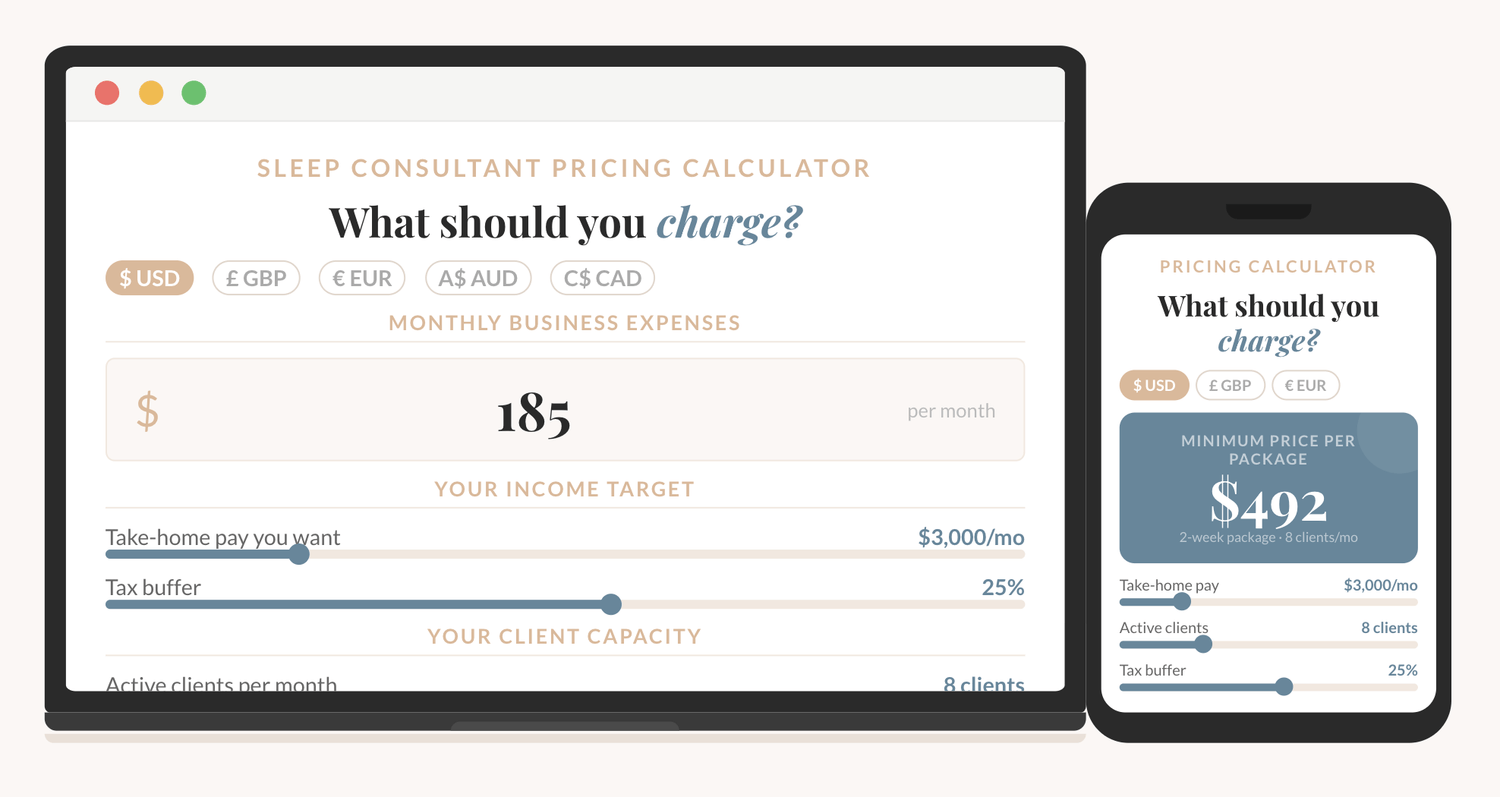
How to price your sleep consulting services?
The Sleep Consultant Pricing Calculator shows you exactly what to charge, based on your real expenses, your income goal, and how many clients you want to take on.
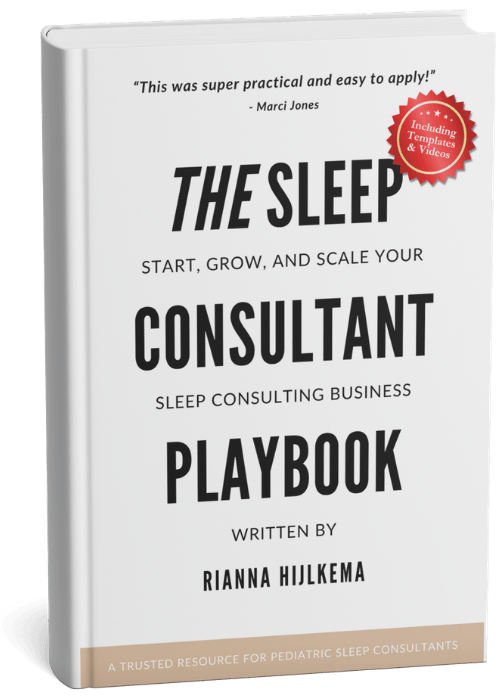
I'm thrilled to offer you an exclusive preview of what’s inside!
You can read the first 22 pages of The Sleep Consultant Playbook and get a taste of the value, insights, and actionable strategies that are waiting for you.
Other articles you might be interested in:
© 2021-2026 Sleep Consultant Business. All Rights Reserved.