
Podcasting for Sleep Consultants: Guest Appearances vs Starting Your Own
Guest appearances on existing podcasts give you immediate access to established audiences without the ongoing commitment of running your own show. Starting your own podcast builds deeper, more loyal listener relationships over time but requires consistent weekly publishing for months before momentum builds. For most sleep consultants, guest appearances are the faster and lower-risk starting point. Your own show makes sense once you've found your voice, have something to say consistently, and are ready to commit to at least a year.
In this guide
- Why podcasting works for sleep consultants
- Guest appearances: what they are and how to land them
- Starting your own show: what it actually takes
- Guest vs your own show: a direct comparison
- How to decide which is right for you
- Getting started with either option
- Frequently asked questions
Podcasting builds some of the deepest trust of any marketing channel. A parent who listens to your voice for 30 minutes a week, in their car or during the baby's nap, feels like they know you before they've ever sent you a message. That familiarity converts well into clients, because by the time they reach out they're already warm.
The question most sleep consultants face is whether to appear as a guest on existing shows, start their own show, or both. Each has very different requirements and very different timelines to results.
Why Podcasting Works for Sleep Consultants
Sleep consulting content is well-suited to audio. The topics parents care about (regressions, wake windows, nap transitions, overnight waking, bedtime battles) are all explainable in conversation. You don't need visuals. You need a voice that is clear, warm, and knowledgeable. Most sleep consultants have all three.
Podcasting also reaches parents at moments when other channels don't. A parent scrolling Instagram needs to stop and pay attention. A parent listening to a podcast is already in a mode of focused listening, whether driving, exercising, or doing dishes during nap time. The quality of attention is different, and that quality translates into stronger trust and faster decisions.
Guest Appearances: What They Are and How to Land Them
A guest appearance means you're interviewed on someone else's existing podcast. You borrow their audience for 30 to 60 minutes, deliver value on a topic relevant to their listeners, and then mention how to find you. It's the fastest way to get your expertise in front of a large, relevant audience without any of the infrastructure of running your own show.
Finding the right shows to pitch
Look for parenting podcasts, wellness podcasts for mothers, postpartum podcasts, and podcasts hosted by doulas, lactation consultants, or midwives. Search your topic keywords in podcast directories. Any show where tired parents are the primary audience is a potential fit.
Start with smaller shows. A podcast with 500 engaged listeners in your ideal audience is more valuable than a broad show with 10,000 listeners who aren't your clients. And smaller show hosts are significantly more accessible when you're starting out.
How to pitch yourself
"Hi [Host name], I'm [Name], a certified pediatric sleep consultant who works with families on [your niche, e.g., newborn sleep, toddler bedtime challenges]. I've been listening to [show name] and think your audience would really benefit from a conversation on [specific topic idea].
A few angles I could cover: [2-3 specific episode ideas]. All of these come from the questions I hear most from exhausted parents.
I'd love to be a resource for your audience if it feels like a fit. Happy to share more about my background. Thanks for the work you're doing with the show, and [specific episode or thing you appreciated].
[Your name, website]"
What makes a good pitch: specific episode ideas (not vague "I could talk about sleep"), genuine familiarity with the show, a clear sense of what value you bring to their specific audience. The worst pitches are generic templates that could have been sent to any podcast. Hosts can tell immediately.
Starting Your Own Show: What It Actually Takes
Your own podcast builds the deepest connection of any content format. A listener who hears you every week for three months feels like they know you thoroughly by the time they book. The conversion rate from loyal podcast listeners to clients is typically high, because the relationship is already established.
What it requires in reality:
- A weekly publishing schedule. Podcast listeners expect consistency. One episode a month is not a podcast. It's an occasional recording. To build and maintain a listener base, weekly episodes are the standard. This is non-negotiable if you want the channel to work.
- Enough topics to sustain 50+ episodes. Before you launch, sit down and brainstorm episode ideas for a year. If you struggle to get to 20, you may not have enough content depth to sustain the format. If 50+ flow easily, you're ready.
- Basic equipment. A decent USB microphone ($50-$150 range), headphones, and a quiet recording space are enough to start. You don't need a professional studio. You do need audio that doesn't distort or echo.
- A hosting platform. Services like Buzzsprout, Anchor, or Podbean distribute your episodes to Spotify, Apple Podcasts, and other directories. Most have free tiers sufficient for getting started.
- Patience. Most podcasts take 6 to 12 months of weekly publishing before listener numbers feel meaningful. The early months are about building the habit and finding your voice, not about metrics.
Something I tell every sleep consultant considering starting a podcast: the first ten episodes will feel like you're talking to yourself. Very few downloads, almost no feedback. That's completely normal. The sleep consultants who build audiences are the ones who kept recording through the quiet early months because they believed in the format, not because it was immediately rewarding. If you need early validation to stay motivated, guest appearances give you that much faster. Your own show requires a different kind of commitment.
Guest vs Your Own Show: A Direct Comparison
| Guest appearances | Your own show | |
|---|---|---|
| Time to first results | Fast (immediate exposure on publication) | Slow (6-12 months to build meaningful audience) |
| Ongoing commitment | Per appearance only, flexible | Weekly, ongoing, for as long as the show runs |
| Audience ownership | Borrowed, belongs to the host | Yours, builds a direct relationship |
| Trust depth | Good, one strong impression | Deep, built over months of weekly listening |
| Equipment needed | Basic mic, headphones | Basic mic, headphones, hosting platform |
| Topic control | Partial, host sets the frame | Full, you choose every episode |
| Best for | Building visibility quickly, establishing credibility, testing your voice | Building a loyal audience, long-term authority, content that compounds |
How to Decide Which Is Right for You
Start with guest appearances if: you are new to podcasting and haven't found your voice yet, you need results in the near term and can't wait 12 months for momentum, you enjoy conversation but aren't sure you have enough topics to sustain your own show, or you want to build credibility and exposure before investing in your own platform.
Start your own show if: you have a clear, specific focus with enough depth for 50+ episodes, you're genuinely comfortable talking and enjoy the format, you're ready to commit to weekly publishing for at least a year, and you're thinking about long-term authority-building rather than near-term client generation.
Do both if: you already have your own show running and want to accelerate reach by appearing on other shows, or you're comfortable with the format and have the capacity for both without it compromising other parts of your business.
Getting Started With Either Option
For guest appearances
- Write a one-paragraph bio that clearly states who you are, what you specialise in, and what you can offer podcast listeners.
- Prepare 5 to 8 episode topic ideas you could speak to confidently and engagingly.
- Identify 10 shows where your ideal clients are already listening.
- Send personalised pitches (never bulk). Target the smaller shows first.
- Follow up once if you haven't heard back in two weeks. Move on after that.
For your own show
- Define your show clearly: who is it for, what do you talk about, what makes it different from other parenting podcasts.
- Batch-record 5 to 8 episodes before you publish. Launching with a back-catalogue gives new listeners something to binge.
- Set up hosting on a platform like Buzzsprout or Anchor. Connect to Spotify and Apple Podcasts.
- Commit to a weekly schedule and put it in your calendar as a non-negotiable. Podcasts without a consistent schedule lose listeners.
- At the end of every episode, give listeners a clear action: book a call, visit your website, subscribe. Give them somewhere to go.
Frequently Asked Questions
Do I need to have a large following to pitch myself as a guest?
No. Most podcast hosts don't care about your following size. They care about whether your expertise is relevant to their audience and whether you'll be an engaging guest. A clear pitch with strong topic ideas and genuine familiarity with their show is far more persuasive than a large Instagram following.
How long should podcast episodes be?
Long enough to deliver real value, short enough to respect the listener's time. For sleep consulting content, 20 to 40 minutes tends to work well for interview episodes, and 15 to 25 minutes for solo episodes. The best length is whatever is natural for the content. Don't pad to hit a number and don't cut valuable content to keep it short.
Can I repurpose podcast content into other formats?
Yes, and this is one of the biggest advantages of podcasting. A 30-minute episode can become a blog post, a newsletter, a week of social media posts, and a set of short video or audio clips. If you're running your own show, build repurposing into your workflow from the start so every episode does multiple jobs across your marketing channels.
Key Takeaways
- Podcasting builds deep trust because listeners spend significant focused time with your voice. The quality of attention is different from social media.
- Guest appearances are faster with less commitment. One well-placed episode on an existing show reaches a warm audience immediately.
- Your own show requires weekly publishing for 6 to 12 months before meaningful momentum builds. It's a long-term investment, not a near-term client generation tool.
- Most sleep consultants should start with guest appearances to find their voice, build credibility, and test whether the format suits them before committing to their own show.
- Pitching yourself as a guest requires specific episode ideas and genuine familiarity with the show, not a large following.
- Podcast content repurposes efficiently into blogs, newsletters, and social posts, multiplying its value across channels.
Pick one action today. Either search for three parenting podcasts you could pitch yourself to, or brainstorm 20 episode ideas for a show of your own. Either way, start with something concrete rather than staying in the planning phase indefinitely.
Disclaimer: The information shared in these articles is for educational and informational purposes only. It does not constitute legal, financial, or professional advice. Always consult with a qualified professional regarding your specific situation.

Rianna Hijlkema
Certified Pediatric Sleep Consultant, Certified Postpartum Doula, Former Teacher & School Director, Founder of Sleep Consultant Design & Sleep Consultant Business and the author of The Sleep Consultant Playbook (available on Amazon).
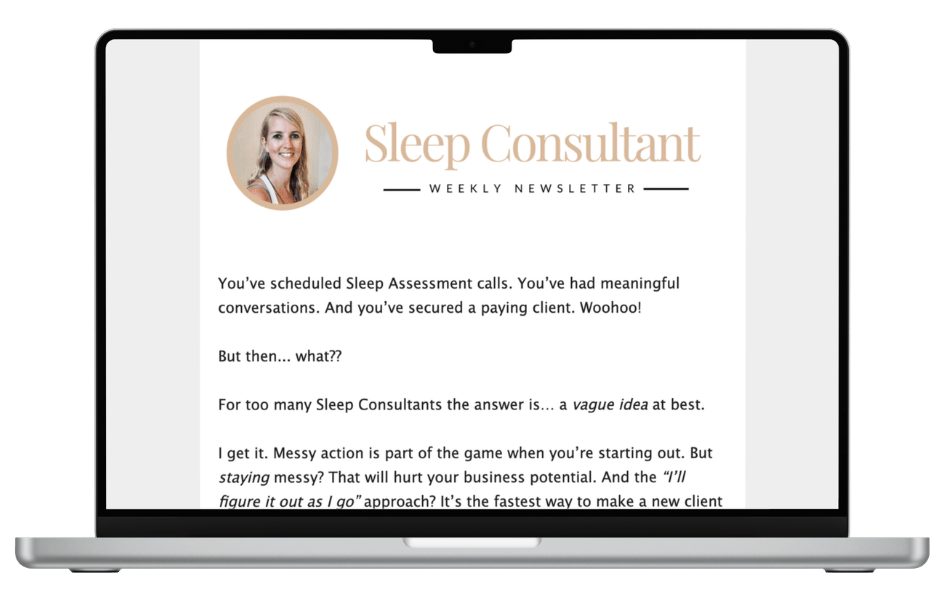
The Sleep Consultant Newsletter
Weekly tips, strategies and marketing ideas for sleep consultants written by a fellow sleep consultant. 1500+ active subscribers!
I’ll only send helpful emails, and you can unsubscribe anytime with one click.
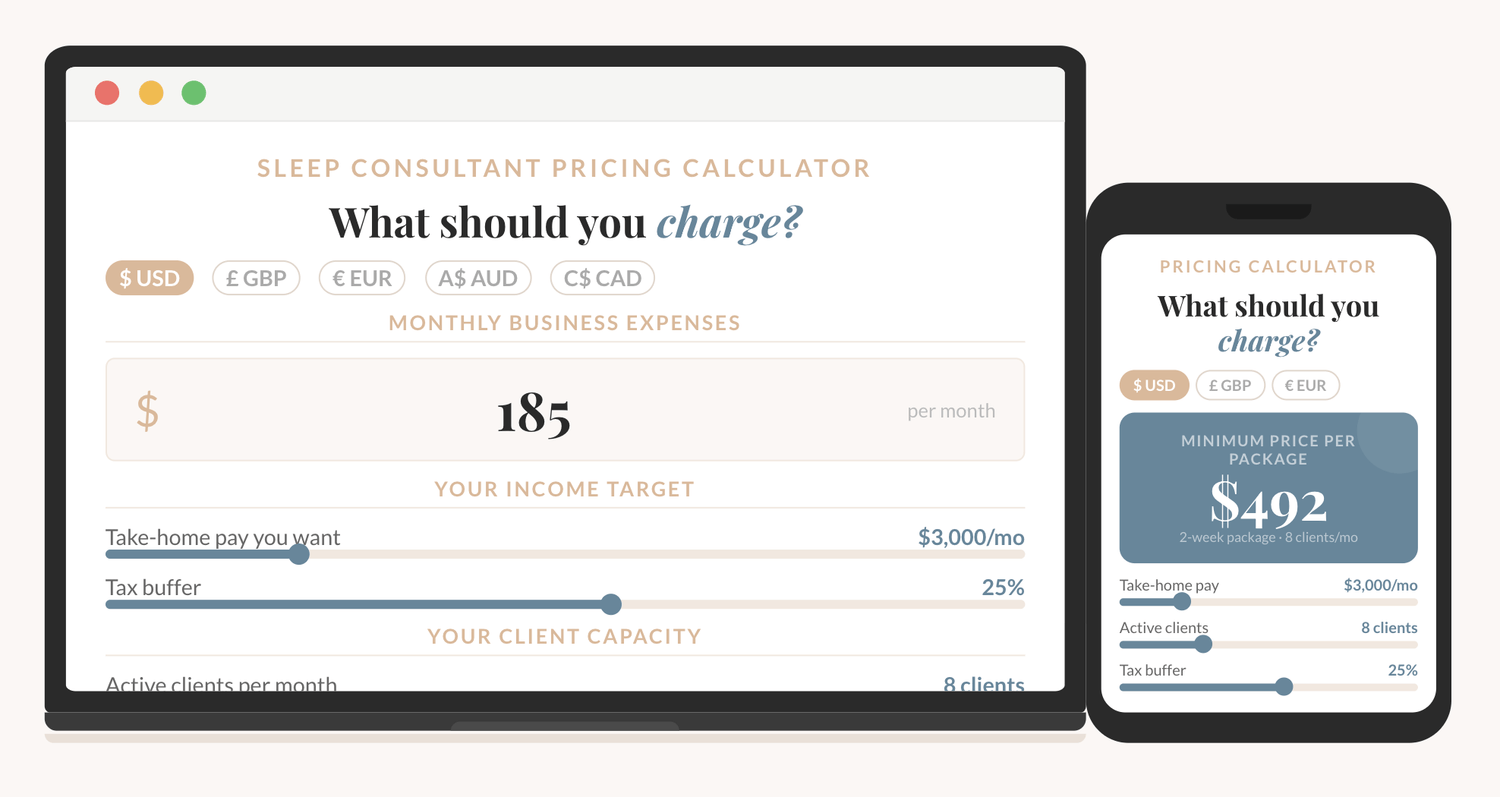
How to price your sleep consulting services?
The Sleep Consultant Pricing Calculator shows you exactly what to charge, based on your real expenses, your income goal, and how many clients you want to take on.
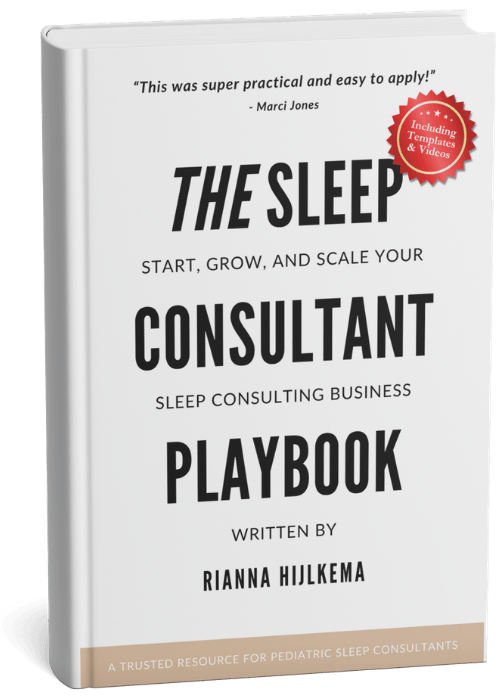
I'm thrilled to offer you an exclusive preview of what’s inside!
You can read the first 22 pages of The Sleep Consultant Playbook and get a taste of the value, insights, and actionable strategies that are waiting for you.
Other articles you might be interested in:
© 2021-2026 Sleep Consultant Business. All Rights Reserved.